
 Worksheets
U.S. History SP26 Unit 1 Quiz: Standards 1 & 2
Total questions: 25
Worksheet time: 13mins
[SSUSH1] What was the primary cause of conflict between settlers in the Southern Colonies and American Indian groups?
differences in religious beliefs
disputes over land ownership
shared agricultural techniques
trade disagreements
[SSUSH1] Which economic system focused on accumulating wealth for the mother country by controlling colonial trade and maximizing exports?
Feudalism
Capitalism
Mercantilism
Bartering System
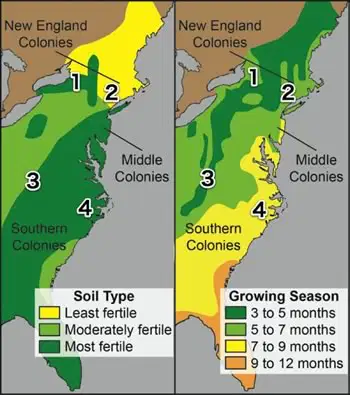
[SSUSH1] Based on the maps showing soil type and growing season in the early British colonies, settlers interested in farming for local food production rather than cash crops would MOST LIKELY choose which region?
1
2
3
4
[SSUSH1] Which of the following was a reason for the Mid-Atlantic Colonies having a more varied population than the New England Colonies?
The presence of large plantations led to an influx of African slaves.
Religious freedom attracted settlers from different backgrounds.
Strict land ownership rules limited immigration.
Limited economic opportunities discouraged diversity.
[SSUSH1] Which rebellion in colonial Virginia was sparked by tensions over frontier defense against Native American attacks?
Stono Rebellion
Boxer Rebellion
Shays' Rebellion
Bacon's Rebellion
[SSUSH1] What was the main consequence for Jamestown settlers who arrived too late to grow food in 1609?
Many died from starvation.
They enjoyed a successful harvest.
They traded with local tribes for food.
They moved to another colony.
[SSUSH1] Laws such as the Navigation Acts were intended to ensure that colonial trade benefited England rather than other European powers. This approach is an example of
capitalism.
liberalism.
imperialism.
mercantilism.
[SSUSH2.a&b] A person in the early 1700s British North American colonies is described as follows: - Skilled artisan - Values religious freedom - Lives in a diverse community - Engages in trade and commerce Which colony would this individual MOST LIKELY have chosen to settle in?
Southern Colonies
Mid-Atlantic Colonies
New England Colonies
Chesapeake
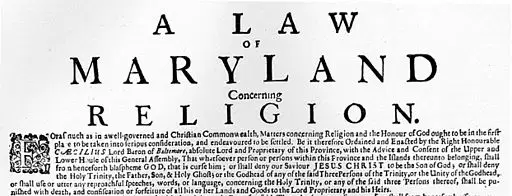
[SSUSH2.a&b] Maryland Act of Toleration 1649 What was a key effect of the Maryland Act of Toleration on religious practices in the colony?
It required all colonists to attend Anglican church services.
It protected the rights of Christians to worship freely regardless of their specific denomination.
It banned all non-Christian religions from the colony.
It gave the colonial government the power to appoint church leaders.
[SSUSH2.a&b] During the period 1607-1754, the transatlantic slave trade primarily involved the movement of enslaved Africans along which of the following routes?
from Africa to Europe to the Pacific Islands
from Africa to the West Indies/The Caribbean to the American colonies
from Africa to South America to northern Canada
from Africa to Central America to the Arctic region
[SSUSH2.a&b] In the colonial period, how did Africans and Native Americans respond to European influence?
They isolated themselves from all other groups.
They fully adopted European customs and beliefs.
They migrated to distant regions to avoid contact.
They blended their traditions to form unique societies.
[SSUSH2.a&b] Which group was MOST likely to be attracted to the Mid-Atlantic/Middle colonies due to their policies of religious tolerance?
English Catholics seeking refuge from persecution
Puritan leaders establishing a theocracy
German Quakers looking for a place to practice their faith freely
Southern planters expanding tobacco farms
[SSUSH2.a&b] In which colonial region were plantations and the use of enslaved labor most prevalent during the colonial era?
New England
Middle colonies
Southern colonies
Ohio River Valley region
[SSUSH2.c] Which outcome resulted from the British policy of salutary neglect toward the American colonies?
It led to stricter enforcement of trade laws.
It encouraged the development of independent colonial governments.
It reduced the influence of colonial assemblies.
It increased direct taxation by Parliament.
[SSUSH2.c] created to provide local governance in Virginia in the early 1600s included elected representatives who met to make laws for the colony served as a model for future legislative assemblies in America Which colonial institution is being described?
the Plymouth Company
the Mayflower Compact
the House of Burgesses
the Fundamental Orders
Which factor MOST contributed to the American colonies forming a distinct identity from Great Britain during the colonial period?
Colonists had different forms of government than Britain
Colonists were separated from Britain by the Atlantic Ocean
Colonists used a different currency than Britain
Colonists traded more with France than with Britain
Which concept brought by Western Europeans to the New World is demonstrated by both the House of Burgesses and the Mayflower Compact?
representative government
religious tolerance
Columbian Exchange
capitalist theory
[SSUSH2.d] One effect of the Great Awakening on colonial society was that it
led to the establishment of new religious denominations.
required all colonists to attend church services.
discouraged emotional expressions of faith.
banned revival meetings and sermons.
[SSUSH2.d] What was one way the Great Awakening influenced colonial society?
It led to a decrease in religious diversity among the colonists.
It encouraged colonists to question traditional religious leadership.
It resulted in fewer people attending religious services.
It caused a decline in the formation of new religious groups.
[SSUSH2.d] · Pennsylvania · religious freedom · diverse population · pacifism Which colonial region is best described by the characteristics listed above?
West Indies
Canadian Provinces
New England Colonies
Mid-Atlantic Colonies
Levi and his family, who were Quakers, settled in North America in the late seventeenth century. Due to their religious beliefs, they did not participate in military service, which led to disagreements with their previous government. Levi worked as a blacksmith and often interacted with both colonists and American Indians through trade.
Which colony in North America was known for welcoming Quakers like Levi?
New York
Pennsylvania
Massachusetts Bay
Georgia
How did the climate and geography of the New England and Southern Colonies influence the types of crops grown in each region?
New England farms mainly grew food for local consumption, while Southern farms focused on growing crops for sale such as tobacco and rice.
New England farms specialized in cash crops like indigo, while Southern farms grew mostly food crops for their families.
Southern farms grew only food crops for local use, while New England farms produced cash crops for export.
Southern farms specialized in growing cotton, while New England farms grew tobacco and indigo.
How did the Triangular Trade system influence the economic development of the American colonies, and what role did enslaved Africans play within this system?
The Triangular Trade discouraged colonial economic growth by limiting trade only to Europe, while enslaved Africans worked mainly in factories.
The Triangular Trade helped the colonies grow by exchanging raw materials for manufactured goods, while enslaved Africans were forced to provide labor that supported agricultural production.
The Triangular Trade focused on equal trade between Europe, Africa, and the colonies, and enslaved Africans participated voluntarily as paid workers.
The Triangular Trade benefited only European nations, while enslaved Africans had little impact on colonial economies.

England's economic policies in the 1600s led to the development of which trade pattern?
representative government.
mercantilist economy
monarchist government
free enterprise economy

