
 Worksheets
LCS Grades and Applications
Total questions: 32
Worksheet time: 16mins
Which statement best describes how LCS grades differ in pipe wall thickness?
Medium grade has the thinnest wall
All grades have equal wall thickness
Heavy grade has the thickest wall
Light grade has the thickest wall
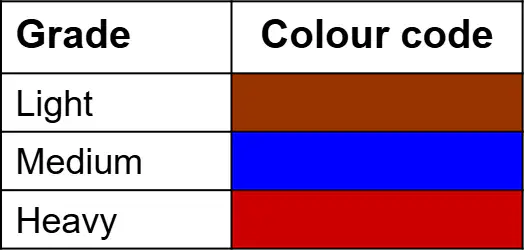
Match each LCS grade with its standard color code shown in industry charts.
Light: brown, Medium: blue, Heavy: red
Light: red, Medium: brown, Heavy: blue
Light: blue, Medium: red, Heavy: brown
In typical plumbing work, which LCS grade is most commonly installed?
Medium grade in most installations
Light grade in domestic systems
Heavy grade in all commercial sites
Light and heavy used equally often
Select all situations where heavy grade LCS is appropriate.
Pressurised systems
Low-pressure decorative fittings
High temperature systems
Below ground pipe runs
Light grade LCS is seldom used. Where is it typically found?
General domestic hot water
Underground mains distribution
High pressure steam headers
Dry sprinkler fire prevention
Where is low carbon steel (LCS) mainly used, with occasional use elsewhere?
Marine ship systems mainly
Commercial installations mainly
Domestic installations mainly
Agricultural irrigation mainly
Which statement best describes how a screwed joint creates a water‑tight seal?
By gluing the socket with solvent cement
By matching internal and external threads tightly
By compressing a ferrule against a pipe
By welding the pipe end to a fitting
When preparing an external pipe thread for sealing, which materials are typically applied?
Anaerobic adhesive
PTFE tape
Hemp and paste
Flux and solder
In practice, how do parallel pipe threads behave when tightened into a tapered threaded socket?
They seal only at the first turn engaged
They tighten progressively as they engage further
They remain loose regardless of depth
They strip because angles are incompatible
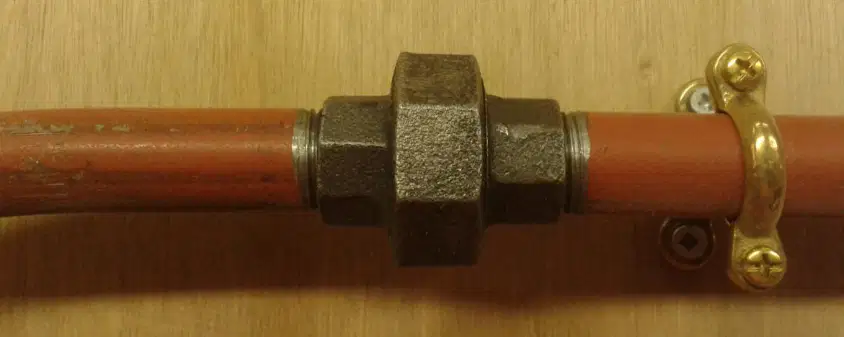
When completing a screwed pipe joint, how many threads should remain visible at the joint for a correct finish?
None should be visible
One and a half to two
Three to four threads
About half a thread
Which statement correctly distinguishes male and female threads in plumbing?
Male threads are external surfaces
Female threads grip onto pipe outsides
Female threads are external surfaces
Male threads are internal surfaces
What does BSPT stand for in pipe thread terminology?
British Standard Parallel Threads
British Standard Pipe Threads
Basic Standard Pipe Taper
British Steel Pipe Threads
Which BSP sizes are most commonly used for plumbing pipe threads?
1/2 in and 3/4 in
1/4 in and 3/8 in
1 in and 1 1/4 in
1 1/2 in and 2 in
You need to connect two male-threaded pipe ends together. Which component should you choose?
Union allowing a break point
Socket with female threads both ends
Nipple with male threads both ends
Bush with hex for reduction
A line must transition from a larger pipe to a smaller pipe with female threads. Which fitting performs this?
Elbow for directional change
Reducer for female-to-female size change
Tee for adding a side branch
Bush for male-to-female reduction
Which fitting has male threads on both ends and is used to join two sockets or females?
Nipple with double male threads
Union for detaching sections
Elbow for 90-degree turn
Bush for internal thread reduction
What is the primary purpose of a union in a screwed pipework installation?
Provide a removable break point
Branch flow into a side run
Create a right-angle direction change
Reduce thread size between pipes
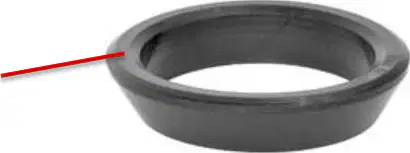
In the diagram of an LCS compression joint, which component directly forms the water-tight seal by being compressed against the pipe exterior?
Rubber seal compressed onto pipe
Reinforcement washer distributing load
Spring retainer applying axial preload
Back nut providing threaded clamping
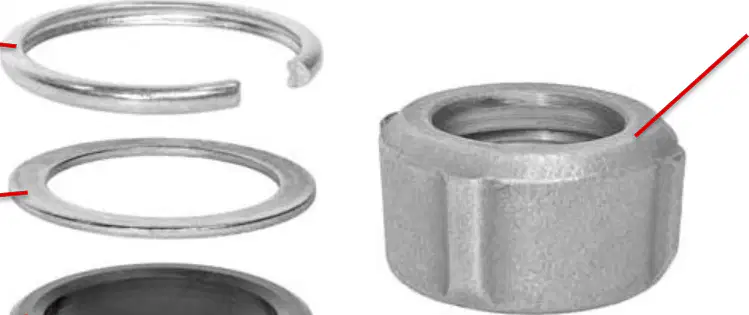
Which pair of components primarily provides the clamping force that compresses the rubber seal in a compression fitting?
Back nut and reinforcement washer
Spring retainer and rubber seal
Rubber seal and reinforcement washer
Back nut and spring retainer
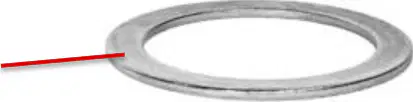
What is the functional role of the reinforcement washer in the compression joint shown?
Provides the threaded engagement to tighten
Distributes compressive load onto seal
Maintains spring tension during service
Creates the sealing interface with the pipe
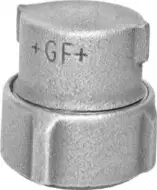
You need to terminate a pipe run securely without creating an outlet. Which fitting from the diagram is appropriate?
Coupling with straight-through flow
End-cap to close the pipe
Reducer to change pipe diameter
Tee to add a side branch
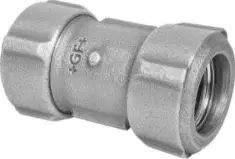
Which pair of fittings in the diagram are primarily used to join pipes of the same diameter in a straight line and to create a perpendicular branch, respectively?
End-cap and Reducer
Elbow and Coupling
Reducer and Elbow
Coupling and Tee
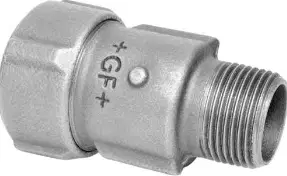
A system requires transitioning from compression to a threaded connection that screws into another component. Which adapter shown is designed to screw into a threaded port?
Male adapter with external thread
Reducer with smaller outlet
Coupling with two compression nuts
Female adapter with internal thread
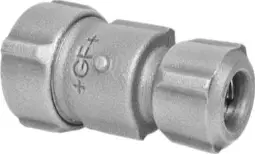
Identify the fitting in the diagram best suited for reducing from 22 mm pipe to 15 mm pipe without changing direction.
Elbow with equal sizes
Reducer with stepped bore
Tee with equal branches
End-cap with closed end
What is the primary shared purpose of clips used on low carbon steel pipework?
Prevent noise and movement
Provide decorative finishes
Seal threaded joints tightly
Increase water flow rate
Which statement best describes a cast school board clip for pipework?
Adhesive mount for temporary support
Flexible strap allowing thermal expansion
Two-part clip securing pipe position
Single-piece clip for quick removal
Select all functions performed by pipe clips in an installation.
Reduce vibration and noise
Lubricate threaded connections
Prevent pipe movement and damage
Increase pipe diameter
Provide structural support
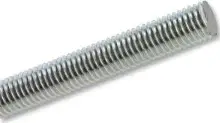
In a Munsen ring and back plate assembly, how is height adjusted?
By adjusting the ring on the screw
By bending the ring tabs
By tightening the adhesive pad
By sliding the back plate slots
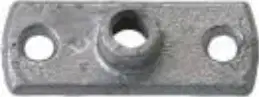
Which component is secured first in a Munsen ring setup to allow later height adjustment?
The screw is glued to the wall
The back plate is secured in position
The ring is fixed to the pipe
The pipe is clamped to a joist
A vertical run of ¾ inch LCS tube requires clips spaced at what distance?
3.0 meters apart
1.8 meters apart
2.1 meters apart
2.4 meters apart
Which tube diameter shares the same horizontal clip spacing as ¾ inch LCS?
1¼ inch tube
½ inch tube
⅝ inch tube
1 inch tube
Why are clipping distances for LCS set further apart compared to copper pipe?
Lower mass than copper pipe
Smaller diameter standard sizes
Greater thermal expansion rate
Higher rigidity than copper pipe

