
Font size
 Worksheets
psych final
Total questions: 218
Worksheet time: 2hrs 10mins
what is an authoritarian parent
a parent who sets few rules and is very relaxed
a parent who expects obedience without question
a parent who uses negotiation and warmth
a parent who lets kids make all decisions
what nickname is given to authoritarian parents
rubber band parent
brick wall parent
open door parent
cloud parent
what do authoritarian parents prioritize
freedom
warmth
rules
choices
what beleif do authoritarian Parents hold
kids should have total independence
kids learn best through mistakes
kids should obey without question
kids should always be happy
parenting styles are based on what
a parents fav books
random habits
parents values and beliefs
a childs personality alone
parents develope their parenting style based on
their own experiences growing up
their favorite teachers
what their friends say
their childs fav hobbies
most parents use
only one strict style
a combo of the parenting styles
no parenting style
the same style as their friends
a parenting style is defined as
a way parents decorate the home
the type of food parents feed their kids
the general manner parents communicate expectations
the amount of money parents make
what is chunking
Chunking is a technique for memorizing large texts.
grouping info into meaningful units
Chunking is a style of writing in poetry.
Chunking refers to breaking down physical objects.
why does chunking improve memory
Chunking improves memory by organizing information into manageable units.
Chunking improves memory by eliminating unnecessary details.
Chunking reduces memory capacity by complicating information.
it organizes info into manageable units
which is an example of chunking
Reciting a poem from memory
Learning a new language vocabulary
Memorizing a list of grocery items
Remembering a phone number in groups (e.g., 123-456-7890)
what is the typical limit of short term memory
The limit of short-term memory is 5 items.
The typical limit of short-term memory is 7 plus or minus 2 items.
Short-term memory can hold 10 items at once.
The typical limit is 3 plus or minus 1 items.
visual imagery helps memory because
images take more time to process
images slow down recall
pictures create stronger memory associations
images require no interpretation
working memory is Best described as
long term storage facts
conscious active processing of info
automatic memory without awareness
permanent memory storage
what improves the chance that info transfers to long term memory
ignoring it
rehearsal with intent to learn
sleeping immediately
multitasking while studying
how is long term memory stored
llike a filing cabinet of individual sheets
by features , associations, and connections
randomly with no pattern
only as images
which example shows long term memory retreival
reading a list
guessing randomly
visualizing your childhood home
forgetting your grocery list
what is long term potentiation (LTP)
the loss of neurons over time
the idea that synapses strengthen when learning occurs
fogetting due to interference
a type of flashbulb memory
why can someone often remember long term memories after a concussion but not short term memories
concussions erease long term memory
short term memories haven't been processed into long term storage yet
the hippocampus stores short-term memory
ltp stops completely
what is flashbulb memory
a memory of a dream
a vivid memory of a surprising or emotional event
a memory that fades quickley
a memory based of only pics
sematic memory refers to
memory of your life story
memory of skils
knowledge of language, rules and meanings
automatic responses
episodic memory refers to
facts and definitions
memory and story of your own life
motor skills like riding a bike
emotions linked to memories
explicit memory involves
unconscious skills
effortful, conscious recall of facts and events
forgetting
emotional triggers
implicit memory involves
skills and conditioning performed without conscious awareness
memorizing definitions
remembering stories
learning a new languege
which is an example of implicit memory
reciting a poem
telling someone how to tie a shoe
automatically riding a bike
learning dates for a test
why do people struggle to verbally describe a skill they can perform well (like tying a tie)
the skill is stored in explicit memory
talking makes the skill harder
the skill is stored in implicit memory and is unconscious
people forget the steps
where are implicit memories formed
hippocampus
amygdala
cerebellum
frontal lobe
where are explicit memories formed
cerebellum
hippocampus and amygdala
pons
motor cortex
which is the pons
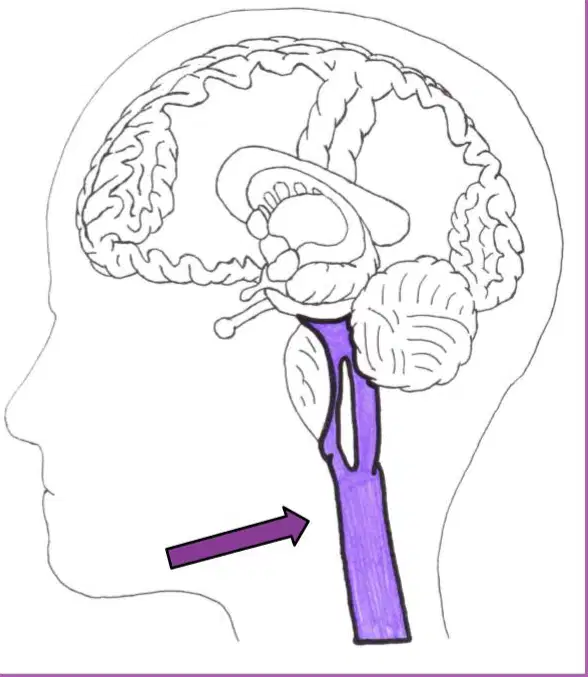
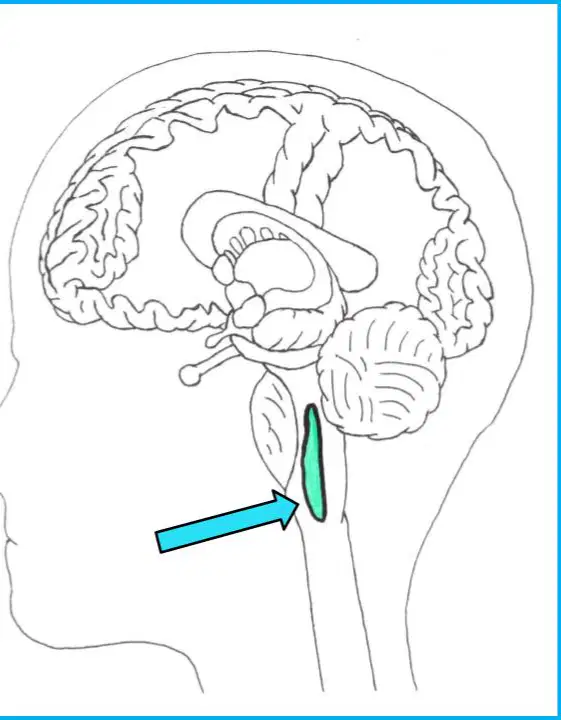
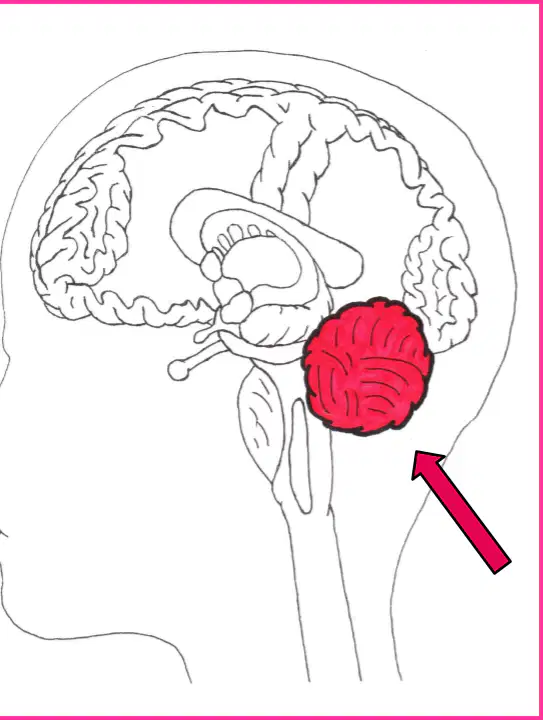
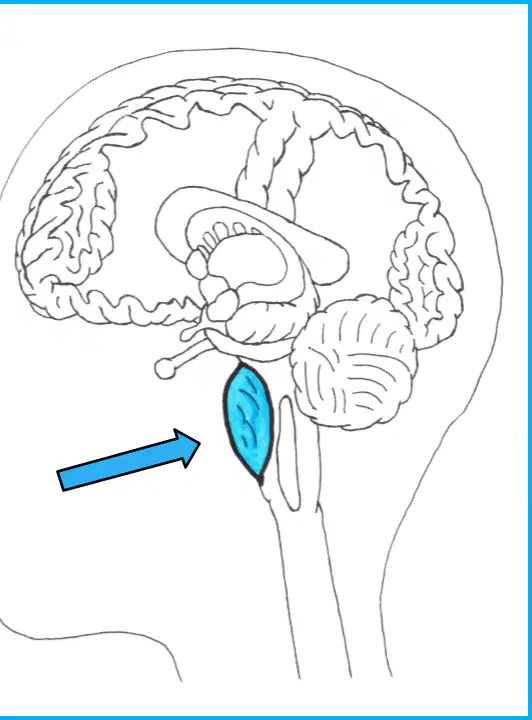
which is the cerebellum
which is the medulla
which is the brain stem
which is the midbrain
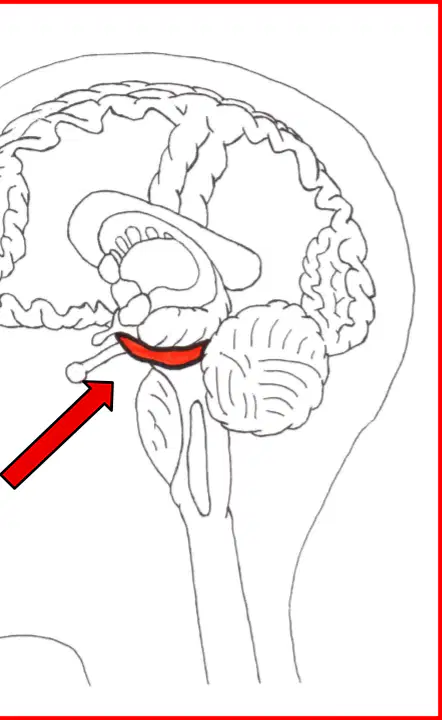
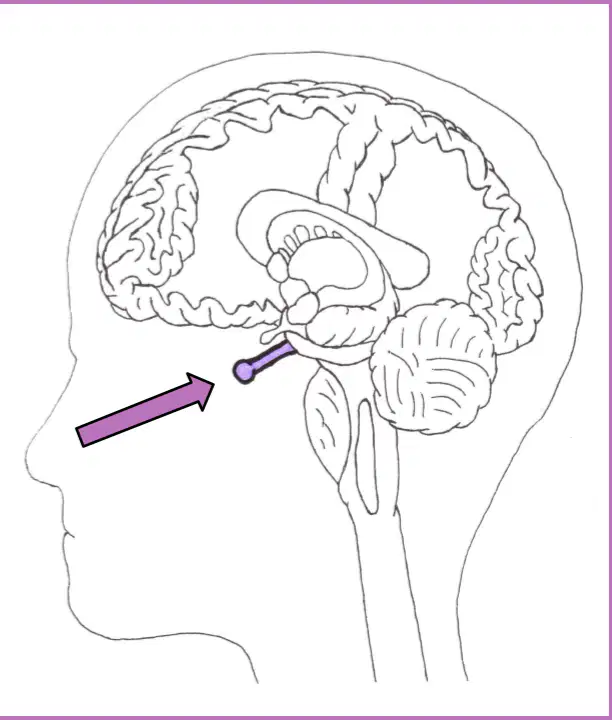
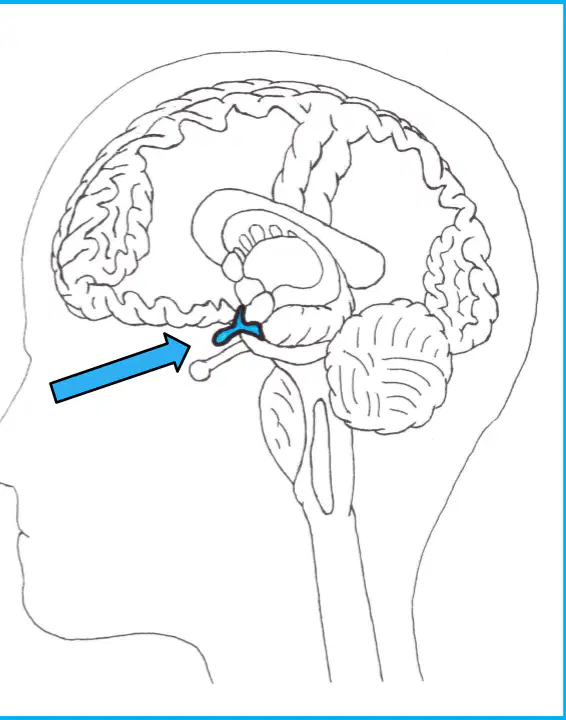
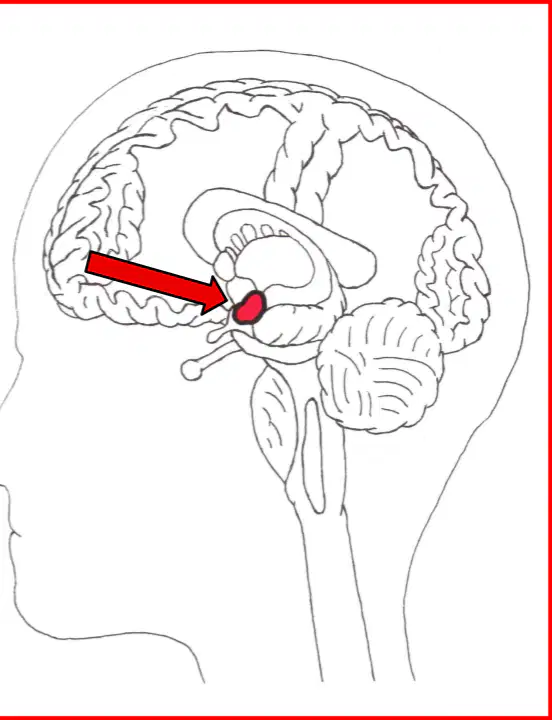
which is the olfactory bulb
which is the pituitary gland
which is the amygdala
which is the hypothalamus
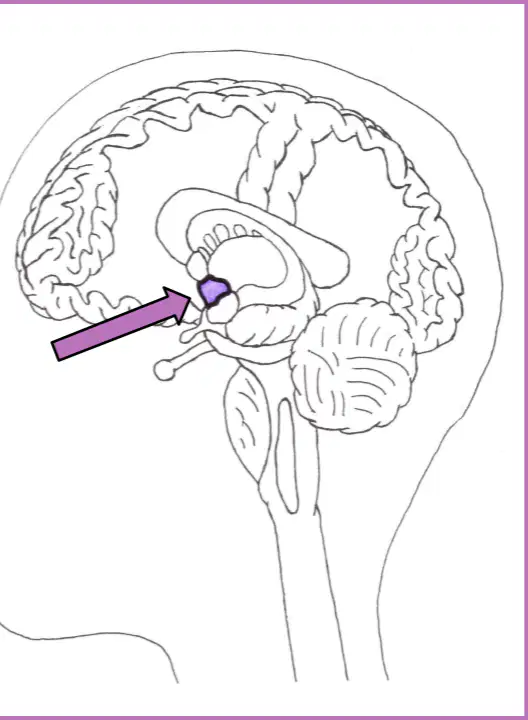
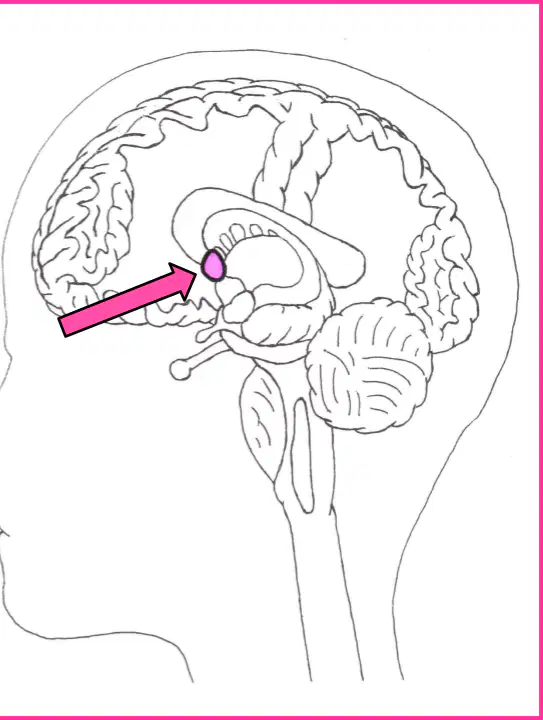

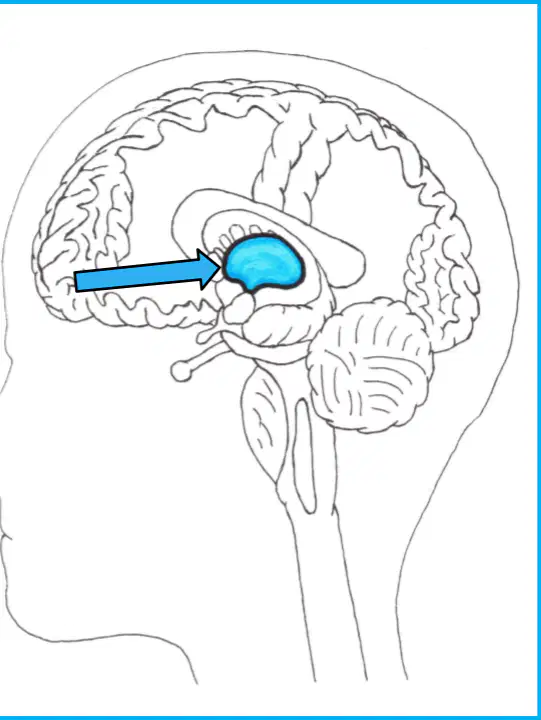
which is the septum
which is the corpus callosum
which is the corpus thalamus

Which color represents the cerebellum?
Blue
Pink
Yellow
Red

Which color represents the frontal lobe?
Yellow
Pink
Red
Blue

Label the Medulla Oblongata
H
K
G
J

Which color represents the occipital lobe?
Yellow
Blue
Pink
Green

Which color represents the temporal lobe?
Blue
Yellow
Pink
Green

Which color represents the parietal lobe?
Blue
Pink
Yellow
Green
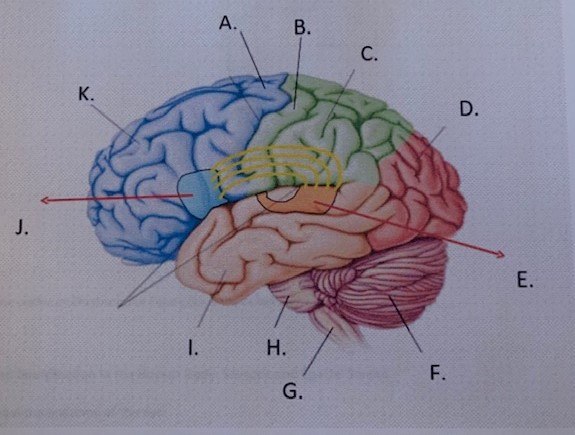
Label the cerebellum
I
F
E
A

Label the Pons
A
H
C
K

Label the motor cortex
B
A
D
H

Which labeled structure is the occipital lobe?
5
3
2
1
This part of my brain is related to balance and muscle coordination
brain stem
pons
midbrain
cerebellum
This portion of the brain stem is located just above the spinal cord. It regulates vital functions, such as heartbeat and breathing
brain stem
pons
medulla o
This part of my brain is related to balance and muscle coordination
cerebellum
cerebrum
brainstem
hippocampus
The grooves (the lower part) on the surface of your brain are called:
Sulcus (sulci - plural)
Gyrus (gyri - plural)
Brain valleys
What part of the brain is responsible for vision?
temporal lobe
parietal lobe
occipital lobe
brain stem

Which letter on the illustration represents the occipital lobe?
A
B
C
D

Controls vital functions such as breathing and heart rate
Diencephalon
Frontal Lobe
Brain Stem
Cerebellum
Controls hearing, speaking coherently, and comprehension
Frontal Lobe
Temporal Lobe
Occipital Lobe
Parietal Lobe
Which lobe is responsible for thinking, planning, problem solving, emotions, behavior control and decision making?
Parietal Lobe
Temporal Lobe
Frontal Lobe
Occipital Lobe
What does the occipital-temporal region of the brain do?
Produces speech
Stores the appearance and meaning of words
Segments a written word into its sounds
Processes speech sounds as we listen and speak

Which letter on the illustration represents the parietal lobe?
A
B
C
D

What part of the brain is Letter A pointing to?
Frontal Lobe
Cerebellum
Medulla Oblongata
Parietal Lobe
What part of the brain is Letter D pointing to?
Frontal Lobe
Temporal Lobe
Occipital Lobe
Cerebellum
Receives sensory input for touch and body position
Parietal Lobe
Frontal Lobe
Occipital Lobe
Temporal Lobe
Controls hearing, speaking coherently, and comprehension
Frontal Lobe
Temporal Lobe
Occipital Lobe
Parietal Lobe
What does the occipital-temporal region of the brain do?
Produces speech
Stores the appearance and meaning of words
Segments a written word into its sounds
Processes speech sounds as we listen and speak

What are the four lobes in the brain?
front, back, left side, right side
frontal, parietal, occipital, and temporal
which is the basal ganglia
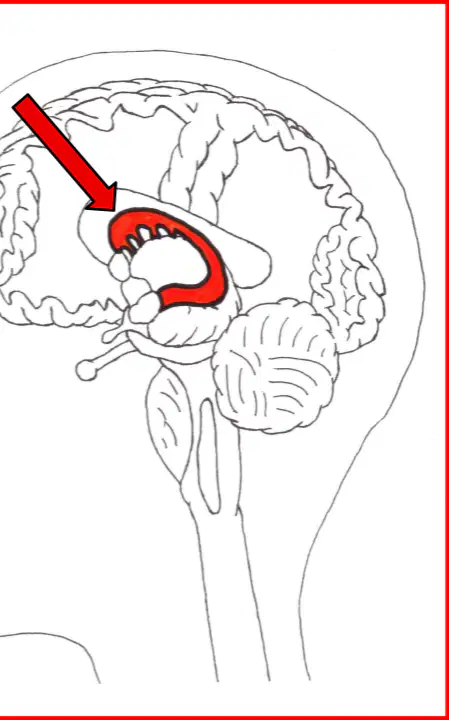
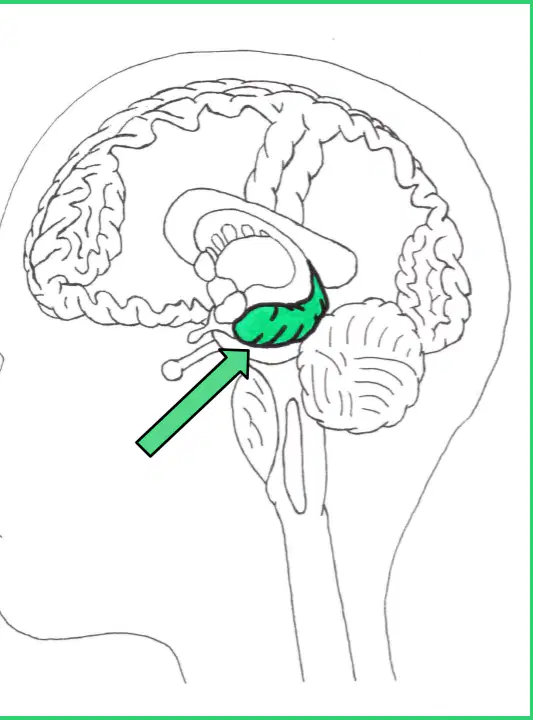
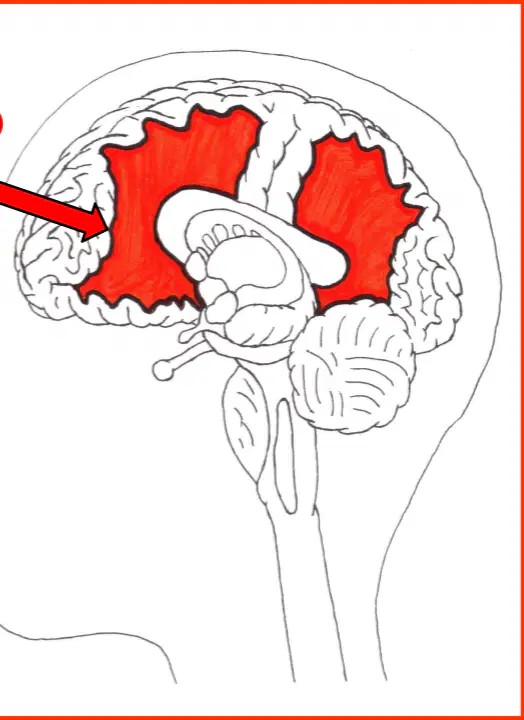
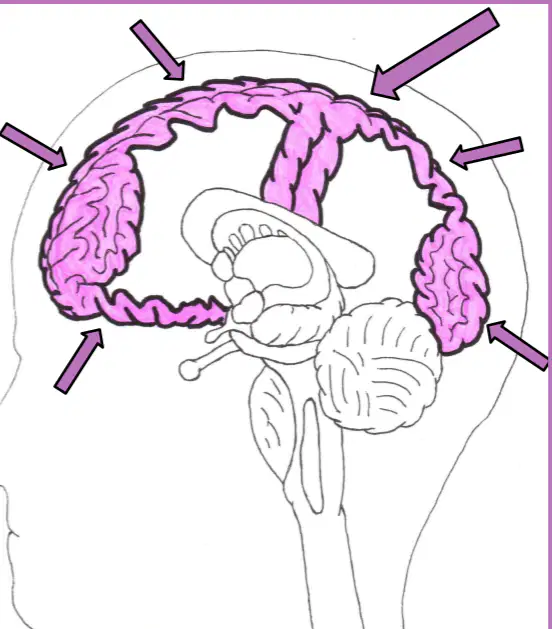
which is the hippocampus
which is the cerebrum
which is the cerebral cortex
what are retrieval cues
tricks used to memorize lists
stimuli that help you remember information
info stored unconsciously
techniques that erease memories
which is an example of a retrieval cue
a smell that reminds you of childhood
writing flashcards
guessing an answer
forgetting your notes
recognition is...
remembering without cues
identifying info from choices
forgetting slowly
Elvis Guitar Broke Down Friday helps me remember the order of musical notes. This is an example of
The method of loci
Spark Notes
Cornell Notes
Mnemonic Device
What is the process of converting sensory input into a form that can be stored in memory called?
Retrieval
Encoding
Storage
Consolidation
What is the first stage of memory where information is processed from the senses?
Sensory memory
Long-term memory
Working memory
Short-term memory
recall is...
knowing the answer when you see it
retrieving info without cues
storing events automatically
relearning material faster
Which of the following is a symptom commonly associated with major depressive disorder?
Compulsive hand washing
Frequent hallucinations
Persistent feelings of sadness and loss of interest
Elevated mood and excessive energy
Which psychological disorder is characterized by recurrent, unwanted thoughts and repetitive behaviors?
Obsessive-compulsive disorder (OCD)
Generalized anxiety disorder
Schizophrenia
Bipolar disorder
What is a common feature of anxiety disorders?
Memory loss
Delusions and disorganized speech
Excessive fear or worry
Manic episodes
what are mnemonic devices?
things that make memories fade
subconscious blocks to memory
memory tricks that help you recall info
parts of the brain
mood congruent memory means that you remember things that
were memorized with visuals
match the mood you're currently in
were learned while multitasking
are the most important to you
what is absent mindedness
forgetting due to not paying attention
forgetting due to trauma
confusing two memories
recalling unwanted memories
what is anxiety disorders
putting your head between your legs
repeated episodes of sudden feelings of intense anxiety and fear or terror that reach a peak within minutes
breathing in and out really fast
crying
transience is..
blocking painful memories
memory fading over time
learning something new
remebering too much
blocking is....
erasing memories intentionally
tip of the tongue phenomenon
mixing up sources
changing memories based on mood
misattribution occurs when...
you cant remember anything
you confuse the source of a memory
you add fake details
you forget due to stress
suggestibility means
memory is altered by misleading information
you intentionally lie
you forget due to aging
you remember irrelevant events
bias refers to
remembering more than you learned
when your current beliefs reshape old memories
confusing similar events
trauma blocking memories
persistence is....
memories that wont go away
the ability to memorize quickly
forgetting facts
recall without cues
what is proactive interference
new info blocks old info
old info blocks new info
forgetting trauma
being unable to store new memories
example of proactive interference
learning Spanish makes you forget english
your new password replaces your old one
you keep typing your old phone number instead of your new one
you cannot remember last night
what is retroactive interference
old info blocks new info
new info blocks old info
forgetting because of trauma
learning without awarness
example of retroactive interference
forgetting your old address after learning your new one
forgetting your new address
being unable to learn multiplication
remembering childhood events early
eyewitness testimony is
a police officers memory
a witness memory of an event
a lawyers statement
video recording
why is eyewitness testimony often unreiliable
people always lie
memory is reconstructive and inaccurate
police force mistakes
witnesses forget intentionally
what percentage of wrongful convictions involved faulty eyewitnesses?
10%
25%
50%
about 75%
which factor reduces eyewitness accuracy MOST
good lighting
police pressence
stress and high emotion
quiet envirement
weapon focus effect means
witnesses focus on criminals face
witnesses focus on the weapon instead of details
crimes with weapons create better memory
weapons help identification
leading questions are.....
questions that are very hard
questions that force a specific answer
questions that test verbal ability
questions that require long responses
why are leading questions dangerous
they confuse the criminal
they create false memories
they make witnesses angry
they solve cases faster
which is a leading question
what did you see?
describe the event
was the man wearing a black hoodie?
where were you standing
lineups become inaccurate when
all pictures match
one photo stands out
there are 8 people
no one makes a guess
the longer a witness takes to choose someone..
the more confident they become
the more accurate they are
the less confident and less accurate they actually are
the police trust them more
confabulation is
recalling everything perfectly
intentionally lying
filling in memory gaps with false details
forgetting due to aging
confabulation happens because...
people weren't paying attention
memory is reconstructive
people want to appear smart
police force them
repression is
forgetting happy events
unconsciously blocking painful memories
confusing two events
remembering everything
which example shows repression
forgetting where you put your phone
not rembering a childhood trauma
mixing up two stories
memorizing a poem
false memories can be created by
good sleep
not paying attention
suggestion or wording in questions
high intellegence
what makes memories fade or distort overtime
repetition
transience
mood
intelligence levels
when people strongly believe a false memory, it is an example of
deja vu
confabulation
flashbulb memory
encoding failure
what is intermittent reinforcement
reinforcement every time
random or scheduled reinforcement
no reinforcement
punishment
what is a fixed ratio
reinforcement after a fixed number of responses
reinforcement after a random number of responses
reinforcement after a fixed time
reinforcement after a random time
which is a fixed interval schedule
after a fixed time
after random responses
after random time
after fixed responses
The beliefs that learning is a process of discovery and knowledge results from active thought is attributed to (a) .
Providing the starting letter of a forgotten word is called a retrieval (a)
Which of the following is a technique to improve memory retrieval?
Multitasking while studying
Studying in a loud environment
Using mnemonic devices
Limiting sleep the night before a test
Please answer YES or NO precisely as you see it here: The correct order of the three stages of memory are Short-term memory, sensory memory, long term memory.
(a)
What is the scientific research approach in psychology known for?
Experiment
Survey
Observation
Introspection
Natalie bought 100 tickets in the raffle for a free homecoming ticket and lost. Months later, she also buys 100 tickets for the senior prom raffle, hoping this will be the time she wins.
fixed-ratio
variable-ratio
fixed-interval
variable-interval
continuous
Select all the following options that identify as fixed interval (FI):
Jessica spanks her son if she has to ask him three times to clean up his room.
Brittany has a spelling test every Friday. She usually does well and gets a sticker!
Mr. Jones receives a salary paycheck every 2 weeks, and Miss Brown does not.
Rachel works at a tanning salon. For every 2 bottles of lotion she sells, she gets a 1 dollar commission.
What is the definition of Fixed Ratio (FR) schedule of reinforcement?
Reinforcement is provided after a fixed amount of time elapses
Reinforcement is provided variably after an average amount of time has elapsed
Reinforcement is provided variably after an average amount of responses are emitted
Reinforcement is provided after a fixed number of responses occur
Poison Ivy's plants:
Poison Ivy waters her plants every morning at 8 AM to encourage their growth.
Question: What type of reinforcement schedule is Poison Ivy using?
fixed-ratio
variable-ratio
fixed-interval
variable-interval
Bat-Signal activation:
The Bat-Signal shines in the sky at random times when Gotham is in need of help. Sometimes Batman responds immediately, and other times, it takes longer.
fixed-ratio
variable-ratio
fixed-interval
variable-interval
Bill gets a sticker for every time he puts his clothes away in the hamper
fixed-ratio
variable-ratio
fixed-interval
variable-interval
You are teaching your dog to sit. As soon as the dog sits, you give them a treat. The dog sits quicker on command in the future.
Positive Reinforcement
Negative Reinforcement
Positive Punishment
Negative Punishment
You have a headache. You take an Advil and the pain goes away.
Positive Reinforcement
Negative Reinforcement
Positive Punishment
Negative Punishment
The child screamed in the store for a candy bar. Dad gave them the candy bar. The child stopped screaming when dad gave her the candy. The next time she started screaming, dad gave her candy. Dad's behavior ....
Positive Reinforcement
Negative Reinforcement
Positive Punishment
Negative Punishment
The child screamed in the store for a candy bar. Dad gave them the candy bar. The next time they went to the store, the child screamed for candy. The child's behavior ...
Positive Reinforcement
Negative Reinforcement
Positive Punishment
Negative Punishment
What is the main difference between positive reinforcement and negative reinforcement?
Positive reinforcement involves adding a stimulus, while negative reinforcement involves removing a stimulus
Positive reinforcement decreases behaviors, while negative reinforcement increases behaviors
There is no significant difference; both increase behaviors
Positive reinforcement is more effective than negative reinforcement
Negative reinforcement __________ the likelihood of a behavior happening again.
Increases
Decreases
Does not affect
Temporarily increases
What is Negative Reinforcement?
Increasing a behavior by adding something that is good.
Increasing a behavior by taking away something that is bad.
Decreasing a behavior by adding something that is bad.
Decreasing a behavior by taking away something that is good.
Getting a piece of candy after getting an answer correct in class is an example of:
Positive Reinforcement
Negative Reinforcement
Positive Punishment
Negative Punishment
Billy tells a joke at the lunch table and gets a big laugh from his friends.
Positive Reinforcement
Negative Reinforcement
Positive Punishment
Negative Punishment
Why is it important to deliver positive reinforcement immediately after the desired behaviour?
To confuse the individual about which behaviour is being reinforced.
To ensure the individual associates the reward with the desired behaviour.
To make the individual wait and increase their patience.
To decrease the effectiveness of the reinforcement.
What is positive reinforcement in operant conditioning?
Adding an unpleasant stimulus to decrease a behavior
Removing an unpleasant stimulus to increase a behavior
Adding a pleasant stimulus to increase a behavior
Removing a pleasant stimulus to decrease a behavior
In operant conditioning, the term "reinforcement" always refers to:
An outcome that decreases the likelihood of a behavior being repeated
An outcome that increases the likelihood of a behavior being repeated
The removal of an unpleasant stimulus
The addition of a pleasant stimulus
What is positive reinforcement in the context of ABA strategies?
A technique used to decrease unwanted behaviours by removing a stimulus.
A method to increase desired behaviours by providing a reward.
A strategy to ignore unwanted behaviours until they stop.
A way to punish unwanted behaviours to reduce their occurrence.
Do you remember things easily through language or through pictures?
Language
Pictures
True or False: According to Bloom's, assignments requiring that we create something new involve the most complex thinking processes.
True
False
What is the process called when your brain accesses information from the past?
Encoding
Forgetting
Retrieval
Storage
How many cognitive development steps did Piaget create?
one
three
four
two

Which stage of cognitive development describes children who are beginning to think symbolically and incorporate pretend play?
Sensorimotor Stage
Preoperational Stage
Concrete Operational Stage
Formal Operational Stage
Which is NOT a part of memory?
Encoding
Storage
Retrieval
Criticism
In the context of memory, what does the term "storage" refer to?
The process of recalling information
The process of converting information into a usable form
The process of maintaining information over time
The process of forgetting information
Please answer YES or NO precisely as you see it here: The correct order of the three stages of memory are Short-term memory, sensory memory, long term memory.
(a)
Which type of memory is responsible for holding information temporarily for analysis and is limited in capacity?
Long-term Memory
Sensory Memory
Short-term Memory
Procedural Memory
You must do something to move information to long-term memory.
True
False
Albert Bandura believes that children learn by _______ other people.
Imitating
Sequence
Objective
Rate
What is used to classify mental illness? What does it stand for?
DSM (Diagnostic and Statistical Manual of Mental Disorders)
DSS (Diagnostic and Statistical System)
DSMV (Diagnostic and Statistical Manual of Variants)
DMS (Diagnostic Manual of Symptoms)
What are the symptoms of an anxiety disorder?
Feeling overly confident and energetic
Common symptoms of an anxiety disorder include excessive worry, restlessness, fatigue, difficulty concentrating, irritability, muscle tension, sleep disturbances, increased heart rate, sweating, and trembling.
Experiencing frequent laughter and joy
Having a strong appetite and weight gain
What is the difference between a social phobia and a simple phobia?
Social phobia is a fear of heights, while simple phobia is fear of crowds.
Social phobia involves fear of animals, while simple phobia is fear of social interactions.
Social phobia involves fear of social situations, while simple phobia is fear of specific objects or situations.
Social phobia is related to fear of the dark, while simple phobia is fear of public speaking.
What are the main symptoms of PTSD? !!!!!!!!
Physical pain and discomfort, social withdrawal, increased appetite, emotional numbness.
Flashbacks, excessive sleep, irritability, loss of interest in activities.
Nightmares, compulsive behaviors, emotional outbursts, decreased energy.
Re-experiencing the trauma, avoidance, negative mood changes, heightened arousal.
What causes PTSD?!!!!!!
Lack of sleep or rest.
Experiencing or witnessing traumatic events.
Daily stress from work or school.
Genetic predisposition to anxiety.
Give an example of somebody who has an antisocial personality. Explain how they fit the description of someone with this illness.
John Wayne Gacy
Aileen Wuornos
Jeffrey Dahmer
Ted Bundy
Explain the difference between tolerance, addiction and withdrawal.
Tolerance is the need for increased amounts of a substance, addiction is the compulsive use despite harm, and withdrawal is the symptoms experienced after stopping use.
Tolerance is the enjoyment of a substance, addiction is the social pressure to use, and withdrawal is the absence of friends who use.
Tolerance is the emotional response to substance use, addiction is the physical dependence, and withdrawal is the craving for the substance.
Tolerance is the psychological need for a substance, addiction is the gradual decrease in use, and withdrawal is the lack of desire to use.
What is the difference between a psychological addiction and a physical addiction?
Psychological addiction is temporary, while physical addiction is always permanent.
Psychological addiction is solely about cravings, while physical addiction is about habits.
Psychological addiction affects only emotions, while physical addiction impacts thoughts.
Psychological addiction is based on mental dependence, while physical addiction involves bodily dependence.
What are the main types of dissociative disorders
Dissociative Stress Disorder
Dissociative Mood Disorder
Dissociative Identity Disorder, Dissociative Amnesia, Depersonalization/Derealization Disorder
Dissociative Personality Disorder
What are the symptoms of schizophrenia?
Symptoms of schizophrenia include hallucinations, delusions, disorganized thinking, lack of motivation, reduced emotional expression, social withdrawal, and cognitive impairments.
Frequent headaches and fatigue
Increased appetite and weight gain
Mood swings and anxiety
What are the four major personality disorders?
Post-Traumatic Stress Disorder
Obsessive-Compulsive Disorder
Schizotypal Personality Disorder
Borderline Personality Disorder, Antisocial Personality Disorder, Narcissistic Personality Disorder, Avoidant Personality Disorder
Describe the symptoms of someone who has bipolar disorder.
Symptoms of bipolar disorder include constant happiness and high energy.
Symptoms of bipolar disorder are only physical aches and pains.
Symptoms of bipolar disorder include: manic episodes (elevated mood, increased energy, decreased need for sleep, racing thoughts), depressive episodes (sadness, fatigue, feelings of worthlessness, loss of interest), and mixed episodes (features of both mania and depression).
Symptoms of bipolar disorder consist solely of extreme irritability and anger.
What is word salad?
Word salad is a style of poetry that uses rhyming words.
Word salad is a disorganized mixture of words that lacks meaningful context.
Word salad refers to a dish made with various vegetables.
Word salad is a type of fruit salad with mixed flavors.
What are the symptoms of depression?
Increased energy and enthusiasm
Heightened sense of self-worth
Symptoms of depression include persistent sadness, loss of interest, changes in appetite, sleep disturbances, fatigue, feelings of worthlessness, difficulty concentrating, and suicidal thoughts.
Consistent joy and happiness
What are some examples of each of the following types of drug: Opiates, hallucinogens, Amphetamine?
Opiates include morphine and codeine; hallucinogens include LSD and psilocybin; amphetamines include Adderall and methamphetamine.
Opiates include oxycodone and hydrocodone; hallucinogens include mescaline and salvia; amphetamines include speed and crystal meth.
Opiates include heroin and fentanyl; hallucinogens include ketamine and DMT; amphetamines include Ritalin and ecstasy.
Opiates include aspirin and ibuprofen; hallucinogens include caffeine and nicotine; amphetamines include caffeine and cocaine.
Identify in Pavlov’s experiment the CS, CR, UCS,UCR and a Generalization.
The CS is the bell, the CR is salivation to the bell, the UCS is food, the UCR is salivation to the food, and generalization is salivation to similar sounds.
The CS is the bell, the CR is food, the UCS is salivation, the UCR is the bell, and generalization is salivation to different bells.
The CS is the salivation, the CR is the bell, the UCS is the sound, the UCR is food, and generalization is salivation to all sounds.
The CS is the food, the CR is salivation to food, the UCS is the bell, the UCR is salivation to the bell, and generalization is salivation to loud noises.
What is Spontaneous Recovery?
Spontaneous Recovery is the reappearance of a conditioned response after a pause following extinction.
Spontaneous Recovery is the loss of a conditioned response after a delay.
Spontaneous Recovery is the immediate return of a conditioned response after reinforcement.
Spontaneous Recovery is the gradual weakening of a conditioned response over time.
When we did the pupil dilation activity how did we extinct the condition?
The condition was maintained by introducing new stimuli during the activity.
The condition was extinguished through ringing the bell but not touching the lights anymore
The condition was eliminated by avoiding the stimulus entirely.
The condition was reinforced through consistent exposure to the stimulus.
If you eat at McDonalds and become violently ill and never eat at McDonalds again what do we call this phenomena?
Nutritional intolerance
Taste aversion
Gastric distress
Food poisoning
If you study for a course and still receive a poor grade so you refuse to study after that experience this is a sign of what type of learned behavior?
Learned optimism
Cognitive dissonance
Learned helplessness
Behavioral conditioning
What/Who discovered the effects of learning on baby Albert?
John B. Watson and Rosalie Rayner
Sigmund Freud and Anna O.
B.F. Skinner and Mary Cover Jones
Albert Bandura and Carl Rogers
What did baby Albert show about generalization
Baby Albert revealed that responses are unique to each stimulus.
Baby Albert indicated that emotional reactions are always learned behaviors.
Baby Albert demonstrated that fear can be conditioned to specific objects.
Baby Albert showed that emotional responses can generalize to similar stimuli.
Define Operant Conditioning
Operant conditioning is a method of learning that occurs through rewards and punishments for behavior.
Operant conditioning is a process of learning through imitation of others.
Operant conditioning is a technique that relies solely on observation of behavior.
Operant conditioning is a form of learning that occurs without any external influences.
What was BF Skinner’s contribution to Operant Conditioning?
BF Skinner's contribution to operant conditioning was the development of the theory and experimental methods that demonstrated how reinforcement and punishment influence behavior.
BF Skinner introduced the concept of classical conditioning in behaviorism.
BF Skinner's work focused on cognitive development and its impact on learning.
BF Skinner emphasized the role of genetics in shaping behavior patterns.
A slot machine is an example of what time of ratio?
Random ratio
Fixed ratio
Variable ratio
Progressive ratio
What is the difference between Variable and Fixed Ratio? A Variable and Fixed Interval?
Variable Ratio: Unpredictable responses; Fixed Ratio: Set responses. Variable Interval: Unpredictable time; Fixed Interval: Set time.
Variable Ratio: Consistent responses; Fixed Ratio: Unpredictable responses.
Variable Interval: Set time; Fixed Interval: Unpredictable time.
Variable Ratio: Set responses; Fixed Ratio: Unpredictable time.
What is it called when you learn how to make a bow by watching someone else do it?
Skill replication
Observational learning
Imitative practice
Visual mimicry
Who created the Bobo doll experiment?
Jean Piaget
B.F. Skinner
Albert Bandura
Sigmund Freud
What type of learning was used in the Bobo Doll experiment?
Cognitive learning
Reinforcement learning
Experiential learning
Observational learning
What are the steps in information processing?
The steps in information processing are Input, Processing, Storage, Output, and Feedback.
Input, Analysis, Output, Review, Action
Input, Storage, Analysis, Output, Feedback
Collection, Processing, Output, Storage, Review
What are storage inputs called?
file inputs
storage outputs
data sources
data inputs
What are the four types of storage?
Primary, Secondary, Tertiary, Off-line
Direct, Indirect, Temporary, Permanent
Local, Remote, Virtual, Physical
Flash, Cloud, Network, Hybrid
Describe Sensory storage
Sensory storage is a long-term memory process.
Sensory storage involves only visual information.
Sensory storage is the analysis of sensory data.
Sensory storage is a brief retention of sensory information.
How long can short term memory keep something in mind versus long term?
Short-term memory: 1-2 minutes; Long-term memory: weeks to years.
Short-term memory: 15-30 seconds; Long-term memory: days to a lifetime.
Short-term memory: 5-10 seconds; Long-term memory: hours to months.
Short-term memory: 30-60 seconds; Long-term memory: minutes to days.
What are some tricks to help keep something in your short term memory for longer than a few seconds?
Use distraction, memorization, and guessing.
Rely on intuition, randomization, and elimination.
Focus on speed, neglect details, and avoid practice.
Use repetition, chunking, visualization, and associations.
What is chunking and give an example of it
Chunking is a method of organizing information into smaller groups, such as breaking a phone number into segments.
Chunking is a way to visualize data using graphs and charts.
Chunking is a technique for memorizing long texts, like a poem.
Chunking refers to the process of summarizing entire books into one sentence.
What are the two types of memory that we have?
Sensory memory and working memory
Short-term memory and long-term memory
Explicit memory and implicit memory
Visual memory and auditory memory
What is the difference between explicit memory and implicit memory?
Explicit memory is automatic and involves skills; implicit memory is deliberate and involves facts/events.
Explicit memory is conscious and involves facts/events; implicit memory is unconscious and involves skills/conditioning.
Explicit memory is related to emotions; implicit memory is related to sensory experiences.
Explicit memory is unconscious and involves facts/events; implicit memory is conscious and involves skills/conditioning.
Where are implicit and explicit memories located in the brain?
Implicit memories are found in the thalamus; explicit memories are in the occipital lobe.
Implicit memories reside in the brainstem; explicit memories are located in the parietal lobe.
Implicit memories are located in the basal ganglia and cerebellum; explicit memories are located in the hippocampus and medial temporal lobe.
Implicit memories are stored in the prefrontal cortex; explicit memories are in the amygdala.
Define Developmental Psychology
Developmental psychology is the study of human development across the lifespan.
Developmental psychology examines animal behavior in various environments.
Developmental psychology is the analysis of economic growth.
Developmental psychology focuses solely on childhood behavior.
What are the two reflexes that babies are born with?
Rooting reflex and grasp reflex
Crawling reflex and walking reflex
Sucking reflex and startle reflex
Blink reflex and yawning reflex
What are some things a baby can do in the womb?
A baby can move, kick, stretch, respond to sounds and light, and practice swallowing and breathing in the womb.
A baby can read and write in the womb.
A baby can play musical instruments inside the womb.
A baby can run and jump in the womb.
What is the purpose of the rooting reflex?
The rooting reflex is a response to loud noises.
The rooting reflex helps infants to sleep better.
The rooting reflex aids in developing motor skills.
The purpose of the rooting reflex is to assist infants in finding food.
What is a scheme/schema?
A scheme/schema is a visual representation of random ideas.
A scheme/schema is a random collection of unrelated data points.
A scheme/schema is a simple list of items without structure.
A scheme/schema is a structured framework that defines the organization and relationships of data or concepts.
How does assimilation and accommodation affect the scheme?
Assimilation and accommodation refine schemas by integrating or modifying information, enhancing understanding.
Assimilation and accommodation create confusion in schemas, hindering learning.
Assimilation and accommodation simplify schemas by removing unnecessary details.
Assimilation and accommodation have no impact on schemas, leaving them unchanged.
When babies realize that a toy exists even if they can’t see it we call this what?
Object permanence
Object visibility
Toy recognition
Item awareness
What are the phases in Piaget theory?
Cognitive, Behavioral, Developmental, Social
Exploratory, Reflective, Analytical, Creative
Initial, Transitional, Advanced, Mastery
Sensorimotor, Preoperational, Concrete Operational, Formal Operational
Explain the difference between the Concrete and Formal Operational Stage?
The Concrete Operational Stage is about abstract thinking, while the Formal Operational Stage is about concrete reasoning.
The Concrete Operational Stage focuses on logical thinking with concrete objects, while the Formal Operational Stage involves abstract and hypothetical reasoning.
The Concrete Operational Stage deals with hypothetical scenarios, while the Formal Operational Stage is limited to tangible objects.
The Concrete Operational Stage emphasizes emotional development, while the Formal Operational Stage focuses on social skills.
What is the conservation idea?
The conservation idea is about maximizing resource extraction.
The conservation idea is the principle of protecting and managing natural resources sustainably.
The conservation idea focuses solely on urban development.
The conservation idea promotes unrestricted access to natural areas.
What example did Kohlberg use in order to show moral development?
Tom's situation
Mary's decision
Heinz's dilemma
John's choice
What experiment did Harlow do show the effects of having a mother?
Harlow's research indicated that monkeys thrived better in isolation without maternal care.
Harlow's experiment demonstrated that monkeys preferred social interaction over maternal comfort.
Harlow's experiment with surrogate mothers showed that monkeys preferred comfort over food, highlighting the effects of having a nurturing mother.
Harlow's study on food preferences showed that monkeys chose toys over mothers.
Define Identity.
Identity is the sum of a person's financial assets.
Identity is the distinguishing character or personality of an individual or group.
Identity refers to a person's physical appearance only.
Identity is a legal document proving citizenship.
What are Erikson’s Stages of Psychosocial Development?
1. Trust vs. Mistrust (Infancy) 2. Autonomy vs. Shame and Doubt (Early Childhood) 3. Initiative vs. Guilt (Preschool Age) 4. Industry vs. Inferiority (School Age) 5. Identity vs. Role Confusion (Adolescence) 6. Intimacy vs. Isolation (Young Adulthood) 7. Generativity vs. Stagnation (Middle Adulthood) 8. Integrity vs. Despair (Maturity)
Creativity vs. Conformity (Young Adulthood)
Independence vs. Dependence (Adolescence)
Connection vs. Disconnection (Infancy)
What brain parts are developing in puberty?
The brainstem and thalamus are growing in teenage years.
The prefrontal cortex and limbic system are developing in puberty.
The amygdala and hippocampus are maturing during adolescence.
The occipital lobe and cerebellum are developing in puberty.
functions of the Cerebellum
Regulation of heart rate and blood pressure.
Storage of long-term memories and emotions.
Coordination of movement, balance, motor learning, and cognitive functions.
Processing visual and auditory information.
functions of the Amygdala
The amygdala functions in emotion regulation, fear response, and memory processing.
The amygdala plays a role in digestion and respiratory control.
The amygdala regulates motor functions and balance coordination.
The amygdala is responsible for visual processing and language skills.
functions of the Hypothalamus
Manages muscle coordination, balance, and reflexes.
Regulates autonomic functions, body temperature, hunger, thirst, sleep, emotions, and hormone production.
Regulates vision, hearing, and taste sensations.
Controls heart rate, blood pressure, and digestion.
functions of the Cerebral Cortex
Visual processing and language comprehension.
Hormonal balance and immune response.
Emotional regulation and memory storage.
The functions of the cerebral cortex include sensory perception, motor control, reasoning, and decision-making.
functions of the Broca’s Area
Broca's Area is involved in visual memory and recognition.
Broca's Area regulates emotional responses and behavior.
Broca's Area is responsible for motor coordination and balance.
Broca's Area functions in language production and processing.
functions of the Wernicke’s Area
Comprehension of language and processing of spoken and written words.
Coordination of motor functions for speech delivery.
Memory recall for visual and auditory stimuli.
Production of speech and articulation of sounds.
functions of the Corpus Callosum
Processes visual information from the eyes.
Regulates blood flow in the brain.
Facilitates communication between the brain's hemispheres.
Controls motor functions in the limbs.
functions of the Spinal Cord
The spinal cord transmits signals between the brain and body, coordinates reflexes, and processes sensory information.
The spinal cord stores memories and manages emotions.
The spinal cord is responsible for breathing and heart rate control.
The spinal cord produces hormones and regulates metabolism.
functions of the Medulla
Regulates vital autonomic functions and reflex actions.
Processes sensory information and higher cognitive functions.
Facilitates voluntary muscle movements and coordination.
Controls emotional responses and memory storage.
functions of the Thalamus
The thalamus controls emotional responses and memory formation.
The thalamus is primarily responsible for digestion and metabolism.
The thalamus produces hormones and regulates body temperature.
The thalamus functions as a sensory relay center, regulates sleep and alertness, and integrates sensory and motor information.
functions of the Motor Cortex
The motor cortex regulates heart rate and blood pressure.
The motor cortex processes visual information and perception.
The motor cortex controls voluntary movements and coordinates muscle activity.
The motor cortex is responsible for hormone secretion and digestion.
functions of the Sensory Cortex
The sensory cortex processes sensory information such as touch, temperature, pain, and proprioception.
The sensory cortex is responsible for hormone production and metabolism.
The sensory cortex controls motor functions and coordination.
The sensory cortex regulates emotional responses and memory.
What are the four lobes of the brain and what are the main functions of them?
The four lobes of the brain are: 1. Frontal Lobe - decision-making and behavior control; 2. Parietal Lobe - sensory processing and spatial awareness; 3. Occipital Lobe - vision; 4. Temporal Lobe - auditory processing and memory.
1. Frontal Lobe - sensory perception and reflexes; 2. Parietal Lobe - decision-making and emotional control; 3. Occipital Lobe - auditory processing and memory; 4. Temporal Lobe - vision and spatial awareness.
1. Frontal Lobe - visual processing and reflexes; 2. Parietal Lobe - emotional responses and decision-making; 3. Occipital Lobe - sensory integration and language; 4. Temporal Lobe - spatial reasoning and attention.
1. Frontal Lobe - emotional regulation and creativity; 2. Parietal Lobe - language comprehension and memory; 3. Occipital Lobe - balance and coordination; 4. Temporal Lobe - motor control and vision.