
Font size
 Worksheets
Worksheet Questions Extraction (Grade 12)
Total questions: 150
Worksheet time: 1hrs 15mins
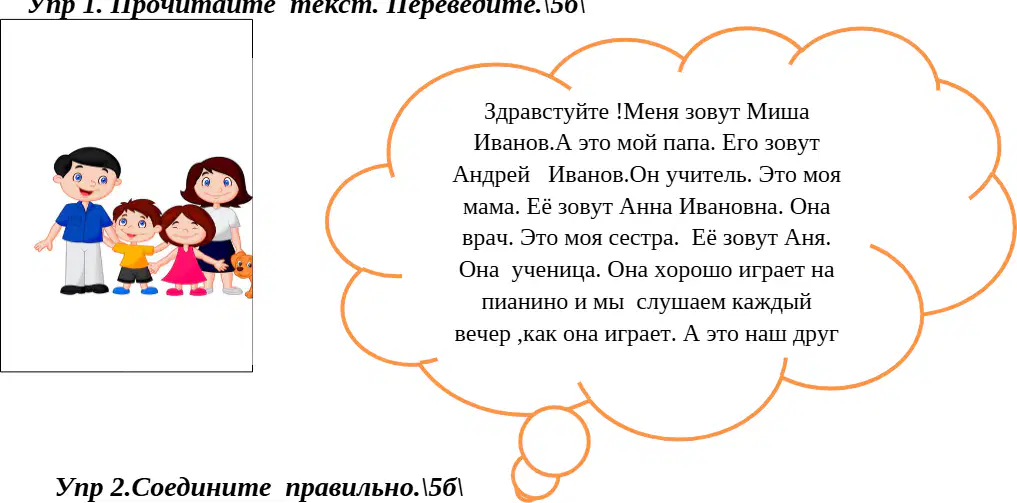
Read the passage and answer: The speaker introduces his family. “Здравствуйте! Меня зовут Миша Иванов. А это мой папа. Его зовут Андрей Иванов. Он учитель. Это моя мама. Её зовут Анна Ивановна. Она врач. Это моя сестра. Её зовут Аня. Она ученица. Она хорошо играет на пианино, и мы слушаем каждый вечер, как она играет. А это наш друг.” Who is the mother by profession?
Учитель
Врач
Ученица
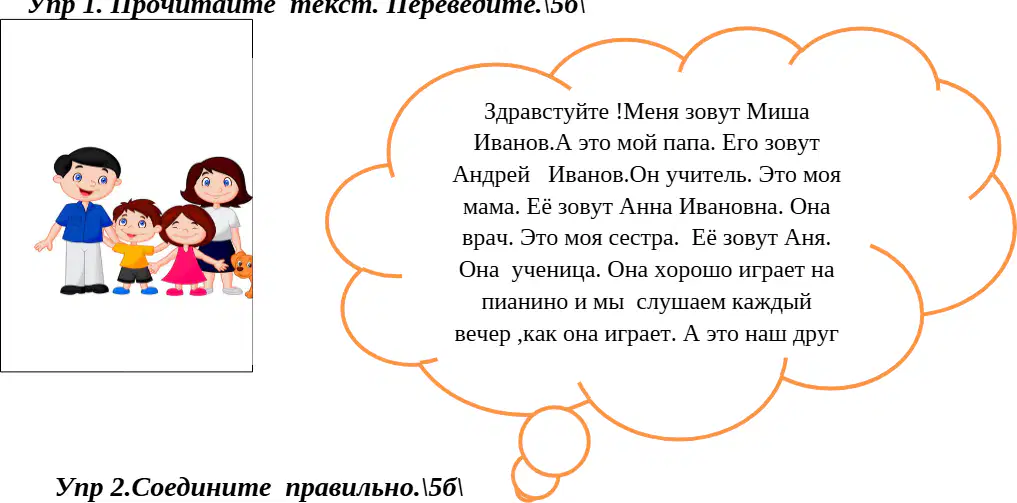
Read the passage and answer: “Здравствуйте! Меня зовут Миша Иванов. А это мой папа. Его зовут Андрей Иванов. Он учитель. Это моя мама. Её зовут Анна Ивановна. Она врач. Это моя сестра. Её зовут Аня. Она ученица. Она хорошо играет на пианино, и мы слушаем каждый вечер, как она играет. А это наш друг.” What is the father’s name?
Сергей
Андрей Иванов
Владимир
Match correctly: Choose the Mongolian equivalent for the Russian phrase Будем знакомы.
алиц танилцагаая
маш таатай байна
Match correctly: Choose the Mongolian equivalent for the Russian phrase Очень рад.
алиц танилцагаая
маш таатай байна
Find the extra word in the set: весёлый, дружный, большой, семья.
весёлый
дружный
Read the microtext and answer: The boy’s name is Bolor. By nationality he is Mongol. He was born on March 5, 2009, in Bulgan aimag. He lives with his parents, brothers and sisters. His father Bolo works as a driver in a company, and his mother Tuya is a doctor in a hospital. Before school he attended kindergarten. In 2014 he entered first grade. He studies well. What is Bolor’s nationality?
Russian
Mongol
Chinese
German
Read the microtext and answer: The boy’s name is Bolor. By nationality he is Mongol. He was born on March 5, 2009, in Bulgan aimag. He lives with his parents, brothers and sisters. His father Bolo works as a driver in a company, and his mother Tuya is a doctor in a hospital. Before school he attended kindergarten. In 2014 he entered first grade. He studies well. Where was Bolor born?
Ulaanbaatar
Bulgan aimag
Moscow
Berlin
Read the microtext and answer: The boy’s name is Bolor. By nationality he is Mongol. He was born on March 5, 2009, in Bulgan aimag. He lives with his parents, brothers and sisters. His father Bolo works as a driver in a company, and his mother Tuya is a doctor in a hospital. Before school he attended kindergarten. In 2014 he entered first grade. He studies well. What is Bolor’s mother’s profession?
Teacher
Engineer
Doctor
Driver
Read the microtext and answer: The boy’s name is Bolor. By nationality he is Mongol. He was born on March 5, 2009, in Bulgan aimag. He lives with his parents, brothers and sisters. His father Bolo works as a driver in a company, and his mother Tuya is a doctor in a hospital. Before school he attended kindergarten. In 2014 he entered first grade. He studies well. What is Bolor’s father’s job?
Doctor
Driver
Cook
Pilot
Following the model “Saraa lives in Mongolia.” choose the correct sentence for Pedro – Mexico.
Pedro lives in Mexico.
Pedro lives at Mexico.
Pedro live in Mexico.
Pedro lives Mexico.
Following the model “Saraa lives in Mongolia.” choose the correct sentence for Nikola – Marseille.
Nikola lives in Marseille.
Nikola lives at Marseille.
Nikola live in Marseille.
Nikola lives Marseille.
Following the model “Saraa lives in Mongolia.” choose the correct sentence for Atsushi – Tokyo.
Atsushi lives in Tokyo.
Atsushi lives at Tokyo.
Atsushi live in Tokyo.
Atsushi lives Tokyo.
Following the model “Saraa lives in Mongolia.” choose the correct sentence for Stefano – Rome.
Stefano lives in Rome.
Stefano lives at Rome.
Stefano live in Rome.
Stefano lives Rome.
Following the model “Saraa lives in Mongolia.” choose the correct sentence for Natasha – Moscow.
Natasha lives in Moscow.
Natasha lives at Moscow.
Natasha live in Moscow.
Natasha lives Moscow.
Match each country to its capital city: Mongolia — ?
Washington
Moscow
Berlin
Beijing
Ulaanbaatar
Match each country to its capital city: China — ?
Washington
Moscow
Berlin
Beijing
Ulaanbaatar
Match each country to its capital city: Russia — ?
Washington
Moscow
Berlin
Beijing
Ulaanbaatar
Match each country to its capital city: America — ?
Washington
Moscow
Berlin
Beijing
Ulaanbaatar
Match each country to its capital city: Germany — ?
Washington
Moscow
Berlin
Beijing
Ulaanbaatar
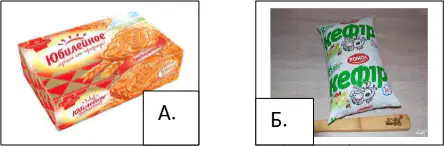
Look at the picture labeled A showing a wrapped white bread loaf. Which item name matches this picture?
a packet of kefir
a bar of chocolate
a loaf of white bread
a jar of jam
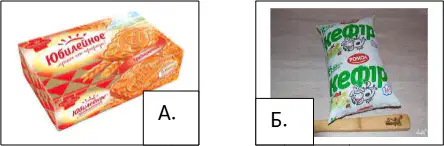
Look at the picture labeled Б showing a plastic packet of kefir. Which item name matches this picture?
a packet of kefir
a bar of chocolate
a loaf of white bread
a jar of jam
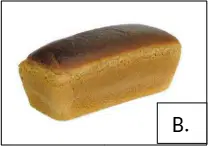
Look at the picture labeled В showing a brown loaf of bread. Which item name matches this picture?
a packet of kefir
a bar of chocolate
a loaf of white bread
a jar of jam
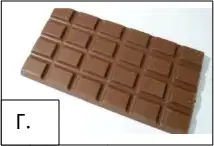
Look at the picture labeled Г showing a chocolate bar. Which item name matches this picture?
a packet of kefir
a bar of chocolate
a loaf of white bread
a jar of jam

Look at the picture labeled Д showing a red-lidded jar of jam. Which item name matches this picture?
a packet of kefir
a bar of chocolate
a loaf of white bread
a jar of jam
Look at the picture labeled Е showing a tin can of coffee. Which item name matches this picture?
a can of coffee
a packet of kefir
a loaf of white bread
a box of sweets
Choose the store where you can buy the listed goods: chair, sofa, armchair, table.
shoe store
confectionery
bookstore
furniture store
stationery store
Choose the store where you can buy the listed goods: pens, notebooks, eraser, pencil case.
shoe store
confectionery
bookstore
furniture store
stationery store
Choose the store where you can buy the listed goods: cake, cookies, candies.
shoe store
confectionery
bookstore
furniture store
stationery store
Choose the store where you can buy the listed goods: books, textbooks, albums.
shoe store
confectionery
bookstore
furniture store
stationery store
Choose the store where you can buy the listed goods: shoes, boots, socks, sneakers.
shoe store
confectionery
bookstore
furniture store
stationery store
Read the mini-text and answer: Hello! My name is Liza. I live in a village with my grandfather and grandmother. We have pets. I love dairy products. The cow gives us milk. Every morning we drink fresh milk. My grandmother makes kefir and sour cream from milk. Our house is near the forest. What is the girl’s name?
Masha
Liza
Lyuba
Sara
Read the mini-text and answer: Hello! My name is Liza. I live in a village with my grandfather and grandmother. We have pets. I love dairy products. The cow gives us milk. Every morning we drink fresh milk. My grandmother makes kefir and sour cream from milk. Our house is near the forest. Where does she live and with whom?
in the city with parents
in the village with grandparents
in the city with grandparents
in the village with friends
Read the mini-text and answer: Hello! My name is Liza. I live in a village with my grandfather and grandmother. We have pets. I love dairy products. The cow gives us milk. Every morning we drink fresh milk. My grandmother makes kefir and sour cream from milk. Our house is near the forest. What do they drink every morning?
coffee
tea
fresh milk
juice
Read the mini-text and answer: Hello! My name is Liza. I live in a village with my grandfather and grandmother. We have pets. I love dairy products. The cow gives us milk. Every morning we drink fresh milk. My grandmother makes kefir and sour cream from milk. Our house is near the forest. Where is their house located?
near the lake
near the forest
in the city center
next to the school
Match the verb to the most suitable noun: eat — which of the following best fits?
d. grape juice
b. fish
g. meat
a. dinner
Match the verb to the most suitable noun: drink — which of the following best fits?
d. grape juice
b. fish
g. meat
a. dinner
Match the verb to the most suitable noun: have dinner (to eat a meal) — which of the following best fits?
d. grape juice
b. fish
g. meat
a. dinner
Match the verb to the most suitable noun: feed on (to subsist on) — which of the following best fits?
d. grape juice
b. fish
g. meat
a. dinner
Match the verb to the most suitable noun: cook — which of the following best fits?
a sandwich
grape juice
dinner
meat
Find the generalizing word for the list: lemon, fruits, grapes, pear.
vegetables
dairy products
fruits
drinks
Find the generalizing word for the list: vegetables, potatoes, cabbage, beetroot.
vegetables
dairy products
fruits
drinks
Find the generalizing word for the list: lemonade, tea, juice, coffee.
vegetables
dairy products
fruits
drinks
Find the generalizing word for the list: kefir, dairy products, milk, curds.
vegetables
dairy products
fruits
drinks
Find the generalizing word for the list: products, pies, cake, cookies.
baked goods and sweets
dairy products
fruits
drinks
Read the mini-text and answer: When I was 8 years old, I went to watch a ballet. I went with my friend Lyuba. At the theater we took off our coats and warm scarves. In the theater locker room they gave us claim tags (numbers) in our hands. In the end I was at the ballet. I forgot everything in the world. When did she go to the theater?
at age 10
at age 8
last year
as a small child, age 5
Read the mini-text and answer: When I was 8 years old, I went to watch a ballet. I went with my friend Lyuba. At the theater we took off our coats and warm scarves. In the theater locker room they gave us claim tags (numbers) in our hands. In the end I was at the ballet. I forgot everything in the world. With whom did she go to the theater?
with her mother
with her friend Lyuba
alone
with her brother
Read the mini-text and answer: When I was 8 years old, I went to watch a ballet. I went with my friend Lyuba. At the theater we took off our coats and warm scarves. In the theater locker room they gave us claim tags (numbers) in our hands. In the end I was at the ballet. I forgot everything in the world. Where did she go?
to the cinema
to the theater to watch a ballet
to the concert hall
to the museum
Read the mini-text and answer: When I was 8 years old, I went to watch a ballet. I went with my friend Lyuba. At the theater we took off our coats and warm scarves. In the theater locker room they gave us claim tags (numbers) in our hands. In the end I was at the ballet. I forgot everything in the world. What did they give into their hands in the locker room?
programs
tickets
binoculars
claim tags with numbers
Match the word to its meaning: visit — what does it most naturally relate to here?
the hall
a program
the theater
a ticket
binoculars
Match the word to its meaning: buy — what does it most naturally relate to here?
the hall
a program
the theater
a ticket
binoculars
Match the word to its meaning: take — what does it most naturally relate to here?
the hall
a program
the theater
a ticket
binoculars
Match the word to its meaning: acquire — what does it most naturally relate to here?
the hall
a program
the theater
a ticket
binoculars
Match the word to its meaning: enter — what does it most naturally relate to here?
the hall
a program
the theater
a ticket
binoculars
Choose the correct option to complete the sentence: The youth theater is located ... in Darhan.
в Дархан
в Дархане
в Дархану
на Дархан
Choose the correct preposition: The theater of opera and ballet is located ... the city center.
в
на
из
по
Identify the person: S. Zhavkhlan is a ...
hero
singer
driver
actor
Choose the correct form: You (plural) ... the theater?
любите
люблю
любят
любишь
Match each sentence to the best explanation: Theater — is ...
an art
when it is sad
when it is funny
to enter the hall
to check clothes into the cloakroom
Match each sentence to the best explanation: Comedy — is ...
an art
when it is sad
when it is funny
to enter the hall
to check clothes into the cloakroom
Match each sentence to the best explanation: Tragedy — is ...
an art
when it is sad
when it is funny
to enter the hall
to check clothes into the cloakroom
Match each sentence to the best explanation: Tickets must be purchased in advance — this is done ...
to enter the hall
to check clothes into the cloakroom
to have your own seat
because it is art
Match each sentence to the best explanation: You need to arrive at the theater early — this is done ...
to enter the hall
to check clothes into the cloakroom
to have your own seat
because it is art
Match each sentence to the best explanation: After the first bell — you should ...
enter the hall
check clothes into the cloakroom
have your own seat
leave the theater
Conjugate the verb “to feel” (Russian: чувствовать себя). Choose the correct present-tense form for “I”.
чувствую себя
чувствуешь себя
чувствует себя
чувствуем себя
Conjugate the verb “to feel” (Russian: чувствовать себя). Choose the correct present-tense form for “you” (singular, informal).
чувствую себя
чувствуешь себя
чувствует себя
чувствуете себя
Conjugate the verb “to feel” (Russian: чувствовать себя). Choose the correct present-tense form for “he/she”.
чувствуем себя
чувствуют себя
чувствует себя
чувствуешь себя
Conjugate the verb “to feel” (Russian: чувствовать себя). Choose the correct present-tense form for “we”.
чувствуем себя
чувствуете себя
чувствуют себя
чувствую себя
Conjugate the verb “to feel” (Russian: чувствовать себя). Choose the correct present-tense form for “you” (plural or formal).
чувствуем себя
чувствуете себя
чувствуют себя
чувствует себя
Conjugate the verb “to feel” (Russian: чувствовать себя). Choose the correct present-tense form for “they”.
чувствуют себя
чувствуете себя
чувствую себя
чувствуем себя
Choose the correct form: болит or болят. Sentence: У меня ……….. голова.
болит
болят
Choose the correct form: болит or болят. Sentence: У мамы ……….. глаз.
болит
болят
Choose the correct form: болит or болят. Sentence: У папы ……….. живот.
болит
болят
Choose the correct form: болит or болят. Sentence: У бабушки ……….. ноги.
болит
болят
Choose the correct form: болит or болят. Sentence: У него ……….. ухо.
болит
болят
Choose the correct form: болит or болят. Sentence: У неё ……….. рука.
болит
болят
Insert the correct form of the verb “to feel” (чувствовать себя). Sentence: Мой брат Ананд плохо себя … . У него болит голова.
чувствует
чувствуешь
чувствуют
чувствую
Insert the correct form of the verb “to feel” (чувствовать себя). Sentence: Моя подруга Женя плохо себя … . У неё болят руки.
чувствую
чувствуешь
чувствует
чувствуют
Insert the correct form of the verb “to feel” (чувствовать себя). Sentence: Как ты себя … ?
чувствуешь
чувствует
чувствую
чувствуют
Insert the correct form of the verb “to feel” (чувствовать себя). Sentence: Сегодня мой папа плохо себя … . У него болит зуб.
чувствует
чувствую
чувствуют
чувствуешь
Insert the correct form of the verb “to feel” (чувствовать себя). Sentence: Сегодня я плохо себя … .
чувствую
чувствуешь
чувствует
чувствуют
Insert the correct form of the verb “to feel” (чувствовать себя). Sentence: Ребята, как вы себя … ?
чувствуете
чувствуют
чувствуем
чувствует
Match by meaning. Which option best matches the word “болит” (aches/pains)?
о здоровье
лекарство
горло
жира
в лесу
Match by meaning. Which option best matches the word “избегать” (to avoid)?
о здоровье
лекарство
горло
жира
в лесу
Match by meaning. Which option best matches the word “гулять” (to walk)?
о здоровье
лекарство
горло
жира
в лесу
Match by meaning. Which option best matches the word “принимать” (to take, e.g., medicine)?
о здоровье
лекарство
горло
жира
в лесу
Match by meaning. Which option best matches the word “заботиться” (to take care)?
о здоровье
лекарство
горло
жира
в лесу
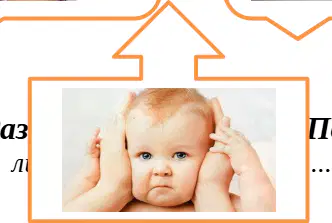
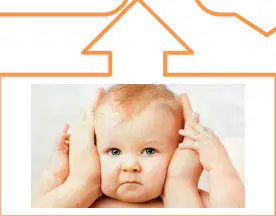
Look at the first image and compose the best sentence. The child is holding the ear as if in pain.
His ear hurts
His stomach hurts
His leg hurts
His eye hurts
Look at the second image and compose the best sentence. The person is clutching the stomach.
Her stomach hurts
Her ear hurts
Her knee hurts
Her shoulder hurts
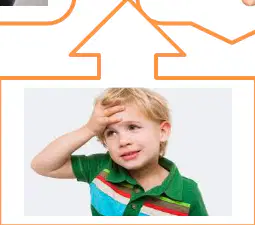
Look at the third image and compose the best sentence. The child touches the head.
His head hurts
His ear hurts
His stomach hurts
His foot hurts
Look at the fourth image and compose the best sentence. The child covers one eye.
Her eye hurts
Her ear hurts
Her hand hurts
Her back hurts
Conjugate the verbs “to do sports” (заниматься) and “to be keen on” (увлекаться). Choose the correct present-tense form for “I”.
занимаюсь
занимаешься
занимаются
увлекаюсь
увлекаются
Conjugate the verbs “to do sports” (заниматься) and “to be keen on” (увлекаться). Choose the correct present-tense form for “you” (singular, informal).
занимаешься
занимаются
занимаюсь
увлекаешься
увлекаюсь
Conjugate the verbs “to do sports” (заниматься) and “to be keen on” (увлекаться). Choose the correct present-tense form for “he/she”.
занимается
занимаетесь
увлекается
увлекаетесь
занимаюсь
Conjugate the verbs “to do sports” (заниматься) and “to be keen on” (увлекаться). Choose the correct present-tense form for “we”.
занимаемся
занимаетесь
увлекаемся
увлекаетесь
занимаются
Conjugate the verbs “to do sports” (заниматься) and “to be keen on” (увлекаться). Choose the correct present-tense form for “you” (plural or formal).
занимаетесь
занимаюсь
увлекаетесь
увлекаюсь
занимаются
Conjugate the verbs “to do sports” (заниматься) and “to be keen on” (увлекаться). Choose the correct present-tense form for “they”.
занимаются
занимается
увлекаются
увлекается
занимаюсь
Microtext comprehension. Choose all activities recommended in the microtext for being healthy: “If you want to be healthy, strong, and beautiful, do sports. It is necessary to do exercise, it is useful to swim, to play tennis or volleyball, and to skate. Sport makes a person strong and goal-oriented, that is, it forms character.”
Doing morning exercises
Swimming
Playing tennis or volleyball
Skating
Eating sweets
Choose the correct variant to complete the sentence: Он занимается …
баскетбол
баскетболом
в баскетбол
Choose the correct variant to complete the sentence: Мы умываемся …
вода
водой
в водой
Choose the correct variant to complete the sentence: Если хочешь быть здоров, …
слушай
говори
закаляйся
Choose the correct variant to complete the sentence: Каждое утро надо делать …
зарядка
зарядку
зарядкой
Choose the correct variant to complete the sentence: Хороший отдых — это отдых …
на природе
на улице
в шумных городах
Match by meaning. Which option best matches “Заниматься” (to do, engage in)?
характер
в бассейне
спортом
в баскетбол
зарядку
Match by meaning. Which option best matches “Играть” (to play)?
характер
в бассейне
спортом
в баскетбол
зарядку
Match by meaning. Which option best matches “Делать” (to do/make)?
характер
в бассейне
спортом
в баскетбол
зарядку
Match by meaning. Which option best matches “Плавать” (to swim)?
характер
в бассейне
спортом
в баскетбол
зарядку
Match by meaning. Which option best matches “Формировать” (to form)?
характер
в бассейне
спортом
в баскетбол
зарядку
Select the correct Russian command that means “Do morning exercise”.
делай утреннюю зарядку
занимайся спортом
не кури
Select the correct Russian command that means “Do sports”.
делай утреннюю зарядку
занимайся спортом
не читай в постели
Select the correct Russian command that means “Do not smoke”.
не кури
занимайся спортом
умойся водой
Answer the question based on general knowledge of Mongolia’s climate. How many seasons are there in Mongolia?
Three
Four
Five
Two
Answer the question: What season is it now? Choose the most plausible option.
Winter
Spring
Summer
Autumn
Answer the question: When does winter start in Mongolia?
September
October
November
December
Answer the question: How long does winter last in Mongolia?
About two months
About three months
About four months
About six months
Answer the question: Do you like winter? Choose the best reason.
Yes, because of fluffy snow and skating
Yes, because it is very hot
No, because there is no snow
No, because autumn rains are better
Match words with pictures. Which phrase best matches image A (two people skating on an ice rink)?
лепить снеговика
кататься на катке
отмечать новый год
чистый воздух
пушистый снег
Match words with pictures. Which phrase best matches image Б (three colorful snowmen outdoors)?
лепить снеговика
кататься на катке
отмечать новый год
чистый воздух
пушистый снег
Match words with pictures. Which phrase best matches image В (decorated Christmas tree and lights)?
лепить снеговика
кататься на катке
отмечать новый год
чистый воздух
пушистый снег
Match words with pictures. Which phrase best matches image Г (a person standing outdoors in winter weather with visible breath)?
лепить снеговика
кататься на катке
отмечать новый год
чистый воздух
пушистый снег
Match words with pictures. Which phrase best matches image Д (a winter landscape with clear sky and trees)?
лепить снеговика
кататься на катке
отмечать новый год
чистый воздух
пушистый снег
Microtext comprehension. Choose all statements that are true based on the passage: “In Mongolia the climate is sharply continental. We have four seasons. In winter it is very cold. In spring and autumn it often rains. In summer in the south of Mongolia it is +36–40°C. In autumn studies begin in schools and universities.”
Mongolia has four seasons
Winters are very cold
It often rains in spring and autumn
Summer in the south can reach +40∘ C
Schools begin in spring
Compose the correct sentence using the given pattern. Choose the best option for Italy and summer: “Italy, summer, hot”.
Italy, summer, it is cold
In Italy in summer it is hot
Italy in winter is hot
In Italy in summer it snows
Compose the correct sentence using the given pattern. Choose the best option for Norway and winter: “Norway, winter, cold, it snows”.
In Norway in winter it is cold and it snows
Norway in summer is cold and it snows
In Norway in autumn it is cold and it snows
In Norway in winter it is hot and dry
Form the correct question to the highlighted word: Летом дети собиратют грибы и ягоды. Which question fits the highlighted word “Летом” (in summer)?
Когда дети собирают грибы и ягоды?
Что дети собирают летом?
Где дети собирают грибы и ягоды?
Почему дети собирают грибы и ягоды?
Form the correct question to the highlighted word: Дети любят кататься на катке. Which question fits the highlighted word “Дети” (children)?
Кто любит кататься на катке?
Где любят кататься на катке?
Когда любят кататься на катке?
Почему любят кататься на катке?
Form the correct question to the highlighted word: На улице идёт дождь. Which question fits the highlighted phrase “На улице” (outside)?
Где идёт дождь?
Когда идёт дождь?
Почему идёт дождь?
Сколько идёт дождь?
Conjugate the verbs “to see off” (провожать), “to meet” (встречать), and “to treat/serve” (угощать). Choose the correct present-tense form for “I”.
провожаю
встречаю
угощаю
провожаешь
угощаешь
Microtext comprehension. When is Maslenitsa celebrated?
In summer
In autumn
At the meeting of spring
At the end of winter only
Microtext comprehension. Why is Maslenitsa called a spring festival?
Because it celebrates meeting spring
Because it celebrates winter sports
Because it is a harvest festival
Because it is a rain festival
Microtext comprehension. What do people do to each other during Maslenitsa?
Fight
Treat each other
Study
Ignore each other
Microtext comprehension. When do people burn the straw effigy?
At the beginning of the festival
In the middle of winter
On the last day of Maslenitsa
On the first day of spring
Microtext comprehension. What main dish symbolizes the sun during Maslenitsa?
Bread
Meat
Pancakes
Fish
Match words with each other. Which option best matches “год” (year)?
блины
солнце
новый
весны
молочные
Match words with each other. Which option best matches “праздник” (holiday)?
блины
солнце
новый
весны
молочные
Match words with each other. Which option best matches “продукты” (products/foods)?
блины
солнце
новый
весны
молочные
Match words with each other. Which option best matches “символизировать” (to symbolize)?
блины
солнце
новый
весны
молочные
Match words with each other. Which option best matches “готовить” (to cook/prepare)?
блины
солнце
новый
весны
молочные
Choose the correct word to complete the sentence: Во время масленицы люди друг друга … .
блины
блинами
блина
Choose the correct word to complete the sentence: В масленицу можно есть молочные продукты и … .
рыба
рыбы
рыбу
Choose the correct word to complete the sentence: Масленица — это … семейный праздник?
масленица
в масленицу
масленицы
Choose the correct verb form to complete the sentence: Когда … масленицу?
отмечал
отмечаю
отмечают
Choose the correct word to complete the sentence: Масленица — это праздник … .
весны
лето
осень
Read the summer microtext and translate. Use the information from the microtext: "Моё любимое время года лето. Летом жарко. Летние месяцы: июнь, июль, август. Дни длинные, а ночи короткие. Часто идёт дождь. Ярко светит солнце. Летом можно купаться, ловить рыбу, собирать ягоды и грибы. Я очень люблю лето. Летом у меня каникулы, поэтому обычно путешествую. Я люблю гулять по летнему лесу, дышать свежим воздухом, собирать ягоды и грибы." Which months are summer according to the microtext?
June, July, August
March, April, May
September, October, November
December, January, February
Read the summer microtext and translate. Based on the microtext excerpt, which activities are mentioned as possible in summer?
Swimming
Catching fish
Collecting berries and mushrooms
Skiing
Choose the correctly ordered sentence from the given words: "Лето, на, улица, жарко."
Летом на улице жарко.
Лето на улице жарко.
Летом на улица жарко.
Лето на улица жарко.
Choose the correctly ordered sentence from the given words: "Лето, часто , идёт , дождь."
Летом часто идёт дождь.
Лето часто идёт дождь.
Летом идёт часто дождь.
Лето идёт часто дождь.
Choose the correctly ordered sentence from the given words: "Лето, мы, ловить, рыба."
Летом мы ловим рыбу.
Лето мы ловить рыба.
Летом мы ловить рыбу.
Лето мы ловим рыбу.
Choose the correctly ordered sentence from the given words: "Мы, загорать, на , солнце."
Мы загораем на солнце.
Мы загорать на солнце.
Мы на солнце загораем.
Мы загораем на солнцу.
Choose the correctly ordered sentence from the given words: "Лето, ребята, купаться, в , речка."
Летом ребята купаются в речке.
Лето ребята купаются в речке.
Летом ребята купаться в речке.
Лето ребята купаться в речке.
Match by meaning: Choose the best match for "Ловить".
в речке
рыбу
ягоды и грибы
в лесу

