
 Worksheets
Introduction to DSLR Video and Shot Types
Total questions: 39
Worksheet time: 20mins

What is one advantage from filming with DSLR cameras rather than camcorders?
Interchangeable lenses for creative control, larger sensor is better in low light
Always-on fixed zoom for simplicity
Built-in tape storage for archiving
Non-removable battery for reliability
Which task is listed under success criteria for handling the camera?
Export footage directly to social media
Calibrate the lens using a focus chart
Update the camera’s firmware wirelessly
Remove and replace the battery and SD card properly

If your footage looks too orange under indoor lights, which camera setting should you adjust?
White balance from Auto to a preset
Frame rate from 24p to 60p
ISO from 100 to 1600
Shutter speed from 1/50 to 1/200
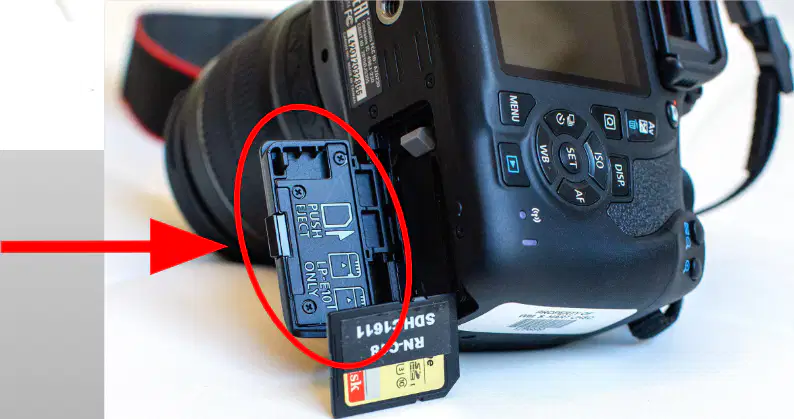
According to the diagram, what confirms the SD card is inserted into the camera slot?
The card label faces outward
The gray battery tab slides over
A soft click is heard and felt
The door closes without resistance
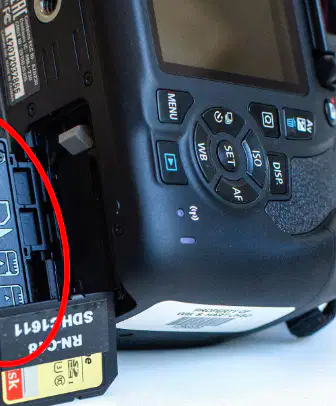
Which action correctly ejects the battery from this camera without forcing it?
Twist the door until it opens
Press the card to pop it up
Pull the strap and yank out
Slide the gray tab to release
Which of these lists the three core camera functions we learned to operate on your DSLR cameras?
Focus, ISO, Color Profile
Focus, Exposure, White Balance
Aperture, Shutter, Frame Rate
Zoom, Stabilization, Resolution

Which component is NOT part of exposure in this context?
Aperture (f/stops)
Shutter speed fractions
ISO sensitivity
Auto focus modes
Which statement best distinguishes shutter speed from frame rate?
Shutter speed is clips per second; frame rate is exposure time
Shutter speed is exposure time; frame rate is clips per second
Both control only how white colors appear
Both measure how many frames are captured per second
On a Canon lens, which setting must be selected to enable the camera to focus automatically before shooting?
Aperture set to f/2.8
Stabilizer set to ON
MF switch to MF position
Switch lens to AF position
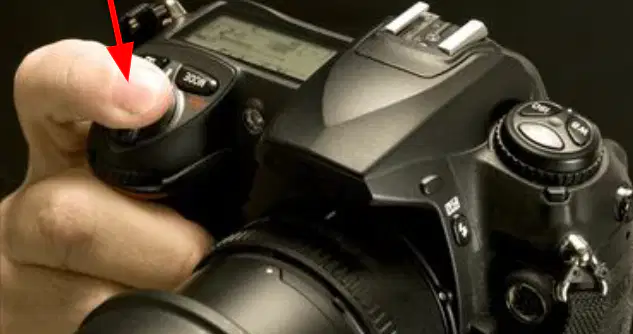
When using auto focus, what simple action confirms focus lock before taking a photo?
Half-press and hold shutter
Zoom fully to 250mm
Rotate the mode dial
Tap the LCD screen twice
Why is knowing how to manual focus considered critical when filming people?
It ensures eyes stay sharp
It brightens low-light scenes
It reduces camera shake
It increases frame rate
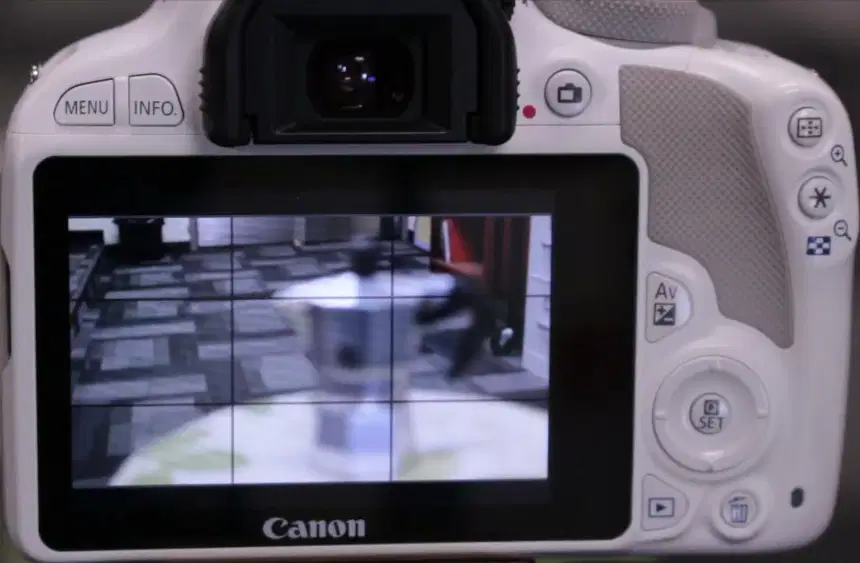
You are recording an interview. The camera keeps focusing on the background whenever the subject moves. What should you do to maintain sharp focus on the person’s eyes?
Switch to manual focus, zoom in and focus, then zoom out and recompose
Use full auto exposure mode
Increase ISO to 1600
Turn off the LCD grid lines
Which feedback commonly indicates successful auto focus lock on many cameras?
Audible beep or green square
White balance symbol appearing
Red histogram on screen
Blue battery icon flashing
In manual mode for video, what does shutter speed describe?
How fast the lens changes focal length
How fast the shutter opens and closes
How quickly ISO increases or decreases
How fast footage exports from camera
You’re shooting at 24 frames per second (fps). Which shutter speed follows the common rule?
1/50 for natural motion blur
1/12 for brighter low light
1/24 for perfect frame matching
1/100 for extra sharp frames
To adjust exposure after setting shutter speed, which setting brightens the image by increasing sensor sensitivity?
Focus
White balance
ISO
Aperture
Which camera setting controls how much light enters the lens and affects depth of field?
White balance
ISO
Aperture
Shutter speed
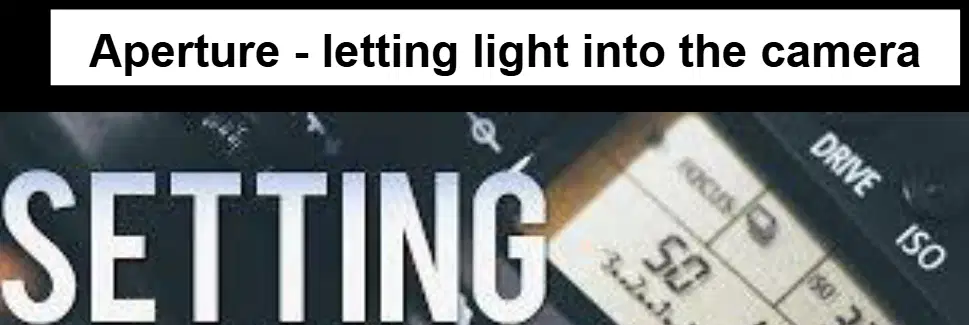
On a typical zoom lens listed as 18mm f/3.5 to 54mm f/5.6, what does the f/number indicate?
Lens focal length
Sensor crop factor
Maximum aperture size
Autofocus speed rating

As the f-stop number increases from f/3.5 to f/16, what happens to light and depth of field?
Less light, deeper focus
More light, deeper focus
More light, shallower focus
Less light, shallower focus
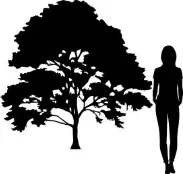
You need both a tree in the background and a person in the foreground to be sharp. Which choice fits this goal?
Use f/16 and step back
Use f/4.0 and lower ISO
Use f/1.8 and stand close
Use f/2.8 and zoom in

Which best explains shallow depth of field?
Keeps entire scene equally sharp
Draws attention to subject by blurring back or foreground, or both
Prevents motion blur in fast action
Makes colors more accurate in daylight
If you increase ISO, what happens to your shot?
It becomes more saturated
It becomes brighter overall
It becomes sharper overall
It becomes darker overall
What does white balance do in a camera?
Increases sensor sensitivity
Controls motion blur amount
Corrects color by defining white
Sets image sharpness level
AWB versus Custom WB: which statement is most accurate?
Custom WB ignores light color completely
Custom WB guesses white automatically
AWB guesses white automatically
AWB locks one fixed color temperature
You are filming in a bathroom with white fluorescent lights, and your footage looks too green. What change should you make first?
Raise ISO to add brightness
Switch to fluorescent white balance
Use tungsten preset for warmth
Lower shutter speed slightly
What is the primary reason to use a tripod during filming?
To add dramatic motion blur
To achieve stability and levelness
To make camera lighter to carry
To replace careful composition choices
Which guideline helps prevent damage when adjusting tripod parts?
Adjust only after filming ends
Don’t force anything when adjusting
Never loosen set screws
Force stiff knobs firmly
Fluid heads on tripods are designed mainly to improve which aspect of camera operation?
Battery efficiency during shoots
Sharper focus at wide apertures
Smooth panning and tilting movement
Stronger leg locks on tripods
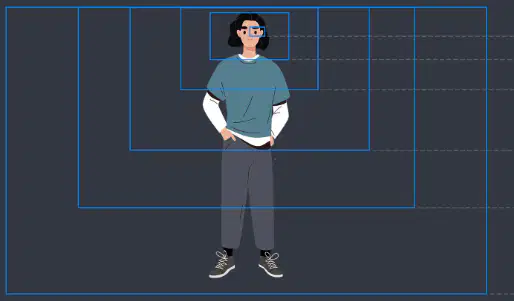
Which shot size frames a subject from head to toe while showing environment?
Extreme close-up of facial features
Close-up focusing on the face
Medium shot from waist to head
Wide shot showing full body view
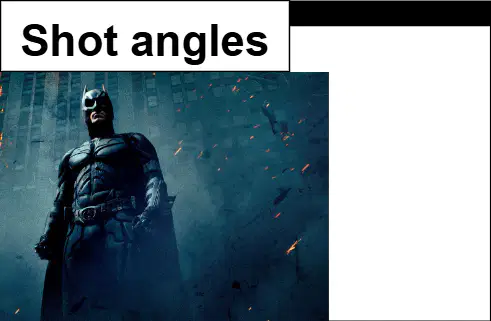
A director wants the subject to appear powerful compared to the surroundings. Which choice best matches this goal?
Eye-level angle straight at subject
Low angle looking up at subject
Dutch angle tilting the horizon
High angle looking down on subject

Which description best matches a Medium Shot in film framing?
Frames collarbone up with minimal background
Frames from just above the hips, focuses on subjects
Frames head to toe with full environment
Frames only the eyes or mouth for extreme detail
A Close Up Shot should generally frame a person from which area?
Full body within scenery
Eyes only with high detail
Collarbone up with little background
Waist to top of head
Which guideline is recommended for Close Up framing?
Avoid showing any background at all
Always center the entire body
Include two or three subjects
Never cut off the chin in the frame
Extreme Close Up Shot is primarily used to show:
Action across a wide area
Two people in conversation
Full context of a scene
Very fine details like eyes or facial features
Which shot type is noted as rare in video broadcasting, but great for adding drama and emotion?
Medium Shot
Close Up Shot
Extreme Close Up Shot
Over-the-shoulder
Over-the-shoulder framing is mainly used for:
Capturing extreme facial detail
Solo portraits with no other person visible
Interviews and dialogue, feeling part of the scene
Establishing landscapes with multiple subjects
When composing an Over-the-shoulder shot, where should the camera be positioned?
Directly in front of the subject at eye level
Just behind someone, with subject on a third line (NOT centered)
Far away to include full body movement
Below the subject aiming upward
If you want to film two or three people together while keeping focus on subjects, which shot fits best?
Extreme Close Up for both faces
Over-the-shoulder across a crowd
Medium Shot called a two shot or three shot
Close Up with all chins cut off
A filmmaker wants viewers to feel included in a conversation scene. Which shot should they choose?
Wide full shot of the room
Over-the-shoulder showing one face and another shoulder
Medium Shot of one person
Extreme Close Up on an eye

