
 Worksheets
Foundations and Jewish History
Total questions: 138
Worksheet time: 1hrs 9mins
Which statement best describes Moshe’s level of נבואה?
He prophesied only through visions at night
He received messages only from מלאכים
He spoke with ה' face-to-face
He spoke with ה' through dreams
What event caused Moshe to flee Mitzrayim before leading the Bnei Yisrael?
He challenged Pharaoh in court
He killed an Egyptian taskmaster
He broke the tablets at Sinai
He refused to build storehouses
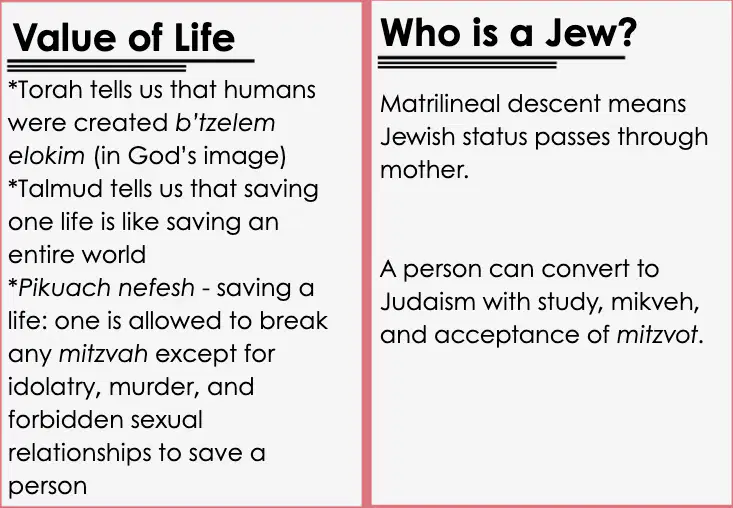
Which description best explains pikuach nefesh?
Saving a life is the priority over most mitzvot
Saving a life demands Temple sacrifice
Saving a life is forbidden on Shabbat
Saving a life requires a public fast
Which mitzvot are not broken to save a life under pikuach nefesh?
Idolatry, murder, forbidden relationships
Shabbat, kashrut, honoring parents
Charity, prayer, study of Torah
Giving Maaser (1/10 to charity), sukkah, lulav and etrog
How is Jewish status passed down by birth according to Jewish tradition?
Through the eldest child’s lineage
Through the father only
Through the mother only
Through both parents equally
Who are the three Avot (אבות)?
ישיהו, ירמיהו, יחזקאל
דוד, שלמה, שמואל
משה, אהרון, יהושע
אברהם, יצחק, יעקב
Which statement about the אמהות (Matriarchs) is accurate?
They include בת שבע, מיכל, אביגיל, תמר
They include אסתר, רות, נעמי, חנה
They include דבורה, מרים, חווה, ציפורה
They include שרה, רבקה, רחל, לאה
Where are the Avot and Imahot (except Rachel) traditionally believed to be buried?
Mount Sinai
Mount Moriah
Valley of Jezreel
Cave of Machpelah
Who was the first king of Israel, and who selected him?
Shlomo, selected by Kohanim
David, chosen by Nathan
Shaul, selected by Shmuel
Rechavam, chosen by prophets
Which contributions are attributed to King Shlomo?
Built the first Beit HaMikdash; wrote Mishlei
Split the kingdom; wrote Ruth
Conquered Jerusalem; wrote Daniel
Defeated Goliath; wrote Tehillim
What is the main difference between Rishonim and Acharonim?
Rishonim focus on קבלה; Acharonim on history
Rishonim lived 1000–1500 CE; (earlier) Acharonim from 1500 CE (later)
Rishonim wrote תנ"ך; Acharonim wrote משנה
Rishonim are modern; Acharonim are medieval
Which statement about Chasidut’s origins is correct?
Started by Baal Shem Tov in 18th-century Ukraine
Founded by Rambam in medieval Spain
Started by Rashi in 11th-century France
Began with Chabad in 16th-century Poland
What is the role of a כהן in Jewish tradition?
Descendant of אהרון and does the work of the Bet Hamikdash
Member of tribe of לוי, transports משכן
Any ישראל, receives third aliyah today
Synagogue cantor, leads musical davenning
What does praying in a minyan, a group of 10, allow the group to do?
Say kaddish and barchu-2 parts of tefilah that need 10 people present.
Decide who gets the aliyot during Torah reading
Become a sofer/scribe who writes Torah in special scripts
Lead musical services with a chazan
What is the main function of a minyan?
Allows saying kaddish and barchu-2 parts of tefilah that need 10 people present.
Decides who gets the aliyot during Torah reading
Trains sofer/scribe in special scripts
Leads musical services with a chazan
Which role of a shul leader takes care of logistics and manages the shul?
Gabbai helps call people up for aliyot etc.
Chazzan leads prayer melodies
Ba’al Koreh reads Torah aloud
Shaliach Tzibbur represents community
Who writes סת״ם, תפילין, and מזוזות?
Mohel, for brit milah
Mashpia, guides in Chasidic life
Sofer Stam, trained in script
Rav, answers legal questions
Which pair matches period and activity of sages?
Tannaim wrote Mishnah, 10–220 CE
Tannaim commented on Talmud, 200–500 CE
Amoraim wrote Mishnah, 200–500 CE
Amoraim wrote Tosefta, 10–220 CE
What are some differences between Ashkenazim from Sephardim in daily practice?
Different customs like kitniyot on Pesach and waiting times between meat and milk
Different holidays and Jewish calendar
Different requirements for minyan formation
Different obligations of Kohen and Levi
Who reads the Torah aloud during services?
Sofer checks klaf for damage
Gabbai assigns readers
Chazzan conducts prayer
Ba’al Koreh reads from the scroll
Which statement about which tribe of Bnei Yisrael you are from is still relevant today?
Which group you belong to is passed only through the mother
During Torah reading, Kohen gets first aliyah, Levi second
During Torah reading, Yisrael gets first aliyah always
During Torah reading, Levi receives third aliyah today
What is the main qualification of a mohel for performing a brit milah?
You must be a descendant of Aharon
You must be an expert at the medical procedure and also the mitzvah
You must be trained as a Sofer and Rabbi
You must be a close relative of the family
What is a mashpia in Chasidic communities?
Leader assigning aliyot
Scribe for megillot texts
Cantor trained in chazzanut
Personal mentor and spiritual guide
Which best describes the Hebrew calendar for Jewish holidays?
purely lunar which means months and dates are determined by the moon
purely solar which means months and dates are fixed by sun
lunar-solar using moon and sun together
neither lunar nor solar, fixed by seasons
What is the first Hebrew month in the Torah?
Nisan is first in the Torah
Tishrei is first in the Torah
Elul is first in the Torah
Adar is first in the Torah
Why is there sometimes an extra month (leap month) in the Hebrew year?
to avoid fasts in summer heat
to add more minor holidays
to align calendar with seasons
to match weekly Shabbat cycles
What event begins a new Hebrew month (Rosh Chodesh)?
full moon appears
new moon is announced
moon reaches first quarter
sun crosses equator
Which set lists the Three Pilgrimage Festivals-the times Bnei Yisrael went to the Bet Hamikdash for the holiday?
Pesach, Shavuot, Sukkot
Rosh Hashanah, Yom Kippur, Purim
Chanukah, Tu BiShvat, Lag BaOmer
Tisha B’Av, Fast of Gedaliah, Esther
What is celebrated on Shavuot?
freedom from slavery in Egypt
מתן תורה in desert
protection in סוכות in Israel
creation of the world by ה'
Which holiday is the Jewish new year?
Purim
Pesach
ראש השנה
יום כיפור
What is the main focus of Yom Kippur?
lighting candles for eight nights
joyful feasting and dancing
יום כיפור and teshuvah
giving gifts and reading מגילה
What is the time period of the Ten Days of תשובה?
from שבועות to סוכות
from פורים to פסח
from אלול to חנוכה
from ראש השנה to יום כיפור
Which rule applies to the two major fast days?
eat one small meal at noon
avoid work but drink water
do not eat, drink, or bathe
light candles and say Havdalah
Which is the holiest fast of the year?
Fast of Gedaliah
Tisha B’Av
Fast of Esther
יום כיפור
Which minor fast occurs after Purim when Esther asked Jews to fast?
Fast of Gedaliah after Rosh Hashanah
Fast of Esther before Purim
Seventeenth of Tammuz after breach
Tenth of Tevet during siege
What weekly practice starts Friday evening and ends Saturday nightfall?
Rosh Chodesh observance
שבת with melachot forbidden
Ten Days of Teshuvah
Havdalah for new month
Which action marks the end of Shabbat?
Reading Megillah
Kiddush Levanah outdoors
Havdalah with wine and spices
Lighting menorah
Which holiday involves lighting candles for eight nights?
פורים includes festive seudah
ט״ו בשבט includes trees meal
ל״ג בעומר includes bonfires
חנוכה includes nightly candles
When does a Jewish child become obligated in mitzvot?
Hebrew birthday blessing time
Upsherin haircut tradition
Bar/Bat Mitzvah milestone
Pidyon HaBen redemption ceremony
On which day after a son's birth is פדיון הבן performed?
40th day after birth
31st day after birth
50th day after birth
8th day after birth
During a Jewish wedding, where do kiddushin and nissuin occur?
Aron Hakodesh
Mikveh pool
Chuppah canopy
Bimah platform
Which document outlines the husband's obligations in marriage?
Megillah scroll
Midrash text
Get divorce writ
Ketubah contract
What are the typical ages for Bar and Bat Mitzvah?
11 for boys, 12 for girls
13 for boys, 12 for girls
12 for boys, 13 for girls
13 for both genders
Which mourning period lasts seven days with visitors comforting the family of someone who passed away?
Shiva seven days
Avelut year-long
Yahrzeit anniversary
Shloshim thirty days
Shemitah occurs in which year of a seven-year cycle?
7th year
3rd year
5th year
1st year
What happens to agricultural debts during Shemitah?
Debts are increased
Debts are cancelled
Debts are delayed
Debts are sold
How many Shemitah cycles does Yovel follow to reach its year?
Twelve Shemitah cycles
Seven Shemitah cycles
Five Shemitah cycles
Ten Shemitah cycles
Which statement best describes Sefirat HaOmer?
Counting days from Purim to Sukkot
Counting 49 days between Pesach and Shavuot
Counting weeks after Rosh Hashanah
Counting months from Chanukah to Pesach
What is Lag BaOmer connected to during the Omer period?
End of the Shloshim period
Start of the Shemitah year
Yahrzeit of Rabbi Shimon bar Yochai
Reading the ketubah
A Hebrew birthday determines dates for which events?
ברית, upsherin, בר/בת מצווה
School enrollment deadlines
Voting and military service
Civil holidays and taxes
Which city is where God chose to establish the Temple?
Tiberias by the Sea of Galilee
Jerusalem with the Temple Mount
Hebron near the Cave of Machpelah
Tzfat in the northern hills
What is the raised platform in a synagogue for leading prayers called?
Bimah for leading davening
Aron Hakodesh holy ark
Mezuzah on the doorway
Ner tamid eternal flame
Which Holy City is associated with the Sanhedrin’s last location?
Jerusalem Temple location
Hebron burial cave site
Tzfat center of Kabbalah
Tiberias final Sanhedrin spot
What is the אבן השתייה linked to?
Start of rabbinic writings
The spot from which the world was created
Burial of patriarchs and matriarchs
Walls surrounding the Olc City of Jerusalem
Which statement best describes Galut (גָּלוּת)?
Jews living outside of Eretz Yisrael (אֶרֶץ יִשְׂרָאֵל)
The raised platform for prayer (בִּימָה)
A ritual bath for purification (מִקְוֶה)
Annual festivals in the Beit HaMikdash (בֵּית הַמִּקְדָשׁ)
What is the mikveh used for?
Welcoming guests
Reading Torah
Storing Torah scrolls
Purification through bathing
Which synagogue feature is the cabinet for Torah scrolls?
Bimah raised platform
Mezuzah case
Aron Hakodesh ark
Ner tamid light
Which city is sacred to Jews, Muslims, and Christians?
Hebron with Machpelah
Tzfat in Galilee region
ירושלים with Old City
Tiberias by Kinneret
What happened to the Second Beit HaMikdash in 70 CE?
Closed to Jewish visitors
Moved to the Kotel
Destroyed by the Romans
Enhanced by King Herod
What is the Western Wall (Kotel) a part of?
Foundation Stone creation site
Herod’s wall around Temple Mount
Cave of Machpelah complex
Sanhedrin hall in Tiberias
Which practice places a parchment on the right side of the doorframe?
Hachnasat orchim hospitality
Shalom bayit peacekeeping
Mezuzah affixed slightly inward
Kiddush over wine weekly
Which event allowed Jews to access the Old City and the Kotel?
Herodian renovations
Ezra leading aliyah
Babylonian exile return
Access regained in 1967 through a war
Which text is a primary source for Jewish law?
Diaries of Jews who went to the Bet Hamikdash for the 3 pilgrimage holidays
Modern community newsletters
Each person's individual understanding of the Torah
שולחן ערוך with lots of questions and answers later by rabbis
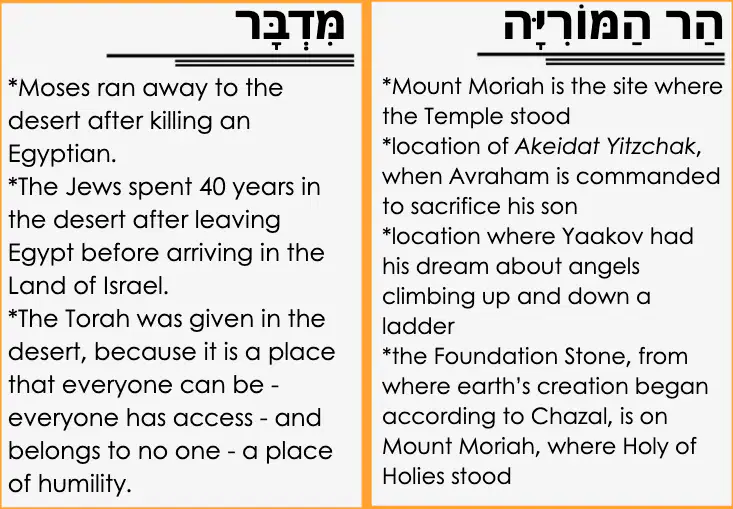
What event connects Mount Moriah to Jewish tradition?
Moses striking water from a rock
Esther saving Jews in Persia
Akedat Yitzchak, the binding of Isaac
David composing psalms in exile
Why is the giving of the תורה in the מדבר meaningful?
A עיר with libraries and schools
A place open to everyone, teaching humility
A fertile land for crops
A secret location guarded by soldiers
Which Jewish community has roots in Eastern Europe?
Mizrachi Jews from North Africa
Ethiopian Jews from the Horn of Africa
Sephardi Jews from Spain and Portugal
Ashkenazi Jews from Eastern Europe
Where can you find stories about great rabbis and lessons?
Modern scientific journals
Talmud and midrashic literature
Roman legal codes
Greek epic poetry
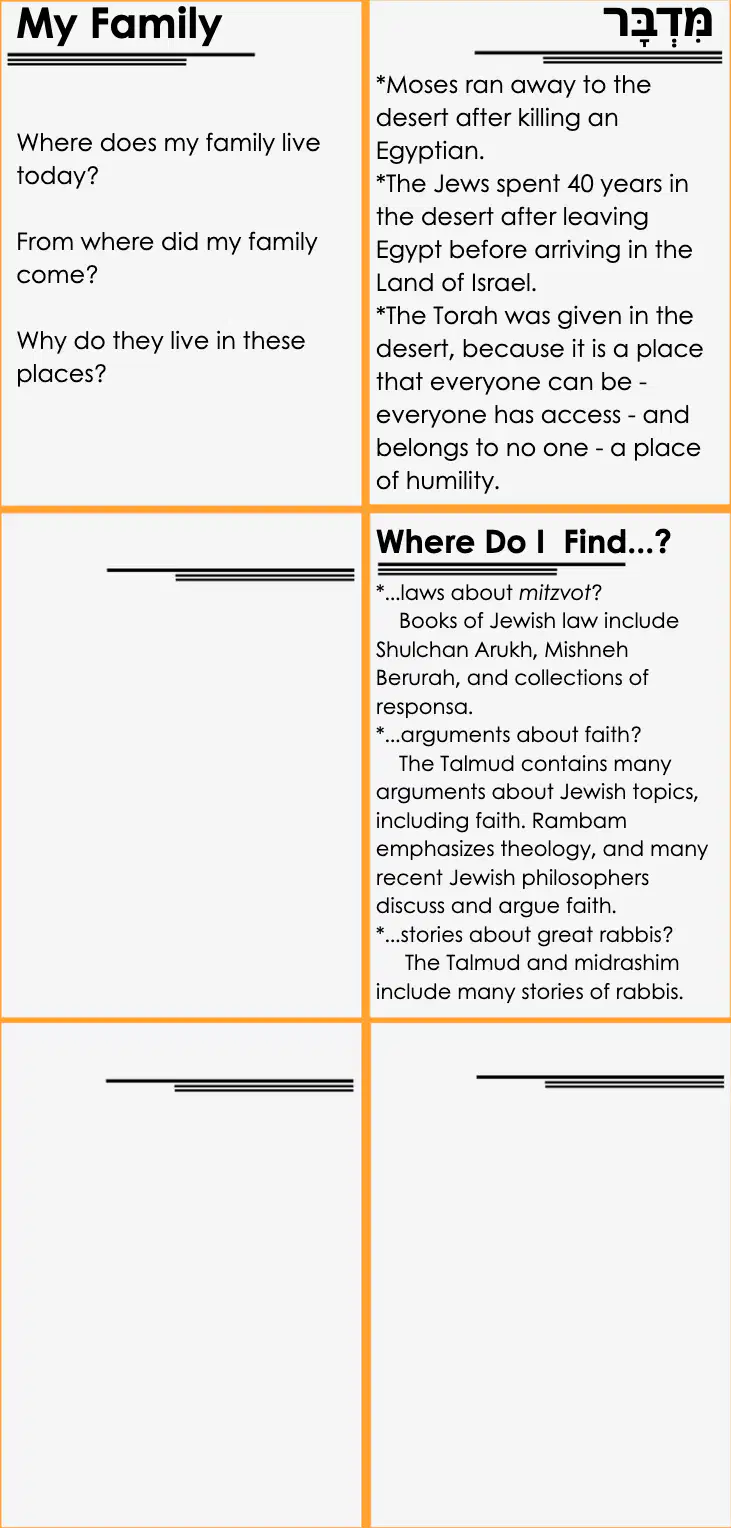
What journey did the בני ישראל take before entering the ארץ ישראל?
Seven months sailing the ים התיכון
Ten years in בבל
Forty years in the מדבר
Three seasons crossing the ירדן
Which item is worn on the head and arm during weekday morning prayers?
Mezuzah door parchment
Tzitzit fringed corners
Tallit gadol shawl
Tefilin boxes with straps
What are tzitzit attached to on a garment?
Bottom hem
Neckline
Inside sleeves
Four corners
Which practice places a klaf with verses on the right side of a doorway?
Birkat hamazon
Mezuzah
Kashrut separation
Netilat yadayim
Kashrut requires animals to be acceptable based on which feature?
Long tails and horns
Chew cud and split hooves
Nocturnal habits
No feathers and scales
Which blessings are said over pleasures like eating, drinking, and smelling?
ברכת המזון series
ברכת ההודאה gratitude
ברכת המצוות phrase
ברכת הנהנין blessings
What is נטילת ידיים used for before eating לחם or מצה?
Ritual hand-washing
Lighting candles
Counting charity coins
Tying tefillin straps
Which mitzvah emphasizes justice through giving to those in need?
Mezuzah klaf
Tzedakah charity
Shabbat rest
Tefillin sign
Which item is an ot, a sign of the covenant, along with Shabbat and brit milah?
Tefillin as a sign
Kashrut utensils
Tzitzit blue thread
Mezuzah doorway
Which garment is worn as a shawl during davening?
Kippah knitted cap
Tallit gadol shawl
Tallit katan undershirt
Mezuzah parchment
Which food rule prohibits mixing milk and meat and requires separate utensils?
כשרות dietary laws
Birkat hamazon rules
Netilat yadayim steps
Tzedakah obligations
What phrase is used in blessings over mitzvot to indicate the commandment?
ברוך שאמר ending
מודה אני morning
שמע ישראל opening
אשר קדשנו במצוותיו
How many compartments does the ראש tefillin box have?
Four compartments
One compartment
Two compartments
Six compartments
What is a common custom after washing hands during netilat yadayim?
To tie tzitzit knots
To recite Shema loudly
Not to speak before hamotzi
To light Shabbat candles
Which blessing is recited after a meal with bread and thanks Hashem for the food and the land (that gives us food)?
Birkat Hagomel
Brachot before eating
Shema Yisrael
Birkat Hamazon
What is the purpose of shechita in kashrut?
Ritual slaughter and salting
Counting compartments
Mixing milk and meat
Attaching door mezuzot
Which thread color is traditionally part of tzitzit?
Gold זהב gold thread
תכלת blue strand
לבן white cord
ארגמן purple line
What is the best way to give tzedakah according to Rambam?
By paying their food bills forever
By buying a home for that person
By giving them a lot of money in front of a large audience
By lending them money or helping them get a job so that they can earn their own money
Which two actions does the תורה command regarding שבת?
Speak and wash
Give and lend
Tie and wear
Keep and remember
Which prayer is the central declaration of faith recited three times daily and before bed?
Hallel on special days
Neilah on Yom Kippur
שמע morning, afternoon, night
Amidah in all services
What is the main prayer of שחרית, מנחה, and מעריב that is recited standing?
מוסף on holidays and שבת
עמידה with blessings of praise and petition
שמע with three Torah paragraphs
הלל on רֹאשׁ חוֹדֶשׁ
שחרית, מנחה, and מעריב are best described as?
Three blessings within the Amidah
Morning, afternoon, and evening services
Types of Torah study sessions
Names of holiday prayer books
Which service includes the extra prayer Musaf?
Bedtime Shema
Neilah on Yom Kippur
Shabbat and holidays
Daily Mincha
Which tefilah that is said on holidays and Rosh Chodesh comes from Tehilim?
Shema with three paragraphs
Musaf after Shacharit
Hallel
Neilah final יום כיפור prayer
What special prayer is recited before Ma'ariv on Yom Kippur?
Musaf extra holiday prayer
Neilah concluding day service
Bedtime Shema declaration
Hallel with psalms of praise
Tashmishei Kedushah refers to items that do which of the following?
Things used for holy moments or to make them more beautiful such as tefilin straps
Are used for any mitzvah action such as money for tzedaka
Holy things that are no longer holy if you sell them
Are only used by a select few holy people
Which item is included under d'varim kedoshim (holy objects with God’s name)?
Mezuzah scroll containing God’s name
Lulav used during Sukkot
Tallit used in prayer
Shofar sounded on holidays
What is true about d'varim kedoshim?
Used only during Sukkot
Discarded wrapped respectfully
Must be buried in a genizah
Lose sanctity when sold
Which rule is true for Tashmishei Mitzvah? (things that were used for a mitzvah such as wood used to build a sukkah)
They always contain God’s name and therefore can only be buried with genizah
They never lose holiness, even when sold
They do not need burial in a genizah but they should be thrown away respectfully (like wrapped up)
They include Torah and tefillin and can never be thrown away
Which set correctly pairs item to category?
תפילין scroll – ד'ברים קדושים
שופר – תשמישי קדושה
ספר תורה – תשמישי מצווה
מזוזה case – ד'ברים קדושים
What do טומאה and טהרה deal with?
Holiday prayer additions
Types of charity and kindness
Daily prayer service order
Spiritual purity and impurity laws
How can some types of tumah be removed?
By reciting the Shema
By going to a mikveh after time
By reading from a machzor
By adding Hallel to prayers
Today, everyone is considered tameh/impure because...?
Most people have been to a funeral or cemetery
Most people are not surrounded by holy objects
Most people don't fast enough
Most people don't study enough Torah
Which book sets the order and wording of prayers?
תורה containing three paragraphs
מחזור for specific holidays
תלמוד used for study debates
סידור for daily services
What does אמונה mean in Jewish thought?
Faith and belief
Unity and solidarity
Acceptance of mitzvot
Happiness and joy
Bitachon is best described as which of the following?
Fear and awe of Heaven
Repairing the world
Love of fellow Jews
Trust and reliance on ה' (Hashem)
Tikkun Olam refers to actions focused on what goal?
Asking for forgiveness
Fixing our mistakes
Building personal wealth
Making the world a better place
Ahavat Yisrael emphasizes which value?
Political leadership of kings
Mystical hidden knowledge
Strict legal judgment
Love of your fellow Jew
Kabbalat Ol Malchut Shamayim is the acceptance of what?
The yoke (the weight of responsibility) of Heaven (Hashem)
Community traditions
The power of authority (teachers, leaders etc.)
Asking questions and looking for answers
Which prayer is connected to accepting the yoke of Heaven?
Kaddish
Amidah
Aleinu
Shema
What does the second paragraph of the Shema accept?
Kingly rule of Israel
Prophetic visions
Temple sacrifices
Mitzvot and their obligations
Which term signifies unity and shared responsibility among Jews?
אמת
יראה
שמחה
אחדות
“All ישראל is responsible for one another” is part of which concept?
Being joyful-besimcha in how you serve Hashem
Achdut - unity amongst Jews
Following Halacha
Having a share in Olam Haba-the World to Come
Which of these is a component of אַחְדוּת - unity?
Being on time
Being easygoing
Being kind
Learning Torah
Yirat Shamayim focuses on which attitude?
Trust in human leaders
Joy in festivals
Love of wealth
Fear and awe of ה' (Hashem)
What are the two levels of fear in יראת שמיים?
Truth and justice
Unity and joy
Love and charity
Punishment and awe
Which value is connected to finding hidden sparks of Hashem to improve the world and make it holy?
אחדות
אמת
תיקון עולם
שמחה
Ahavat Hashem is best defined as what?
Fear of punishment
Speaking the truth
Loving Hashem
Repairing the world
Which term means truth?
נְשָׁמָה
אֱמֶת
אַהֲבָה
אַחְדוּת
Which term means returning and repairing a relationship with God and others?
תשובה, returning and repairing
Shalom Bayit, harmony in the home
Kiddush Hashem, sanctifying God
Derech Eretz, proper worldly manners
According to Rambam, real תשובה is shown by what action?
Reciting long prayers
Making a different choice in the same situation
Avoiding contact with others
Giving charity annually
Baal teshuvah refers to someone who begins keeping mitzvot even though they were not raised what?
Educated in history
Religious and observant
Strictly vegetarian
Wealthy and powerful
Which term focuses on sanctifying God’s Name in public?
Avodah, service and worship
Kedushah, holiness and separation
Kiddush Hashem, sanctification of the Name
Shalom Bayit, peace in the home
What does it mean that a person died 'Al Kiddush Hashem'?
When they had to choose, they gave up their life rather than serve idols or go against Hashem
They fasted on all the most important days
They gave all their money to charity till the day they died
They studied Torah day and night until the day they died
Which term emphasizes good manners and proper behavior?
Avodah, service of the heart
Kedushah, separation for holiness
Teshuvah, returning from mistakes
Derech Eretz, way of the world
“Pirkei Avot states, ‘Derech Eretz precedes the Torah.’” What does this mean?
Good manners are needed before true Torah service
The Torah is read earlier in the morning
Prayer is more important than behavior
Temple service must happen before study
Shalom Bayit refers to what?
Public worship in the Beit HaMikdash
Legal debates about mitzvot
Personal spiritual purification
Peace at home between husband and wife
A key practice for Shalom Bayit in a household is:
Compromise for a peaceful home
Strict punishment for mistakes
Silence during disagreements
Avoid shared decisions
Kedushah means holiness. How is it commonly expressed?
Working only in the Beit HaMikdash courts
Fasting every week
Speaking softly to everyone
Separation from impurity for Kedushah
Avodah originally referred to service in the Beit HaMikdash. Later, it most commonly refers to what?
P'sak halacha by scholars
Tefillah as service of the heart
Public acts of courage
Travel to holy cities
One goal of avodah is to elevate a person spiritually by doing what kind of work?
External work with public rituals
Internal work within the heart
Political work for the community
Physical work building structures

In the diagram showing handwashing, which practice is linked to eating לחם?
Washing after meals
נטילת ידים before eating לחם
Washing before sleep
Washing only on holidays
Which ritual is illustrated with a ram’s horn?
Lighting שבת candles
Taking חלה
Blowing שופר
Putting on תפילין

Who is described as rich?
One who gives half his money
One who teaches many students
One who is happy with one’s lot
One who owns many lands
What is not part of having a kosher kitchen?
Keeping meat and dairy separate
Allowing only kosher foods to be prepared in the kitchen
Praying before you cook
Koshering things if they become unkosher
What percentage is typically given for מעשר (tithe) in צדקה?
One sixth, about 16 percent
One fifth, 20 percent
One tenth, 10 percent
One eighth, 12.5 percent

Which action is paired with 'הַפְרָשַׁת חַלָּה' in the baking panel?
חַלָּה holiday history
חַלָּה recipe
חַלָּה braiding tips
חַלָּה serving customs

Which holidays are mentioned in the candle-lighting visuals?
שבת and חנוכה
ראש השנה and יום כיפור
פורים and סוכות
פסח and שבועות

Which mitzvah involves wrapping boxes with straps on the arm and head?
Giving tzedakah
Reciting Havdallah
Putting on tefillin
Kashering an oven

Which statement encourages communal responsibility?
These and these are the words
In the beginning ה' created
This too will pass
כל ישראל ערבים זה לזה

Which ritual marks the end of Shabbat?
Blowing shofar
Taking challah
Reciting havdallah
Lighting Chanukah candles

