
NEW
Font size
 Worksheets
11. Aboriginal Woodworking
Total questions: 10
Worksheet time: 5mins
Which native timber was commonly selected for strength and availability when crafting wooden objects?
Pine from plantations
Birch from cold forests
Teak from tropical imports
Mulga from arid regions
Which material combination best represents traditional toolmaking before widespread metal use?
Clay, glass, concrete
Copper, brass, steel
Plastic, resin, fiberglass
Stone, bone, shell, wood
What is the primary purpose of using a woomera during hunting?
Increase spear power and distance
Hold multiple spare spearheads
Camouflage the hunter’s movement
Signal directions to other hunters
Which statement about boomerangs is accurate?
Some were heavy non-returning for hunting
All were lightweight and returned reliably
They were used only for ceremonial dances
They replaced spears for close combat
A community in rainforest areas prefers broad, flat bark shields. Which reasoning best explains this regional choice?
Metal resources are abundant locally
Small shields work better in dense scrub
Local materials suit carving flat forms
Heat-hardened hardwood is easier to bend
Which technique would best shape the interior of a coolamon?
Drilling holes and stitching
Soaking then pressing molds
Burning then scraping smooth
Cold chiseling with steel
Which statement best describes the spiritual role of woodworking objects in Aboriginal communities?
Generic art influenced by global design trends
Decorations for trade with no cultural ties
Ceremonial items with ochre and spiritual motifs
Mainly utilitarian tools without sacred meaning
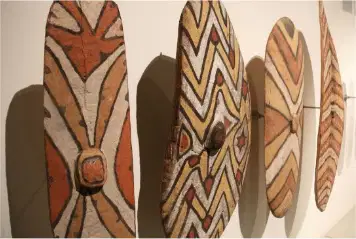
Identify a regional characteristic of rainforest woodworking traditions in Queensland.
Exclusive use of desert hardwoods for tools
Production of Pukumani poles with painted carvings
Use of bark for large protective shields
Focus on spear throwers and digging sticks
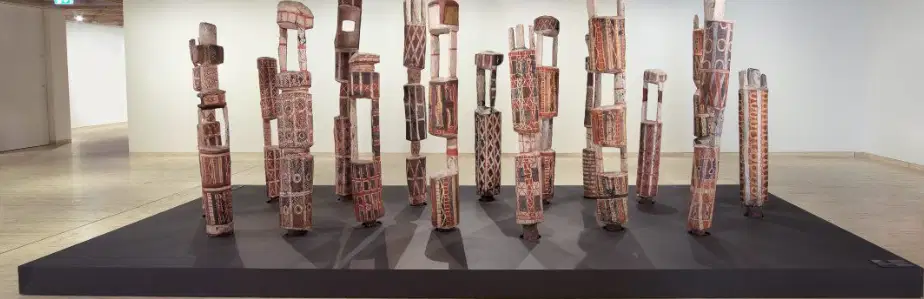
The painted poles displayed in the gallery are most likely associated with which practice?
Tourist souvenirs with synthetic materials
Pukumani poles used in ceremonial contexts
Modern industrial timber framing methods
Navigation markers for desert trade routes
Why was some woodworking knowledge restricted within Aboriginal groups?
To comply with colonial trade regulations
Because ceremonial knowledge required initiation
Due to a lack of written language for teaching
To prevent wood scarcity in wet environments

