
 Worksheets
Elements of a Story Practice
Total questions: 37
Worksheet time: 28mins
What is SETTING?
Select all that apply
the location
the time of day and the time of year
the location and resolution
the time and place of a story
the scenery
The time and place of a story is the...
Exposition
Setting
Climax
Plot
Conflict
What are examples of "Time in History"?
during 1995
TV show
the time of the covid pandemic
During the war of Independence
South Amboy Middle High School
What is a PROTAGONIST?
the favorite character
The best friend
The villain
The main character
An Antagonist is....
the villain
the character that creates problems for the protagonist
the bad character
the character that is against the protagonist
the main character
What is PLOT?
Select all that apply
the structure of the story
the setting of the story
the organization of the story
the sequence of events of the story
the protagonist
What 3 things happen in the exposition?
develop the setting
the conflict is made clear
the tension increases
hint the conflict of the story
introduce the protagonist
During the Rising Action, the protagonist faces (a) .
During the Rising Action, the Protagonist faces blocks to their (a) .
In the Rising Action, the (a) and the tension increases.
The MOST important thing abut the Rising Action is...
the setting
the conflict is made clear
the resolution
the hint of the conflict
The Climax is also called...
Turning Place
Turning Point
Turn Around
The denouement
The climax is the point of maximum tension where the protagonist must (a) something very important.
During the Climax, the protagonist faces challenges and ___________.
cliffhangers
solutions
the setting
obstacles
The Climax leads to the ___________.
Turning Point
The resolution
The setting
The answer
What is the most important thing about the Falling Action?
the solution is finalized
the problems begin to solve
the end is near
the climax is near
What is the most important things about the resolution?
the end is near
the problems and conflicts increase
the problems and conflicts are resolved
the setting is explained
A story that does not provide a full ending or resolution is called:
Resolution
Denouement
Exposition
Cliffhanger
What is another name for a resolution?
denouement
cliffhanger
climax
exposition
A struggle between two opposing forces in a story is called....
the denouement
the literary conflict
the setting
the climax
What is Literary Conflict?
a challenge for the villain in the story
a struggle between opposing forces in the story
a resolution of conflicts in the story
a development of the setting in the story


What are two components of a setting?
Time and Place
Place
Time and Time
Time

The _______ is the time and place that the story takes place.
setting
character
plot
solution

What type of Literary Conflict?:
Elsa has to be hidden away from the outside world because of her secret magical powers.
Character versus Character
Character versus Nature
Character versus Society
Character versus Themselves
Billy and Sam got into an argument over who was first in line for lunch. This is an example of...
Character vs. Character
Character vs. Themselves
Character vs. Nature
Character vs. Society
Which of the following is an example of Character vs. Nature?
Batman fought against the Joker for a long time.
Hamlet struggled to decide if the ghost was real or sent by the devil.
Santiago faced the harsh sunlight and storms from his little boat on the sea.
Atticus Finch went against his town's racist views when he defended Tom Robinson.
When a character goes against the government, culture, or morals around him, it's an example of...
character vs. self
character vs. nature
character vs. character
character vs. society

A plane crashed on an island in the middle of the ocean. Alejandro had to survive all on his own!
Character vs. Character
Character vs. Technology
Character vs. Nature
Character vs. Society

A story about a character fighting against a tornado would most likely involve which type of conflict?
Character vs. Technology
Character vs. Nature
Character vs. Character
Character vs. Society

Which type of conflict is depicted in a story where a character is trying to survive in a post-apocalyptic world dominated by machines and robots?
Character vs. Technology
Character vs. Nature
Character vs. Society
Character vs. Self
The events after the climax, that lead to the resolution are called....
Falling Action
Rising Action
Main Character
Point of View
The Turning Point is....
the point of the solution of problems for the protagonist
The point where the setting is developed in the story
The point where everything changes for the antagonist
The point where everything changes for the protagonist
A struggle between opposing forces
Conflict
Point of View
Main Character
Protagonist
Where the story takes place
Setting
Place
Conflict
Rising Action
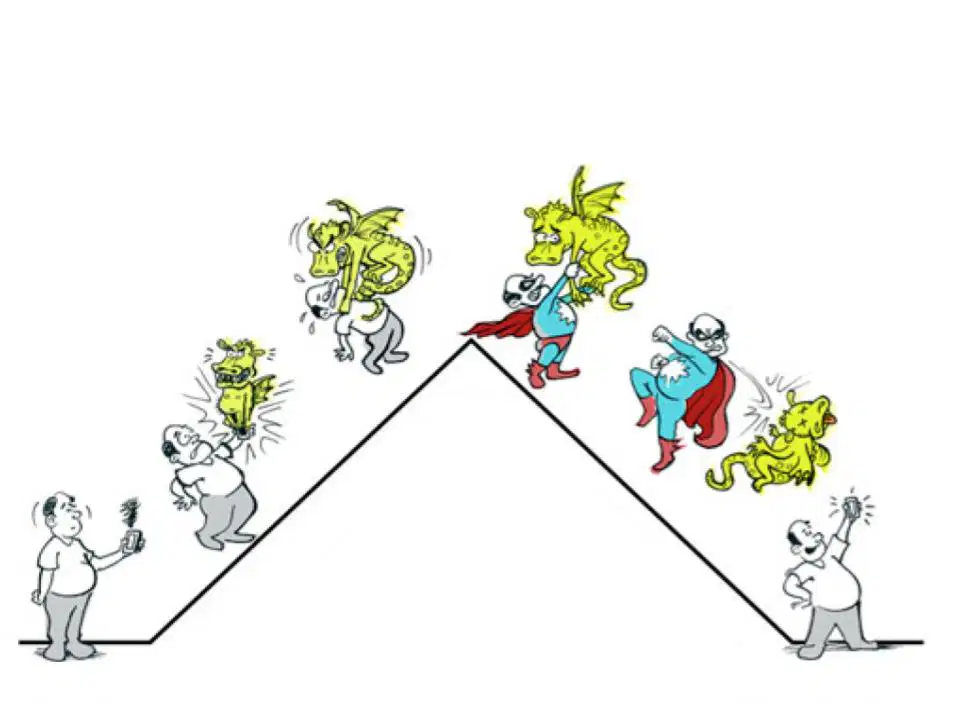
Which list shows the plot elements in the correct order?
exposition, falling action, climax, rising action, resolution
exposition, rising action, climax, falling action, resolution
exposition, falling action, rising action, climax, resolution
rising action, falling action, exposition, climax, resolution

Which part of the story is represented by this blue section?
Rsing Action
Climax
Exposition
Falling Action

