
 Worksheets
Checkpoint 3 Review
Total questions: 50
Worksheet time: 32mins
Who was the father of the Constitution?
Madison
Washington
Jefferson
How many amendments are in the Bill of Rights?
8
10
12
What do the Bill of Rights protect?
individual freedoms
government
jobs
What means 2 part Legislature?
Bi-cameral
Bicycle
Biology
Which two plans combined to create the Great Compromise (choose two)
Virginia Plan
New York Plan
Massachusetts Plan
New Jersey Plan
How many slaves in each state were counted towards their state's population?
4 out of 5
None
3 out of 5
All
The Federalists wanted what?
A weak central government
A strong central government
The Anti-Federalists wanted what?
A strong central government
A weak central government
This was an agreement between the states that created 2 houses of Congress based on both state population and equal representation for each state -
Separation of Powers
The Great Compromise
Limited Government
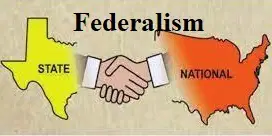
The idea that the national government shares power with the state governments.
Federalism
The Bill of Rights
Arguments for the ratification of the Constitution can be found in what historical document(s)?
The Articles of Confederation
The Federalist Papers
Declaration of Independence
Large states at the Constitutional Convention prefered which plan?
New Jersey Plan
Virginia Plan
Madison Plan
New York State Plan of Union
The New Jersey plan involved...
representation based on population diversity
equal representation for every state
representation based on population size
Who did the New Jersey Plan favor?
Larger States
Every state except for Pennsylvania
Only Pennsylvania
Smaller States
What are the three branches of Government?
Apples, Oranges, and Bananas
Law, Order, Voting
Executive, Legislative, and Judicial
Which branch of government is separated into two parts?
Legislative
Executive
Judicial

Checks and balances help to ....
control the use of power.
pass laws more quickly.
pay members of Congress.
elect better presidents.

Which is considered to be a civic responsibility of citizens of the United States?
attending church
going to college
voting in elections.
owning property

The First Amendment to the Constitution guarantees the right or freedom of
Speech
Religion
Assembly
Press
All of the above

In the Preamble, what phrase means "maintaining peace and order" in our country?
Establish Justice
Secure the Blessings
Insure domestic tranquility
We the people

What is the 4th Amendment to the Bill of Rights?
Freedom of Religion
The Right to bear arms
The Right to a Lawyer
Freedom from Unreasonable Search & Seizure

The Executive Branch is headed by the?
President of the United States
Congress
Supreme Court
Capitol Hill

Which branch of government writes laws?
Legislative Branch
Judicial Branch
Executive Branch
Political Branch
Growth of Representative Government
Virginia House of Burgesses - 1619
The first representative government.
Mayflower Compact - 1620
Pilgrims pledged to self-government.
English Bill of Rights - 1689
Tradition of Individual Rights.
Magna Carta - 1215
Principle of Limited Government.

John Locke believed that people had which type of rights?
Freedom of Speech, Religion & Press
The Right to Bare Arms and the Right to a Trial by Jury
Life, liberty, and property

The Baron de Montesquieu developed this idea of government
three branches of government
unicamiral legislature
dictatorship
The president can “check” the power of the legislative branch by
vetoing a law.
issuing an executive order.
granting a pardon.
True or False: There are limitations to freedom of speech.
True
False
What is the U.S Constitution?
A declaration of war
A document that says how the U.S government runs. It is the highest law of the land.
A peace deal
Is a document that says how mayors and governors should act.
Who makes up the Judicial Branch?
Congress
President
The Supreme Court-9 Judges chosen by the President
Vice president
What are the 2 houses of the Legislative Branch
The Senate and House of Representatives
The Senate and Supreme Court
House of Representatives and President
Senate and President
The executive branch of government is ran by?
Congress
The President
Supreme Court
House of Representatives

Congress can override a Presidential veto with a _____ vote.
1/2
2/3
1/4
3/5
When was the Constitution signed?
September 5, 1987
September 17, 1787
July 4, 1776
November 17, 1875
Who were in favor of the Constitution and supported the federal government?
Federalists
Republicans
Democrats
Anti-Federalists
George Washington created departments with advisors. This is known as the President's ____________.
cupboard
cabinet
sink
club
The ______ Rebellion occurred during Washington's Presidency.
Whiskey
Shay's
Wheat
Washington decided that since the U.S. was a young nation, it'd be best if it stayed __________, and not get involved in other wars.
neutral
ignorant
overseas
What did George Washington warn against in his Farewell Address? (Choose 2)
He urged the country to stay neutral and not take sides in other country's affairs.
He warned against establishing more departments in the presidential cabinet.
He warned against political parties and the harm they would cause.
He warned against staying neutral; he wanted the U.S. to help other countries.
Why did George Washington believe neutrality was best for the U.S.?
Feared French settlements in the West
Wanted to stay out of foreign affairs/wars
Feared attacks from Native Americans
Believed that fighting was a good thing
What was the purpose of Hamilton's financial plan?
Strengthen the country's economy after the American Revolution
Weaken the country's economy after the American Revolution
Strengthen the economies of the states
What were the four parts of Hamilton's financial plan?
never pay back the debt, create a bank, tax paper goods, tax dairy products
pay off debt, create a national bank, tax on whiskey, tariff on foreign goods
borrow money from Britain, create individual state banks, tax foreign goods, whiskey tax
What is a protective tariff?
a tariff (tax) on foreign goods
a tariff (tax) on domestic goods
a tax on goods from Mexico
a tax on ships
What is the purpose of a protective tariff?
To protect England
To encourage Americans to buy foreign goods
To encourage Americans to buy 'American' goods
This was a protest by farmers in western Pennsylvania against the Whiskey tax. Washington’s response (12,000 soldiers strong), showed the power of the new federal government.
Whiskey Rebellion
Freedom Speech
Farewell Address

