
Font size
 Worksheets
CH8 Endocrine System REVIEW
Total questions: 55
Worksheet time: 51mins
A student has difficulty falling asleep after staying up late completing a 25 page research paper due at 2359 CST. Which hormone is most likely being disrupted?
Cortisol
Insulin
Melatonin
Adrenaline
Which gland releases the hormone responsible for regulating the sleep–wake cycle?
Pituitary gland
Pineal gland
Thyroid gland
Adrenal gland
After skipping a meal, a student feels shaky and weak. Which hormone helps raise blood glucose levels?
Insulin
Cortisol
Glucagon
Thyroxine
Insulin is best described as a hormone that:
Increases heart rate
Releases glucose from the liver
Allows cells to take in glucose
Raises blood calcium levels
Which hormone is responsible for rapid increases in heart rate, breathing, and energy during an emergency?
Cortisol
Aldosterone
Adrenaline (epinephrine)
Thyroid hormone
A hormone involved in long-term stress and blood glucose regulation is:
Adrenaline
Cortisol
Melatonin
Insulin
Growth hormone (GH) is released from which gland?
Thyroid gland
Hypothalamus
Pituitary gland
Adrenal gland
Which hormone stimulates egg production in ovaries and sperm production in testes?
LH
PRL
FSH
TSH
Which hormone is responsible for male secondary sex characteristics such as facial hair and increased muscle mass?
Estrogen
Progesterone
Cortisol
Testosterone
A decrease in blood calcium levels triggers the release of which hormone?
Calcitonin
Thyroxine
Parathyroid hormone (PTH)
Aldosterone
Which hormone helps lower blood calcium levels by promoting calcium storage in bones?
Parathyroid hormone
Calcitonin
Cortisol
Growth hormone
A hormone that programs T-lymphocytes and supports immune system development is:
Insulin
Cortisol
Thymosin
Aldosterone
The (a) gland releases TSH to stimulate the (b) gland to release (c) .
Luteinizing hormone (LH) is released by the (a) triggering (b) in females and (c) production in males.
(a) stimulates the adrenal (b) to release (c) , a hormone involved in balancing blood glucose during stress.
Select the hormones released by the anterior pituitary gland.
ACTH
TSH
FSH/LH
GH
ADH
Select the hormones released by the anterior pituitary gland that do not trigger glands.
GH
PRL
LH
FSH
oxytocin
Reorder the Neural Control pathway.
sensory input from the environment
CNS Signals adrenal medulla
adrenal medulla release epinephrine & norepinephrine
heart rate increases, pupils dilate, breathing rate increases
run away from the threat
Reorder the Humoral Control pathway.
blood glucose level increase is detected
islets of Langerhans in the pancreas produce insulin
insulin carries glucose into cells for use
blood glucose level is back in homeostasis
pancreas stops producing insulin
Reorder the Hormonal Control pathway.
sensory input from environment detected
CNS signals hypothalamus - releasing factors sent
anterior pituitary releases hormones
glands release hormones
target organs produce reaction based on message
Reorder the negative feedback loop
hypothalamus & pituitary signal target gland to release hormone
target gland releases hormone to produce effect on target tissues
goal is met
feedback signals are sent back to hypothalamus & pituitary
hormone production inhibited to prevent excess & maintain balance
Match the location with the gland
Base of the brain
Pineal gland
Deep within the brain
Pituitary gland
Anterior neck, below the larynx
Thyroid gland
Posterior surface of the thyroid
Parathyroid gland
Upper chest, behind sternum
Thymus gland
Match the location with the gland
Upper abdomen, behind stomach
Pancreas
On top of each kidney
Adrenal glands
Pelvic cavity (female)
Ovaries
Scrotum (male)
Testes
Neck region, below the jaw
Thyroid gland
Select the points that represent the pancreas in both figures.
Select the points that represent the thymus gland in both figures.
Select the correct picture of the gland also known as the master gland


(a) – two glands – located in the scrotum (pouch that hangs suspended outside of the (b) body between the legs)
(a) – two glands – located on the lateral aspects of the (b) in the pelvic cavity
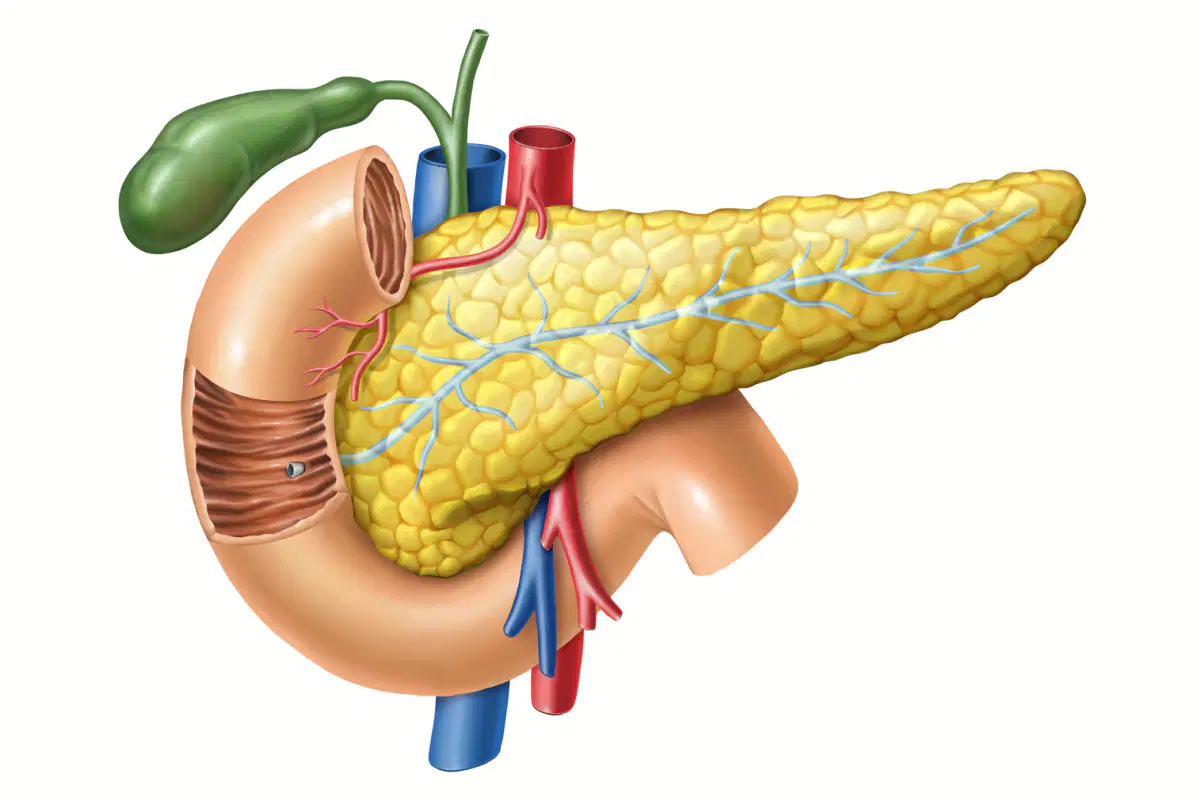
The yellow organ is located (a) to the stomach and (b) to the spine in the upper left abdomen and is called the (c) .
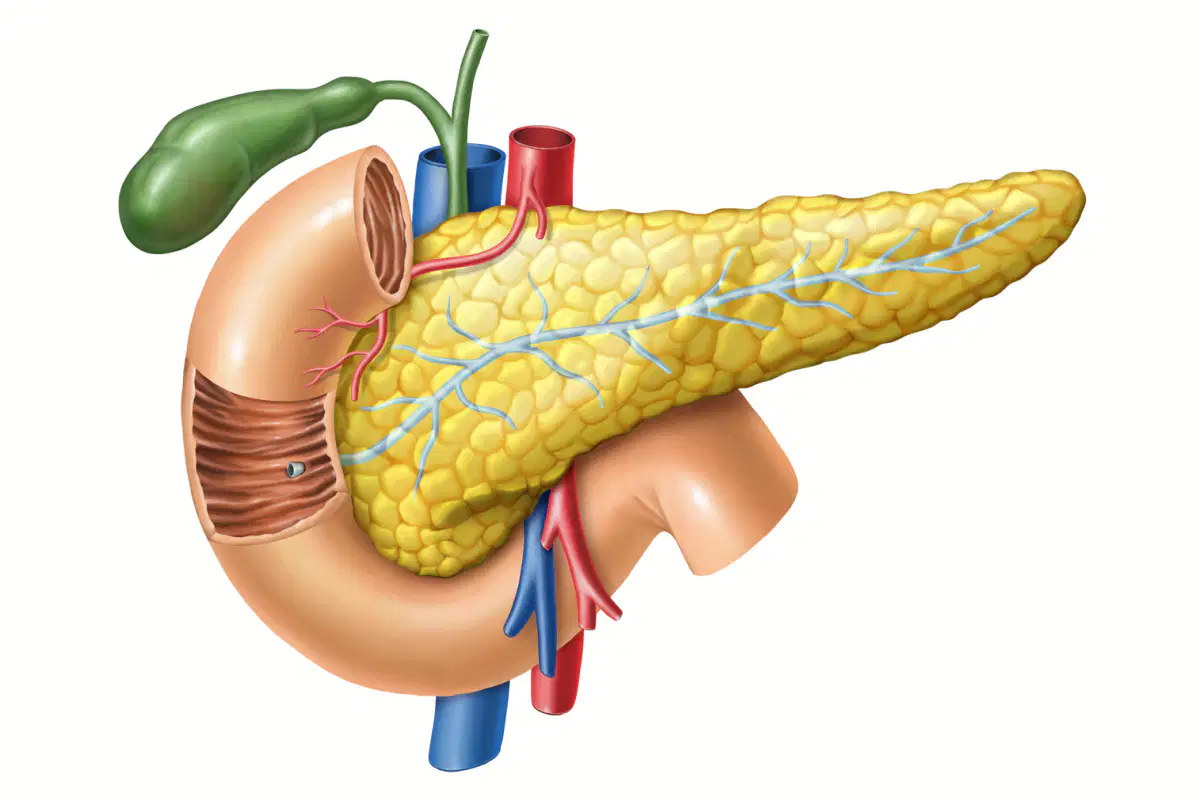
In this organ, (a) cells release hormones into the (b) and (c) cells release digestive enzymes through (d) .
This organ is both an endocrine and exocrine organ.
pancreas
thymus
pituitary gland
stomach
adrenals
Endocrine glands produce (a) , (b) have ducts, and release directly into/onto the (c) . Effects are (d) .
Categorize the organs as endocrine or exocrine:
Pineal gland
Pituitary gland
Pancreas (islet cells)
Sweat glands
Pancreas (acinar cells)
Parathyroid
Thymus
Prostate
Liver
Lacrimal glands
What is this gland?
Thymus
Thyroid
Adrenal
Testes
Which type of endocrine regulation occurs when nerve fibers directly stimulate a gland to release hormones?
Humoral control
Hormonal control
Neural control
Chemical control
The fight-or-flight response is an example of neural control because it involves:
Blood glucose levels changing
Hormones released from other endocrine glands
Direct stimulation of the adrenal medulla by the nervous system
A negative feedback loop
During the fight-or-flight response, which hormones are released from the adrenal medulla?
Insulin and glucagon
Thyroxine and calcitonin
Epinephrine and norepinephrine
Growth hormone and prolactin
In hormonal control, which structure acts as the “president” of the endocrine system by directing the pituitary gland?
Adrenal glands
Hypothalamus
Thyroid gland
Pancreas
When hormone levels from a target gland rise and signal the hypothalamus and pituitary to stop releasing hormones, this is known as:
Positive feedback
Neural regulation
Hormonal amplification
Negative feedback
Which situation best represents humoral control?
Increased heart rate during a scary movie
The hypothalamus releasing TRH
The pancreas releasing insulin in response to high blood glucose
The pituitary releasing TSH
A patient has low blood glucose levels. Which hormone will most likely be released to restore homeostasis?
Insulin
Epinephrine
Glucagon
Cortisol
A student has difficulty falling asleep after using their phone late at night. Which hormone is most likely being disrupted?
Which gland releases the hormone responsible for regulating the sleep–wake cycle?
After skipping a meal, a student feels shaky and weak. Which hormone helps raise blood glucose levels?
Insulin is best described as a hormone that:
allows cells to take in glucose
Which hormone is responsible for rapid increases in heart rate, breathing, and energy during an emergency?
A hormone involved in long-term stress and blood glucose regulation is:
Growth hormone (GH) is released from which gland?
Which hormone stimulates egg production in ovaries and sperm production in testes?
Which hormone is responsible for male secondary sex characteristics such as facial hair and increased muscle mass?
A decrease in blood calcium levels triggers the release of which hormone?
Which hormone helps lower blood calcium levels by promoting calcium storage in bones?
A hormone that programs T-lymphocytes and supports immune system development is:
Categorize the organs as endocrine or exocrine:
Pineal gland
Pituitary gland
Pancreas (islet cells)
Sweat glands
Pancreas (acinar cells)
Parathyroid
Thymus
Prostate
Liver
Lacrimal glands

