
 Worksheets
Introduction to Heat and Cooking Techniques
Total questions: 81
Worksheet time: 41mins
Which food qualities are most directly changed by applying heat during cooking?
Calories, shelf life, barcode, brand
Weight, shape, price, origin
Packaging, label, logo, slogan
Color, flavor, aroma, texture
Which cooking choice best helps minimize nutrient loss in vegetables?
Deep-frying until very crisp
Boiling large pieces longer
Steaming small pieces briefly
Roasting at very high heat
Which method is a moist-heat technique?
Poaching at low simmer
Roasting in hot oven
Grilling over dry heat
Pan-broiling in skillet
Which set lists only dry-heat methods?
Boiling, poaching, steaming
Braising, pressure-cooking
Frying, sautéing, pan-broiling
Roasting, broiling, grilling
Cooking in fat includes which example?
Boiling pasta noodles
Steaming broccoli florets
Poaching eggs gently
Deep-fat frying potatoes
Which technique combines moist and dry heat in one method?
Braising tough meat cuts
Grilling buttered corn
Deep-frying doughnuts
Pan-broiling thin steaks
Microwave cooking typically preserves more nutrients mainly because it
Cooks quickly with less liquid
Uses heavy metal cookware
Boils foods at higher heat
Removes all cooking fats
What is a critical safety rule for using a microwave oven?
Always cook foods uncovered
Use only glass lids tightly
Preheat the empty cavity
Do not place metal inside
A student wants vivid color and crisp-tender texture in green beans while keeping nutrients. Which method is best?
Deep-fry until browned
Boil vigorously for long
Steam briefly then serve
Roast at high temperature
Which pair shows the correct match between category and example?
Moist heat—simmering soup
Dry heat—poaching fish
Combination—pan-broiling
Fat cooking—steaming rice
You need to choose a method that avoids water washing away vitamins from cut carrots. Which is the most suitable option?
Microwave with minimal water
Boil in excess salted water
Parboil then soak in ice
Simmer covered for long
Which statement best explains how heat affects food quality during cooking?
Heat reduces aroma but adds water
Heat only warms food without changes
Heat changes texture and develops flavor
Heat increases color while removing fat
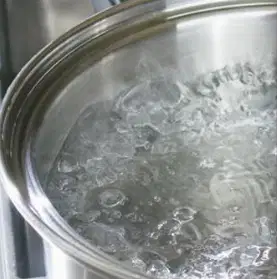
Which moist-heat method is shown when large bubbles rise rapidly and break at the surface of the water?
Simmering with gentle tiny bubbles
Pressure cooking with sealed lid
Boiling with vigorous bubbling throughout
Steaming using a covered basket

In the right-side pot image, small bubbles barely disturb the surface. Which method is this?
Boiling with rolling agitation
Simmering at a gentle heat
Steaming above the water
Pressure cooking under lock
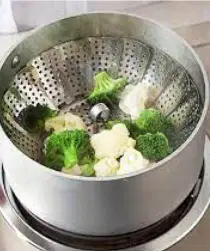
Which description best matches steaming?
Food is suspended above boiling water
Food is fully submerged and rolling
Food is cooked in sealed high pressure
Food is barely bubbling beneath
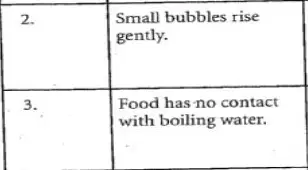
Which method is recommended for fragile foods that might break apart?
Deep-frying in hot oil
Simmering with gentle small bubbles
Boiling with vigorous agitation
Pressure cooking under high pressure
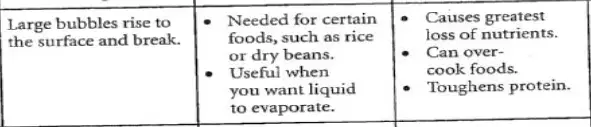
Which is a disadvantage of boiling?
Can overcook and toughen proteins
Takes longest of all methods
Leaves foods undercooked often
Requires special steamer equipment
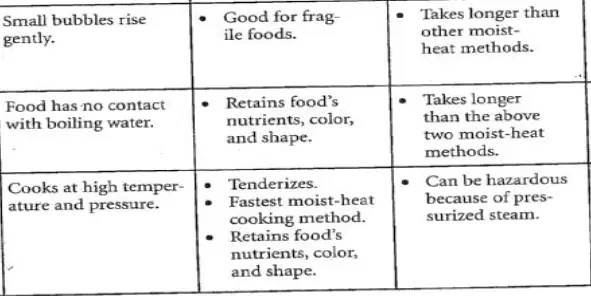
Which food use aligns with steaming, where food has no contact with boiling water?
Rice, vegetables, and fish
One-dish meals and soups
Dry beans and tough meats
Corn on the cob and pasta
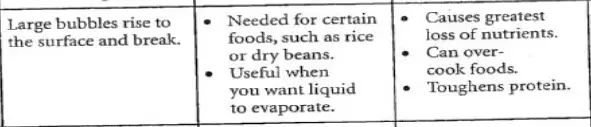
You need to reduce a sauce by evaporating liquid quickly. Which method fits this goal?
Boiling to drive off moisture
Pressure cooking for tenderness
Simmering to keep shapes
Steaming for nutrient retention
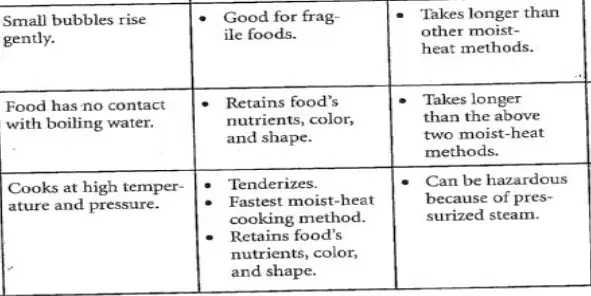
Which method best retains food’s nutrients, color, and shape while taking longer than boiling and simmering?
Microwaving with vented lid
Steaming above water surface
Pan-frying in shallow oil
Broiling with direct heat
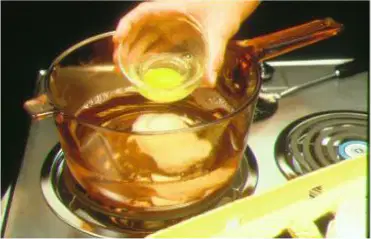
Why would you choose simmering for poached eggs as shown?
Gentle heat prevents breaking apart
High pressure speeds cooking time
Dry heat browns the exterior well
Rolling boil improves egg shape
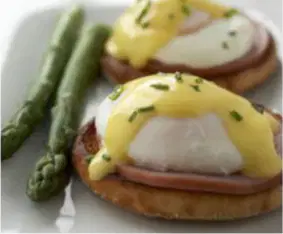
Which dish in the visuals is a classic outcome of poaching followed by assembly on an English muffin?
Eggs Benedict with poached eggs
Shakshuka with simmered sauce
Frittata with sautéed greens
Quiche Lorraine with baked eggs
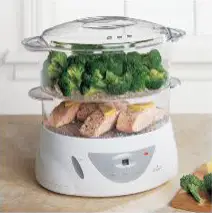
If vegetables keep turning mushy when boiled, which moist-heat method change could help preserve texture and nutrients?
Switch to steaming in a basket
Increase to a rolling boil
Pressure cook for longer time
Brown by pan-frying instead
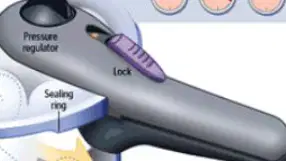
Which component on the cooker controls how much steam escapes to maintain a set pressure?
Locking handle on the lid
Sealing ring around the rim
Heating plate under the pot
Pressure regulator on the top
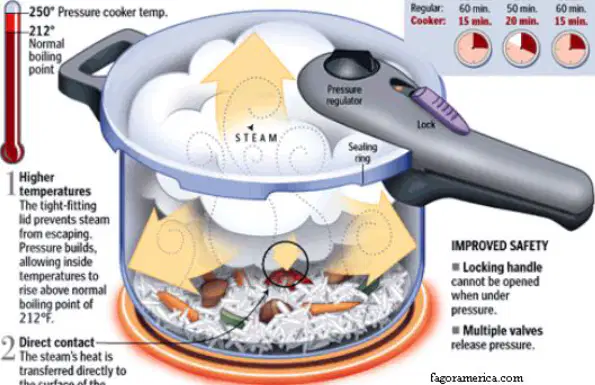
Why can food cook faster inside a pressure cooker than in an open pot?
Steam cools the surface faster
Boiling point of water is lower
Internal temperature rises above 212°F
Less liquid touches the ingredients
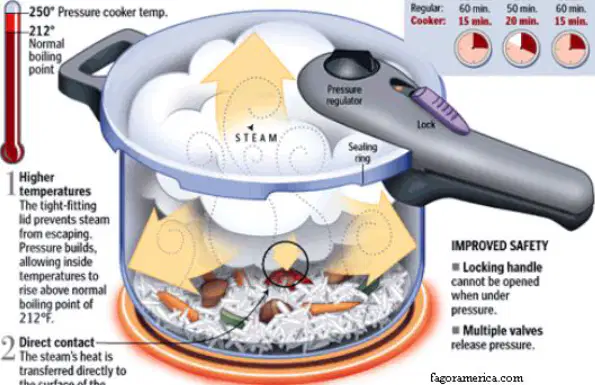
According to the cooking times panel, which item benefits from the greatest reduction when using a pressure cooker compared with regular boiling?
Whole chicken from 60 to 15 minutes
Vegetables from 20 to 18 minutes
Brown rice from 50 to 20 minutes
Black beans from 60 to 15 minutes
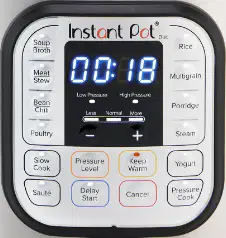
A recipe for beans requires softer texture without bursting. Which adjustment best uses the pressure regulator to achieve this goal?
Use low pressure setting and shorten time
Remove sealing ring to vent steam
Open lid briefly during cooking
Keep regulator at high pressure longer
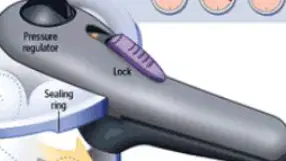
Which part ensures steam does not leak so pressure can build inside the pot?
Sealing ring seated in the lid
Metal outer housing shell
Digital display control panel
Condensation collector cup
Which dry-heat method is done in a conventional oven and makes a brown crust while keeping food moist inside?
Deep-frying in very hot oil
Pan-broiling on a stovetop griddle
Broiling under very high direct heat
Roasting or baking in a conventional oven
Which method cooks food under direct heat, browns food well, and lets fat drip away?
Broiling on a rack close to heat
Sautéing in shallow fat
Baking in a preheated oven
Braising in seasoned liquid
A main disadvantage of baking or roasting compared with other methods is that it is usually:
Slower than many other methods
Faster than most stovetop methods
Likely to add excess fat
Riskier due to splattering
Which food is best suited to broiling due to needing tender cuts and quick cooking?
Large roasts and whole turkeys
Thin fish fillets and tender meats
Tough stewing beef cubes
Dense root vegetables only
Pan-broiling is done in a skillet without extra added fat. What is a typical food use?
Hamburgers or tender steak cuts
Yeast breads and muffins
Root vegetables in stock
Large whole poultry birds
Which frying technique cooks small pieces quickly in a small amount of fat to give a jump start?
Braising with added liquid
Sautéing with minimal added fat
Deep-frying in hot liquid fat
Pan-broiling on a dry skillet
Which method browns and crisps larger pieces in a small amount of fat?
Poaching in simmering water
Pan-frying shallow fat method
Steaming with covered pan
Baking with dry oven air
Deep-frying submerges food in hot liquid fat. Which is a key disadvantage?
Adds the most fat and burn risk
Always leaves centers undercooked
Requires only very tender foods
Takes the longest cook time
Which method both tenderizes and adds flavor by browning in fat and then simmering in liquid?
Poaching at low water heat
Grilling over charcoal only
Roasting entirely in dry air
Braising using moist heat finish
Stir-frying is best described as:
Quick frying then adding seasoned liquid
Deep-frying at constant temperature
Slow roasting for even browning
Simmering tough cuts for hours
Which dry-heat method is especially suitable for cakes, cookies, and breads due to even heat?
Stir-frying over high heat
Pan-frying with shallow fat
Broiling with direct radiant heat
Baking in a conventional oven
Which statement best compares sautéing and pan-frying?
Sautéing cooks larger roasts than pan-frying
Sautéing always takes longer than pan-frying
Sautéing uses deeper oil than pan-frying
Sautéing uses less fat than pan-frying
Why are tender cuts recommended for broiling and pan-broiling?
They always require covered cooking
They absorb more breading and oil
They need extended simmering to soften
They cook quickly without long moist heat
Which method allows fat to drip away while giving strong browning from radiant heat above?
Sautéing with clarified butter
Pan-frying with shallow oil
Broiling on a rack or pan
Baking with convection fan
Which frying method is most likely to produce the greatest crispness and highest fat absorption?
Deep-frying with full submersion
Sautéing in minimal oil
Pan-broiling without added fat
Braising with moist heat
A cook needs to quickly cook bite-sized vegetables with minimal added fat and keep them crisp. Which technique fits best?
Baking at moderate heat
Stir-frying over high heat
Braising covered in stock
Poaching at low simmer
Which combination method is most appropriate for large, less tender cuts of meat to improve tenderness?
Broiling at very high heat
Pan-broiling on dry skillet
Braising with a liquid simmer
Sautéing in shallow fat
Which term means cooking food completely submerged in hot fat at around 350–375°F?
Pan-broiling
Pressure cooking
Moist heat
Deep fat frying
Cooking food in a small amount of hot fat while stirring frequently is called what?
Poaching
Stewing
Braising
Stir-frying
Which method uses hot air in an oven to cook food?
Pan-frying
Boiling
Steaming
Baking
What term describes cooking with water at a rolling 212°F?
Boiling
Simmering
Steaming
Poaching
Which method cooks food with intense radiant heat from above or below?
Broiling
Roasting
Pan-broiling
Steaming
Cooking food slowly in a covered pot with liquid just below boiling is called what?
Simmering
Boiling
Steaming
Pan-frying
What is the term for cooking food in steam produced by boiling water?
Roasting
Baking
Poaching
Steaming
Which verb means to cut food into very small, uniform pieces?
Fold
Grate
Chop
Mince
Which method cooks food uncovered in an oven using dry heat all around?
Roasting
Stewing
Steaming
Pressure cooking
Cooking food in a small amount of fat in a pan over medium-high heat is called what?
Poaching
Sautéing
Stewing
Boiling
Which method uses trapped steam at very high pressure to cook foods quickly?
Moist heat
Pressure cooking
Dry heat
Pan-frying
Which term means rubbing food against small, sharp holes to create shreds?
Mince
Beat
Chop
Grate
Which action means mixing ingredients rapidly to add air?
Beat
Fold
Stir
Roast
Which technique means gently combining a light mixture with a heavier one without deflating it?
Chop
Fold
Grate
Beat
Which phrase best matches cooking food partially submerged in fat in a shallow pan?
Pan-frying
Pan-broiling
Deep fat frying
Stewing
Which method cooks small pieces fully covered with liquid at low heat for a long time?
Roasting
Boiling
Stir-frying
Stewing
Which term categorizes techniques that use water or steam as the main heat transfer?
Frying method
Combo method
Dry heat
Moist heat
Cooking on a hot pan or griddle without added fat while draining away drippings is called what?
Sautéing
Pan-frying
Broiling
Pan-broiling
Which category includes methods like baking, roasting, and broiling?
Dry heat
Frying method
Moist heat
Combo method
Which label best fits methods that start with dry heat and finish with liquid?
Moist heat
Combo method
Frying method
Dry heat
Which option is the umbrella term for pan-frying, deep-frying, and stir-frying?
Frying method
Dry heat
Pressure cooking
Moist heat
Which description matches gently cooking delicate foods in liquid below a simmer?
Poaching
Steaming
Boiling
Braising
Which method involves quickly cooking small pieces over high heat while constantly moving them?
Stir-frying
Baking
Stewing
Roasting
Which cooking method is used for classic baked potatoes in this recipe?
Dry heat baking without foil
Moist heat simmering in water
Microwave steaming in a bag
Pan-frying in hot oil
Why are potatoes pierced with a fork or knife before baking?
To season the interior evenly
To allow trapped steam to escape
To help the skins peel off later
To make the potato cook faster by half
Where should potatoes be placed in the oven for baking as directed?
Directly on the oven rack
Inside a covered casserole
On a foil-lined baking sheet
On the lowest oven drawer
What is the recommended oven temperature for baking potatoes in this method?
500 degrees Fahrenheit
400 degrees Fahrenheit
450 degrees Fahrenheit
350 degrees Fahrenheit
How long should large potatoes bake at the specified temperature?
50 minutes total
About 1 hour
30 to 35 minutes
40 to 45 minutes
After baking, what is done before serving to season the potato?
Mash with butter and hot milk
Break open and add butter and salt
Brush with oil and sprinkle sugar
Soak in warm milk with herbs
Which phrase best describes the cooking method for mashed potatoes in this recipe?
Dry heat roasting in pans
Moist heat boiling gently
Sautéing with butter first
Pressure steaming on racks
Before boiling for mashed potatoes, what preparation step is specified?
Poke holes and coat with oil
Grate and rinse in water
Peel and cut into quarters
Leave skins on and halve
For mashed potatoes, how do you know the pieces are cooked enough to drain?
They float rapidly in water
They turn golden on edges
They are tender when pierced
They sink firmly to the bottom
What is the instruction immediately after boiling the potatoes for mashing?
Rinse under cool running water
Let them rest covered in pan
Add cold milk to stop cooking
Drain very well and reduce heat
What ingredients are added first during mashing to create the base texture?
Half the milk and the butter
All the milk and the salt
Only butter with cold cream
Only milk with black pepper
Which tool is recommended to achieve light and fluffy mashed potatoes?
Food processor blade
Potato masher or a fork
Stand mixer whisk
Immersion blender head
Which statement best contrasts the two methods used for baked vs. mashed potatoes?
Baked uses moist heat; mashed uses dry heat
Both use dry heat at high temperatures
Both rely on steaming in foil packets
Baked uses dry heat; mashed uses moist heat

