
 Worksheets
Introduction to Engineering Materials
Total questions: 45
Worksheet time: 23mins

In the classification diagram, which grouping correctly places a material that contains iron as a primary element?
Non-ferrous metals category branch
Ferrous metals category branch
Composite materials mixed branch
Synthetic non-metal plastics branch

A designer chooses aluminum for a lightweight frame. Based on the diagram, where does aluminum fit?
Composites like fiber laminates
Non-ferrous metals like aluminum
Thermosetting plastics branch
Ferrous metals like wrought iron

Looking at non-metals in the diagram, which choice correctly shows their two main branches?
Natural and synthetic materials
Thermoplastics and alloys
Cast irons and plain steels
Composites and ceramics

Which statement best distinguishes thermosetting plastics from thermoplastics according to the diagram grouping?
Thermoplastics harden permanently once cast
Both are subgroups of ferrous metals
Both soften repeatedly on heating
Thermosetting plastics cure irreversibly
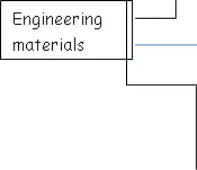
An engineer needs high carbon steel for a tough tool. Which path through the diagram leads to this material?
Engineering materials → metals → ferrous metals
Engineering materials → non-ferrous metals → aluminum
Engineering materials → composites
Engineering materials → non-metals → natural
A lab sample is a non-metal and exists as a single type of atom. Which classification fits this sample best?
Metal alloy element
Non-metal element sample
Non-metal mixture sample
Non-metal compound sample
A carbon dioxide cylinder is labeled as a non-metal substance. How should carbon dioxide be classified?
Non-metal element form
Metallic compound form
Non-metal compound form
Non-metal mixture form
An unknown non-metal sample shows multiple components that can be separated physically. Which basic form does this indicate?
Element form of non-metal
Compound form of non-metal
Alloy form of metal
Mixture form of non-metal

A material engineer must choose a non-metal from the natural category. Which option fits that category?
Thermosetting epoxy resin
Thermoplastic polyethylene
Vulcanized rubber material
Processed aluminum metal

A factory must select a synthetic non-metal for injection molding. Which choice matches that requirement?
Ceramic tile material
Natural glass obsidian
Thermoplastic polymer
Hardwood lumber
Which list correctly groups only non-metal materials commonly used in engineering?
Glass, aluminum, ceramics
Rubber, brass, glass
Steel, copper, wood
Wood, rubber, plastics

In the diagram, plastics belong to a larger family. Which branch shows how plastics are grouped under that family?
Polymers divided into fibres, plastics, elastomers
Ceramics divided into oxides, carbides, nitrides
Composites divided into matrices, reinforcements, fillers
Metals divided into alloys, ceramics, polymers

Using the diagram, which pair correctly represents the primary division within plastics?
Thermoplastics and thermosetting plastics
Elastomers and fibres
Alloys and composites
Ceramics and glasses
A product needs to be remolded by reheating multiple times. Based on the diagram’s categories, which plastic type is most suitable?
Thermoplastics allowing repeated softening
Thermosetting plastics permanently crosslinked
Elastomers with high elastic recovery
Fibres with oriented molecular chains

A heat-resistant electrical plug must keep its shape after one curing cycle. Which category from the diagram best fits this need?
Thermosetting plastics for rigid, heat-stable parts
Elastomers for flexible rubber-like components
Thermoplastics for easily reshaped materials
Fibres for tensile reinforcement materials
During moulding of thermosetting plastics, what process causes a permanent change in the material?
Annealing by slow cooling
Tempering with cold air
Work hardening from pressure
Curing due to generated heat
After a thermosetting plastic has cured, what happens if you try reheating it?
It softens and flows again
It returns to its plastic state
It remains rigid and unchanged
It dissolves into monomers

Which statement best explains why thermosets are used for electrical plugs shown?
They absorb moisture easily
They can be reshaped repeatedly
They insulate and resist heat
They conduct electricity strongly
The phrase 'It has changed permanently' refers to what property of thermosetting plastics?
Elastic recovery after cooling
Temporary physical deformation
Permanent cross-linked structure
Reversible softening on heating

Which household item in the images most likely uses a thermoset for its casing due to heat exposure?
Toaster outer shell
Decorative radio grille
Old rotary telephone
Plastic kettle body
Why is moulding a critical step for thermosetting plastics shown in the slides?
It aligns polymer chains temporarily
It reduces electrical resistance
It triggers heat that cures the polymer
It removes moisture from the resin
Which statement best explains why thermoplastics can be remoulded repeatedly when heated and cooled?
They chemically cure into permanent hard structures
They are metals with crystalline grains that reform
Intermolecular forces allow softening at set temperatures
They have crosslinked networks that stay rigid
A factory needs materials that can be reheated to soften during rework. Which material class should be selected?
Ceramics for extreme hardness
Composites for layered strength
Thermosets for irreversible hardening
Thermoplastics for repeated softening
Compared with thermosets, thermoplastics are described as not as rigid but usually tougher. What practical implication does this have for product design?
They cannot be processed by injection moulding
They suit flexible parts that absorb impact
They always shatter under sudden loads
They must be cast into thick rigid blocks
ABS is lightweight and commonly used in Lego bricks and safety helmets. Which property makes ABS suitable for these applications?
Low friction like a lubricant
High brittleness under impact loads
Good toughness with light weight
Transparency like window glass
Acrylic is often marketed as Plexiglas or Perspex. Why is acrylic a practical alternative to glass in safety glazing?
It resists wear as a solid lubricant
It conducts electricity efficiently
It is shatterproof and lightweight
It cures permanently when heated
Which application best matches polyester’s common uses described?
Non‑stick cookware surfaces
Optical lenses and scientific prisms
Clothing, blankets, and mouse pads
Brake pads and engine pistons
A packaging engineer needs a plastic resistant to many chemical solvents, acids, and bases. Which thermoplastic fits this requirement?
Acrylic for transparency
Polypropylene for chemical resistance
ABS for impact resistance
Cellulose acetate for adhesives
Polystyrene can function as either a thermoplastic or a thermoset. As a thermoplastic, which typical product uses polystyrene?
High‑temperature turbine blades
Disposable cutlery and CD cases
Flexible belts and ropes
Shatterproof window panels
Cellulose acetate is chosen for eyeglass frames. Which feature makes it suitable for this application?
Extreme resistance to solvents and acids
Compatibility with adhesives and moulding
Transparency with shatter resistance
Self‑lubricating low friction surfaces
Teflon (PTFE) is used both as non‑stick cookware coating and as a lubricant in machinery. What shared property enables these uses?
Strong crosslinking upon heating
High optical clarity and rigidity
Very low friction and stickiness
High surface energy and adhesion
Nylon is described as a silk‑like plastic used for fabrics and ropes. Which performance characteristic is critical for these uses?
Good tensile strength and flexibility
Electrical conductivity in fibers
High stiffness with low elongation
Brittle fracture under tension
Polyketones are high‑performance thermoplastics that resist solvents and have good mechanical properties. Which engineering scenario best fits their selection?
Disposable foam cups and packaging
Components exposed to aggressive chemicals
Permanent crosslinked structural parts
Transparent safety glazing panels
Which statement best describes ceramics as a class of engineering materials?
Organic metallic solids formed without heat
Metallic composites produced by pressure sintering only
Inorganic non-metallic solids formed by heating then cooling
Polymeric materials cured at room temperature
A builder needs roof tiles that resist weathering. Which ceramic sector provides typical products like bricks, pipes, and tiles?
Technical ceramics sector
Whitewares ceramics sector
Refractories ceramics sector
Structural ceramics sector
A kiln lining must withstand very high temperatures. Which ceramic sector is most appropriate?
Refractories ceramics sector
Structural ceramics sector
Technical ceramics sector
Whitewares ceramics sector
A manufacturer is producing tableware and sanitary ware. Which ceramic sector matches this application?
Refractories ceramics sector
Technical ceramics sector
Structural ceramics sector
Whitewares ceramics sector
Which application is a typical example of technical (engineering) ceramics?
Sanitary ware for public restrooms
Decorative wall tiles for kitchens
Bearing components for mechanical systems
Clay bricks for suburban houses
Select the best ceramic choice for ballistic protection armor plates.
Structural ceramics used for roofing
Refractory ceramics optimized for insulation
Technical ceramics designed for high performance
Whitewares ceramics for glossy finishes
A design team needs materials for jet engine turbine blade coatings. Which ceramic category should they evaluate?
Structural ceramics for load-bearing masonry
Refractories for furnace bricks and linings
Whitewares for consumer table sets
Technical ceramics for advanced aerospace uses
Which set lists items commonly made from technical ceramics?
Kiln linings, furnace bricks, fireclay mortars
Tableware, sanitary basins, porcelain cups
Floor tiles, roof tiles, drainage pipes
Space Shuttle tiles, ceramic disk brakes, missile nose cones
Which statement best explains why emery and corundum are classified as compounds in engineering materials?
They are mixtures of different metal alloys only
They combine a metal element with a non-metal element
They are pure elemental metals without oxygen
They are polymers formed from long carbon chains
Aluminium oxide found in abrasive grits is formed from which pair of elements?
Iron and oxygen
Aluminium and nitrogen
Aluminium and oxygen
Magnesium and carbon
A grinding wheel uses grits containing 80 percent aluminium oxide. What does this percentage indicate about the material composition?
It is a composite with no chemical compounds
It is mostly a polymeric organic material
It mainly consists of a metal–non-metal compound
It is entirely a pure metal substance
Which pair correctly matches a naturally occurring abrasive with its typical major compound?
Corundum — iron oxide
Emery — aluminium oxide
Corundum — silicon carbide
Emery — magnesium oxide

