
 Worksheets
BUSINESS MANAGEMENT WEBXAM STUDY GUIDE (Worksheet Extraction)
Total questions: 132
Worksheet time: 1hrs 6mins
Career Planning and Preparation: When developing a career plan, which of the following is the most important factor to ensure the plan reflects both secondary and postsecondary options?
Only focusing on the immediate job available after high school graduation.
Aligning personal interests and pathways with required degrees, certifications, or trade school options.
Choosing a career based solely on the highest potential salary regardless of interest.
Waiting until after college graduation to research specific industry requirements.
Career Planning and Preparation: A student looking to become a Certified Public Accountant (CPA) must meet specific state requirements. This is an example of identifying:
A voluntary industry association membership.
Requirements for education, licensure, and experience.
A strategy for self-promotion.
Organized labor regulations.
Career Planning and Preparation: Which of the following is a key component of "self-promotion" when preparing for the hiring process?
Including only personal social media handles on a job application.
Developing a professional portfolio that showcases specific work samples and achievements.
Memorizing a script for an interview to avoid showing any personality.
Listing every job ever held, including those unrelated to the position.
Professionalism and Workplace Behavior: An employee who consistently takes ownership of their mistakes and ensures their tasks are completed on time is demonstrating:
Networking techniques.
Accountability and work ethic.
Technical writing skills.
Laissez-faire leadership.
Professionalism and Workplace Behavior: How should a business professional manage the "correlation between emotions, behavior, and appearance"?
By allowing personal frustrations to dictate their tone in emails to clients.
By dressing casually for all meetings to feel more comfortable.
By maintaining a composed demeanor and professional dress to establish credibility and trust.
By avoiding all workplace interactions when feeling stressed.
Professionalism and Workplace Behavior: What is the most effective way to "receive constructive feedback" from a supervisor?
Defending your actions immediately to prove the supervisor is wrong.
Listening actively, asking clarifying questions, and creating an action plan for improvement.
Ignoring the feedback if it does not align with your own self-assessment.
Discussing the feedback with coworkers to see if they agree with the supervisor.
Problem Solving and Adaptability: When "taxing workplace demands" cause high levels of stress, a successful employee should:
Request a transfer to a different department immediately.
Adapt personal coping skills, such as time management or mindfulness, to adjust to the pressure.
Work longer hours without breaks to ensure all tasks are finished.
Complain to management until the workload is reduced.
Problem Solving and Adaptability: Which action demonstrates "respect for different cultural beliefs and practices" in a global business environment?
Expecting all team members to adopt the manager's personal cultural habits.
Researching and acknowledging diverse holidays and communication styles within the team.
Avoiding coworkers who have different beliefs to prevent conflict.
Treating everyone exactly the same, regardless of their unique cultural needs or dietary restrictions.
Problem Solving and Adaptability: Identifying a "healthy lifestyle" that reduces the risk of chronic disease and unsafe habits is important in business because it:
Is a requirement for obtaining a state business license.
Increases long-term productivity, reduces absenteeism, and improves mental clarity.
Allows an employee to work 24 hours a day without needing rest.
Is the primary role of professional industry associations.
Effective Communication & Information Management: When a manager pulls data from a trade journal to support a new marketing strategy, which action is necessary to ensure the information is "valid and relevant"?
Changing the data to match the company's internal goals.
Citing the source to provide credibility and allow others to verify the information.
Presenting the information as their own to show leadership authority.
Only using information that is older than five years.
Effective Communication & Information Management: What is a primary "disadvantage" of using electronic communication, such as instant messaging, for complex workplace instructions?
It is significantly more expensive than printed memos.
It allows for the message to be forwarded to many people.
It lacks non-verbal cues, which can lead to a misunderstanding of the intended tone.
It provides a permanent record of the conversation.
Effective Communication & Information Management: Which skill is most important when "technical writing" is required to complete an equipment failure report?
Using descriptive, emotional language to show frustration with the machine.
Providing clear, objective, and accurate details so others can solve the issue.
Writing in a "stream of consciousness" style to capture every thought.
Including personal opinions about the manufacturer of the equipment.
Leadership Styles & Teamwork: A leader who gathers all "stakeholders" to discuss a problem and works until everyone agrees on a solution is using which technique?
Autocratic decision-making.
Consensus-building.
Laissez-faire leadership.
Formal presentation skills.
Leadership Styles & Teamwork: Which of the following is a characteristic of a "Transformational" leadership style?
Focusing strictly on daily tasks and immediate rewards.
Using motivational strategies to inspire a shared vision and long-term goals.
Avoiding all contact with subordinates to promote independence.
Making all decisions without seeking any input from the team.
Leadership Styles & Teamwork: When providing group leadership to promote "collaboration," a manager should:
Assign the same task to three different people to see who does it best.
Identify the unique strengths of each team member and encourage open dialogue.
Discourage any form of disagreement or debate during meetings.
Take over all tasks to ensure they are completed exactly to their standard.
Conflict Resolution & Interpersonal Skills: "Active listening" in a negotiation is best demonstrated by:
Thinking about your next counter-argument while the other person is speaking.
Interrupting the other party to correct their facts immediately.
Summarizing what the other person said to confirm understanding before responding.
Looking at your phone to show the other party that you are not intimidated.
Conflict Resolution & Interpersonal Skills: Which of the following is the most professional way to use "negotiation skills" to reach a solution?
Demanding that your needs are met before considering the other person's.
Finding a "win-win" outcome that addresses the core interests of both parties.
Walking away from the discussion if the other person does not agree immediately.
Complaining to higher management about the other person's stubbornness.
Business Models and Societal Role: Which business model involves a company providing a basic service for free while charging for premium features?
Direct Sales model
[Freemium model](https://www.investopedia.com/terms/f/freemium.asp)
Subscription model
Franchise model
Business Models and Societal Role: From a societal perspective, what is a primary role of business beyond generating profit for owners?
To eliminate all forms of competition in the local market.
To provide goods and services that satisfy needs and improve the standard of living.
To ensure that government policies remain unchanged over time.
To prevent the integration of new technologies in the workplace.
Business Functions and Interdependence: Which department is primarily responsible for managing the "people" aspect of a business, including recruitment, training, and compliance with labor laws?
Operations Management
[Human Resources Management](https://www.shrm.org/about-shrm/pages/default.aspx)
Strategic Management
Information Management
Business Functions and Interdependence: How does the "Marketing" function typically interact with the "Operations" department?
Marketing provides the funding that Operations uses to pay employees.
Marketing communicates consumer demand, which tells Operations how much product to produce.
Marketing writes the technical code used by Operations to manage machinery.
Marketing is responsible for the physical delivery of goods produced by Operations.
Business Functions and Interdependence: Which business activity is focused on the "oversight and coordination" of the entire journey of a product from raw materials to the final customer?
Sales Department
Supply Chain
Accounting and Finance
Information Management
Driving Forces and Business Agility: A company decides to expand its operations into three new countries to take advantage of lower production costs. This is an example of which driving force?
Globalization
Domestic diversity
Political climate
Industry structure changes
Driving Forces and Business Agility: "Business Agility" is best described as a company's ability to:
Maintain a rigid organizational structure to prevent confusion.
Rapidly adapt to market changes and environmental shifts to remain competitive.
Avoid using new technology until it has been on the market for ten years.
Focus exclusively on one product regardless of changing consumer trends.
Customer Motivation and Results: Which factor is most likely to motivate a "business" (B2B) to make a purchase compared to an individual consumer?
Emotional appeal and brand status.
[Return on Investment (ROI)](https://www.investopedia.com/terms/r/returnoninvestment.asp) and operational efficiency.
Impulse buying based on social media trends.
Personal hobbies of the procurement officer.
Customer Motivation and Results: What is a common difference in how "Information Management" is implemented in a small business versus a large corporation?
Small businesses never use technology to manage records.
Large corporations often have dedicated IT departments, while small business owners may manage IT themselves.
Only large corporations are required to follow privacy laws.
Small businesses focus on global data, while large businesses focus only on local data.
Structure, Interrelationships, and Definitions: How does an "organizational structure" primarily impact business processes?
It determines the physical location where all employees must work.
It acts as a framework that defines how employees work together and supports the achievement of strategic goals.
It serves only as a list of job titles and has no effect on daily operations.
It replaces the need for formal policies and procedures.
Structure, Interrelationships, and Definitions: In business management, what is the best description of the relationship between "processes"?
Processes are isolated tasks that do not impact other departments.
Processes are inter-related activities that turn inputs into outputs across various business functions.
Processes are legal requirements that only apply to the accounting department.
Processes are only used in large corporations and are not necessary for small businesses.
Structure, Interrelationships, and Definitions: Which of the following correctly describes the hierarchy of "Policies, Processes, and Procedures"?
A Procedure is a broad rule; a Policy is a high-level map; a Process is a step-by-step instruction.
A Policy sets the strategic goal; a Process provides the broad steps; a Procedure provides the detailed, step-by-step tasks.
They are all synonyms and can be used interchangeably in a formal report.
A Process is a rule; a Procedure is a roadmap; a Policy is a technical manual.
Changes and Technology Integration: What is a common reason that business processes must "change" over time?
To ensure that employees never become too comfortable in their roles.
To stay relevant and adapt to shifts in the marketplace, technology, or regulatory requirements.
Because small businesses are legally required to change their processes every six months.
To increase the complexity of daily tasks for stakeholders.
Changes and Technology Integration: How does the "integration of social networking" directly influence business process performance?
It allows businesses to engage directly with customers and provides valuable real-time analytics for decision-making.
It eliminates the need for any other form of information technology.
It is used exclusively for personal communication between employees during break times.
It reduces the security risks associated with digital communication.
Internal Controls and Risk Management: The design of a business process that requires one employee to "authorize" a payment and a different employee to "record" the payment is an example of:
Inefficient management.
Segregation of duties, an internal control to reduce the risk of fraud.
A "Laissez-faire" leadership style.
A customer motivation strategy.
Internal Controls and Risk Management: Why are "internal controls" integrated into the design of business processes?
To make it more difficult for customers to return unwanted items.
To protect assets and provide reasonable assurance regarding the reliability of financial reporting.
To replace the need for professional liability insurance.
To ensure that information technology systems are never updated.
Personality, Culture, and Leadership: A manager who is highly "extraverted" is leading a team of largely "introverted" data analysts. To maintain a positive relationship, the manager should:
Require all employees to attend daily high-energy social mixers.
Adapt their communication style by providing written agendas and allowing time for quiet reflection before meetings.
Replace the introverted team members with more extraverted staff.
Ignore personality differences, as they have no impact on business productivity.
Personality, Culture, and Leadership: Which statement best describes the impact of "Organizational Culture" on business relationships?
Culture is a set of formal legal rules that only applies to external clients.
Organizational culture reflects shared values and behavioral norms that influence how employees interact and collaborate.
Culture is only relevant in large, international corporations.
A strong culture eliminates the need for any leadership or management oversight.
Personality, Culture, and Leadership: When a company encourages "sharing best practices" across different departments, how does this typically impact internal relationships?
It creates intense competition and hostility between departments.
It promotes collaboration and a "unified direction" by breaking down silos and fostering mutual support.
It slows down business processes by requiring too much communication.
It is only useful for technical tasks and does not affect human relationships.
Goal Alignment and Change Management: A software developer wants to learn a new coding language, and the company needs to modernize its mobile app. This alignment between "personal and organizational goals" leads to:
Higher levels of self-motivation and increased employee engagement.
Increased worker turnover because the employee is now overqualified.
A conflict of interest that requires human resources intervention.
A decrease in the company's overall profitability.
Goal Alignment and Change Management: Which leadership behavior is most effective when "leading workplace changes," such as a merger or a shift to remote work?
Keeping all information confidential until the change is completely finished.
Communicating with thoughtful transparency to inspire confidence and reduce employee anxiety.
Panicking visibly to show employees the seriousness of the situation.
Telling employees that their personal safety and well-being are secondary to the transition.
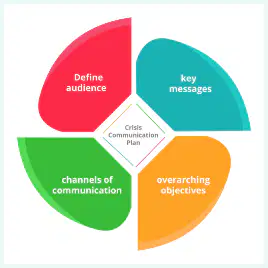
Crisis Management and Employee Relations: When a "crisis in a relationship" occurs—such as a major disagreement between two department heads—what is the most professional first step for a manager?
Wait for the employees to resolve the issue on their own to avoid interference.
Act as a mediator to facilitate open communication and find a common ground.
Discipline both parties immediately to set an example for the rest of the team.
Assign the disputing parties to different buildings so they never have to interact.
Crisis Management and Employee Relations: Which of the following is a way that businesses build "positive employer-employee relationships"?
Discouraging employees from asking questions about the company's future.
Implementing recognition programs and ensuring employees feel their work has a direct impact on success.
Micro-managing every task to ensure no mistakes are ever made.
Providing feedback only once a year during a formal performance review.
Communication Protocol, Risk, and Feedback: A new employee wants to send a company-wide announcement about a department social. According to standard "organizational communication protocols," what should they do first?
Post the announcement immediately on the company's public social media page.
Consult the communication guidelines to identify the appropriate channel and approval process.
Use the public address system during peak business hours.
Send a blind copy (BCC) email to every contact in the company database.
Communication Protocol, Risk, and Feedback: Which of the following is an example of "legal and regulatory exposure" created by the content of a business communication?
Using the wrong font size on a printed internal memo.
Sending a marketing email that accidentally includes a customer’s private health data.
Forgetting to include the company’s mission statement in a meeting agenda.
Delivering a formal presentation that is two minutes shorter than planned.
Communication Protocol, Risk, and Feedback: What is the most effective strategy for a manager to "solicit feedback" from a team after implementing a new procedure?
Wait for employees to complain during their annual performance reviews.
Use a feedback loop such as a brief digital survey or a dedicated Q&A session.
Assume no news is good news and continue with the new procedure.
Tell the team that feedback is only allowed if it is positive.
Persuasion, Branding, and Audience Management: To develop "persuasive communications" that gain audience commitment for a new project, a manager should focus on:
Listing every minor technical detail regardless of the audience's interest level.
Aligning the project's benefits with the audience's needs, values, and goals.
Using aggressive language to show that there is no other option but to agree.
Keeping the presentation as vague as possible to avoid questions.
Persuasion, Branding, and Audience Management: An "integrated approach" to business communications ensures that branding and messaging are consistent across all channels. This is best achieved by:
Allowing every department to design its own unique logo and color scheme.
Creating and following brand guidelines that outline logo usage, tone of voice, and visual identity.
Using a different tone of voice for social media than for formal reports.
Changing the company's value proposition every month to stay "fresh."
Persuasion, Branding, and Audience Management: When a manager "repurposes content" for an intended audience, they might:
Send the exact same 50-page technical report to both the engineering team and the social media followers.
Turn key findings from a technical report into a series of simple infographics for a client newsletter.
Delete the original data once the first presentation is over.
Post confidential internal memos on the company's public blog.
Crisis Management and Data Decision-Making: In the context of "managing crises," what is the primary purpose of business communications?
To hide the problem from stakeholders for as long as possible.
To control the narrative, reduce confusion, and demonstrate transparency and accountability.
To blame a specific employee publicly to protect the company's reputation.
To stop all communication until the crisis has completely ended.
Crisis Management and Data Decision-Making: When interpreting research data for decision-making, a manager notices a "strong positive correlation" between employee training and sales growth. What is the best "actionable business recommendation"?
Eliminate the training budget to save money since sales are already high.
Invest in further employee development to potentially drive higher sales revenue.
Ignore the data because correlation never implies a useful relationship in business.
Fire the employees who did not attend the training.
Diversity, Equity, and Inclusion (DEI): Which strategy best promotes "Diversity, Equity, and Inclusion" in business communications?
Using gender-neutral language (e.g., "chairperson" instead of "chairman") in all official documents.
Only including photos of the executive board in the annual report.
Using complex industry jargon that only a small group of people can understand.
Translating documents into other languages only when a client asks for it.
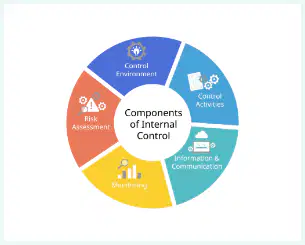
Risk Concepts and Classifications: A company’s server is hacked, leading to a temporary shutdown of their online store. This is an example of which type of business risk?
Strategic Risk
Operational Risk
Financial Risk
Compliance Risk
Risk Concepts and Classifications: Which of the following best describes "Residual Risk"?
The total amount of risk exists before any management actions are taken.
The risk that remains after internal controls and mitigation strategies have been implemented.
Risk that is completely eliminated through insurance.
Risk specifically related to the company's reputation and brand image.
Risk Concepts and Classifications: In Enterprise Risk Management (ERM), "Compliance Risk" is primarily driven by:
Changes in consumer spending trends.
Government regulations and regulatory agencies.
Fluctuations in international currency exchange rates.
Inefficient internal production processes.
Measuring and Analyzing Risk: A manager uses a "Qualitative" approach to analyze risk. This means they are measuring risk based on:
Numerical data and statistical modeling.
Subjective judgment, experience, and descriptive scales.
Exact dollar amounts of potential losses.
Automated algorithms that calculate probability to the fourth decimal.
Measuring and Analyzing Risk: How does a "Key Risk Indicator (KRI)" differ from a "Key Performance Indicator (KPI)"?
A KPI measures past success, while a KRI acts as an early warning signal of potential future problems.
A KRI measures profit, while a KPI measures safety.
There is no difference; the terms are interchangeable in a risk profile.
KRIs are only used by government agencies, while KPIs are for private business.
Risk Mitigation and Policy: A business decides to purchase a "Cybersecurity Insurance" policy to cover potential data breach costs. This is an example of which risk management strategy?
Risk Prevention
Risk Control
Risk Transfer
Risk Retention
Risk Mitigation and Policy: When developing a "Risk Profile" using the risk-reward relationship, a business with a "High Risk Tolerance" is likely to:
Avoid any project that has a chance of financial loss.
Accept greater potential threats in exchange for the possibility of higher financial returns.
Focus exclusively on compliance risks while ignoring strategic risks.
Retain all risks and refuse to buy insurance.
Risk Mitigation and Policy: Which of the following is a core element that should be included in an "Enterprise Risk Management Policy"?
A list of every employee's personal social media accounts.
The organization's risk appetite and the roles/responsibilities for managing risk.
Detailed daily weather reports for all office locations.
A guarantee that the business will never face a financial loss.
The Role and Impact of Compliance: What is the primary reason businesses must adhere to "compliance standards"?
To ensure that the business never has to pay taxes to the government.
To protect the organization from legal penalties, reputational damage, and financial loss.
To allow managers to ignore workplace safety rules when production is slow.
To guarantee that the company's stock price will increase every month.
The Role and Impact of Compliance: How do "compliance requirements" typically impact a business’s pricing strategy?
They have no impact on pricing because compliance is free to implement.
They may increase the cost of products or services due to the expenses associated with monitoring, testing, and reporting.
They always lead to lower prices because compliant companies are more efficient.
They require businesses to set prices based on government-mandated profit margins.
The Role and Impact of Compliance: Compliance expectations for a "Healthcare" organization (like a hospital) differ from a "Restaurant" primarily because:
Restaurants are not subject to any government regulations.
Healthcare must follow strict patient privacy laws HIPAA, while restaurants focus more on food safety and sanitation codes.
Healthcare organizations do not need to worry about employee training.
Restaurants are the only industry sector required to have a written compliance plan.
Developing and Managing Compliance Programs: Which of the following is a core "element of a basic compliance program" designed to promote consistent behavior?
A list of competitors' prices for similar products.
Written policies and procedures combined with regular employee training.
An informal "handshake agreement" between the CEO and the staff.
A marketing plan focused on social media engagement.
Developing and Managing Compliance Programs: Which factor most significantly influences the "effectiveness and cost" of a compliance program?
The size and structure of the organization.
The physical color of the office walls.
The number of holidays the company observes annually.
The personal hobbies of the human resources manager.
Developing and Managing Compliance Programs: When a manager performs a "due-diligence review" before a company merger, what are they primarily doing?
Calculating the potential holiday bonuses for the next three years.
Assessing the target company to ensure they are in compliance with all relevant laws and regulations.
Redesigning the company logo to match the new partner.
Interviewing every customer to see if they like the merger.
Documentation and Assessment: What is the primary function of an "internal audit" in a compliance program?
To find ways to bypass safety regulations without getting caught.
To independently verify that the organization is following its own policies and meeting regulatory requirements.
To replace the need for a Board of Directors.
To create a persuasive marketing presentation for potential investors.
Documentation and Assessment: Which method is most appropriate for "documenting adherence" to safety compliance procedures?
Asking employees to remember the dates they completed their training.
Maintaining detailed logs, sign-in sheets, and digital certificates of completion.
Writing a blog post about how much the company values safety.
Assuming compliance is happening as long as no accidents are reported.
CSR Purpose, Impact, and Drivers: What is the primary purpose of a Corporate Social Responsibility (CSR) policy within a for-profit organization?
To eliminate the need for paying federal and state taxes.
To integrate social and environmental concerns into business operations and interactions with stakeholders.
To ensure the company can bypass local labor regulations.
To focus exclusively on short-term profit maximization for shareholders.
Which of the following factors is an "external driver" that often pushes a business to implement more rigorous social responsibility policies?
Internal desire to reduce the employee benefits budget.
Shifting customer trends and increased demand for ethically sourced products.
A decrease in the cost of raw materials.
The personal political opinions of the company’s junior staff.
How does the impact of CSR policies typically manifest in business activities?
By reducing the transparency of financial reports to the public.
By improving brand reputation and building long-term loyalty with consumers and employees.
By allowing the company to ignore the safety standards of global markets.
By ensuring that the business never has to compete with nonprofit organizations.
When comparing ethical challenges, which issue is more likely to be a primary concern for a global manufacturing firm than for a local nonprofit?
Managing volunteer schedules for community events.
Navigating complex labor standards and environmental regulations across multiple different countries.
Organizing small-scale local fundraising drives.
Filing for tax-exempt status with the Internal Revenue Service (IRS).
In which way might a "Nonprofit" organization exhibit CSR differently than a "For-Profit" corporation?
Nonprofits do not have to follow any ethical guidelines.
Nonprofits exist primarily to fulfill a social mission, whereas for-profits must balance social goals with the need to generate a return for investors.
Only for-profit organizations are allowed to donate money to charity.
Nonprofits are prohibited from using digital communication strategies.
An employee discovers that their company is knowingly dumping chemical waste into a local river in violation of the CSR policy. The correct professional action is to:
Ignore the situation to avoid creating conflict with management.
Report the noncompliance through the company’s internal reporting system or a regulatory whistleblower hotline.
Post anonymous complaints on personal social media pages.
Resign immediately without telling anyone why.
"Sustainability reporting" is a method businesses use to EXHIBIT corporate social responsibility by:
Keeping energy consumption data secret from the public.
Publicly disclosing performance on environmental, social, and governance (ESG) goals.
Showing that they have successfully lobbied to remove local regulations.
Proving that they only hire employees from one specific cultural background.
What is the primary role of a "Governance Structure" in a business environment?
To handle the daily physical maintenance of office facilities.
To provide the framework of rules and practices by which a board of directors ensures accountability, fairness, and transparency.
To replace the need for a human resources department.
To ensure that every employee has equal voting rights on financial decisions.
How does a "Multinational" corporation’s governance structure typically differ from that of a "Microenterprise"?
Multinational firms have no formal governance requirements.
Large multinational corporations require complex, multi-layered governance to manage diverse global regulations, whereas microenterprises often have a centralized, informal structure.
Microenterprises are required by law to have a Board of Directors.
Governance only applies to nonprofit organizations, not for-profit multinationals.
In a "Limited Liability Company" (LLC), the governance structure is primarily designed to:
Protect the owners (members) from personal liability for business debts.
Ensure the business is managed by a publicly elected board of government officials.
Force the company to become a nonprofit within five years.
Prevent the company from expanding beyond a local market.
Which committee is specifically responsible for overseeing financial reporting, internal controls, and the work of independent auditors?
The Risk Committee
The Audit and Finance Committee
The Marketing Committee
The Human Resources Committee
How does a Board of Directors impact the "Strategic Planning" function of a business?
By performing the day-to-day administrative tasks of entry-level employees.
By approving the long-term vision and monitoring management’s progress toward key objectives.
By personally interviewing every new hire for the sales department.
By writing the technical code for the company’s website.
Which "governance process" element is a legal requirement for public corporations to document what happened during a board meeting?
Personal diaries of the CEO
Meeting Minutes
Social media status updates
Marketing brochures
"Proxies" are most commonly used in public business governance to allow:
Employees choose their own working hours.
Shareholders to vote on corporate matters without being physically present at a meeting.
Managers to bypass the Board of Directors when making large purchases.
The government to take control of a private company’s assets.
In which situation is it most "appropriate to escalate" a decision to a governance member (such as the Board of Directors)?
When an employee wants to request a two-day vacation.
When a strategic risk or legal issue arises that could significantly impact the entire organization’s survival.
When a team leader needs to order more printer paper.
When two coworkers have a minor disagreement about a lunch break schedule.
A manager is focused on meeting a quarterly production quota by monitoring employee output and correcting errors. This specific focus on day-to-day operations and stability is a hallmark of:
Leadership
Management
Conceptual decision-making
Organizational Development
Which "Decision-Making Style" is most effective in a high-pressure, emergency situation where a quick, task-oriented choice is needed based on existing rules?
Analytical
Directive
Conceptual
Behavioral
When a manager must coordinate the delivery of raw materials from a third-party vendor to the factory, they are primarily managing:
Internal resources
External resources
Knowledge assets
Operational risk
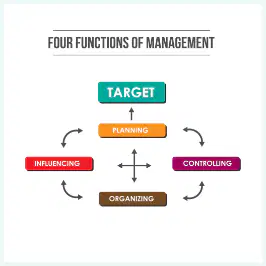
A manager is currently assigning specific tasks to department teams and establishing the reporting structure for a new project. Which management function are they performing?
Planning
Organizing
Leading
Controlling
According to "Contingency Management Theory," what is the "one best way" to lead an organization?
Using strict hierarchical control (Bureaucracy).
Viewing employees as interchangeable parts of a machine (Classical).
There is no "one best way"; it depends on the specific situation and environmental factors.
Focusing solely on financial incentives for all workers.
Which motivational strategy relies on an employee’s "internal" drive to complete a task because they find the work itself satisfying or challenging?
Intrinsic motivation
Extrinsic motivation
Theory X management
Quality assurance
"Knowledge Management" is distinguished from "Information Management" primarily because it focuses on:
Storing raw data in a database.
Organizing spreadsheets into reports.
Capturing and sharing "know-how," experience, and intuition held by people.
Legally protecting the company’s hardware assets.
Which field of management focuses specifically on "improving organizational effectiveness" and helping a company adapt to long-term change through culture and process shifts?
Project Management
Quality Management
Organizational Development
Supply Chain Management
A bank faces a loss because a teller made a data entry error. This is categorized as which type of risk?
Market risk
Credit risk
Operational risk
Strategic risk
When assessing "information quality" for a marketing campaign, a manager notices that 20% of the customer email addresses are in the wrong format (for example, missing the "@" symbol). Which dimension of data quality is being compromised?
Completeness
Validity
Uniqueness
Integrity
A business maintains "routing orders and tracking shipments" to ensure logistics efficiency. These are classified as which type of business records?
Accounting Records
Operational/Shipping Records
Human Resources Data
Quality Data
What is the primary purpose of "monitoring and auditing internal records" on a regular basis?
To increase the physical storage space required for paper files.
To verify adherence to compliance policies and identify gaps in data or documentation.
To allow employees to delete records they find uninteresting.
To replace the need for an Information Technology (IT) department.
According to standard "retention guidelines," which of the following business records typically must be preserved "Permanently" or "Forever"?
General correspondence with vendors.
Board meeting minutes and bylaws.
Employee job applications for candidates who were not hired.
Bank reconciliations from two years ago.
A manager is using a digital tool to "facilitate on-time completion" of a project by coordinating team calendars and meeting requests. This is an example of which management function?
Scheduling and Resource Planning
Information Archiving
Regulatory Compliance
Data Cleansing
During an "Information Technology (IT) needs assessment," the first step a business should take is to:
Buy the most expensive software available on the market.
Review the current technology landscape and survey employees about their "pain points."
Delete all existing records to start with a "clean slate."
Fire the current IT staff to save on the assessment budget.
An "Acceptable Use Policy" (AUP) is a common procedure used to protect business information by:
Defining how company IT resources can be used responsibly and securely by employees.
Prohibiting employees from ever using a computer for work tasks.
Automatically deleting all emails after 24 hours.
Requiring all business data to be stored on personal social media accounts.
Which strategy is most effective for "integrating information technology" into business operations to drive growth?
Keeping the IT department completely isolated from other departments.
Aligning IT plans and tools with the company’s strategic business goals and objectives.
Avoiding any new technology until it has been on the market for at least 20 years.
Only using technology for accounting and ignoring its use in sales or customer service.
Which of the following best describes the primary role of Human Resource Management (HRM)?
To handle the physical security and maintenance of the company’s office building.
To align the organization’s workforce with its strategic goals through recruitment, training, and development.
To replace the need for an executive leadership team.
To focus exclusively on reducing the cost of employee salaries to zero.
Which "External Factor" most significantly impacts a company’s ability to hire new employees?
The specific font used in the employee handbook.
The availability of qualified people in the local and global labor market.
The personal office decor of the HR manager.
The color of the company’s delivery vehicles.
"Employer Branding" impacts Human Resource Management by:
Increasing the cost of all physical marketing materials.
Influencing the perception of potential candidates and improving the company’s ability to attract and retain top talent.
Forcing the company to change its legal ownership structure.
Allowing the business to ignore all state and federal labor regulations.
A business is looking five years into the future to identify which current employees could potentially take over leadership roles when the current executives retire. This planning technique is known as:
Workforce Forecasting
Succession Planning
Outsourcing
Job Rotation
Which "Alternative Staffing Method" allows a business to access specialized talent for a specific project without adding to its permanent full-time headcount?
Succession Planning
Contracted Workers or Consultants
Full-time internal hiring
Mandatory overtime for existing staff
To ensure a job description is "Legally Compliant" with the Americans with Disabilities Act (ADA), a manager should:
Focus on the essential functions and outcomes of the job rather than the specific method used to perform them.
List "perfect physical health" as a mandatory requirement for all desk jobs.
Avoid writing job descriptions entirely to reduce legal exposure.
Only hire individuals from one specific cultural background.
What is the primary function of "Employment Assessments" (such as skills tests or personality batteries) in the hiring process?
To make the application process as difficult and long as possible for candidates.
To provide a standardized and objective way to measure a candidate's aptitude and predict their potential for success in a role.
To replace the need for an in-person interview.
To find out an applicant's personal religious or political beliefs.
A retail store hires ten additional "Seasonal Workers" to handle the increased customer traffic during the holiday month. This is an example of implementing a:
Long-term succession plan
Short-term staffing plan to support immediate business needs.
Global outsourcing strategy
Total rewards program
According to research, which of the following is a leading factor that causes employees to become disengaged and actively look for a new job?
Having too many local community involvement opportunities.
A toxic company culture or a lack of clear career development paths.
Being asked to participate in a formal mentorship program.
Receiving "timely and specific" recognition for high-impact work.
What is the estimated impact of high "employee disengagement" on an organization’s performance?
It has no financial impact if the employees still show up for work.
It leads to increased absenteeism, higher turnover costs, and lower overall productivity.
It automatically increases the company's "Net Promoter Score."
It reduces the need for a Human Resources department.
When implementing an "employee recognition program," which strategy is most effective for increasing long-term engagement?
Giving a generic "Great Job" card once a year to every staff member.
Providing timely, meaningful, and specific praise that connects an employee's actions to company values.
Only recognizing the single highest performer in the company once every five years.
Keeping all recognition private so that other team members do not feel jealous.
How does "Coaching" primarily differ from "Mentoring" in a professional business setting?
Coaching is for new employees, while mentoring is only for executives.
Coaching focuses on specific skill enhancement and short-term performance, while mentoring provides long-term career guidance and wisdom.
Mentoring is always a paid external service, while coaching must be done internally.
There is no difference; the terms are used interchangeably in HR planning.
A "Diverse, Equitable, and Inclusive (DEI)" work environment directly impacts business objectives by:
Increasing the risk of legal exposure and discrimination claims.
Improving employee retention and fostering a sense of belonging that drives innovation.
Reducing the number of qualified candidates who apply for open roles.
Ensuring that all employees have the exact same background and life experiences.
Which of the following is a proven strategy for creating a more "inclusive work environment"?
Hiring only from one specific university to ensure "culture fit."
Supporting Employee Resource Groups (ERGs) where individuals with shared backgrounds can connect and be heard.
Removing all "Diversity and Inclusion" mentions from the company website to save space.
Ignoring employee concerns about bias to avoid "uncomfortable" conversations.
When "documenting employee concerns" or performance issues, a manager should prioritize:
Their personal opinions and interpretations of the employee's "bad attitude."
Specific, factual, and objective accounts of behaviors, including dates, times, and impact.
Keeping the documentation in a public shared folder for all employees to read.
Waiting at least six months before writing anything down to see if the issue goes away.
How can "community involvement" serve as a strategic tool for "talent acquisition"?
It forces local residents to apply for jobs at the company.
It builds a value-driven connection with the local population, showcasing the company's mission and attracting mission-aligned candidates.
It reduces the company's need to pay competitive salaries.
It is only used to help employees find new jobs at other organizations.
Which quality methodology is specifically designed to reduce variation and eliminate defects using the DMAIC framework?
ISO 9000
Six Sigma
Malcolm Baldrige
Benchmarking
A company focuses on "Lean" principles in its manufacturing plant. What is the primary objective of this approach?
To increase the number of management levels.
To eliminate waste and reduce non-value-added activities.
To ensure every product is inspected by at least five people.
To replace all human workers with automated robotics.
The "DMAIC" process is used to improve existing processes. What does the "M" in DMAIC stand for?
Measure—collecting data to establish a baseline
Maintenance—repairing old equipment
Management—hiring new supervisors
Motivation—rewarding top employees
A manager wants to identify the "vital few" problems that cause the most defects, following the 80/20 rule. Which tool should they use?
Histogram
Pareto Chart
Scatter Diagram
Flowchart
Which quality tool is best suited for identifying the potential "root causes" of a specific business problem?
Check Sheet
Cause-and-Effect (Fishbone) Diagram
Control Chart
Histogram
In a standard Quality Management System (QMS), which document provides the most detailed, step-by-step instructions for a specific task?
Quality Manual
Quality Policy
Work Instructions
Strategic Plan
A software company releases a new app to a small group of "real-world users" to find bugs before the final launch. This validation method is called:
Alpha Testing
Beta Testing
First-Article Inspection
Market Benchmarking
What is the primary impact of "poor quality control" on a business’s financial performance?
It decreases the cost of customer support.
It increases costs related to product recalls, warranty claims, and lost sales due to a tarnished reputation.
It has no impact as long as the marketing budget is high.
It automatically increases the company's profit margin.
Which project stakeholder is primarily responsible for providing the financial resources, approving the project charter, and serving as the final escalation point for major issues?
Project Manager
Project Sponsor
Project Team Member
Stakeholder Analyst
A document that formally authorizes the existence of a project and provides the project manager with the authority to apply organizational resources to project activities is called a:
Project Charter
Statement of Work (SOW)
Lessons Learned Register
Gantt Chart
What is the primary purpose of "expectation setting" at the beginning of a project?
To ensure the project manager has no accountability for delays.
To align stakeholders on the project's scope, timeline, and quality standards to prevent "scope creep."
To guarantee that the project will be finished under budget regardless of changes.
To eliminate the need for a project team.
When a manager identifies the sequence of tasks that determines the shortest possible duration of a project, they are analyzing the:
Critical Path
Resource Allocation Map
Project Budget
Risk Register
A project manager notices that a required software update is taking three days longer than planned, which will delay the final launch. The first professional action should be to:
Ignore the delay and hope the team can work faster later.
Communicate the status and potential delay to stakeholders immediately with a proposed adjustment.
Cancel the project to avoid further costs.
Blame the software vendor publicly to protect the team's reputation.
To manage a project team effectively and reduce conflict, a manager should establish "group norms." These are best defined as:
Technical requirements for the product's output.
Shared expectations and rules for how team members will communicate and behave.
The maximum number of hours a team member can work per week.
Legal contracts signed between the sponsor and the buyer.
Which activity is a critical part of the "project closing" phase?
Developing the initial project charter.
Obtaining formal buyer acceptance and finalizing all billing and payments.
Identifying the critical path for the first time.
Hiring new team members for the next project.
Why is "evaluating project results" and reviewing "lessons learned" important for an organization?
To find which employees to fire for minor mistakes.
To improve future project performance by identifying what worked well and what challenges can be avoided.
To prove that the project manager was perfect in every decision.
To increase the complexity of the project closing documentation.
Which of the following best describes a "Business Mission" statement?
A detailed list of the company's financial goals for the next ten years.
A summary of the organization's purpose, identifying why it exists and who it serves.
A breakdown of every employee's daily job responsibilities.
A plan for how to outsource the human resources department.
When conducting a SWOT analysis, a "new government regulation that increases taxes on your product" would be categorized as a:
Strength
Weakness
Opportunity
Threat
What is the relationship between a "Strategic Plan" and a "Departmental Plan"?
They are completely independent and should never overlap.
The departmental plan provides the specific tactics required to support the high-level goals of the strategic plan.
The strategic plan is only for the CEO, while the departmental plan is for everyone else.
Departmental plans are only necessary if the business is failing its strategic objectives.