
 Worksheets
Technical drawing test
Total questions: 18
Worksheet time: 14mins
What characterizes axonometric perspective?
Lines converge at a vanishing point
It represents objects in 2D only
All projection lines are parallel to each other
It uses curved projection lines
Which axonometric subtype uses all axes perpendicular to the image plane?
Dimetric
Isometric
Trimetric
Cavalier
In isometric projection, the angles between the axes are typically:
45°, 45°, 90°
60°, 60°, 60°
120°, 120°, 120°
90°, 45°, 45°
In cavalier perspective, the measurements of Y axis is reducted by a fraction of
1/2
(1 real meter is 0,5 meters in the drawing)
2/3
(1 real meter is 0,66 meters in the drawing)
3/4
(1 real meter is 0,75 meters in the drawing)
The Y axis maintains its dimensions
(1 real meter is 1 meter in the drawing)
Egyptian or high-skew perspective is useful because it shows:
Only one face clearly
Many measurements at the same time
Only vertical dimensions
No dimensions at all
Conical perspective imitates how:
Machines perceive objects
Humans naturally see objects
Technical drawings distort reality
Light reflects inside a prism
What is a vanishing point?
A point where projection lines are perpendicular
Where parallel lines appear to meet
A point where dimensions are measured
The center of an object
One-point perspective is typically used for:
Architectural design of interiors
Drawing buildings on streets
Technical mechanical parts
Unmeasurable sketches
Why is conical perspective rarely used for final product designs?
It is too technical
It is less realistic
It makes measurement difficult
It removes depth
The purpose of standardisation in drawings is to:
Make drawings artistic
Allow personal styles
Ensure universal understanding
Add unnecessary details
What does an “edge” symbol represent according to the table?
A separation of the planes
A hidden line
A sectioned area
A cylindrical axis
A “hidden edge” is used to show:
A line that's hidden from the view
A visible contour
A cut plane
A folding line
Which of the following styles would you use to show the axis of a circle
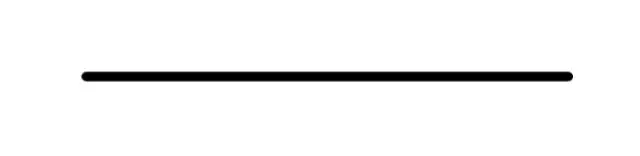



What do we call the line that divides a figure into two identical and mirrored parts?
C-section
Reference line
Axis of symmetry
Cutting plane
In one‑point conical perspective, all parallel lines converge to a single (a) point.
Graphical representation is the way we show ideas, objects and projects using drawings and (a)
Which perspectives do we normally use to show the details of a piece?
Isometric
Dimetric
Trimetric
Tetrahedric
When drawing tall buildings using conical perspective viewed from below, how many vanishing points are typically used?
One
Two
Three
None

