
 Worksheets
Classification and Uses of Metals
Total questions: 65
Worksheet time: 33mins
A plumber needs a magnet to quickly sort fittings. Which group of metals would be attracted and also prone to rusting if untreated?
Non-ferrous metals lacking iron content
Ferrous metals containing iron
Alloys blended for strength
Pure metals refined from ore
Which choice correctly matches an alloy to its main components used in plumbing?
Solder: zinc and lead
Steel: copper and tin
Brass: copper and zinc
Bronze: iron and carbon
A fitting must avoid magnetism and resist rust without coatings. Which metal type fits this need best?
Alloys of iron and carbon
Ferrous metals containing iron
Non-ferrous metals without iron
Pure iron from ore
When selecting pipe brackets, which property of ferrous metals is most likely to influence corrosion control decisions?
High electrical resistance in copper
Magnetic behavior and rust tendency
Melting point similar to solder
Low density of aluminum alloys
Which list shows common metals a plumber regularly encounters as raw materials?
Copper, low carbon steel, brass
Zinc, tin, solder, gunmetal
Copper, brass, iron, lead
Solder, bronze, gunmetal, steel
A technician needs a hard, castable alloy for valves with copper, tin, and zinc. Which option fits?
Brass for decorative trims
Steel for reinforcing bars
Bronze used for coins
Gunmetal used for castings
Which statement best distinguishes pure metals from alloys in plumbing stock?
Alloys are non-metallic compounds of iron
Alloys contain only one metallic element
Pure metals come straight from ore processing
Pure metals are mined mixtures of elements
A repair requires soft soldering on copper pipe. Which composition describes typical plumbing solder?
Copper and zinc blend
Iron and carbon blend
Copper and tin blend
Tin and copper blend
Which scenario demonstrates applying metal classification to select a material for a wet, magnetic environment?
Choose non-ferrous to avoid attraction
Choose solder for high structural loads
Choose pure copper for magnetism
Choose ferrous and add rust protection
Identify the non-ferrous option best suited for pipes due to corrosion resistance and workability.
Low carbon steel pipe
Copper tubing for water
Cast iron soil pipe
Gunmetal bracket material
Which pairing matches a material with a typical plumbing use based on properties?
Brass: threaded fittings
Lead: structural brackets
Steel: non-magnetic hangers
Aluminum: ferrous radiators
A student confuses bronze and brass. Which correction helps choose materials correctly?
Both are pure metals from ore
Bronze is copper and zinc; brass copper and tin
Brass is copper and zinc; bronze copper and tin
Both are iron-based, so magnetic
Which metal is correctly matched to being an alloy of iron and carbon with typical use in brackets and heat exchangers?
Low carbon steel used for brackets and exchangers
Stainless steel used for brackets and exchangers
Brass used for brackets and exchangers
Aluminium used for brackets and exchangers
A project needs industrial pipe and fittings resistant to corrosion. Which composition best fits this requirement?
Alloy of iron, carbon, chromium, nickel
Pure aluminium with high thermal capacity
Alloy of copper and zinc for valves
Pure copper for domestic pipe
Which choice best applies when selecting materials for fittings and valves in a plumbing system?
Iron, a pure ferrous metal
Lead, a pure heavy metal
Aluminium, a pure light metal
Brass, an alloy of copper and zinc
You are replacing heat exchangers in a period-style installation. Which metal from the list is most appropriate?
Copper used for piping only
Iron used for radiators and exchangers
Brass used for decorative valves
Lead used for flashings only
Which material choice best matches plumbing flashings and some solders?
Lead as a pure metal
Brass alloy for valves
Stainless steel alloy for pipes
Copper pure metal for pipes
A designer wants lightweight heat exchanger components. Which table entry aligns with this use?
Brass, copper–zinc alloy
Copper, a pure metal
Aluminium, a pure metal
Low carbon steel, iron–carbon alloy
For domestic pipe and fittings where ease of installation is needed, which metal and type are correctly paired?
Low carbon steel as a pure metal
Stainless steel as a pure metal
Brass as a pure metal
Copper as a pure metal
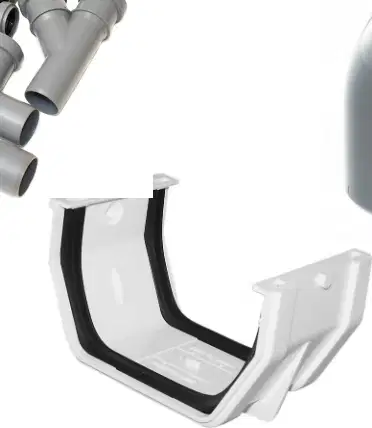
A guttering component in cold climates needs to resist becoming brittle when frozen. Which plastic type would be least suitable for this task?
Thermosetting rigid polymer
Recycled thermoplastic blend
Flexible thermoplastic elastomer
Thermoplastic made from polymer resin
A plumber must select a pipe material for sustained high-temperature flow in a central heating system. Which property points to the correct plastic category?
Rigid and copes with high temperatures
Becomes brittle when frozen easily
Recyclable and re-shapeable when heated
Softens and re-molds repeatedly
Choose the statement that correctly differentiates recyclability between the two major plastic groups used in plumbing.
Thermosettings are recyclable; thermoplastics are not
Both groups are recyclable equally
Thermoplastics are recyclable; thermosettings are not
Only plastics used for guttering are recyclable
A manufacturer plans to heat and reshape offcuts from pipe production to reduce waste. Which plastic group enables this process?
Thermoplastic from polymer resin
Thermosetting rigid composite
Cross-linked thermosetting resin
High-temperature resistant thermoset
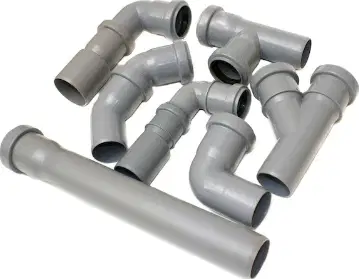
You are comparing two fittings: one for above-ground drainage exposed to sun and intermittent heat, and another for central heating. Which pairing best uses plastic categories appropriately?
Drainage: thermosetting; heating: thermoplastic
Drainage: thermoplastic; heating: thermosetting
Both drainage and heating: thermosetting
Both drainage and heating: thermoplastic
A client asks why some plastic fittings can be recycled while others cannot. Which explanation aligns with their material behavior when reheated?
Thermoplastics can be reheated and reshaped
Thermosettings melt and flow repeatedly
All polymer resins behave identically
Recyclability depends only on color pigments
A homeowner needs cold-water waste and guttering pipes that can be joined by solvent welding or push fit but must not carry hot water. Which plastic is most suitable?
PVCu for cold water and soil pipes
ABS for commercial hot water systems
MDPE for underground mains only
Polybutylene for central heating circuits
A blue service pipe for underground mains needs joints made by fusion welding, push fit, or compression. Which material should be specified?
ABS for above-ground overflow lines
PVCu for waste and downpipes
Polypropylene for CWSC and waste
MDPE for underground mains in blue
Which property makes HDPE unsuitable for long-term exposure above ground without protection?
It cannot be compression jointed
It is only rated for hot water
It degrades when exposed to sunlight
It feels slightly greasy to the touch
A loft cold-water storage cistern (CWSC) needs waste/overflow connections. Which plastic commonly used for CWSC connections also degrades in sunlight and is fusion welded?
Polybutylene used only for waste
ABS used for commercial heating
MDPE used for CWSC connections
PVCu used for hot water lines
Which joining method is appropriate for PVCu plumbing systems?
Solvent welding or push fit joints
Fusion welding only joints
Compression only joints
Not solvent welded joints
A black underground mains pipe requires either fusion welded, push fit, or compression joints. Which plastic meets these criteria?
Polypropylene for domestic waste
ABS for commercial overflow work
PVCu for guttering applications
HDPE for black underground mains
Which plastic is suitable for both hot and cold water and central heating, but is not solvent welded?
MDPE for commercial hot water
PVCu for hot and cold lines
ABS for central heating circuits
Polybutylene for hot, cold, and heating
A contractor needs rigid waste and overflow pipes that can be solvent welded and may be used in commercial water systems. Which plastic fits this description?
ABS for commercial waste and overflow
MDPE for blue underground mains
Polypropylene for central heating loops
PVCu for fusion welded hot water
Which statement correctly compares MDPE and HDPE for underground mains?
Only MDPE can be used for hot water service
HDPE is blue and MDPE is black in color
MDPE is solvent welded while HDPE is push fit only
Both degrade in sunlight and use fusion welded joints
Which material is described as feeling slightly greasy to the touch and is not solvent welded?
HDPE for black underground mains
ABS for commercial water systems
PVCu for soil and guttering
Polypropylene for waste and overflow
For exterior waste pipework exposed to sunlight, which thermoplastic should be avoided due to UV degradation?
ABS resists sunlight without issues
Polybutylene is solvent welded outdoors
PVCu is rated for hot water exposure
Polypropylene degrades in direct sunlight
Which jointing options are suitable for polybutylene plumbing systems?
Compression only, fusion prohibited
Solvent welded or fusion welded only
Push fit only, no compression allowed
Push fit or compression, not solvent welded
A designer is selecting materials for soil stacks and downpipes carrying cold water waste. Which material is commonly used and must avoid hot water?
MDPE used for commercial hot water
ABS used for underground mains
PVCu used for soil and waste pipes
Polypropylene used for central heating
Which plastic used for waste and overflow is not joined by solvent welding and is noted for a slightly greasy surface feel?
ABS for commercial overflow lines
Polypropylene for waste and overflow
HDPE for underground service mains
PVCu for guttering downpipes
A system specifies push fit and compression joints for a mixed hot and cold water installation with central heating. Which plastic matches these jointing methods and temperature range?
MDPE suitable for above-ground heating
PVCu suitable for hot water only
ABS suitable for underground mains
Polybutylene suitable for hot and cold
A client wants glossy bathroom basins with a smooth finish. Which ceramic material best matches this requirement?
Vitreous china with high gloss finish
Fire clay fired at higher temperature
Stoneware with textured low sheen
Porcelain clay with matte glazing
You are comparing two sink materials. One chips less because it is fired at a higher temperature. Which material is this?
Earthenware with low firing heat
Porcelain with thin glass coating
Fire clay more resistant to chipping
Vitreous china commonly used for WCs
A manufacturer wants a common ceramic for both sinks and WCs. Which option should be specified?
Stoneware primarily for outdoor pots
Porcelain only for decorative tiles
Fire clay mainly for heavy furniture
Vitreous china widely used for sanitaryware
When selecting materials for sanitaryware, which statement correctly applies the differences between vitreous china and fire clay?
Vitreous china provides glossy finish on ceramics
Fire clay achieves high gloss through glazing
Fire clay is unsuitable for producing sinks
Vitreous china resists chips due to higher firing
A material sample is being pulled in a test rig until it stretches or breaks. Which property is primarily being assessed?
Compressive strength under crushing loads
Tensile strength under pulling loads
Shear strength under sliding forces
Elasticity under bending loads
When a column is loaded from the top and shortens without shattering, which statement best describes its behavior?
Low compressive strength under crush
High shear strength resisting sliding
High tensile strength resisting pulling
Adequate compressive strength resisting shortening
Two plates are forced to slide past each other along the joint line. Which property governs the material’s resistance to this motion?
Hardness opposing surface scratch
Shear strength opposing lateral slide
Compressive strength opposing crush
Tensile strength opposing axial pull
A test records failure at 250 MPa. What does the unit MPa represent in material strength measurements?
Energy per unit volume in joules per cubic meter
Force per unit area in newtons per square meter
Displacement per unit length in meters per meter
Mass per unit area in kilograms per square meter
Choose the best material response for tensile loading: pulling on a ductile metal bar causes it to
Instantly shatter without elongation
Elongate before necking and breaking
Crush shorter without lateral bulging
Slide across planes without deformation
A concrete cube is loaded from two opposite faces until it fails. This setup is designed to evaluate
Conductivity under thermal flux
Shear strength under torsion
Compressive strength under crushing
Tensile strength under axial tension
In a bolted lap joint, the main failure mode from forces trying to make the plates move parallel to their contact surfaces is
Elastic recovery after unloading
Shear failure through bolt shank
Tensile fracture across bolt axis
Compressive buckling of plate thickness
Which scenario correctly matches the strength type to the applied load direction?
Tensile strength with pushing forces
Compressive strength with pulling forces
Shear strength with sliding forces
Elastic strength with twisting forces
A plumber needs tubing that can be bent around obstacles without cracking. Which material property best fits this need?
Ductility allowing stretching and bending without fracture
Malleability allowing compression and hammering into shape
Hardness resisting surface scratching and indentation
Elasticity returning to original shape after load
When forming a lead flashing by bossing it over a corner, which property is being used most?
Ductility to elongate under tensile force
Malleability to change shape under compression
Hardness to resist cutting and abrasion
Elasticity to spring back after shaping
A copper pipe is pulled slightly to fit a coupling and does not break. Which explanation is most accurate?
Copper’s ductility allows limited stretching without fracture
Copper’s malleability resists shear forces under tension
Copper’s elasticity increases its compressive strength
Copper’s hardness prevents tensile deformation

Which scenario best demonstrates shear strength in plumbing materials?
Pipe surface resisting scratch from a file
Pipe resisting being cut by scissor-like blades
Pipe springing back after being flexed
Pipe elongating under a pulling force
A fitting described as ‘malleable iron’ is chosen for threaded joints. What does ‘malleable’ imply for its fabrication?
It is extremely hard on the Mohs scale
It can be stretched into long wires easily
It has a high elastic limit for springback
It can be compressed and shaped without cracking
On the Mohs scale, a harder material does what when in contact with a softer one during installation?
Scratches the softer material more easily
Compresses the softer material without shaping
Gets scratched by the softer material surface
Increases its elastic limit under load
During bending, a copper tube is kept below the elastic limit. What outcome should the plumber expect after unloading?
Permanent deformation remains in the tube
The tube returns to its original shape
Surface becomes harder against scratching
Tube fractures due to tensile failure
Choose the best material property for making thin sheet formed by rolling without cracking.
High hardness against indentation and wear
High ductility under tension and bending
High elasticity for shape memory effects
High malleability under compression and rolling
Which pair correctly matches property with plumbing example use?
Malleability — forming lead flashing by hammering
Elasticity — resisting opposing shear forces
Ductility — bossing lead flashing corners
Hardness — bending copper tube neatly
A copper pipe is bent during installation and then released. Which outcome best applies based on material properties?
It springs back to original shape fully
It stretches longer without bending
It remains largely in the bent shape
It fractures immediately at the bend
Which situation demonstrates a material exceeding its elastic limit?
A beam bends temporarily under small load
A pipe returns perfectly after slight flex
A rod stays deformed after heavy distortion
A tube vibrates but remains unchanged
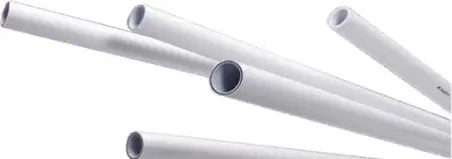
You must choose a pipe that can flex around minor obstacles and then recover. Which option best meets this requirement?
Annealed copper water pipe
Plastic barrier plumbing pipe
Cast iron drainage pipe
Concrete sleeve conduit
A drill bit tip needs a material with very high hardness to resist abrasion. Which choice aligns with this property?
Aluminum alloy, medium Mohs rating
Copper metal, around 3 Mohs
Diamond material, about 10 Mohs
Brass alloy, moderate hardness

