
 Worksheets
UK Energy Sector and Generation Trends
Total questions: 10
Worksheet time: 5mins
Which statement best describes the UK’s energy trade status since 2004?
Consistent net exporter of total energy
Net importer supplying about thirty percent
Balanced trade with minimal net flow
Exporter of electricity but importer of fuels
In 2020, which source provided the largest share of UK electricity generation?
Nuclear around sixteen percent
Coal at roughly two percent
Oil at around two percent
Renewables around forty‑one percent
Between 2009 and 2020, which primary energy source saw the most significant decline in UK consumption share?
Coal dropping from fourteen to three
Hydro remaining about one percent
Natural gas staying around thirty‑eight
Oil decreasing from thirty‑seven to thirty‑five

Which sectors are included within the UK energy and power generation industries?
Oil and gas plus coal imports
Only nuclear and wind operations
Petrochemicals without extraction
Exclusively hydropower facilities
A gas‑fired plant is retired and replaced with wind capacity. What immediate effect is most likely on the UK generation mix?
Reduced hydro contribution nationally
Higher coal percentage in the mix
Increased renewables share overall
Greater oil use for electricity
Which statement best describes current hydrogen use in the UK industrial landscape?
Focused on refineries, chemicals, agriculture sectors
Dominated by large-scale nationwide household heating
Primarily used in aviation and maritime propulsion
Mostly exported rather than used domestically

In UK industry, hydrogen pipelines are mainly used to supply which configuration of users?
Mobile retail refuelling stations on highways
Isolated rural households spread widely
Industrial clusters with nearby facilities
University campuses with seasonal demand

When hydrogen is delivered by road into industrial hubs, which forms are commonly used?
Dissolved aqueous or polymer gel forms
Cryo-magnetic or ionised beam states
Supercritical plasma or solid hydride bars
Compressed gaseous or liquefied forms
Which industrial sector primarily uses hydrogen for hydroprocessing to remove sulfur from fuels?
Oil refining operations
Ammonia synthesis plants
Bulk gas distribution
Electronics manufacturing
Methanol reformers
A fertilizer plant plans to scale production using hydrogen. Which process most directly relies on hydrogen as a feedstock?
Steam cracking of ethane
Fischer–Tropsch liquid fuels
Electroplating metal surfaces
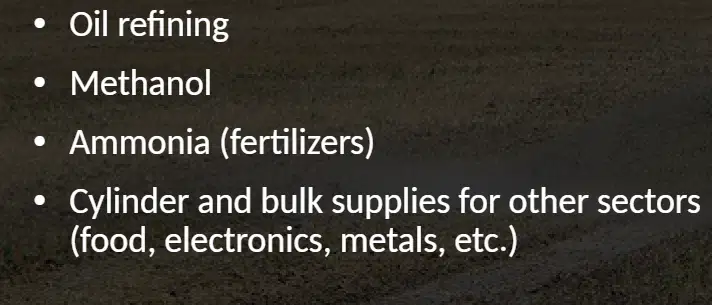
Haber–Bosch ammonia synthesis
Claus sulfur recovery

