
Font size
 Worksheets
Science Ch. 1 & 2 Test Review
Total questions: 22
Worksheet time: 15mins
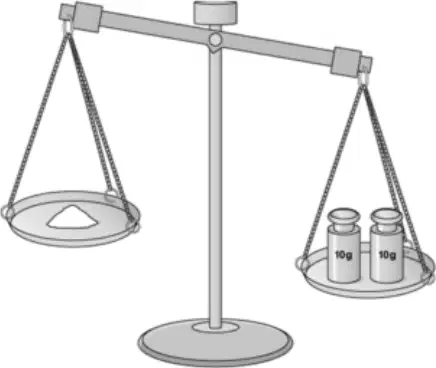
George is measuring a property because he is comparing the property to a standard unit of measure. A pan balance shows an unknown sample on the left pan and standard weights totaling 20 grams on the right pan. The right pan is lower than the left. Which conclusion is supported by George’s investigation?
The matter weighs more than 20 grams.
The matter weighs 20 grams.
The matter weighs less than 20 grams.
Which other two properties can George identify without using any additional materials? Select two correct answers.
color
solubility
magnetism
texture
Which example would best demonstrate evidence of matter that cannot be seen?
Blow up a balloon with helium gas.
Burn a piece of paper to make ashes.
Feel the heat given off by a lightbulb.
Add water to a mixture of sand and gravel.
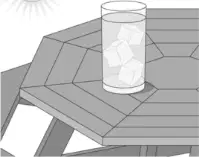
Jim places a glass of cold ice water on a picnic table on a warm day to model water vapor in the air. Which observation will show that there is water in the air that people cannot see?
The ice in the glass will melt.
Water droplets will form on the outside of the glass.
The water in the glass will get warmer.
Delaney has two samples of matter. She observes the samples with a hand lens and does not observe any differences in the two samples. Which observations would identify the samples as two different kinds of matter? Select two correct answers.
One sample is soluble in water and one sample is not.
One sample has more mass than the other sample.
One sample has a greater volume than the other sample.
One sample forms bubbles in vinegar and one sample does not.
Properties of Matter:
Substance W: white, powder, soluble in water, conductive
Substance X: white, crystals, soluble in water, not conductive
Substance Y: white, powder, not soluble in water, does not form solution
Substance Z: white, crystals, not soluble in water, does not form solution.
Claire has a sample of matter and knows that the sample is one of the four substances in the table. Her sample is white and has a crystal appearance. Which two substances could Claire have? Select two correct answers.
W
X
Y
Z
Using the same information on Properties of Matter, Claire discovers that her sample does not form a solution. Can the sample now be identified based on the data in the chart?
Yes, she can identify it as substance Y.
No, she needs to know if it forms a conductive solution.
Yes, she can identify it as substance Z.
No, because more than one substance has the same properties.
Which three items on Anya’s lunch tray are solids? Select three correct answers.
bread
ice
bowl
soup
Keisha’s teacher placed a substance in a jar for Keisha to observe. The teacher labeled the jar substance X. Observations of substance X: clear color, filled half of the container, definite volume, flowed to the other side when it was turned upside down. Which conclusion is supported by Keisha’s observations?
Substance X is a gas.
Substance X is a solid.
Substance X is a liquid.
Substance X is a solid and a liquid.
Keisha finds and records the mass of substance X. Then she places the substance in a freezer until the substance freezes. She then removes substance X from the freezer and finds and records the mass again. Which set of data did Keisha most likely record?
Mass before freezer: 850 grams; Mass after freezer: 450 grams
Mass before freezer: 950 grams; Mass after freezer: 900 grams
Mass before freezer: 850 grams; Mass after freezer: 850 grams
Mass before freezer: 400 grams; Mass after freezer: 850 grams
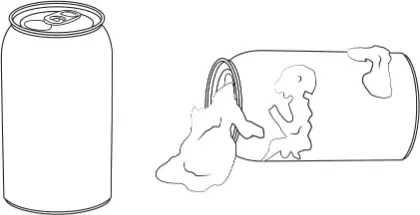
Emma placed a canned liquid drink in a freezer and removed the can 12 hours later. The pictures show the can before and after Emma put it in the freezer; after freezing, the can has ruptured and frozen liquid is bulging out. Which best explains what Emma observed?
The liquid in the can changed and is now a different substance.
The liquid in the can froze and expanded when it became a solid.
The liquid in the can melted, causing it to flow out of the container.
The liquid in the can evaporated, causing some of the liquid to be lost.
Jamal’s class is observing how different substances are affected by physical and chemical changes. What evidence might indicate that a chemical change has occurred? Choose the three correct answers.
release of heat
change in temperature
color change
new smell
Which observation best shows that air is made of matter, even though it cannot be seen?
A deflated basketball becomes firm when pumped with air.
A rock sinks when placed in water.
A metal spoon feels cold to the touch.
A leaf changes color in autumn.
Maria pours a clear liquid into a container. The liquid takes the shape of the container but keeps the same amount. What property of matter is Maria observing?
Temperature
Texture
Color
Volume
After leaving a cold can of soda outside on a humid day, droplets form on its surface. What does this demonstrate about the air?
The air contains invisible water vapor.
The soda is leaking from the can.
The can is absorbing water from inside.
The temperature of the can is rising.

Match the following terms to their proper defintions
Matter
Anything that has mass and volume
Mass
The amount of matter in an object
Volume
The amount of space an object takes up
Atoms
The smallest particle of an element that still has the properties of that element
Elements
A substance that is made up of only one kind of atom.

(a) is the amount of matter in an object.

A physical property is something that can be observed, measured, or described when looking at a piece of matter.
_ (a)
False
true
Apply the correct state of matter
Solid
Liquid
Gas

When two or more things are added together and you can see the different parts or could easily take it apart, it is called a (a) .
Mixture
Solution
Compound
Molecule

This is an example of a (a)
Mixture
Solution
Classify as a mixture or solution.
Salt and water (a)

