
 Worksheets
Grade 3 - Science - Fossil formation and layer
Total questions: 23
Worksheet time: 1hrs 8mins
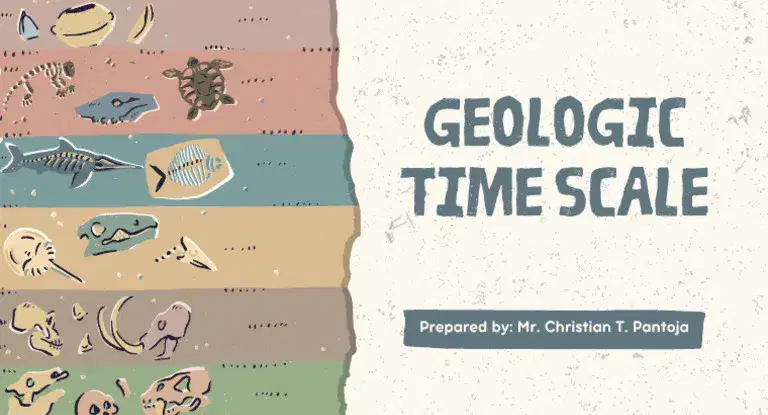
The Geologic Time Scale
--
Order the following eras from the oldest to the youngest
Paleozoic Era
Mesozoic Era
Cenozoic Era
.............. is also known as ..................
Paleozoic Era
Ancient life
Mesozoic Era
Age of Reptiles
Cenozoic Era
Age of Mammals
Match the following eras with their pictures

Paleozoic

Mesozoic Era

Cenozoic Era
Animals live on different eras
human
elephant
rhino
horse
ancient fish
giant insect
Scientists who find and study fossil
(a)

How fossils are formed
A mouse dies.
The body of the dead mouse is covered with soil.
Water flows through the soil and dissolves the body of
the mouse, leaving an empty space called a mold.
Minerals in water move into the space that once held
the mouse's body.
Minerals harden to form a cast. Over time, the cast
becomes a rocky fossil.
What do scientists call the record that shows the total number of
fossils found and helps them identify patterns in life from the past?
fossil record
index fossil
geologic time scale
If a fish fossil is found in a dry, rocky area, what can you infer about this?
The fish lived on land.
Which statement shows fossil evidence that a climate change took
place in the location where the fossil was found?
A fossil of a crocodile is found in a swamp.
A fossil of a whale is found on a mountaintop.
A fossil of a shelled animal is found in a riverbed.
A fossil of a palm tree is found in a jungle.
Millions of years ago, a huge flood covered a large area.
Rivers overflowed. Land was covered with deep water.
Which two statements provide evidence that fish survived the flood but dinosaurs did not?
Fossil fish would appear in the fossil record in layers that are younger than the layer in which the flood occurred.
No dinosaur fossils would appear below the layer in which the flood
occurred.
No dinosaur fossils would appear above the layer in which the flood
occurred
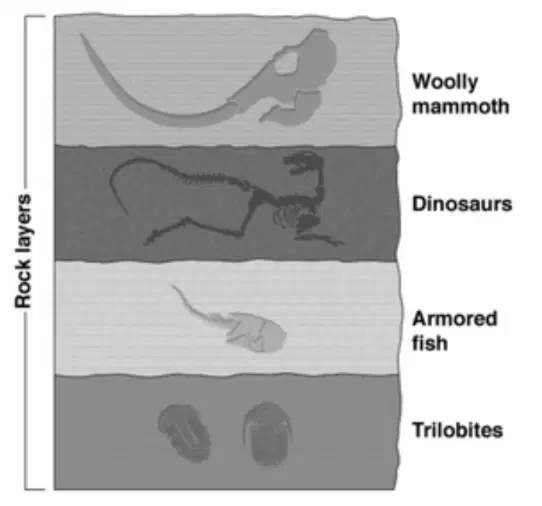
The armored fish in the picture appeared (a) the trilobites appeared.
The dinosaur appeared (b) the woolly mammoth appeared.
Which of the following is NOT a fossil?
an imprint of a fern leaf
the remains of a wooly mammoth
an imprint of a seashell in the side of a mountain
the snake skin found by the river
The remains of a once living thing is called a
remainder
mineral
fossil
sediment
Scientist study fossils to learn about
different kinds of soil
extinct plants and animals
hardness
pollution
Describes a group of living things that are no longer living.
fossil
extinct
endangered
dinosaur

An animal has sharp, pointy teeth, what can we infer about this animal?
The animal lived in the water
The animal lived near the beach.
The animal is a carnivore.
The animal only ate plants.

What can we infer about animals with dull teeth?
They ate other animals.
They ate only plants.
They ate nothing.
They only ate fish.
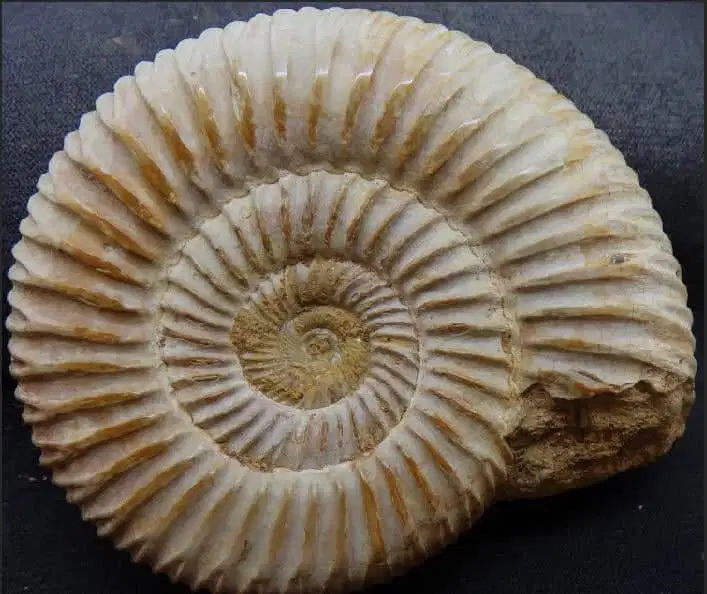
Which type of fossil show the organism in 3D form, sticking out from the rock?
Cast Fossil
Mold Fossil
Trace Fossil
True Form Fossil

Which type of fossil shows an impression of the organism in rock?
Cast Fossil
Mold Fossil
Trace Fossil
True Form Fossil

A paleontologist dug up several fossils from the layers shown.
If one of the fossils is older than layer A, but younger than layer C, which layer was it collected from?
A
B
C
D

Look at the picture. Plants and animals fossilized in several different ways. Which object fossilized most recently?
D
E
C
A
What can a scientist learn by studying fossils?
What rocks are made of
how every organism died long ago
how minerals are formed
what types of organisms lived a long time ago

Which layer has the oldest fossils?
1
2
3
4

