
 Worksheets
Catalytic Quiz - Evolution 2.0
Total questions: 10
Worksheet time: 5mins

Scientists can use the fossil record to determine changes in a given environment. What does the abrupt appearance of a new organism's fossils demonstrate?
The sudden appearance of a new organism is evidence of ____________ and ___________ (select two answers).
The age of fossils
An increase in biodiversity
An unstable environment
A environment without change
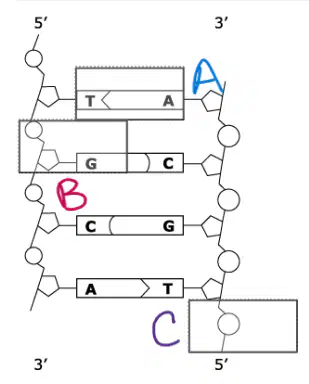
Uh-oh, the DNA review Mr. Patton told us about! Who could have predicted???
Pictured is a molecular diagram of a DNA strand. Which portion of this structure is described by Section A?
The nitrogenous base pairs
A complete nucleotide
Deoxyribose sugar
Phosphate backbone

Species of coral-like sea organisms called bryozoans first appeared in the fossil record around 140 million years ago. Evidence supports that they remained unchanged for 40 millions years, before suddenly experiencing rapid change.
Which process would BEST account for this pattern of evolution?
Convergent evolution
Gradualism
Pattonal awesomation
Punctuated equilibrium
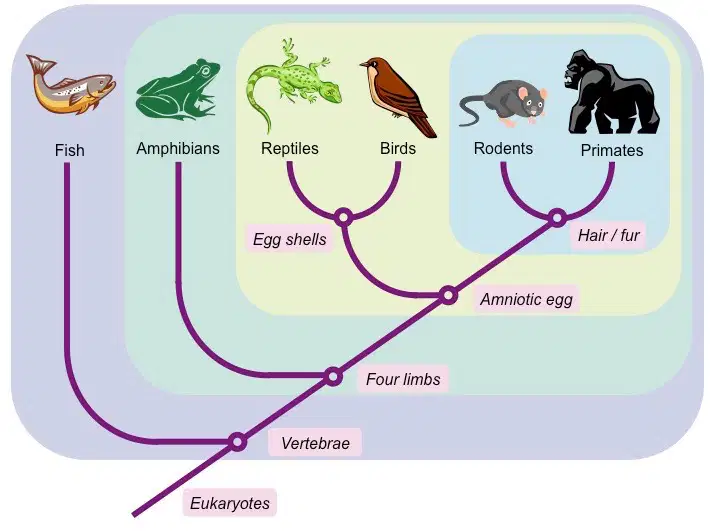
The cladogram pictured represents the relatedness of species based on their homologous structures.
Based on this diagram, which of the following statements is true?
Fish are more closely related to rodents than they are to primates
Primates are more closely related to amphibians than they are to reptiles
Rodents are more closely related to reptiles than they are to amphibians
Rodents and primates are more closely related to each other than birds are to reptiles

Why might crops constantly sprayed with pesticides experience a more difficult time combatting crop consuming pests after a few decades?
Only crop pests resistant to the poison will survive, and their offspring are likely to inherit their resistance
The poisoned plants will become weaker to crop pests, developing a dependence on water
The pesticide will kill all of the pests in a given area, inviting new herbivores to come feed on the crops
Mr. Patton will give the crops a really good pep talk, and they will study for their next quiz
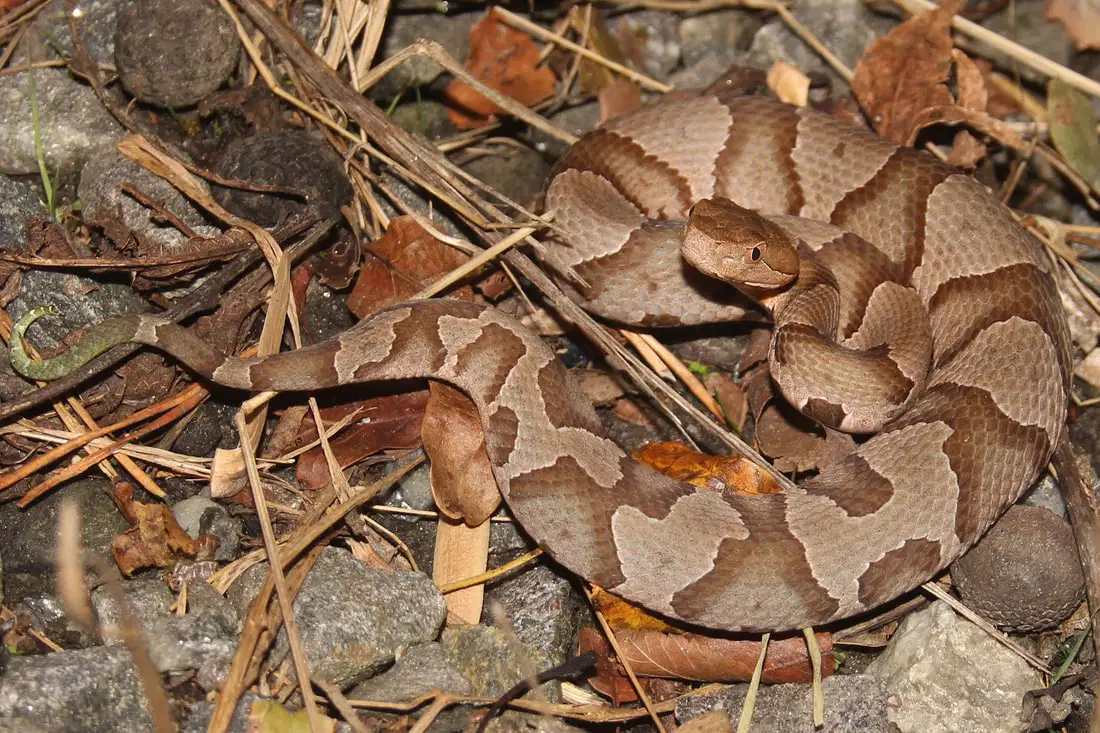
Copperheads are a native species of viper in the Americas. These snakes can vary significantly in color and pattern, camouflaging themselves from predators and prey in their leafy, dry grass or stoney habitats.
Which of the following would be an accurate explanation for why copperheads in suburban populations might begin to have lighter colors, while copperheads in nature reserves might display a more broad array of colors?
Generations of copperheads would begin to have lighter colors, which humans prefer and reward
Generations of copperheads would inherit coloration which better match the concrete of human environments
Copperheads would choose to become lighter colors so that they can blend in with grass lawns
Copperheads would begin to become lighter colors so that Mr. Patton can find them more easily (he loves them so very much)

Scorpions are arachnids, related to spiders, but lack the venomous fangs of their cousins. Instead, they deliver paralyzing venom to prey with stingers in their tails.
How might homologous structures act as supporting evidence for the relatedness of spiders and scorpions?
Both species have methods of delivering poison to predators when eaten, a trait which only arachnids have
Comparable organs for delivering venom, in conjunction with having eight limbs, would be unlikely to have developed randomly
Mr. Patton loves arachnids and he really loves spiders, so they must be related
All invertebrate arthropods are equally related, so spiders and arachnids have to be cousins
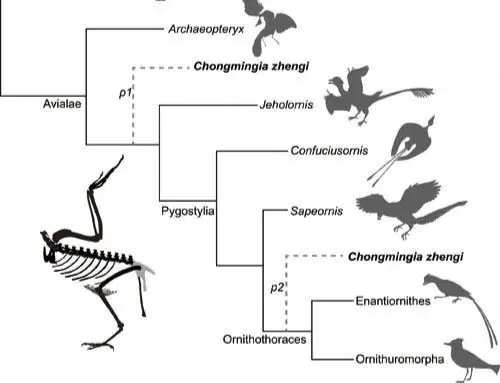
Based on the phylogenetic tree of the evolution of flight in vertebrates, and the silhouettes of each the homologous structures in these ancestors, the common ancestor of all of these species most likely had what structure?
A beak to catch insects
Long tail feathers to display for mating
Feathered wings
A sarynx to create bird songs
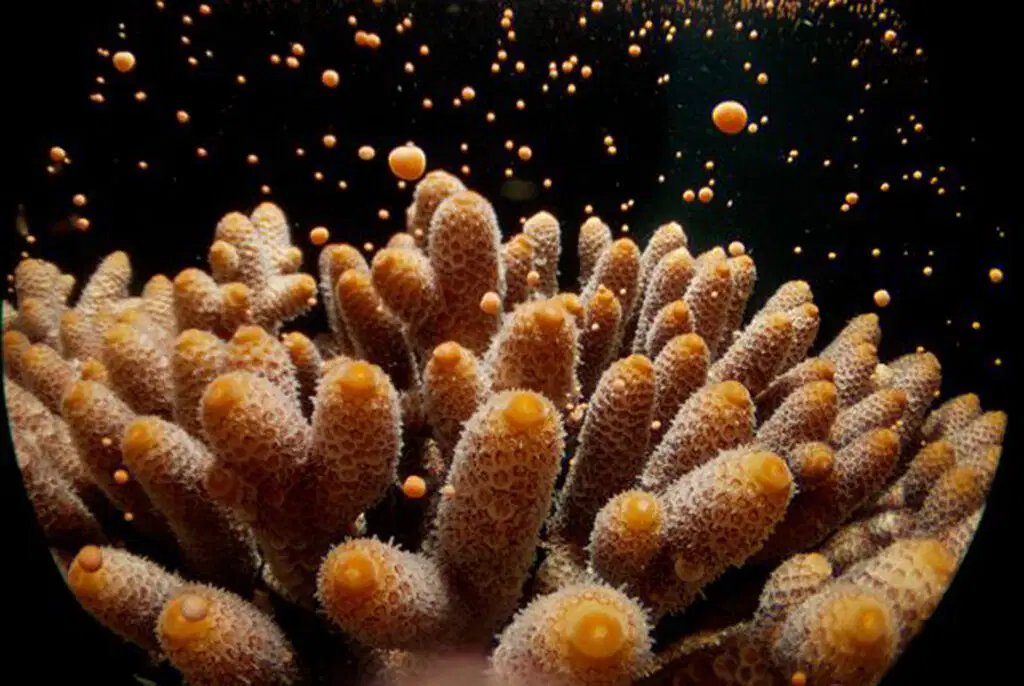
When oceanic coral reproduce, they release thousands of polyps (young corals) in a single reproductive event. The great majority of these polyps will not survive to become new corals.
What advantage is there to the coral producing so many offspring?
The additional polyps will help ensure that next generation is better than the last
The increased number of polyps increases the genes that the coral has
The overproduction of young increases the chance that some will survive to the next generation
The increased offspring allow for increased competition, which helps improve the genetics of the original coral

A review question about DNA and genetics?/! We didn't know Mr. Patton meant it when he said we needed to study these again!
Well, anyway, the variable organization of which structure in DNA allows it to code as the instructions of thousands of different genes?
Ribose sugars in RNA
Phosphates in DNA
Nucleotides in DNA
Inspirations in Bards

