
 Worksheets
New EDP 2026
Total questions: 32
Worksheet time: 30mins
In a microwave oven, a turntable slowly rotates food while the oven is in operation. The turntable, however, was not part of the original design. Which of the following statements is the most likely reason the turntable was added to the microwave oven?
The food did not cook evenly
The oven used too much power
Food did not receive enough energy
The oven became too hot during operation
Engineers designing a new brake system have tested their prototype. The system has experienced repeated failures. They have prepared a report for their company detailing the problems. What will be the next step in the design process?
stop working on the brake system altogether
redesign the brake system (iterate)
evaluate the quality of the report and communicate
build a full-scale model of the brake system
What is the first step of the engineering design process?
Testing the prototype
Building prototypes
Identifying the problem or need
Brainstorming
When finding the solution to an engineering problem, there is usually
only one possible correct solution
no solution
many possible correct solutions
Which of the following do you NOT need to keep in mind as you plan your solution?
The criteria you will be evaluated on
The supplies that are available to you
Who you are partners with
Your partner's thoughts & ideas
You begin to create a prototype of your design, only to find that your solution is not working at all. What should you do?
Add more tape
Go back to an earlier stage and choose another solution
Blame your partner
Keep going and hope it will be okay
Stating limitations, roadblocks, and specifications or must-haves are an example of which step?
Criteria and constraints
Refining the design
Identifying the problem
Generating ideas / Brainstorming
A team of engineers is asked to design a scooter for less than $30. They decide that they will only use recycled materials. Which of the following is the team’s constraint?
the attractiveness of the scooter
made out of recycled materials
money/cost
time
A group of engineers wanted to know how different building designs would respond during an earthquake. They made several models of buildings and tested each for their ability to withstand earthquake conditions. Which will most likely result from testing different building designs?
Buildings will be made safer.
Building designs will look nicer.
Buildings will be built faster.
Building materials will be cheaper.

What is the main goal of the engineering design process?
To write reports
To make things
To make charts and graphs
To find solutions to problems

Which describes the "Identify the Problem" part of the Engineering Design Process?
Identification occurs when someone realizes that a problem exists and needs to be solved.
Definition occurs when someone realizes exactly what the problem is.
The requirements the solution must meet, such as what it must do.
The limitations on the solution, such as a maximum size or budget.
One day in November, Marisol opened her locker and had to quickly jump back to avoid a cascade of her belongings falling to the floor. “Oh no,” she yelled. “This isn’t cool!” Marisol quickly began to scoop her things back into her locker, but after putting everything away, she was late to her next class. Unfortunately, this wasn’t the first time the locker avalanche had happened. “I’ve got to find a way to organize my locker,” she said to herself. What stage of the Engineering Design Process is this?
Identifying/Defining a Problem
Developing Ideas
Evaluating Ideas
Criteria/Constraint
At which step are all ideas accepted?
Selecting an approach
Generating ideas
Brainstorming
Building a model or prototype
If your initial design does not fully solve the problem or meet the challenge, you must go back and revise your design. This is part of which step in the Design Process?
Construct a Prototype
Redesign
Identify the Need
Develop Possible Solutions
What is an engineer?
Problem Solver
Smart Person
Computer Programmer
STEM

Two scientists are shown with a test model of a new design. Which step in the engineering design process may not yet have been completed by these scientists?
Identify a need
Build a prototype
Communicate results
Brainstorm a solution
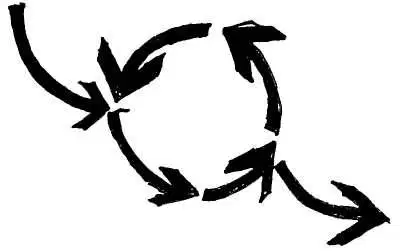
Ready for a brain teaser? Can you identify an example of iterative testing from the following options?
A dedicated scientist who records the same data every day
Kanye West, putting his heart and soul into designing a unique pair of shoes
A school of sardines, all swimming harmoniously in the same direction
Thomas Edison, the persistent inventor, who designed over 3,000 lightbulbs before finally creating the perfect one
Imagine you are living in the 19th century. The invention of the railroad was the ___________ to the ______________ of slow long-distance travel. What do you think it was?
Obstacle; goal
Solution; problem
Question; answer
Response; lack
Imagine you're a rocket scientist! One ___________ you would definitely consider in all your rocket designs is the ability to withstand extreme heat. What would you call this?
Criterion
Constraint
Prototype
Iteration
Imagine you are a scientist in a lab. How would you describe a prototype?
Is it a sudden burst of inspiration?
Could it be an abstract design?
Or is it a work in progress?
Maybe it's a final product?
Imagine you're an engineer designing a new helmet. At which step of the engineering design process would you gleefully drop your helmet prototype from a height just to see what happens?
When you're letting your imagination run wild with ideas
While you're meticulously planning out your design
Right after you've created your first prototype
During the thrilling testing phase
What must you do before building a prototype? Select all that apply.
Define the problem
Do research
Communicate results
Specify requirements
Brainstorm, evaluate, and choose
Imagine you are the captain of a spaceship and need to brainstorm with your crew. Why is it crucial to include everyone in the brainstorming process?
More ideas are uncovered, like discovering new galaxies
Different backgrounds allow for different ideas to take shape, like an alien's perspective
It creates ownership among all members of the team, like a well-functioning spaceship crew
All of the above

Can you tell if the diagram is showing the sequence of the Engineering process correctly?
YES, absolutely!
NO, not quite.
I'm not sure.

When they are trying to solve a problem, engineers follow a series of _____
steps
problems
solutions
tests
A company decides to design and produce a new type of ice skate. Which of these should the company do first?
Evaluate the new skate design.
Identify a need for new skates.
Build a prototype of the skates.
Test the design of their new skates.
What is a constraint in the engineering design process?
A test to evaluate the prototype
A creative idea for solving the problem
A requirement the solution must meet
A limitation or restriction on the solution
During which step would engineers most likely test and evaluate their prototype?
Communicating results
Testing and evaluating
Identifying the problem
Brainstorming ideas
Which step in the engineering design process involves testing your solution to see if it meets the criteria and constraints?
Identifying the problem
Evaluating the solution
Building a prototype
Brainstorming ideas
Why is it important to communicate your results after completing the engineering design process?
To avoid feedback
To start over from the beginning
To keep your work secret
To share your findings and improvements with others
During which step would an engineer list the requirements and limitations for a new project?
Identifying criteria and constraints
Testing the prototype
Communicating results
Building the final product

