
 Worksheets
English 6: English SOL Review- PART 1
Total questions: 140
Worksheet time: 2hrs 20mins
True or False: The setting of a story can influence the plot and characters.
True
False
The people, animals, or things in the story.
Protagonist
Antagonist
Characters
Setting
The “good guy” or main character in the story.
Antagonist
Protagonist
The “bad guy” or person who causes the protagonist in the story problems.
Protagonist
Antagonist
A problem or struggle the character must face in the story.
Plot
Conflict
Argument
Theme
The sequence of events in the story. It’s what happens in the story in order.
Setting
Theme
Plot
Conflict
The lesson the author wants you to learn in the story.
Plot
Conflict
Theme
Advice
"The old mansion stood at the end of the street, its windows broken and its walls covered in ivy."
This quote gives details about the...
Setting
Plot
Character
Conflict
Which of the following best describes the theme of a story?
The main events that happen
The time and place where the story occurs
The underlying message or lesson
The people or creatures in the story
The short story "Who's the New Kid?" takes place 44 years ago. This is an example of
Setting
Plot
Conflict
Theme
In the novel 'Hatchet,' Brian goes up against wild animals, poisonous berries, and a huge storm. These are all examples of
Conflict
Plot
Theme
Setting
What is this an example of?
Hugo, the son of a clockmaker, who dreams of becoming a magician
Setting
Plot
Character
Conflict
In "Goldilocks and the Three Bears", Goldilocks tests out their chairs, eats their breakfast, and sleeps in their beds. This is all part of the _____.
Plot
Setting
Conflict
Character
True or False:
The protagonist can be a "bad guy".
True
False
"The sun was just peeking over the horizon as the runner made her way down the street. The air was crisp, and the sky was turning orange, pink, lavender, and blue."
This quote gives details about the...
Setting
Plot
Character
Conflict
The statement, "A good friend is hard to find," is an example of which of the following?
Plot
Theme
Setting
Characters
A struggle within a character's mind or emotions.
Internal Conflict
External Conflict
A character struggles with their own beliefs, emotions, or decisions.
Character vs. Society
Character vs. Character
Character vs. Self
Character vs. Technology
A character faces opposition from another character.
Character vs. Society
Character vs. Character
Character vs. Nature
Character vs. Technology
A character encounters forces beyond the natural world.
Character vs. Society
Character vs. Supernatural
Character vs. Nature
Character vs. Technology
A character faces opposition from another character.
Character vs. Society
Character vs. Character
Character vs. Nature
Character vs. Technology
A character challenges societal norms, laws, or expectations.
Character vs. Technology
Character vs. Character
Character vs. Nature
Character vs. Society
A character struggles with machines, AI, robots, or advanced technology.
Character vs. Self
Character vs. Character
Character vs. Nature
Character vs. Technology

A man stand up for what he believes is right even though nearly everyone else disagrees with him.
Character vs. Character
Character vs. Self
Character vs. Society
Character vs. Technology

.A teen is torn between ditching class with her friends and staying to take a test in a class she's failing.
Character vs. Character
Character vs. Self
Character vs. Society
Character vs. Technology
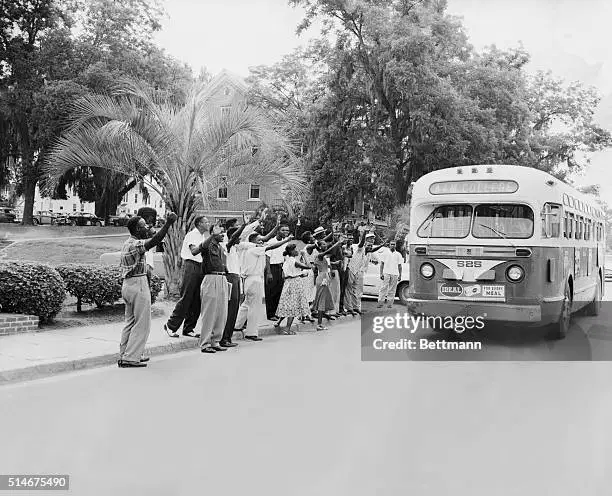
Protesters in the 1960s refuse to take the busses in Montgomery, Alabama, because of the separate seating for blacks and white.
Character vs. Character
Character vs. Self
Character vs. Society
Character vs. Technology

Four hikers get trapped on a ski lift on top of a snow-covered mountain, and no one will be back until the morning.
Character vs. Character
Character vs. Self
Character vs. Nature
Character vs. Technology

A husband and wife disagree about where to spend the holidays.
Character vs. Character
Character vs. Self
Character vs. Society
Character vs. Technology

The jobs of fourteen employees at a business are "phased out" because the company has bought a computer that can take the place of all of them and do the job faster and more cheaply.
Character vs. Man
Character vs. Self
Character vs. Nature
Character vs. Technology

When a horde of zombies break through one of the fences, Michonne must fight as many zombies as possible while the others fix the fence.
Character vs. Nature
Character vs. Character
Character vs. Supernatural
Character vs. Self
Ashley gets the flu and has to be out of school for the rest of the week.
What type of conflict is this?
Louis thinks about whether or not he would make a good soccer player for his team.
What type of conflict is this?
I moved into a house, and it was haunted by ghosts.
What type of conflict is this?
Character vs Supernatural
Sam fights off a bear in the woods.
What type of conflict is this?
What are character traits?
Qualities that describe how a character thinks, feels, or acts.
Temporary feelings like sad, angry, or happy.
Descriptions of a character's appearance.
The process of constructing a character.
What is direct characterization?
The character's actions reveal their traits.
The author shows the character's traits.
The reader infers the character's personality.
The author tells the reader about the character.
What is indirect characterization?
The author tells the reader about the character.
The author shows the character's traits through what they say, act, or do.
The character's appearance is described.
The character's emotions are revealed.
What is a protagonist?
The main character of the story.
The character who opposes the protagonist.
A character who stays the same throughout the story.
A character who changes during the story.
What is an antagonist?
A character who changes during the story.
The main character of the story.
The character who opposes the protagonist.
A character who stays the same throughout the story.
What defines a dynamic character?
A character who changes during the story.
A character who stays the same throughout the story.
A character with many traits.
A character with only one or two traits.
What defines a static character?
A character who changes during the story.
A character who stays the same throughout the story.
A well-developed character.
A simple, one-dimensional character.
What is a round character?
A well-developed character with many traits.
A character who stays the same throughout the story.
A character who changes during the story.
A simple, one-dimensional character.
What is a flat character?
A character who changes during the story.
A well-developed character with many traits.
A simple, one-dimensional character.
A character who stays the same throughout the story.
Mark was mean-tempered and rude.
Direct Characterization
Indirect Characterization
Eric forcefully pushed the laptop out of the way to snag the popcorn bag.
Direct characterization
Indirect Characterization
Read the following and determine if the author used direct or indirect characterization.
Mark mumbled something under his breath, stomped out of the room and slammed the door, thinking to himself, this is so unfair!
Direct Characterization
Indirect Characterization
Read the following and determine if the author used direct or indirect characterization.
"Alfie was a little weird - into sci-fi and comic books, but he was mature for his age and knowledgeable about many things."
Direct Characterization
Indirect Characterization
Which of the following is NOT a characteristic of a static character?
Remains the same
Changes over time
Does not develop
Stays consistent
What is the main difference between a dynamic and a static character?
Dynamic characters change; static characters do not
Static characters are always villains
Dynamic characters are always heroes
Static characters are more complicated
Kelvin found a wallet on the ground. He opened up the wallet and saw an old woman's ID card. Kelvin took the ID out of the wallet, walked to the woman's house, and returned the wallet to her.
Which character trait does Kevin demonstrate?
persistent
unfair
honorable
rich
Craig is a football player training over the summer. The coach demands that all players come in at 6:00 AM, but Craig gets there at 5:00 AM to begin his training.
What character trait does Craig exhibit?
lazy
cheerful
encouraging
dedicated
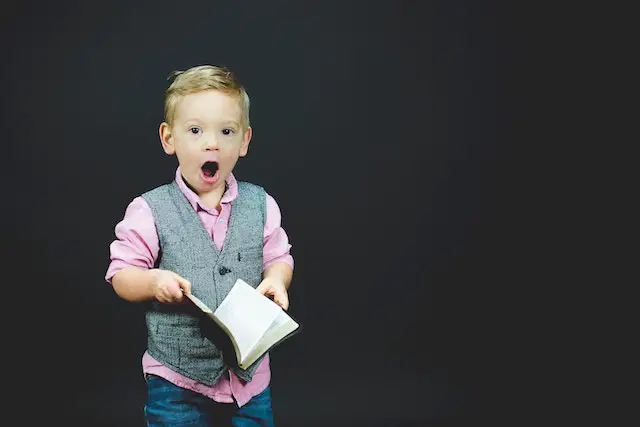
A group of kids were playing in the backyard and pretending that they were all pirates on a pirate ship. They created a game that had pirates, robbers, and princesses.
The kids were showing which character trait?
Which word best describes Lena?
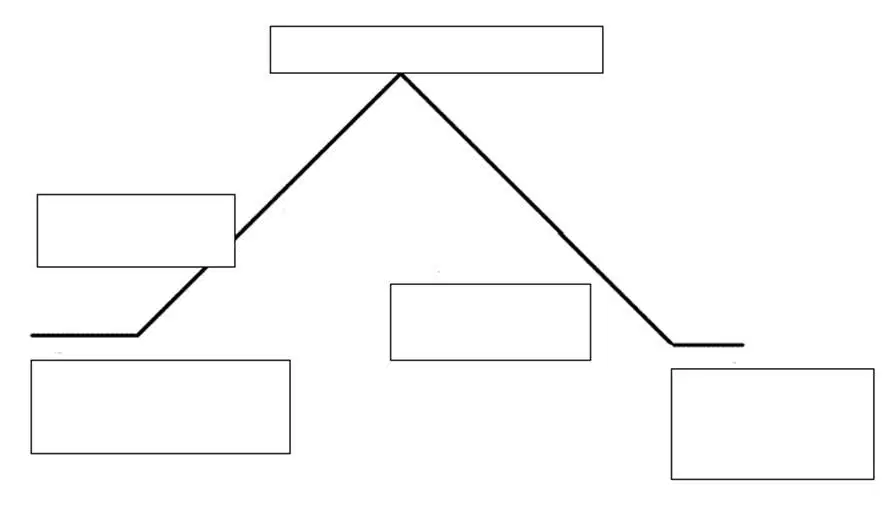
The correct order of the plot line is...
Climax, Exposition, Falling Action, Rising Action, Resolution
Exposition, Rising Action, Climax, Falling Action, Resolution
Conflict, Rising Action Climax, Falling Action, Resolution
Exposition, Conflict, Climax, Falling Action, Resolution
Which part of the plot diagram makes up MOST of the story?
Exposition
Climax
Falling Action
Rising Action

Which part of the plot is the turning point?
Climax
Falling Action
Resolution
Conflict

Which part of the plot is the hooks the reader?
Climax
Inciting Incident
Conflict
Rising Action
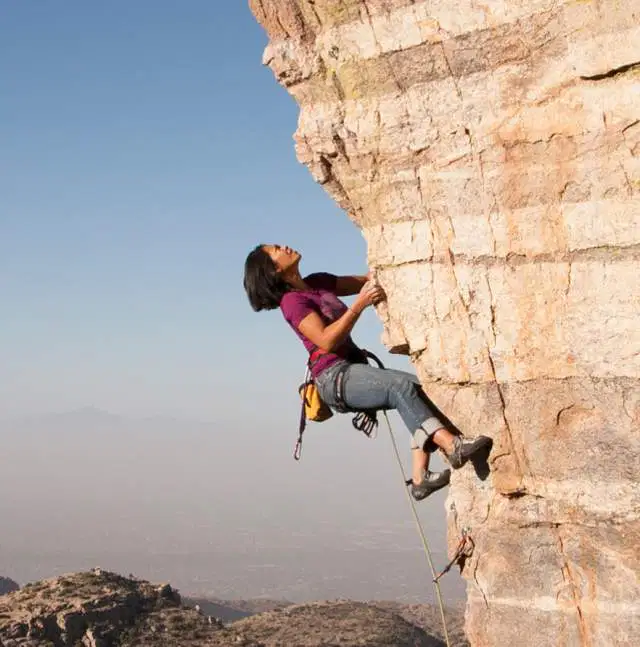
Which part of the plot creates tension and suspense?
Climax
Rising Action
Falling Action
Exposition
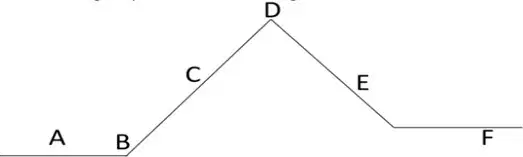
What part of the story is the letter D?
Falling Action
Climax
Conflict
Rising Action
Resolution
What part of the story is the letter C?
Falling Action
Climax
Conflict
Rising Action
Resolution
What part of the story is the letter F?
Falling Action
Climax
Exposition
Rising Action
Resolution
What part of the story is the letter A?
Falling Action
Exposition
Conflict
Rising Action
Resolution
What part of the story is the letter B?
Falling Action
Exposition
Inciting Incident
Climax
Resolution
What part of the story is the letter E?
Falling Action
Rising Action
Conflict
Climax
Resolution
Which of the following shows a resolution to a story?
The glass slipper does not fit Cinderella's wicked stepsisters.
The Third Little Pig defeats the Big Bad Wolf.
Marlin and Dory get chased by a shark.
In the story Hatchet, the pilot has a heart attack.
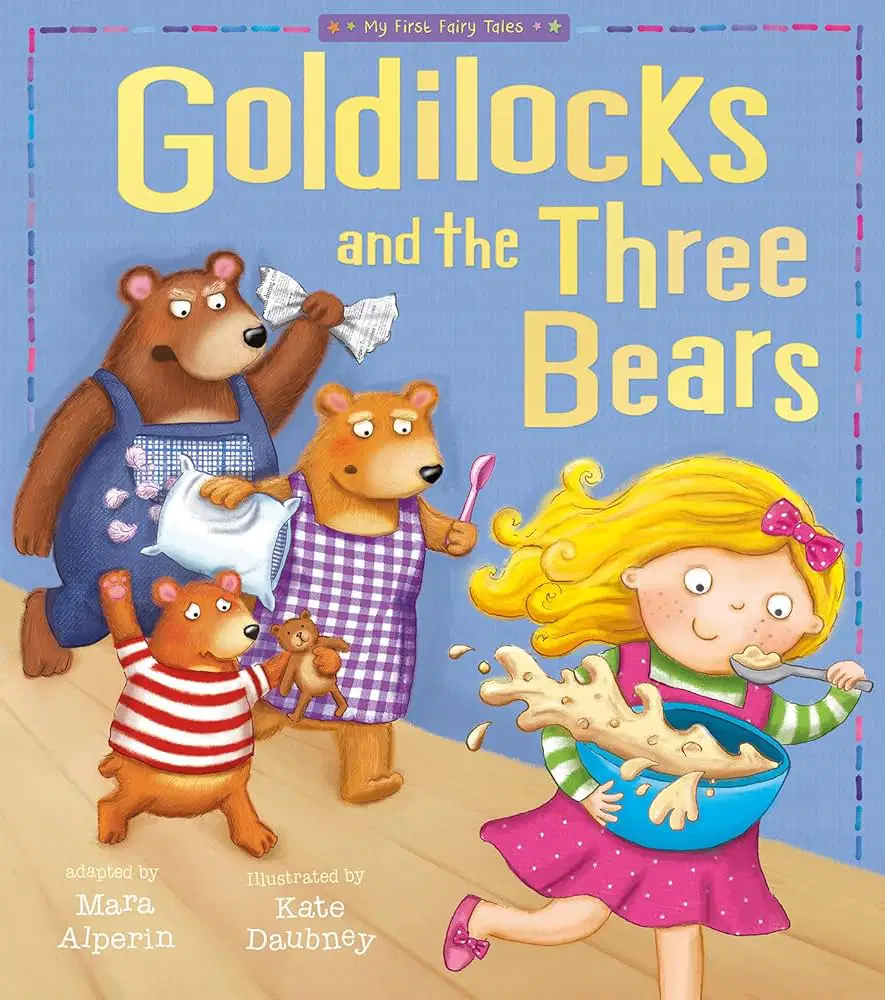
“Once upon a time, there were three bears. There was a Daddy Bear, who was very big, a Mama Bear, who was middle-sized, and a Baby Bear, who was very small. They all lived together in a little cottage in the middle of the woods."
This is an example of ...
Exposition
Rising Action
Climax
Conflict

•The end.
•The conflicts are solved or left up to the readers to think...
Exposition
Falling Action
Resolution
Conflict
· The beginning of the story.
· Introduces the characters, setting (time & place), and the basic situation.
Exposition
Rising Action
Conflict
Resolution
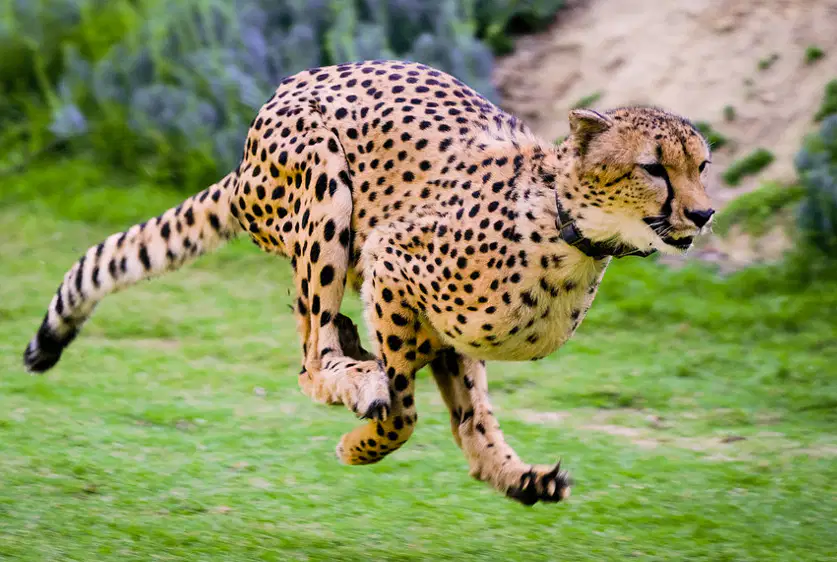
•The story is starting to come to an end.
•We see how the conflict begins to resolve.
•It happens quickly.
Exposition
Rising Action
Conflict
Falling Action
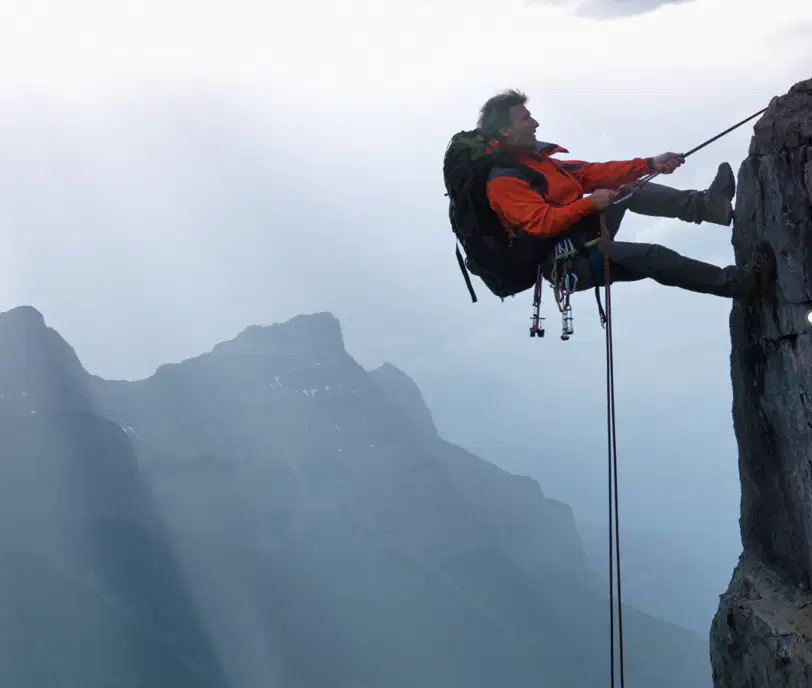
•It is the longest part of the story.
•The conflict develops.
•Suspense builds up until the climax happens.
Exposition
Rising Action
Conflict
Falling Action
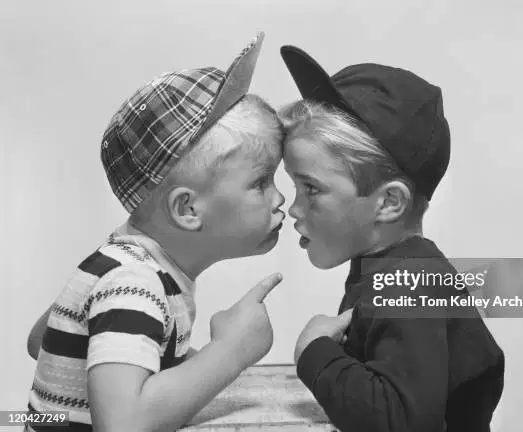
· The event that starts the main conflict.
· It “hooks” the reader into the story.
Exposition
Inciting Incident
Conflict
Rising Action

•This is the struggle or problem in the story.
•Introduced mostly in the exposition.
Exposition
Climax
Conflict
Falling Action

•The turning point in the story.
•The most exciting part of the story.
•It normally happens towards the END of the story.
Exposition
Climax
Conflict
Falling Action

What is the main purpose of the exposition in a story?
To resolve the conflict
To build suspense
To present the climax
To introduce the characters and setting

What is the definition of onomatopoeia?
A word that describes two objects without using 'like' or 'as.'
A word that describes two objects using 'like' or 'as.'
A word that imitates the sound of a thing.
A word that gives an object human characteristics.
Which one is an example of personification?
The wind whistled through the air.
I was so hungry I could eat a horse.
Her eyes were jewels.
The cat was like the night sky.
What is the definition of hyperbole?
A non-human object is given human qualities.
An exaggerated statement that is used to build intensity.
A comparison using "like" or "as" between two things.
A comparison between two unlike things.
What is the definition of personification?
A non-human object is given human qualities.
An exaggerated statement that is used to build intensity and urgency.
A comparison using "like" or "as" between two things.
A comparison between two unlike things.
Which of the following sentences contains personification?
Anger gripped my heart in its fist, squeezing out all my feelings.
My sister's outburst was like a violent volcano eruption.
My sister's anger is the eye of a storm.
Her tantrum was the loudest thing I have ever heard in my life.

The wind whistled throughout the day.
Personification
Hyperbole
Onomatopoeia
Metaphor
Which of these sentences contains an example of hyperbole?
The room was so hot that my face melted.
The room was as hot as an oven.
The room was very hot.
The room was hotter than the air outside.
Which of these is a hyperbole?
They lived in a small cabin in the woods.
The boy was taller than the Eiffel Tower.
Jackson was eating a bite-sized candy bar.
The moon is overwhelmingly beautiful tonight.
Which is NOT a personification?
Traffic slowed to a crawl.
My alarm clock yells at me every morning.
Rita heard the last piece of pie calling her name.
Miss Lewis has a sweet dog named Waffles.
The kitten was as light as a feather.
Alliteration
Metaphor
Hyperbole
Simile
The sky misses the sun at night.
Personification
Simile
Hyperbole
Onomatopoeia
Thunder grumbled and raindrops reported for duty.
Which 2 types of figurative language are being used?
Hyperbole
Personification
Metaphor
Onomatopoeia
Tom is a walking dictionary.
Hyperbole
Personification
Metaphor
Alliteration
He clattered and clanged as he washed the dishes.
personification
idiom
simile
onomatopoeia

Her smile is a mile wide.
Personification
Hyperbole
Metaphor
Simile
Winter had wrapped a white blanket over the city.
What does the figurative language in this sentence mean?
Spring was finally coming
It had snowed
The buildings appeared brighter in the winter
It was so cold that people needed blankets
Marcy became a waterfall when she saw the D on her report card.
What does the figurative language in the sentence mean?
Marcy likes to swim
Marcy poured water on her report card
The boy across the street has a heart as big as all outdoors.
What does the figurative language in the sentence mean?

"Victoria vrooms in the van very vivaciously" is an example of...
simile
metaphor
alliteration
hyperbole
Which of these completes this sentence with alliteration?
Are you hungry? Let's find a cafe for ________, __________ and __________.
egg, chips and cola
coffee, cakes and tea
coffee, cakes and cola
fish, chips and coffee
Which of the following sentences uses onomatopoeia?
I ate noodles with chopsticks.
My sister slurped down her spaghetti.
The chef rolled out a sheet of dough to make pasta.
I love sushi so much; it's probably my favorite food.
The basketball almost hit him, but instead it _____________ past his head.
Use onomatopoeia to complete this sentence.
whooshed
sailed
sped
flew

Mary's voice is music to my ears.
Personification
Hyperbole
Metaphor
Simile

The snow is a white blanket.
Alliteration
Metaphor
Hyperbole
Simile

The flowers were dancing in the wind.
Personification
Alliteration
Simile
Metaphor
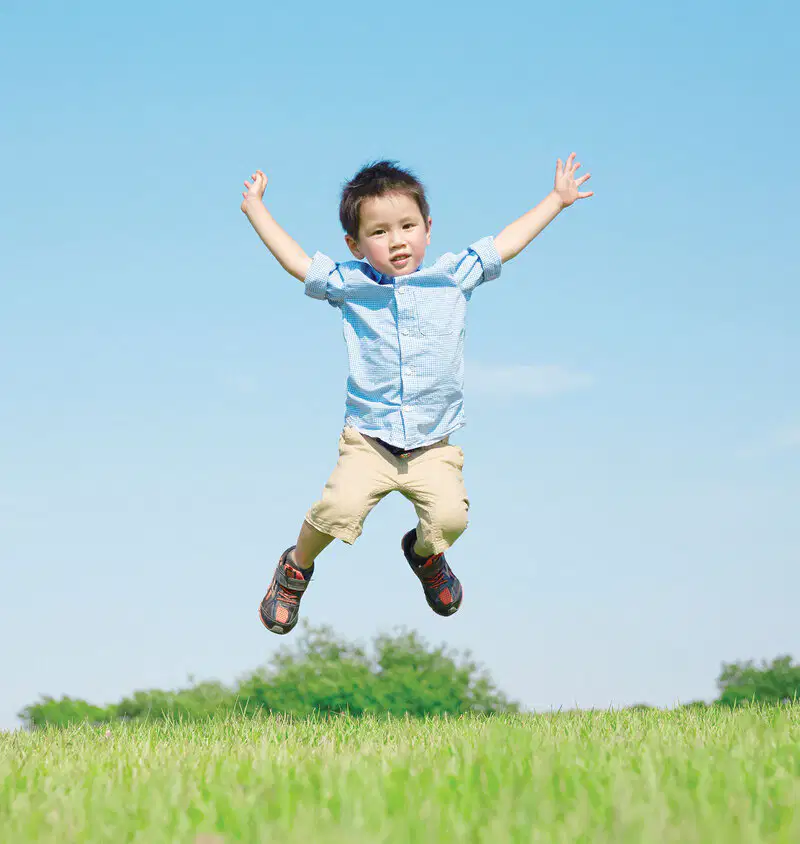
I joyfully jumped like the jolly jelly beans.
Personification
Metaphor
Onomatopoeia
Alliteration
Poetry is organized in ___________ and ___________.
Syllables, Rhyme
Tone, Mood
Lines, Stanzas
A group of lines in a poem is called a _________.
Rhyme
Stanza
Line
A group of words arranged in a row.
Line
Syllables
Stanza
Repetition
Lines resemble a ____________.
sentence
paragraph
Stanzas resemble a ____________.
sentence
paragraph
How many sounds are in a word.
Repetition
Syllables
Rhyme Scheme
Rhyme
An object representing a bigger idea
Symbolism
Imagery
Theme
Rhyme
Words that have the same ending sound
Repetition
Syllables
Rhyme Scheme
Rhyme
•The pattern of rhyme at the end of the line in a poem
Repetition
Syllables
Rhyme Scheme
Rhyme
•The repeating of words, phrases, lines, or stanzas
Repetition
Syllables
Rhyme Scheme
Rhyme
The way a piece of writing makes the reader (you) feel.
Mood
Tone
The author’s attitude about the topic
Mood
Tone
The “voice” of the poem — not always the poet
Character
Protagonist
Speaker
Antagonist
Select all the examples of MOOD
I feel happy reading this
The story made me feel scared
The author wrote the story to make it scary
Haikus are poems usually about ____________________.
Nature
Love
Rhyme
Emotions
Haiku poems have (a) lines.
Which is the correct syllable pattern for a haiku poem?
7-5-7
5-5-7
5-7-5
7-7-5
Limericks are poems that are usually ____________.
Serious
Funny
Emotional
Romantic
What is the rhyme scheme of a limerick?
AABBB
ABABA
AAABB
AABBA
Limerick poems have (a) lines.
Which of the following applies to a free verse poem?
Has a clear rhyme scheme
Has no rules
Has a certain number of lines
Shows a pattern
Tells a story with characters, setting, conflict, and plot.
Free Verse
Haiku
Narrative
Lyric
What is the RHYME SCHEME of this poem?
--
Roses are red,
We have the flu.
I can't smell anything
And neither can you
A, C, A, B
A, B, C, B
A, B, C, C
A, B, A, B
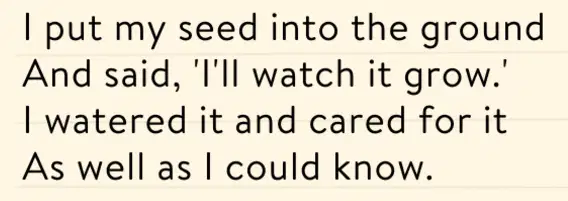
What is the rhyme scheme of this poem?
ABAB
ABCB
ABAA
ABBB
Language that appeals to the senses (sight, sound, taste, touch, smell)
Theme
Imagery
Symbolism
Repetition
What point of view does the narrator tell a story without describing any of the characters thoughts or feelings? The narrator just states the facts.
Second Person
First Person
Third Person Objective
Third Person limited
The narrator is a character in the story and uses pronouns such as I, me, my, we, and us.
First Person
Second Person
Third Person Limited
Third Person Objective
The narrator knows the thoughts and feelings on one character.
Second Person
Third Person Omniscient
First Person
Third Person Limited
The narrator knows the thoughts and feelings of all characters in the story.
First Person
Second Person
Third Person Limited
Third Person Omniscient
The standpoint from which a story is being told.
First Person
Second Person
Point of View
Third Person Objective
Identify the point of view of this sentence.
The Australian runners quickly stretched before the big race.
First Person
Third Person Objective
Third Person Limited
Third Person Omniscient
Identify the point of view of this sentence.
There is no way I am going to lose this race, I know I can beat every other runner here!
First Person
Third Person Objective
Second Person
Third Person Limited
Identify the point of view of this sentence.
You know you have to get to school on time, but you decide to stop off at the donut shop for a delicious cream filled donut because you love donuts!!
First Person
Second Person
Third Person Limited
Third Person Omniscient
Identify the point of view of this sentence.
Everyone in the class was nervous for the upcoming exam on point of view, but felt like they had studied enough and would do well.
First Person
Third Person Objective
Third Person Limited
Third Person Omniscient
Identify the point of view of this sentence.
He was overcome with sadness when he realized that he was not going to get picked to be on the varsity soccer team this year.
First Person
Third Person Objective
Third Person Limited
Third Person Omniscient
Identify the point of view of this sentence.
After the student finished reading his book, he took a quiz and passed it.
First Person
Second Person
Third Person Objective
Third Person Limited
Identify the point of view of this sentence.
I know it is time to go to sleep, but I can't stop playing my new favorite video game!
First Person
Second Person
Third Person Limited
Third Person Omniscient

