
 Worksheets
8th Grade Diagnostic (Chem to Season+Tides)
Total questions: 121
Worksheet time: 2hrs 38mins
2Mg + O2 ---> 2MgO
What has both metal and nonmetal properties?
Electrons
Metalloids
Protons
Metals
The majority of elements on the periodic table are
Nonmetals
Metalloids
Metals
What are good conductors of heat?
Nonmetals
Metalloids
Metals
How many Hydrogen atoms are in 4 H2O? (a) How many oxygen atoms? (b)
How many Nitrogen atoms are in the in H3C2ON5?
2
3
4
5
How is a chemical change different from a physical change?
there is no difference
a physical change creates a new substance
a chemical change creates a new substance
Is glass breaking a chemical or physical change?
When mixing milk and vinegar, a white, chunky, solid substance is formed. What has occurred?
Physical change: state of matter
Chemical change: precipitate
Physical change: freezing
Chemical change: new gas
Boiling Water
Physical Change
Chemical Change
A physical change is a change
in an item's properties like its shape, size or density.
that creates a new substance or emits light or heat
that creates a smell
that cannot be undone
Physical change
(Shape)
Cutting paper
Physical change
(solubility)
Dissolving
Kool-Aid
Chemical Change
(Flammability)
Lighting a match
Chemical Change
Creating a new substance
Both a Physical & Chemical change
Bubbles

Choose the best description below for the image
physical change
chemical change
A physical change...
changes the physical properties of an object, but does not create a new substance.
creates a new substance and cannot be undone.
A chemical change
changes the physical properties of an object, but does not create a new substance.
creates a new substance and cannot be undone.

Is this an example of a physical or chemical change?
physical
chemical

Is this an example of a physical or chemical change?
physical
chemical

Is this an example of a physical or chemical change?
physical
chemical

Is this an example of a physical or chemical change?
physical
chemical

Is this an example of a physical or chemical change?
physical
chemical

Is this an example of a physical or chemical change?
physical
chemical

Is this an example of a physical or chemical change?
physical
chemical

Is this an example of a physical or chemical change?
physical
chemical

Is this an example of a physical or chemical change?
physical
chemical

Is this an example of a physical or chemical change?
physical
chemical

Is this an example of a physical or chemical change?
physical
chemical

Is this an example of a physical or chemical change?
physical
chemical

Is this an example of a physical or chemical change?
physical
chemical

Is this an example of a physical or chemical change?
physical
chemical

Is this an example of a physical or chemical change?
physical
chemical

Is this an example of a physical or chemical change?
physical
chemical

Is this an example of a physical or chemical change?
physical
change

There are 24 cm3 Find the total mass.
TRUE OR FALSE: Unbalanced forces result in a change of motion.
True
False
What formula can we use to find speed?
Speed = distance/time
Speed = distance X time
Speed = mass X acceleration
Speed = mass/acceleration
What is the speed of a turtle that travels 10 miles in 5 hours?
50 miles/hour
2 miles/hour
5 miles/hour
15 miles/hour

What is the net force acting on the object? (Just write the number)
(a)

Does the picture show a balanced or unbalanced forced?
Balanced
Unbalanced

Green object is moving at a faster constant speed than Red
Red object is moving at a faster constant speed than Green
Green object is moving at a slower constant speed than Red
Red object is moving 2 times faster than Green


The geese fly 23 mph to the south when they migrate for the winter.
speed
velocity
acceleration
Changes in our speed, direction or both are called _________.
gravity
changes
acceleration
displacement
Match the following vocabulary words to the definitions.
Unbalanced Force
Forces acting on an object that combine and form a net force that is not zero
Balanced Force
Forces acting on an object that combine and form a net force of zero
Newton’s 3rd Law
For every action there is an equal and opposite reaction.
Newton’s 1st Law
An object will not change its motion unless acted upon by an external force.

During which interval is the object speeding up?
A to B
B to C
D to E
E to F

Juan ran 72 m across the football field in 8 seconds. What was his speed?
8 m/s
576 m/s
7 m
9 m/s
Steve runs 20 m North in 4 seconds. What is his velocity
5 m/s
4 m/s south
5 m/s south
5 m/s north

Mr. Rudman drives his race car at a speed of 300 miles per hour. What distance and time could have been used to find his speed?
300 miles in 2 hours
60 miles in 20 hours
30 miles in 20 hours
600 miles in 2 hours
A 20-N net force acts on an object with a mass of 2.0 kg. What is the object's acceleration?
10 m/s2
0.1 m/s2
40 m/s2
22 m/s2
What is the mass of a motorcycle that accelerates at 4 m/s2 when a net force of 400 N is applied to it?
1600 kg
100 kg
0.01 kg
396 kg
The sum of all forces acting on an object is known as…
Applied force
Net force
Normal force
I don't know

Calculate the Net Force
0 N
7 N Right
28 N Right
I don't know
Two students kick a soccer ball at the same time. Student A kicks the ball with a force of 80 N to the right. Student B kicks the ball with a force of 45 N to the left. Calculate the net force.
45 N Right
35 N Right
30 N Right
I don't know
Three dogs are pulling on a stuffed animal. Dog A pulls with a force of 150 N to the north. Dog B pulls with a force of 150 N to the south. Dog C (a much smaller dog) is pulling to the east with a force of 40 N. Which dog will win the toy?
dog A
Dog B
Dog C
I don't know
"For every action, there is an equal and opposite reaction" represents
Newton's 1st law
Newton's 2nd law
Newton's 3rd law
Law of conservation of momentum
Match the following Law of motion with the correct example
Newton's 1st law of motion
Roll a ball across smooth/rough surfaces. The ball rolls faster on smooth because less fiction
Newton's 2nd law of motion
Hit a ball with 2 different forces, the ball will have greater acceleration due to larger force
Newton's 3rd of motion
Bouncing the ball on the court is the action, the floor pushing the ball back up is the reaction
When someone takes an action of pushing off of a wall the reaction is that the person will get a boost to go. Which law does this represent?
Newton's 1st law
Newton's 3rd law
Newton's 2nd law
When one's body moves to the side when a car takes a sharp turn which law is that?
Newton's 3rd law
Newton's 1st law
Newton's 2nd law

Which law does this picture represent?
Newton's 3rd law
Newton's 1st law
Newton's 2nd law
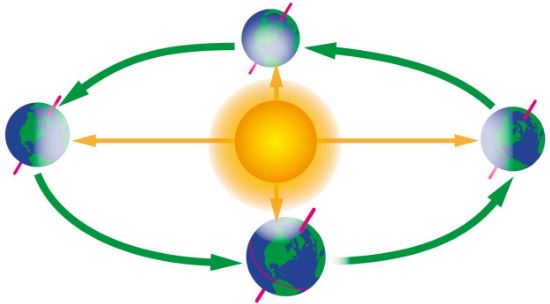


Which season is taking place in the Northern Hemisphere in Position 1?

Which season is taking place in the Northern Hemisphere in Position 3?

Which season is taking place in the Northern Hemisphere in Position 4?

Tides are caused by...
the rotation of the Earth
the orbit of the Moon
the gravitational pull of the Sun and Moon
wind currents

When do Spring Tides occur?
During the new moon and full moons
During the crescent moons
During the Spring
During the gibbous moons

What do you call small tides where the high tide is not as high as usual and the low tides are not as low as usual?
neap tides
spring tides
orbital eccentricity
orbital declination


sort of cool, dim (not too much light), and red?

The best description of a super giant star would be -
hot and bright
hot and dim
average brightness and temp
cool and bright


What type of electromagnetic wave has a higher frequency than visible light and a larger wavelength than x-rays
Infrared
Gamma
visible
Ultraviolet
What type of wave has the largest wavelength and the lowest frequency on the electromagnetic spectrum?
Radio
Micro
Gamma
X ray
Electromagnet waves transfer ____________ without matter.
information
energy
x rays
medium
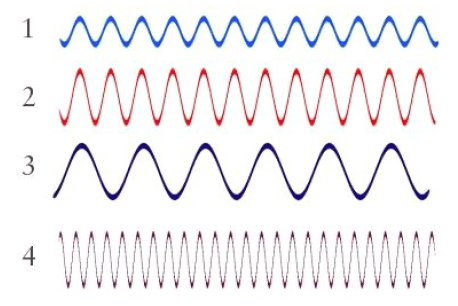
Radio waves
Has the longest wavelengths and the lowest frequency
Microwaves
Used in cell phone communication and police radar systems
Infrared rays
It is used in thermal imaging
UV rays
Overexposure to this can result in sunburns and skin cancer
Gamma Rays
Has the highest energy of all electromagnetic radiation and is the most damaging to human tissue

