
Font size
 Worksheets
New York State World Languages Thematic Topic: Soy yo
Total questions: 121
Worksheet time: 1hrs 1mins
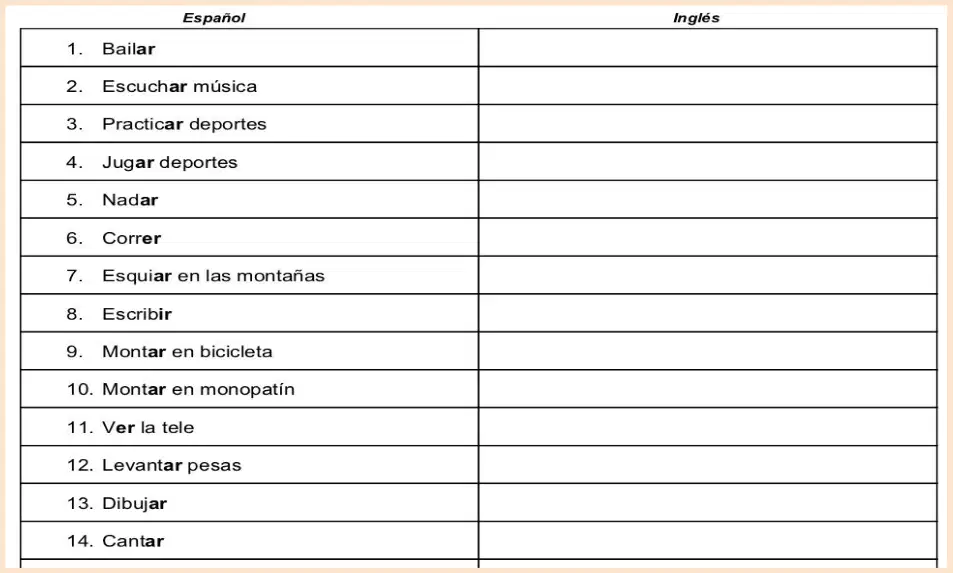
Directions: Define the following vocabulary in English. What is the best English meaning of “Bailar” from the Español column in the two‑column table labeled Español and Inglés?
to dance
to sing
to draw
to run
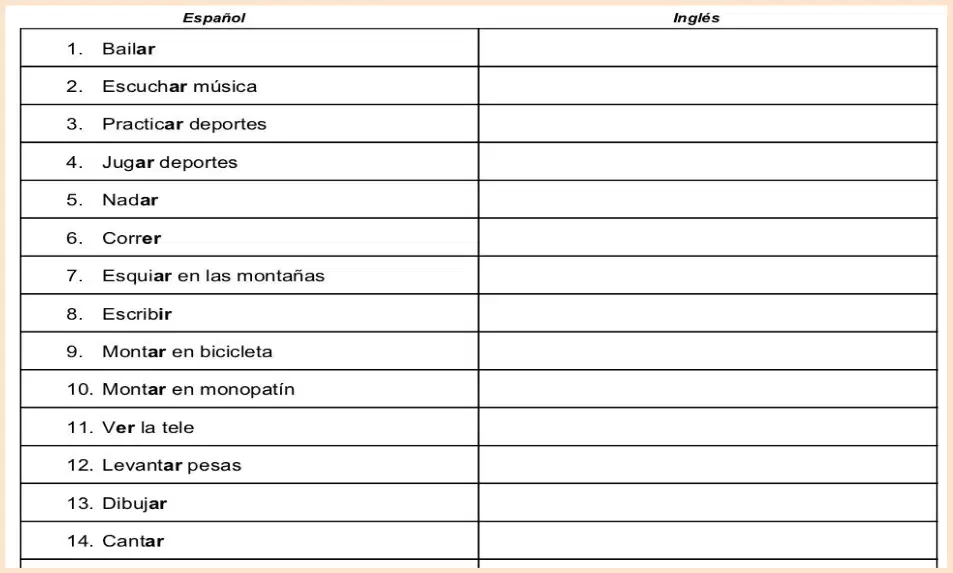
Directions: Define the following vocabulary in English. What is the best English meaning of “Escuchar música”?
to listen to music
to play sports
to watch TV
to play the guitar
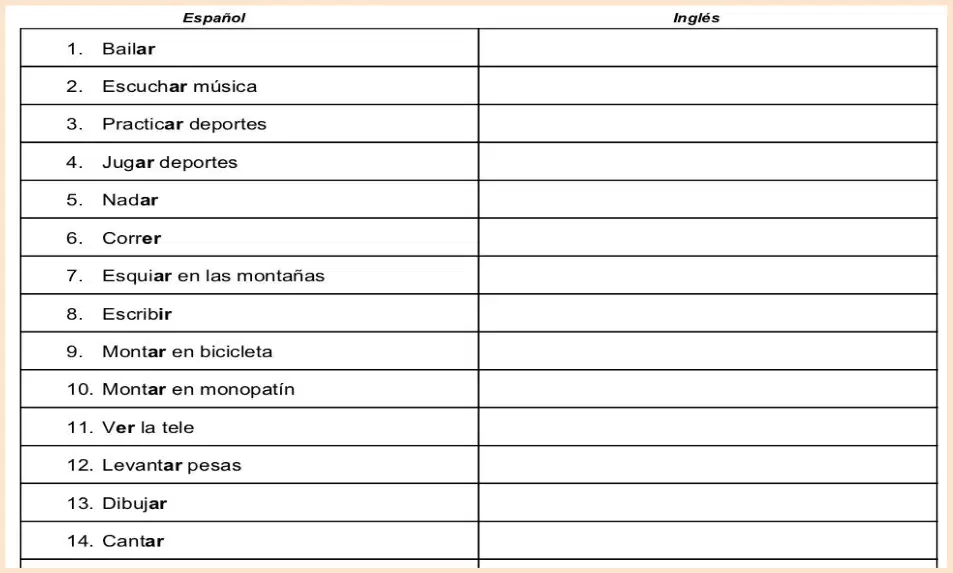
Directions: Define the following vocabulary in English. What is the best English meaning of “Practicar deportes”?
to practice sports
to play video games
to lift weights
to go shopping
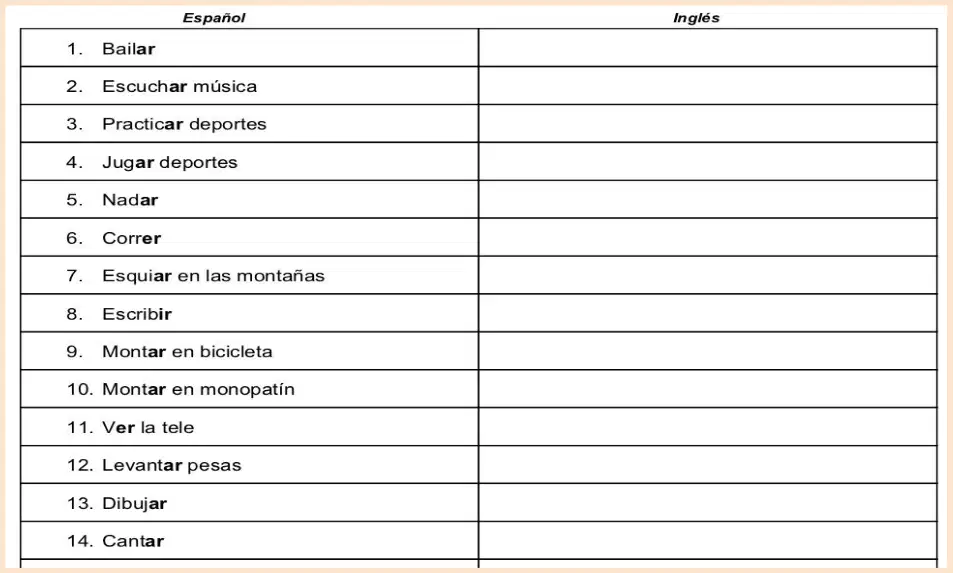
Directions: Define the following vocabulary in English. What is the best English meaning of “Jugar deportes”?
to play sports
to write
to skate
to go to school
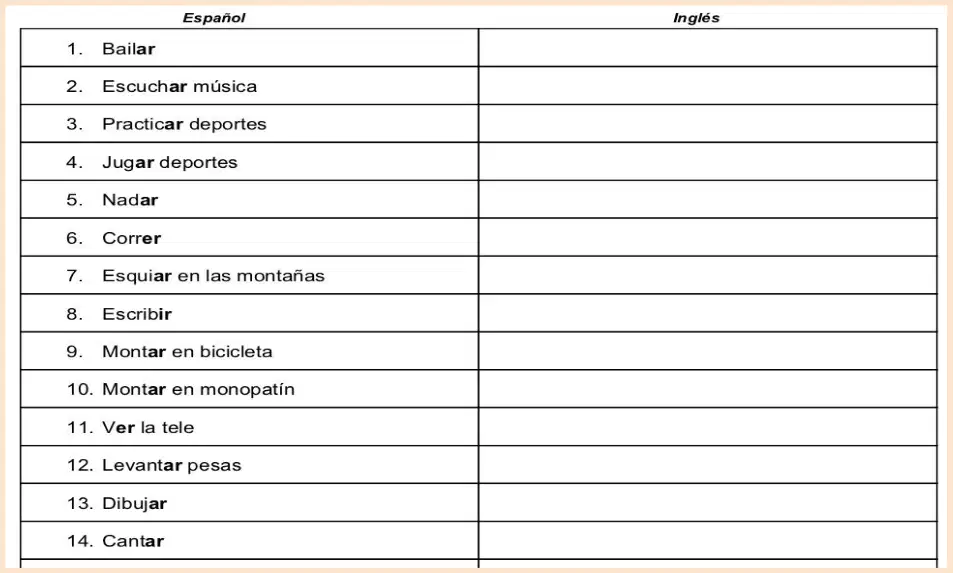
Directions: Define the following vocabulary in English. What is the best English meaning of “Nadar”?
to swim
to ski in the mountains
to talk with friends
to send a text message

Directions: Define the following vocabulary in English. What is the best English meaning of “Correr”?
to run
to draw
to read magazines
to go fishing
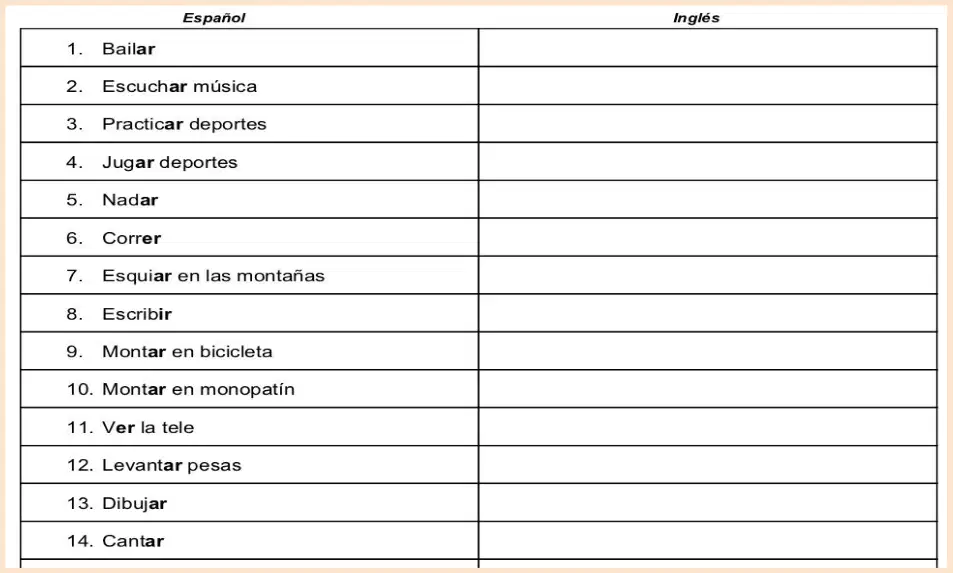
Directions: Define the following vocabulary in English. What is the best English meaning of “Esquiar en las montañas”?
to ski in the mountains
to ride a bicycle
to work
to play the guitar
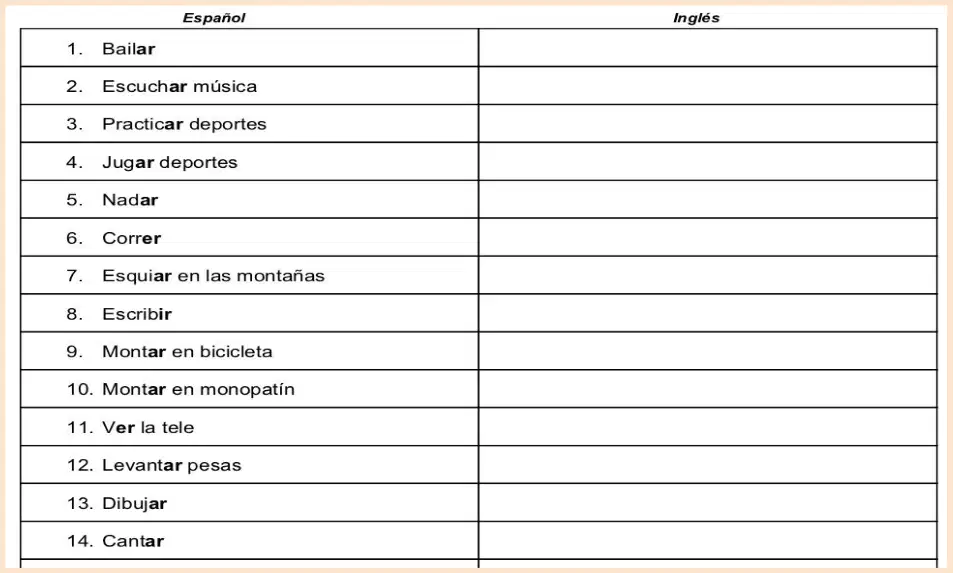
Directions: Define the following vocabulary in English. What is the best English meaning of “Escribir”?
to write
to watch TV
to go to school
to skate
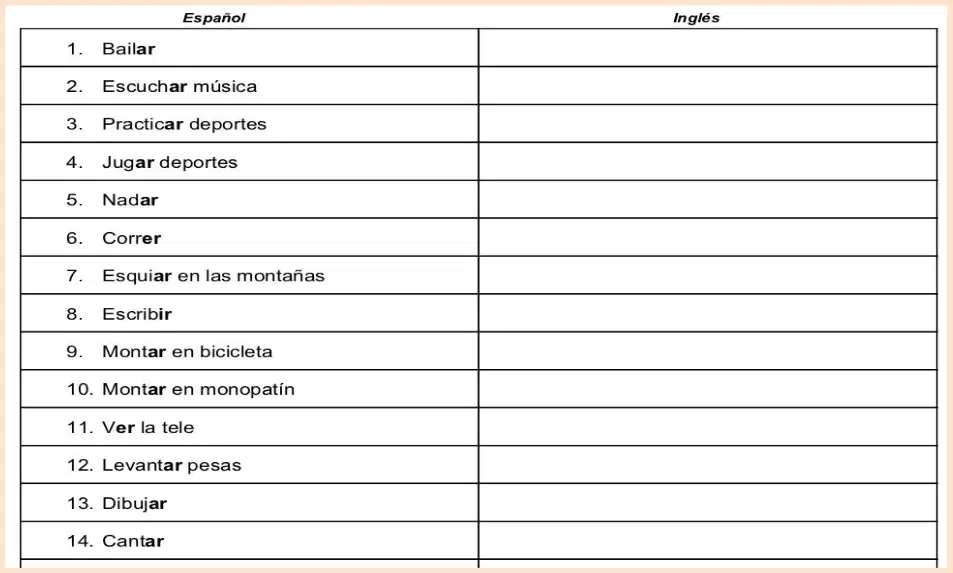
Directions: Define the following vocabulary in English. What is the best English meaning of “Montar en bicicleta”?
to ride a bicycle
to go shopping
to lift weights
to play video games
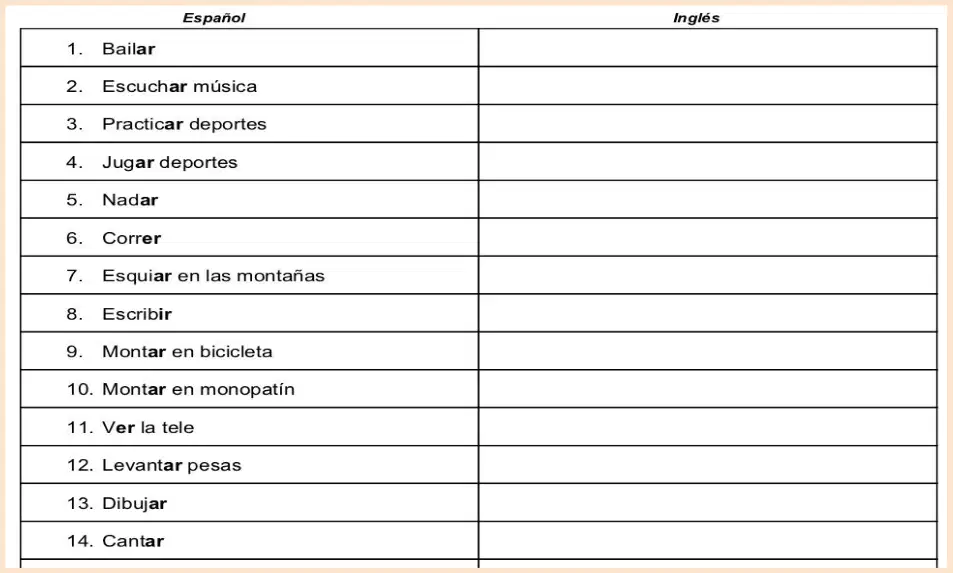
Directions: Define the following vocabulary in English. What is the best English meaning of “Montar en monopatín”?
to skateboard
to send a text message
to practice sports
to dance
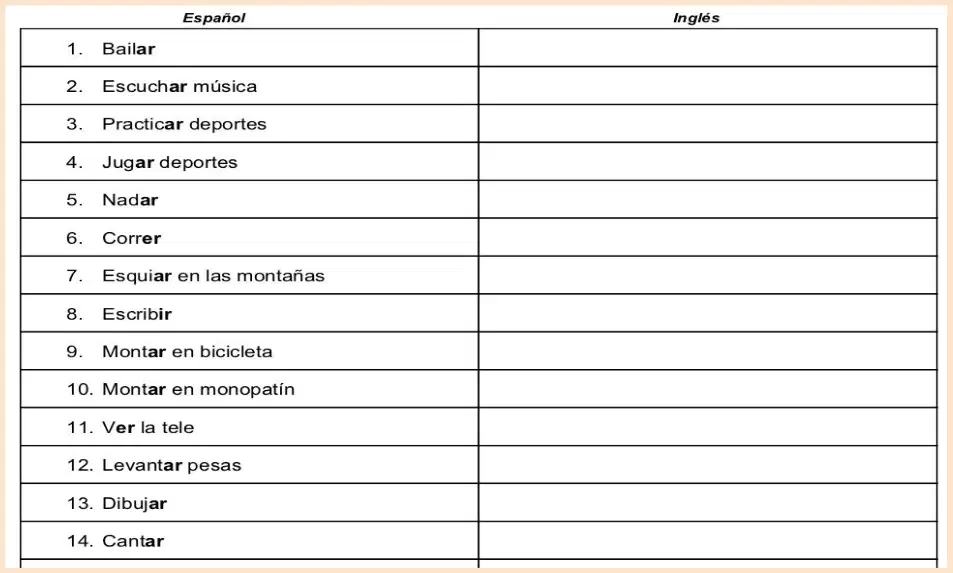
Directions: Define the following vocabulary in English. What is the best English meaning of “Ver la tele”?
to watch TV
to walk
to go fishing
to talk on the phone
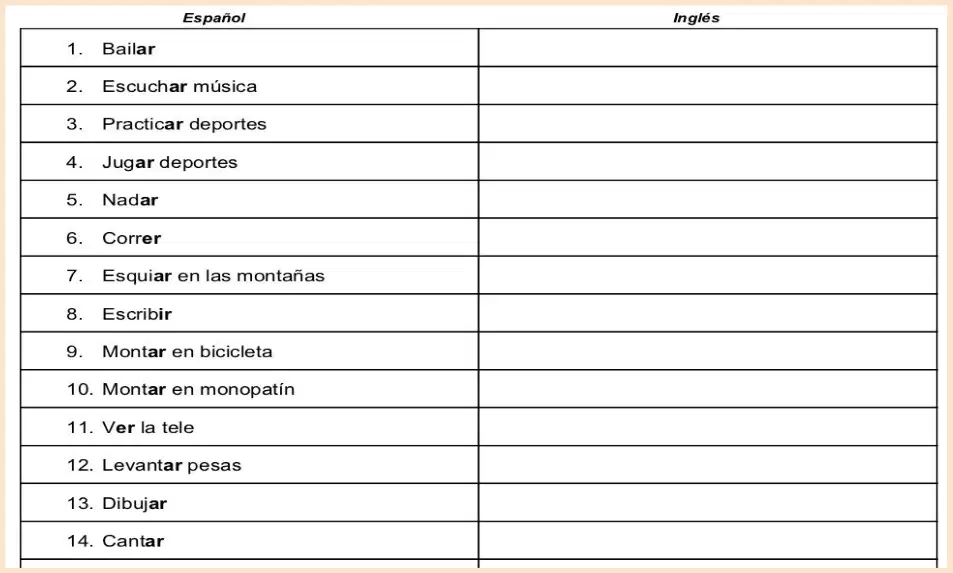
Directions: Define the following vocabulary in English. What is the best English meaning of “Levantar pesas”?
to lift weights
to read magazines
to go to school
to draw
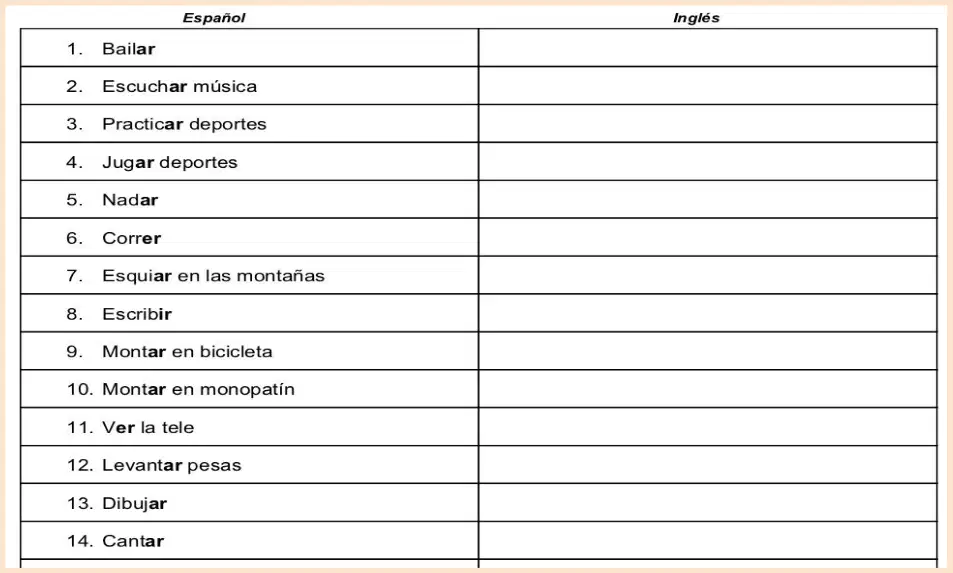
Directions: Define the following vocabulary in English. What is the best English meaning of “Dibujar”?
to draw
to run
to play sports
to ski in the mountains

Directions: Define the following vocabulary in English. What is the best English meaning of “Cantar”?
to sing
to work
to spend time with friends
to watch TV

Directions: Define the following vocabulary in English. What is the best English meaning of “Jugar videojuegos”?
to play video games
to lift weights
to go shopping
to read magazines
Directions: Define the following vocabulary in English. What is the best English meaning of “Usar la computadora”?
to use the computer
to go fishing
to talk with friends
to skateboard
Directions: Define the following vocabulary in English. What is the best English meaning of “Leer [revistas]”?
to read magazines
to write
to play the guitar
to walk
Directions: Define the following vocabulary in English. What is the best English meaning of “Tocar la guitarra”?
to play the guitar
to talk on the phone
to practice sports
to go to school
Directions: Define the following vocabulary in English. What is the best English meaning of “Hablar por teléfono/móvil”?
to talk on the phone
to spend time with friends
to send a text message
to go shopping
Directions: Define the following vocabulary in English. What is the best English meaning of “Hablar con amigos”?
to talk with friends
to play sports
to read magazines
to go to school
Directions: Define the following vocabulary in English. What is the best English meaning of “Pasar tiempo con amigos”?
to spend time with friends
to work
to skateboard
to lift weights
Directions: Define the following vocabulary in English. What is the best English meaning of “Patinar”?
to skate
to dance
to watch TV
to go fishing
Directions: Define the following vocabulary in English. What is the best English meaning of “Ir a la escuela”?
to go to school
to walk
to play video games
to send a text message
Directions: Define the following vocabulary in English. What is the best English meaning of “Ir de compras”?
to go shopping
to read magazines
to work
to ride a bicycle
Directions: Define the following vocabulary in English. What is the best English meaning of “Trabajar” (first occurrence in the list)?
to work
to play the guitar
to talk with friends
to go to school
Directions: Define the following vocabulary in English. What is the best English meaning of “Mandar un mensaje de texto”?
to send a text message
to watch TV
to go shopping
to skate
Directions: Define the following vocabulary in English. What is the best English meaning of “Caminar”?
to walk
to play sports
to lift weights
to draw
Directions: Define the following vocabulary in English. What is the best English meaning of “Trabajar” (second occurrence in the list)?
to work
to spend time with friends
to read magazines
to dance
Directions: Define the following vocabulary in English. What is the best English meaning of “Ir de pesca”?
to go fishing
to use the computer
to play the guitar
to run
Directions: Define the following vocabulary in English. What is the best English meaning of “Hacer ejercicios”?
to exercise
to go to school
to skate
to send a text message
Directions: Define the following vocabulary in English. What is the best English meaning of “[No] Me gusta…[infinitive]”?
I [don’t] like to … [infinitive]
I want to … [infinitive]
I need to … [infinitive]
I can … [infinitive]
Directions: Define the following vocabulary in English. What is the best English meaning of “¿Qué [no] te gusta hacer?”
What do you [not] like to do?
Where do you like to go?
When do you have to work?
Which sports do you play?
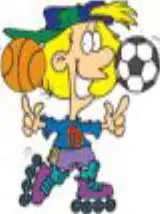
Directions: Write the Spanish translation for the image showing a kid playing sports with a soccer ball while wearing skates. Select all correct translations.
practicar deportes
patinar
comer
leer

Directions: Write the Spanish translation for the image of a student surrounded by stacks of books and reading/studying.
leer
estudiar
cantar
comer

Directions: Write the Spanish translation for the image of two kids riding bicycles.
montar en bicicleta
correr
esquiar
nadar

Directions: Write the Spanish translation for the image of a person eating a hamburger.
comer
beber
cocinar
hablar

Directions: Write the Spanish translation for the image of a person running.
correr
caminar
saltar
bailar

Directions: Write the Spanish translation for the image of a person swimming.
nadar
esquiar
bucear
patinar

Directions: Write the Spanish translation for the image of a person reading a book.
leer
escribir
dibujar
cantar

Directions: Write the Spanish translation for the image of people singing together into a microphone.
cantar
hablar
gritar
escuchar música

Directions: Write the Spanish translation for the image of a kid riding a skateboard.
andar en patineta
patinar sobre hielo
correr
montar en bicicleta

Directions: Write the Spanish translation for the image of a person playing video games with a controller and TV.
jugar videojuegos
ver la televisión
escuchar música
navegar por internet

Directions: Write the Spanish translation for the image of a group of friends spending time together.
pasar tiempo con amigos
ir de compras
estudiar solo
dormir
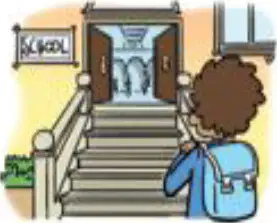
Directions: Write the Spanish translation for the image of a student walking into a school building.
ir a la escuela
salir de casa
viajar en autobús
trabajar en la oficina

Directions: Write the Spanish translation for the image of a person playing an electric guitar.
tocar la guitarra
escuchar música
cantar
bailar
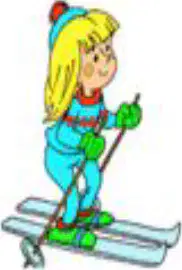
Directions: Write the Spanish translation for the image of a person skiing on snow with poles.
esquiar
correr
nadar
patinar

Directions: Write the Spanish translation for the image of a student writing at a desk.
escribir
leer
dibujar
estudiar

Directions: Write the Spanish translation for the image of a child holding a drawing of a sun.
dibujar
pintar paredes
leer
sacar fotos

Directions: Write the Spanish translation for the image of a person talking on a telephone.
hablar por teléfono
escuchar música
gritar
mandar mensajes

Directions: Write the Spanish translation for the image of two people dancing to music.
bailar
cantar
correr
caminar
Directions: Read the following statement and choose the correct vocabulary word that is being defined. What activity involves reading, learning, and understanding of many subjects?
Studying
Reading novels
Teaching
Playing games
Directions: Read the following statement and choose the correct vocabulary word that is being defined. What activity involves wearing a helmet, a warm jacket and snow pants?
Skiing
Ice skating
Sledding
Snowshoeing
Directions: Read the following statement and choose the correct vocabulary word that is being defined. What activity involves flipping pages and getting lost in the magic of stories?
Reading
Writing stories
Browsing the internet
Watching movies
Directions: Read the following statement and choose the correct vocabulary word that is being defined. What activity involves splashing and floating in water?
Swimming
Boating
Surfing
Fishing
Directions: Read the following statement and choose the correct vocabulary word that is being defined. What activity involves good times with your buddies?
Spending time with friends
Solitary study
Practicing piano
Gardening
Directions: Read the following statement and choose the correct vocabulary word that is being defined. What activity involves classrooms, teachers, and learning?
School
Library visit
Online tutoring
Field trip
Directions: Read the following statement and choose the correct vocabulary word that is being defined. What activity involves pedaling your way on two wheels?
Bicycling
Scootering
Rollerblading
Motorcycling
Directions: Read the following statement and choose the correct vocabulary word that is being defined. What activity involves swaying, twirling, and letting the music guide your steps?
Dancing
Singing
Acting
Drumming
Directions: Read the following statement and choose the correct vocabulary word that is being defined. What involves fingers playing strings, producing beautiful sounds?
Playing a string instrument
Playing drums
Composing on a laptop
Whistling
Directions: Read the following statement and choose the correct vocabulary word that is being defined. What activity lets you create with shapes and lines on paper?
Drawing
Sculpting clay
Painting walls
Origami
Directions: Choose the appropriate English translation for the Spanish adjective trabajador.
hard working
athletic
lazy
serious
Directions: Choose the appropriate English translation for the Spanish adjective deportista.
athletic
studious
talented
neat
Directions: Choose the appropriate English translation for the Spanish adjective atrevido.
bold, daring
shy, reserved
nice, friendly
patient
Directions: Choose the appropriate English translation for the Spanish adjective talentoso.
talented
good
fun
intelligent
Directions: Choose the appropriate English translation for the Spanish adjective artístico.
artistic
messy
neat
serious
Directions: Choose the appropriate English translation for the Spanish adjective gracioso.
funny
fun
impatient
unkind, unfriendly
Directions: Choose the appropriate English translation for the Spanish adjective sociable.
sociable
reserved
lazy
patient
Directions: Choose the appropriate English translation for the Spanish adjective simpático.
nice, friendly
serious
bold, daring
messy
Directions: Choose the appropriate English translation for the Spanish adjective ordenado.
neat
messy
lazy
athletic
Directions: Choose the appropriate English translation for the Spanish adjective inteligente.
intelligent
studious
talented
serious
Directions: Choose the appropriate English translation for the Spanish adjective serio.
serious
good
funny
patient
Directions: Choose the appropriate English translation for the Spanish adjective paciente.
patient
impatient
reserved
neat
Directions: Choose the appropriate English translation for the Spanish adjective divertido.
fun
funny
good
athletic
Directions: Choose the appropriate English translation for the Spanish adjective desordenado.
messy
neat
hard working
talented
Directions: Choose the appropriate English translation for the Spanish adjective bueno.
good
unkind, unfriendly
lazy
serious
Directions: Choose the appropriate English translation for the Spanish adjective estudioso.
studious
intelligent
athletic
talented
Directions: Choose the appropriate English translation for the Spanish adjective reservado.
shy, reserved
bold, daring
nice, friendly
fun
Directions: Choose the appropriate English translation for the Spanish adjective antipático.
unkind, unfriendly
nice, friendly
patient
good
Directions: Choose the appropriate English translation for the Spanish adjective impaciente.
impatient
patient
serious
lazy
Directions: Choose the appropriate English translation for the Spanish adjective perezoso.
lazy
hard working
athletic
neat
In the sentence "Me llamo Juan", what does the writer say?
My name is Juan
I live in Juan
I will call Juan later
My friend’s name is Juan
In the sentence "Soy de Madrid, España.", what does the writer state?
I am from Madrid, Spain
I am traveling to Madrid, Spain
I study at a school in Madrid
I like visiting Madrid in Spain
In "Tengo trece años y mi cumpleaños es el cinco de mayo.", what are the writer’s age and birthday?
Age 13 and birthday on May 5
Age 12 and birthday on April 5
Age 13 and birthday on May 15
Age 14 and birthday on May 5
In "¿Cuántos años tienes?", what is the writer asking?
How old are you?
Where do you live?
What do you like to do?
When is your birthday?
From "Me gusta tocar la guitarra, practicar deportes en el parque con mis amigos, y escuchar música en la clase de música.", which activity does the writer say they like?
Playing the guitar
Dancing at parties
Calling friends on the phone
Cooking at home
In "Mi clase favorita es la clase de español porque el profesor es muy simpático.", which class is the writer’s favorite and why?
Spanish class because the teacher is very nice
Music class because they enjoy listening
Physical education because they like sports
English class because they enjoy reading
In "No me gusta ni hablar por teléfono ni bailar.", what does the writer say they do not like to do?
Talk on the phone or dance
Play the guitar
Study Spanish
Read books
In "No soy ni talentoso ni serio.", what does the writer say about themselves?
I am neither talented nor serious
I am very talented and very serious
I am talented but not serious
I am serious but not talented
In "Según mi familia, soy gracioso y sociable.", how does the writer’s family describe them?
Funny and sociable
Intelligent and serious
Shy and quiet
Athletic and hardworking
In "Según mis amigos, soy deportista y trabajador.", how do the writer’s friends describe them?
Athletic and hardworking
Funny and sociable
Intelligent and serious
Lazy and bored
In "Mi mejor amigo es Tomás. Él es inteligente y serio.", how is Tomás described?
Intelligent and serious
Funny and sociable
Athletic and hardworking
Shy and quiet
In "Él tiene trece años.", how old is Tomás?
13 years old
12 years old
14 years old
15 years old
In "Le gusta practicar deportes y leer libros.", what does Tomás like to do?
Play sports and read books
Dance and call friends
Play the guitar and listen to music
Travel and cook
From the closing "Tu amigo, Antonio.", who signs the letter?
Antonio
Juan
Carlos
Tomás
From the salutation "Querido Carlos,", who is the letter addressed to?
Carlos
Antonio
Juan
Tomás
In the worksheet’s Spanish letter from Carlos, you are instructed to begin your reply with a specific salutation. Choose the exact phrase you must use to start your letter.
Querido Carlos,
Querido Amigo,
Hola Carlos,
Estimado Señor,
Select the exact Spanish question from Carlos’s letter that asks about how you are.
¿Cómo estás?
¿Qué te gusta hacer?
¿Cómo eres?
¿Y tú, de dónde eres?
Select the exact Spanish question from Carlos’s letter that asks about where you are from.
¿Y tú, de dónde eres?
¿Cuál es tu estación favorita?
¿Cómo estás?
¿Cómo eres?
Select the exact Spanish question from Carlos’s letter that asks about your favorite season.
¿Cuál es tu estación favorita?
¿Qué te gusta hacer?
¿Cómo eres?
¿Y tú, de dónde eres?
Select the exact Spanish question from Carlos’s letter that asks about what you like to do.
¿Qué te gusta hacer?
¿Cómo estás?
¿Cuál es tu estación favorita?
¿Cómo eres?
Select the exact Spanish question from Carlos’s letter that asks about what you are like (your personality or characteristics).
¿Cómo eres?
¿Qué te gusta hacer?
¿Cómo estás?
¿Y tú, de dónde eres?

Directions: Read the following information about teens in Spanish-speaking countries. Who do you think would get along best? _________ y _________. Choose the pair with the most shared interests based on the profiles provided.
Marisol (Puerto Rico) and Daniel (Cuba)
Daniel (Colombia) and Silvia (España)
Marisol (Puerto Rico) and Daniel (Colombia)
Silvia (España) and Daniel (Cuba)

Directions: Read the following information about teens in Spanish-speaking countries. If you enjoy playing sports and do not like watching TV, with which teen would you have the most in common?
Marisol (Puerto Rico)
Daniel (Colombia)
Silvia (España)
Daniel (Cuba)
Directions: Select the sentences that are personal messages similar to those you just read about the teens (first-person statements of likes and traits).
Me gusta practicar deportes y mandar mensajes a mis amigos. Soy simpático.
¿Te gusta tocar el piano?
Me gusta mucho ver la tele y escuchar música. Soy muy sociable.
Practicar deportes en equipo, voleibol y tenis.
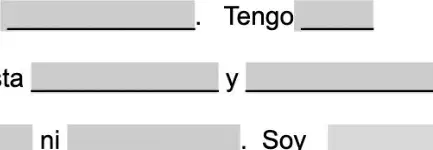
Choose the correct verb to express age in the sentence frame "_____ 13 años."
Tengo
Soy
Estoy
Hago

Complete the sentence frame for introducing yourself: "_____ Ana."
Me llamo
Yo llamo
Me llama
Soy llamado
Choose the correct construction to say your friend’s name: "Mi amigo[a] _____ Carlos."
se llama
me llama
se llamo
es llama
Choose the correct structure for likes with verbs: "_____ nadar y correr."
Me gusta
Me gustan
Yo gusto
Me encantan
Choose the correct conjunction to express two dislikes: "No me gusta _____ pizzas _____ hamburguesas."
ni ... ni
y ... y
o ... o
pero ... pero
Choose the correct third-person frame for age: "Él/[Ella] _____ 12 años."
tiene
es
está
hace
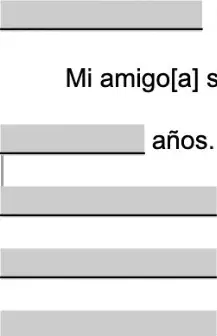
Complete the third-person likes sentence frame: "Él/[Ella] _____ leer y escribir."
le gusta
le gustan
le encanta
gusta
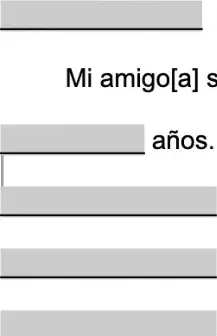
Choose the correct negation for your friend’s dislikes: "No le gusta _____ helado _____ pastel."
ni ... ni
y ... y
o ... o
pero ... pero

Select the correct verb to describe your friend with adjectives: "Él/[Ella] _____ trabajador[a], _____ y _____ ."
es
está
tiene
hace

Choose the correct conjunction to say you are not two adjectives: "No soy _____ perezoso _____ desordenado."
ni ... ni
y ... y
o ... o
pero ... pero
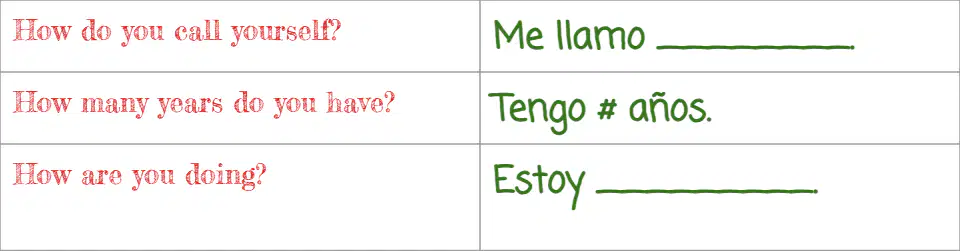
Choose the best English translation of “¿Cómo te llamas?”
How do you call yourself?
What do you do?
Where are you from?
How old are you?
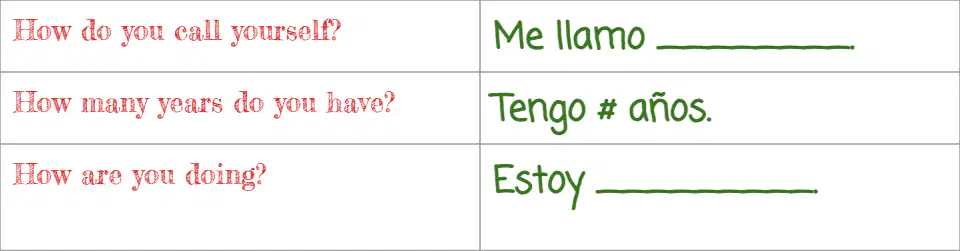
Choose the best English translation of “¿Cuántos años tienes?”
How many years do you have?
How are you doing?
What time is it?
Where do you live?
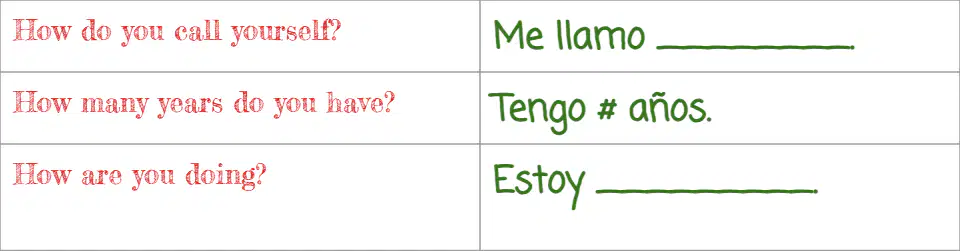
Choose the best English translation of “¿Cómo estás?”
How are you doing?
What are you like?
Where are you going?
What do you like?

Choose the best English translation of “¿Cómo eres?”
How are you? (What are you like?)
How old are you?
Where are you from?
What do you like to do?
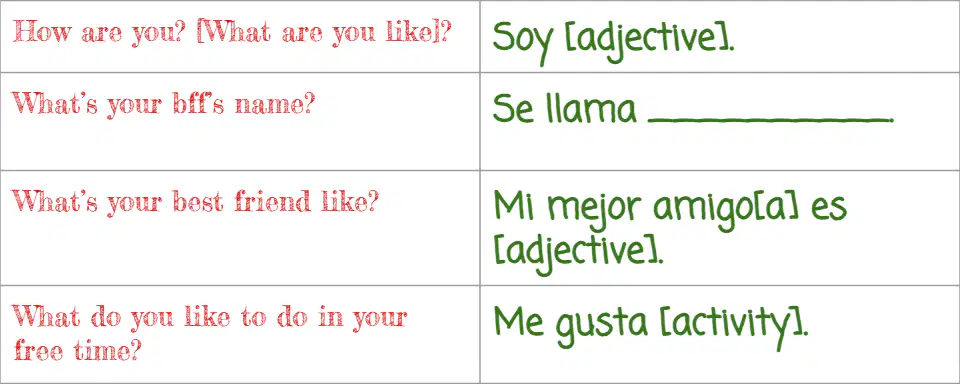
Choose the best English translation of “¿Cómo se llama tu mejor amigo[a]?”
What’s your bff’s name?
Where does your best friend live?
How old is your best friend?
What do you and your best friend like to do?
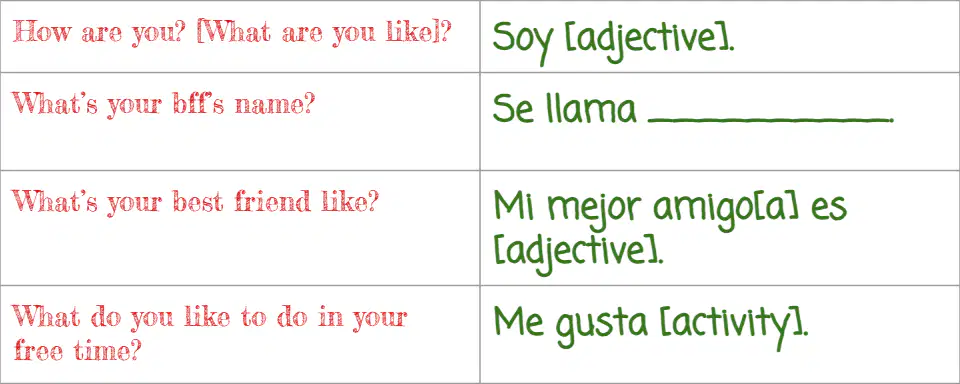
Choose the best English translation of “¿Cómo es tu mejor amigo[a]?”
What’s your best friend like?
What’s your bff’s name?
Where is your best friend?
How are you doing?

Choose the best English translation of “¿Qué te gusta hacer en tu tiempo libre?”
What do you like to do in your free time?
What time do you get home?
How are you? (What are you like?)
How many years do you have?

