wayground logo

Free Printable Worksheets

Font size

S
M
L
XL
Worksheets

Exploring Earth and Space Concepts

Total questions: 306

Worksheet time: 7hrs 51mins

Name
Class
Date
1.

Which planet is known as the "Red Planet" in our solar system?

a)

Venus

b)

Mars

c)

Jupiter

d)

Saturn

2.

What is the process called when heat is transferred through direct contact between objects?

a)

Radiation

b)

Conduction

c)

Convection

d)

Insulation

3.

Which law states that an object at rest stays at rest unless acted upon by an external force?

a)

Newton's First Law

b)

Newton's Second Law

c)

Newton's Third Law

d)

Law of Gravity

4.

What is the outermost layer of the Earth called?

a)

Mantle

b)

Core

c)

Crust

d)

Lithosphere

5.

Which force keeps the planets in orbit around the Sun?

a)

Magnetism

b)

Gravity

c)

Friction

d)

Electricity

6.

What is the name of the theory that explains the movement of Earth's plates?

a)

Continental Drift Theory

b)

Plate Tectonics Theory

c)

Evolution Theory

d)

Big Bang Theory

7.

Which planet is the largest in our solar system?

a)

Earth

b)

Jupiter

c)

Saturn

d)

Neptune

8.

What type of heat transfer occurs when warm air rises and cool air sinks?

a)

Conduction

b)

Radiation

c)

Convection

d)

Insulation

9.

Which layer of the Earth is made mostly of liquid iron and nickel?

a)

Inner core

b)

Outer core

c)

Mantle

d)

Crust

10.

What is the main source of energy for the solar system?

a)

The Moon

b)

The Sun

c)

Earth

d)

Jupiter

11.

Which of the following is an example of Newton's Third Law of Motion?

a)

A ball rolling until it stops

b)

A rocket launching and pushing exhaust gases downward

c)

A car accelerating

d)

A book sitting on a table

12.

Which process transfers heat from the Sun to Earth?

a)

Conduction

b)

Convection

c)

Radiation

d)

Insulation

13.

Which planet is closest to the Sun?

a)

Venus

b)

Mercury

c)

Earth

d)

Mars

14.

What is the main cause of earthquakes?

a)

Weather changes

b)

Movement of tectonic plates

c)

Volcanic eruptions

d)

Ocean tides

15.

Which layer of the Earth is directly below the crust?

a)

Mantle

b)

Outer core

c)

Inner core

d)

Lithosphere

16.

If a metal spoon is placed in a hot cup of tea, which type of heat transfer occurs?

a)

Convection

b)

Radiation

c)

Conduction

d)

Insulation

17.

If you drop a ball from a height, which force causes it to fall to the ground?

a)

Friction

b)

Gravity

c)

Magnetism

d)

Electricity

18.

Which of the following best describes the movement of tectonic plates at a transform boundary?

a)

Plates move away from each other

b)

Plates slide past each other

c)

Plates move towards each other

d)

Plates do not move

19.

A student places a hand above a candle flame and feels warmth. Which type of heat transfer is this?

a)

Conduction

b)

Convection

c)

Radiation

d)

Insulation

20.

Which planet has the most moons in the solar system?

a)

Earth

b)

Mars

c)

Jupiter

d)

Mercury

21.

If a car accelerates from rest, which of Newton's laws explains the change in motion?

a)

First Law

b)

Second Law

c)

Third Law

d)

Law of Gravity

22.

Which layer of the Earth is responsible for the movement of tectonic plates?

a)

Crust

b)

Mantle

c)

Outer core

d)

Inner core

23.

Which type of plate boundary is most likely to form mountains?

a)

Divergent boundary

b)

Convergent boundary

c)

Transform boundary

d)

Passive boundary

24.

If you observe that the planets farther from the Sun move slower in their orbits, which force is responsible for this pattern?

a)

Magnetism

b)

Gravity

c)

Friction

d)

Electricity

25.

A student notices that a metal rod gets hot at one end when the other end is placed in a flame. Which process is responsible for this?

a)

Convection

b)

Radiation

c)

Conduction

d)

Insulation

26.

A ball is thrown upward with an initial velocity of 10m/s10\,\text{m/s} . Using Newton's laws, predict what will happen to the ball after it leaves the hand.

a)

It will continue to rise forever

b)

It will slow down, stop, and fall back down

c)

It will stay at the highest point

d)

It will move in a straight line upward

27.

Explain how convection currents in the mantle contribute to the movement of tectonic plates.

a)

They cause plates to stay still

b)

They create forces that move plates

c)

They cool the plates

d)

They make plates lighter

28.

A student observes that when two continental plates collide, large mountain ranges form. What reasoning supports this observation?

a)

The plates melt and form mountains

b)

The collision causes the crust to buckle and rise

c)

The plates slide past each other

d)

The plates move apart

29.

If the Sun's gravity suddenly disappeared, what would happen to the planets in the solar system?

a)

They would continue orbiting the Sun

b)

They would move in straight lines away from the Sun

c)

They would crash into each other

d)

They would stop moving

30.

A student wants to demonstrate convection using water and food coloring. What steps should they follow to show convection currents?

a)

Heat the water from the top and add food coloring

b)

Heat the water from the bottom and add food coloring to observe movement

c)

Cool the water and add food coloring

d)

Add food coloring without heating

31.
An imaginary axle that a planet spins on
a)
horizon
b)
axis
c)
the tilt of the planet
d)
altitude
32.
The day and night cycle on Earth is caused by
a)
Earth's tilted axis
b)
Earth's orbit around the Sun
c)
Earth's rotation on its axis
d)
Earth's distance from the Sun
33.
The Moon can be seen from Earth
a)
Only when it is night
b)
Only when it is day
c)
Sometimes at night and sometimes during the day
d)
Only after the Sun has set
34.
The distance above Earth's surface is ____?
a)
Altitude
b)
Line of sight
c)
Horizon
d)
Point of view
35.

The position from which an observation is made is a ______.

a)

Altitude

b)

Line of sight

c)

Horizon

d)

Point of view

36.
A place where the sky and Earth's surface appear to meet is the _______.
a)
Axis
b)
Line of sight
c)
Horizon
d)
Point of view
37.
What is rotation?
a)
Turning/Spinning like a top
b)
The amount of time it takes to go around the Sun.
c)
Going around another object
d)
The same as orbit
38.
What is revolution?
a)
Traveling around something
b)
Day/night cycle
c)
Spinning like a top
d)
Turning on an axis.
39.
The path and length of time it takes a planet to go around the Sun is its
a)
axle
b)
orbit
c)
elevation
d)
rotation
40.
The horizontal bands that measure the distance North or South from the Equator
a)
Latitude
b)
Longitude
c)
Revolution
d)
Rotation
41.

The way a ship appears to change as it sails away

a)

It appears to sink

b)

The top disappears first

c)

It gets really tiny but you can always see it

d)

Disappears all at once as it falls off the edge of the Earth

42.

Earth's axis

a)

always points to the North Star

b)

changes as we orbit the Sun

c)

always points away from the Sun

d)

never points at the North Star

43.

What is altitude?

a)

The distance above sea level

b)

The distance above Earth's surface

c)

A place where the sky and Earth's surface appear to meet

d)

A type of breath mint

44.

What is elevation?

a)

The distance above sea level

b)

The distance above Earth's surface

c)

A place where the sky and Earth's surface appear to meet

d)

A breath mint

45.

Earth's rotation on its axis causes

a)

the seasons

b)

Earth's orbit around the Sun

c)

the day and night cycle

d)

the moon phases

46.

Earth's rotation lasts for about

a)

365 days

b)

12 hours

c)

24 hours

d)

30 days

47.

About how long is Earth's revolution?

a)

365 days

b)

12 hours

c)

24 hours

d)

30 days

48.

Which planet looks reddish in the night sky?

a)

Jupiter

b)

Saturn

c)

Mars

d)

Mercury

49.

A(n) _________________________________ is the distance that light travels in one year.

a)

revolution

b)

light year

c)

axis

d)

rotation

50.

______________________________ is everything that exists.

a)

axis

b)

universe

c)

rotation

d)

revolution

51.

How the universe began with a big explosion is described by the _____________________________________.

a)

geocentric model

b)

heliocentric model

c)

light year

d)

big bang theory

52.

A very massive star might end its life as a

a)

black hole

b)

black dwarf

53.

In the final stage of its life cycle, a star is called a ( nebula / black dwarf )

a)

nebula

b)

black dwarf

54.

What causes seasons?

a)

The tilt of Earth's axis

b)

Earth's distance from the sun

c)

Global warming

d)

heliocentric model

55.

Newton's 1st Law is also called the Law of ...

a)

Friction

b)

Inertia

c)

Unbalanced forces

d)

Newtons

56.
The tendency of an object to resist a change in motion is...
a)
inertia
b)
kinetic energy
c)
vector
d)
net force
57.

Because of inertia, a moving object will keep ________ unless acted on by an unbalanced force.

a)

at rest

b)

moving

c)

in one spot

d)

inertia

58.
Because of inertia, a resting object will remain at ________.
a)
rest
b)
a constant speed
c)
school
d)
inertia 
59.

If a ball is in motion, how do balanced forces effect it?

a)

it will slow the ball down

b)

the ball will speed up

c)

the ball will continue to move at a constant speed & in the same direction

d)

the ball will stop

60.

What force causes objects that are moving to come to a stop?

a)

gravity

b)

inertia

c)

friction

d)

magnetism

61.

Why does an 18-wheeler truck have more inertia than a bicycle?

a)

it has more mass

b)

it has more volume

c)

it is not as aerodynamic

d)

it has more space

62.
True of False?
An object's inertia is effected by its mass.
a)
False
b)
True
63.
What is the unit of measurement for force?
a)
kilograms
b)
newtons
c)
grams
d)
newt
64.
The law of inertia (Newton’s First Law) applies
a)
to both moving and nonmoving objects
b)
only to moving objects
c)
only to objects that are not moving
65.
Objects with greater _________ also have greater inertia.
a)
speed
b)
mass
c)
temperature
d)
friction
66.

What is the relationship between heavy objects and inertia?

a)

Only heavy objects have inertia.

b)

Heavy objects have more inertia.

c)

Heavy objects have less inertia.

d)

Heavy objects have no inertia.

67.
Friction is a force that acts in an ___________ direction of movement.
a)
similar
b)
opposite
c)
parallel
d)
west
68.
If one object has twice as much mass as another object, it also has twice as much...
a)
inertia
b)
velocity
c)
acceleration due to gravity
d)
DO NOT PUSH ME
69.
Which type of force(s) will cause a change in an object's motion?
a)
gravity
b)
zero net force
c)
balanced forces
d)
unbalanced forces
70.
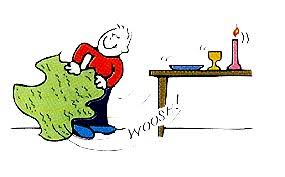
A magician pulls a tablecloth out from under dishes and glasses on a table without disturbing them.
a)
Newton's 1st Law
b)
Newton's 2nd Law
c)
Newton's 3rd Law
71.
This person bought coffee and put it on the seat next to them. If they stopped quickly and the coffee spilled which law would that represent?
a)
Newton's 1st Law
b)
Newton's 2nd Law
c)
Newton's 3rd Law
72.

A force is a

a)

A push only

b)

A pull only

c)

A push or pull

d)

Energy

73.

While you’re ice-skating with your friends, you push off from one end of the rink and slide forward. Based on Newton’s first law of motion, what is true?

a)

You will lose your balance and fall over before your reach the middle of the ice rink.

b)

You will continue to slide across the ice until a force makes you stop or change direction.

c)

The force of gravity will make you keep your velocity until your friends make you stop.

d)

The size of your ice skates will determine how quickly or slowly you travel across the ice.

74.

Diagram 3 shows a cat chasing a rat. The inertia of the cat is bigger than the rat because.

a)

The size of the cat is bigger than the rat

b)

The length of the cat is more than the rat

c)

The mass of the cat is bigger than the rat

75.
Which of the following is an example of inertia?
a)
Slamming on the breaks in your car and flying forward.
b)
An apple falling off of a tree. 
c)
Running at a cross country event. 
76.

Seat belt is needed for safety purpose in a vehicle. What is the use of the seat belt?

a)

To increase the effect of inertia

b)

To reduce the effect of inertia

c)

To increase the effect of momentum

d)

To decrease the effect of momentum

77.

Which explains why the tablecloth trick works?

a)

The dishes are stuck in place due to air resistance.

b)

The tablecloth is an ilusion.

c)

The dishes have inertia, and therefore stay on the table.

d)

magic

78.

An astronaut kicks a soccer ball in outer space at a location far from significant influences of gravity and air resistance. The soccer ball will _________.

a)

continue in motion with the same speed and direction

b)

eventually stop as its inertia slowly becomes used up

c)

eventually stop since all objects ultimately "lose their steam"

d)

either a, b, or c -- depending on whether the astronaut continues to kick it

79.

Michael Jordan guides a golf ball around the outside rim of the green at the Hole-In-One Putt-Putt Golf Course. When the ball leaves the rim, which path (A, B, or C) will the golf ball follow?

a)

A

b)

B

c)

C

80.

50 miles per hour, West

a)

acceleration

b)

speed

c)

velocity

d)

gravity

81.

A force is a ________________________ that acts on an object.

a)

push

b)

pull

c)

push or pull

82.

A force that pushes back against one object moving past another object

a)

gravity

b)

friction

c)

inertia

d)

mass

83.

Acceleration is best described as a change in an object's

a)

velocity

b)

speed

c)

direction

84.

An object at rest will stay at rest unless an unbalanced force acts on it.

a)

True

b)

False

85.

An object that is changing position (location) is

a)

at rest

b)

in motion

86.

An object's tendency to resist (not) change its state of motion.

a)

gravity

b)

force

c)

inertia

d)

friction

87.

Which of the following is not a force?

a)

gravity

b)

velocity

c)

friction

d)

push

88.

If an object in motion is not acted on by an unbalanced force, it will continue with the same speed and direction.

a)

True

b)

False

89.

If an object is speeding up, it has acceleration.

a)

True

b)

False

90.

The rate or measure of how fast an object is moving

a)

velocity

b)

force

c)

speed

d)

acceleration

91.

The measure of how fast an object is moving AND what direction it is moving

a)

velocity

b)

force

c)

speed

d)

acceleration

92.

Which of the following will NOT reduce (make less) friction?

a)

make a surface smooth

b)

add wheels

c)

Increase the surface contact area

d)

add a lubricant or oil

93.

If an object changes direction, it experiences acceleration.

a)

True

b)

False

94.

75 miles per hour

a)

speed

b)

velocity

95.

An object at rest will stay at rest unless an unbalanced force acts on it.

a)

True

b)

False

96.

An object that is changing position (location) is

a)

at rest

b)

in motion

97.
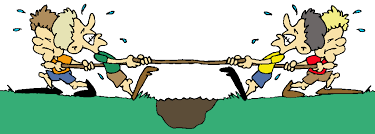
If these teams are pulling with the same amount of force what will happen?
a)
The boy in blue will win.
b)
They will not move at all.
c)
The boy in red will win.
d)
Both will fall down.
98.
How will this object move? 
a)
It won't move. 
b)
It will move to the right. 
c)
It will move to the left. 
d)
It will move up. 
99.
What is the net force?
a)
400 N Up
b)
400 N Down
c)
- 400 N Down
d)
800 N Down
100.
Which of the blocks above has balanced forces acting on it?
a)
A
b)
B
c)
C
d)
D
101.

Newton's 1st Law is also called the Law of ...

a)

Friction

b)

Inertia

c)

Unbalanced forces

d)

Newtons

102.
An object in motion tends to stay in motion unless an ___ force acts on it.
a)
unbalanced
b)
balanced
103.
Why is the net force 0 in the image?
a)
Because the elephants are the same size
b)
Because they are both pulling the same amount of force in opposite directions
c)
Because they are elephants
d)
Because they are pulling away from each other.
104.

Because of inertia, a moving object will keep ________ unless acted on by an unbalanced force.

a)

at rest

b)

moving

c)

in one spot

d)

inertia

105.
Objects with greater _________ also have greater inertia.
a)
speed
b)
mass
c)
temperature
d)
friction
106.

What force causes objects that are moving to come to a stop?

a)

gravity

b)

inertia

c)

friction

d)

magnetism

107.

The skateboarder does NOT see the stick on the ground and is approaching FAST. Based on what you know about inertia, what do you think will happen next?

a)

The skateboarder will hit the stick and stop.

b)

The skateboarder will hit the stick and go flying forward but the skateboard will stop.

c)

The skateboarder will hit the stick and bounce backwards.

108.

What is the net force if a man pushes a wall with a force of 100 N and the wall pushes back with a force of 100 N?

a)

200 N

b)

100 N

c)

0 N

d)

50 N

109.

What is the net force if a boy pushes a box with a force of 30 N to the right and another boy pushes the box with a force of 20 N to the left?

a)

50 N to the right

b)

50 N to the left

c)

10 N to the right

d)

10 N to the left

110.
A change in an object's position is called ______.
a)
Speed
b)
Motion
c)
Velocity
d)
Friction
111.
The tendency of an object to resist change in motion.
a)
Force
b)
Motion
c)
Friction
d)
Inertia
112.
Lighter objects have LESSER inertia than heavier objects.
a)
True
b)
False
113.
____ is a force that occurs when an object rubs against another object.
a)
Motion
b)
Friction
c)
Velocity
d)
Speed
114.
An object will remain at rest or in uniform motion in a straight line unless acted upon by an external force.
a)
Newton's First Law of Motion
b)
Newton's Second Law of Motion
c)
Newton's Third Law of Motion
d)
Newton's Fourth Law of Motion
115.
It is also called the Law of Inertia.
a)
Newton's First Law of Motion
b)
Newton's Second Law of Motion
c)
Newton's Third Law of Motion
d)
Newton's Fourth Law of Motion
116.
Objects with more mass (or heavier) have greater gravitational pull.
a)
True
b)
False
117.
Objects with more mass (or heavier) have more inertia; thus,  EASIER to move or stop.
a)
True
b)
False
118.
____ means that an object in motion will stay in motion in the same direction, or it will stay at rest,  unless another force acts upon it.
a)
Inertia
b)
Friction
c)
Motion
d)
Gravity
119.
The SI units for force are...
a)
Kilograms
b)
Newtons
c)
Meters per second
d)
Pounds
120.
A crumpled piece of paper hits the ground before a flat sheet of paper because
a)
the acceleration of gravity is greater on the  crumpled paper.
b)
there is more air resistance against the flat paper.
c)
the crumpled paper is more massive
d)
the crumpled paper is less massive.
121.
According to Newton’s first law of motion, a moving object that is not acted on by an unbalanced force will
a)
remain in motion.
b)
eventually come to a stop.
c)
change its momentum.
d)
accelerate.
122.
A sled sliding on a flat, icy surface with a constant velocity is best described by
a)
Newton’s first law of motion for objects at rest.
b)
Newton’s first law of motion for objects in motion.
c)
Newton’s second law of motion.
d)
Newton’s third law of motion.
123.
Without any force to change it, an object at rest stays at rest and an object in motion stays in motion
a)
Newton’s first law of motion
b)
Newton’s second law of motion
c)
Newton’s third law of motion
124.
Unit of mass
a)
m/s 2
b)
m/s
c)
newtons
d)
kg
125.
A student pushes a box to right with a force of 10N while a young boy pushes the box to the left with a force of 8N. What is the sum of all forces on the box? 
a)
18N left
b)
18N right
c)
2N right
d)
2N left
126.
If net force acting on object is 0, then the force is considered to be..
a)
Balanced
b)
Unbalanced
c)
Equal in Direction
d)
Distance/Time
127.
A cat sitting on couch, a pencil on desk and a car at rest are all example of..
a)
Balanced Force
b)
Unbalanced Force
128.
A car speeding up, a dog slowing down and person turning around the block are examples of..
a)
Balanced Forces
b)
Unbalanced Forces
129.
Which type of force(s) will cause a change in an object's motion?
a)
gravity
b)
zero net force
c)
balanced forces
d)
unbalanced forces
130.
Which of Newton's laws is illustrated when a magician pulls a tablecloth out from under the dishes without disturbing them?
a)
first
b)
second
c)
third 
d)
fourth
131.
A person is pushed forward into their seat belt when a car stops.  Which law is this?
a)
1st
b)
 2nd
c)
2 and 3
d)
3rd 
132.
The tendency of an object to resist a change in motion is...
a)
inertia
b)
kinetic energy
c)
vector
d)
net force
133.
The law of inertia (Newton’s First Law) applies
a)
to both moving and nonmoving objects
b)
only to moving objects
c)
only to objects that are not moving
134.
What kind(s) of objects have inertia?
a)
all objects with mass
b)
only objects at rest
c)
only objects in motion
d)
only objects whose motion is being changed
135.
You push on a car and it does not move.  What is true about the inertia?
a)
The inertia is changing
b)
The inertia of the car is too great 
c)
The inertia of the person is equal to the car
d)
There is not inertia because of no movement
136.
An object following a straight-line path at a constant speed 
a)
has zero acceleration
b)
has no forces acting on it
c)
has a net force acting in the direction of motion
d)
none of these
137.
One object has twice as much mass as another object. The first object also has also twice as much...
a)
velocity
b)
gracitational acceleration
c)
inertia
d)
all of these
138.
If a hockey puck slides on a frictionless force it will eventually slow down because of its inertia.
a)
True
b)
False
139.
Why is the net force 0 in the image?
a)
Because the elephants are the same size
b)
Because they are both pulling the same amount of force in opposite directions
c)
Because they are elephants
d)
Because they are pulling away from each other.
140.

What is another name for Newton's first law of motion?

a)

Law of Inertia

b)

Law of Gravity

c)

Law of Motion

d)

Law of Friction

141.

What happens to an object in motion according to Newton's first law of motion?

a)

It remains in motion in a straight line and at a constant speed

b)

It slows down and eventually stops

c)

It changes direction randomly

d)

It moves faster and faster

142.

What is the condition for an object to stop moving according to Newton's first law of motion?

a)

When another force acts upon it

b)

When it reaches a certain distance

c)

When it loses energy

d)

When it collides with another object

143.

What is friction?

a)

An opposing force that affects the motion of objects

b)

A force that keeps objects in motion

c)

A force that pulls objects towards the ground

d)

A force that pushes objects away from each other

144.

What are the factors that affect the movement of a rolling ball?

a)

Friction and gravity

b)

Magnetism and electricity

c)

Heat and light

d)

Sound and vibration

145.

What happens to the ball when it is rolling and rubbing against the grass?

a)

It slows down little by little

b)

It speeds up

c)

It stops suddenly

d)

It changes direction

146.

What force is pulling the ball downwards?

a)

Gravity

b)

Friction

c)

Magnetism

d)

Electricity

147.

Why does the ball stay still when no force is acting on it?

a)

Because all the forces are equal

b)

Because it has no energy

c)

Because it is too heavy

d)

Because it is stuck to the ground

148.

What causes the ball to move when it gets kicked?

a)

A greater force

b)

Friction

c)

Gravity

d)

Magnetism

149.

What would happen to the ball if there was no friction and gravity?

a)

It would keep moving forever

b)

It would stop immediately

c)

It would change direction randomly

d)

It would explode

150.

What is Galileo's concept of inertia?

a)

Objects at rest stay at rest and objects in motion stay in motion

b)

Objects at rest start moving in a straight line

c)

Objects in motion slow down and eventually stop

d)

Objects in motion change direction randomly

151.

According to Newton, how do objects move unless acted on by a force?

a)

In the same direction and at a constant speed

b)

In a circular motion

c)

In random directions

d)

In a zigzag pattern

152.
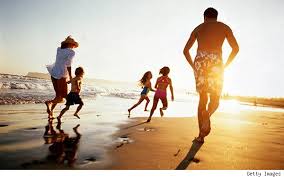
The sun shines down on this family as the play on the beach.
a)
conduction
b)
convection
c)
radiation
153.
A group of friends gather around a fire to stay warm.
a)
conduction
b)
convection
c)
radiation
154.
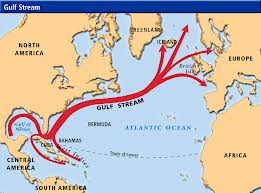
The Gulf Stream is a current that brings warm ocean water from the south to the north.
a)
conduction
b)
convection
c)
radiation
155.
Walking on the warm sand sand with your bare feet.
a)
conduction
b)
convection
c)
radiation
156.
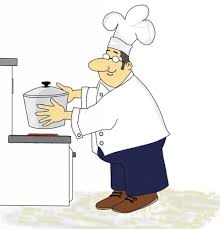
The man goes to take the hot pot off the stove with his bare hands.
a)
conduction
b)
convection
c)
radiation
157.
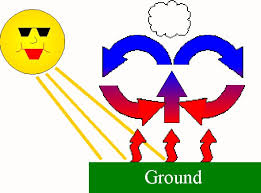
Warm air rises and the cool air sinks.
a)
conduction
b)
convection
c)
radiation
158.
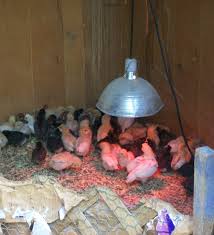
The baby chickens are kept warm from the heat lamps.
a)
conduction
b)
convection
c)
radiation
159.
In some cultures, walking on fire is the ultimate sign of strength.
a)
conduction
b)
convection
c)
radiation
160.
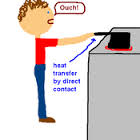
Johnny accidentally grabbed the handle of the hot pot.
a)
conduction
b)
convection
c)
radiation
161.
The way the heat is moving from the hot coffee is called...
a)
convection
b)
radiation
c)
insulation
d)
conduction
162.
The warm air from this heater creates a current when the warm air rises and the cold air sinks.
a)
conduction
b)
convection
c)
radiation
163.
The chocolate bunny and the blow dryer.
a)
conduction
b)
convection
c)
radiation
164.
The chocolate bunny and the iron.
a)
conduction
b)
convection
c)
radiation
165.
The chocolate bunny and the lamp.
a)
conduction
b)
convection
c)
radiation
166.
Heat transfers from an area of ____temperature to an area of ___ temperature.
a)
high to low
b)
low to high
c)
high to high
167.
Which of the following is NOT a method of heat transfer?
a)
convection
b)
induction
c)
conduction
d)
radiation
168.

A cat is hanging out several feet from a fire in a fireplace. This causes the kitty cat to get warm. The kitty cat is warm because of...

a)

Convection

b)

Conduction

c)

Radiation

d)

The fur sweater he's wearing!

169.

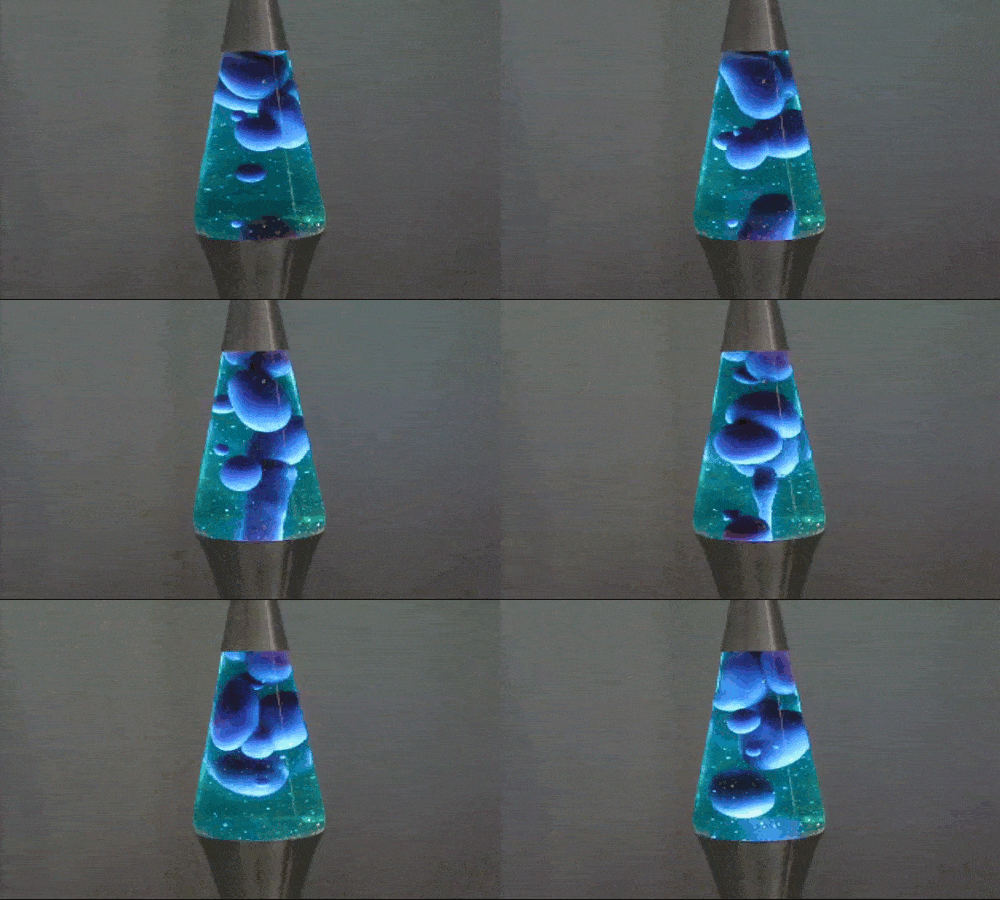
A certain type of decorative lamp contains colored liquids. These liquids form globs that break off and rise to the top of the liquid. The globs rise due to

a)

Convection

b)

Conduction

c)

Radiation

d)

Globulation

170.

Near the ceiling of a room, the air is warmer. The warmer air is rising because of

a)

Convection

b)

Conduction

c)

Radiation

d)

It was told to by this crazy fool!

171.

In a swimming pool, the water near the surface is slightly warmer. The temperature of the water near the top rises because of

a)

Convection

b)

Conduction

c)

Radiation

d)

Too many dogs being in the pool!

172.

A fireman that is at a building that is on fire feels a door and it is hot. Why does his hand feel hot?

a)

Convection

b)

Conduction

c)

Radiation

d)

The Human Torch was on the other side!
173.

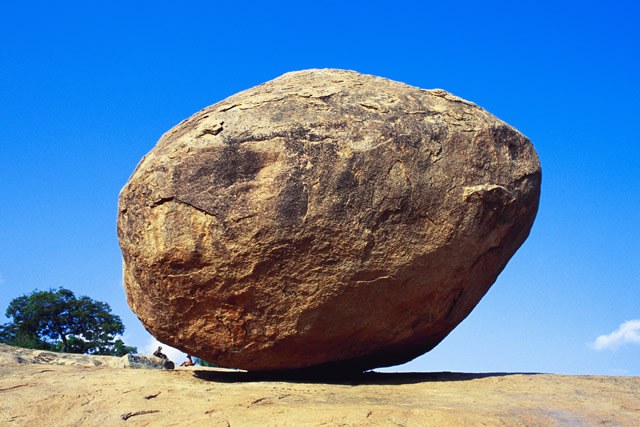
A huge boulder at the state park in Arizona gets so hot during a mid summer's day. This is due to...

a)

Convection

b)

Conduction

c)

Radiation

d)

Boogie Fever

174.

A house burns down. On the house next to it, the vinyl siding is twisted and warped by the heat. The heat was transferred across to the other house by

a)

Convection

b)

Conduction

c)

Radiation

d)

Marvin the Martian

175.

As you hold a piece of ice, it begins to melt from the warmth of you hand on it. This is because of

a)

Convection

b)

Conduction

c)

Radiation

d)

the fact that you are the Human Torch from the Fantastic Four.

176.

In heat transfer, heat always flows from the _______________ object to the _______________ object.

a)

hotter / colder

b)

colder / hotter

c)

hotter / hotter

d)

colder / colder

177.

Which of the following statements is true regarding heat energy?

a)

The quicker a molecule moves, the colder it is.

b)

The slower a molecule moves, the warmer it is.

c)

The quicker a molecule moves, the warmer it is.

d)

The faster you dance, the quicker you get tired.

178.
Heat is the movement of ______.
a)
radiation
b)
thermal energy
c)
cold
d)
fire
179.

Weather Patterns...

a)

Conduction

b)

Convection

c)

Radiation

180.

Heat/magma moving under Earth's mantle; hot magma rises and cold magma sinks...

a)

Conduction

b)

Convection

c)

Radiation

181.

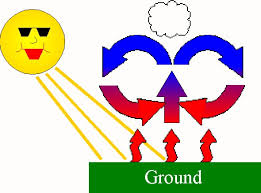
What is the circular motion of hot air rising and cold air sinking?

a)

Radiation

b)

Convection Currents

c)

Electromagnetic Waves

d)

Conduction

182.

The sun shining...

a)
conduction
b)
convection
c)
radiation
183.

Hot coffee is stirred with a spoon; the spoon gets hot due to...

a)
conduction
b)
convection
c)
radiation
184.
Molecules in cold things move more _________
than in hot things.
a)
quickly
b)
slowly
c)
happily
d)
merrily
185.
The kind of heat transfer that travels through space in electromagnetic waves is ______________________.
a)
insulation.
b)
Radiation
c)
Conduction
d)
Convection
186.
Select the temperature in °F
a)
90°F
b)
100°F
c)
40°F
d)
30°F
187.

Taking a hot air balloon ride is an example of what?

a)

Radiation

b)

Conduction

c)

Convection

188.
What kind of heat transfer happens when the sun is heating your body?
a)
Conduction
b)
Radiation
c)
Convection
d)
Density
189.
What heat transfer happens when you burn your hand by touching a fire?
a)
Radiation
b)
Conduction
c)
Convection
d)
I don't know!!!!!!!!!!!
190.
Warm air rises and the cool air sinks demonstrates this type of heat transfer. 
a)
conduction
b)
convection
c)
radiation
d)
Insolation 
191.
Ironing a shirt is an example of...
a)
condensation
b)
conduction
c)
convection
d)
radiation
192.
Warm air is __________ dense than cold air and rises creating convection currents.
a)
more
b)
less
193.
Hot coffee is stirred with a spoon; the spoon gets hot due to
a)
conduction
b)
convection
c)
radiation
194.
The metal skewer gets so hot that you drop your marshmallow into the campfire because of
a)
conduction
b)
convection
c)
radiation
195.

Walking on the hot sand on a beach

a)

Conduction

b)

Convection

c)

Radiation

196.

Why does hot air rise?

a)

It's hot

b)

It's less dense

c)

It's more dense

d)

I'm not sure

197.

What causes heat energy?

a)

the ratio of energy

b)

heat between substances

c)

radiation

d)

the motion of atoms

198.

How does heat travel from hot to cold?

a)

Particles

b)

the atoms of a hot substance move and collide with cold atoms

c)

molecules are packed together

d)

the particles leave enough room for expansion

199.

What is thermal expansion?

a)

energy from motion

b)

the flow of energy into a larger object

c)

an object expanding and becomes larger due to it's rise in temperature

200.

Which of these are liquids?

a)

helium and milk

b)

rain and milk

c)

water vapor and rain

d)

milk and water vapor

201.

Which of these are solids?

a)

Snow and Ice

b)

Snow and Pillow

c)

Snow, Pillow, and Ice

d)

All of them

202.

Which of these are gases?

a)

Helium, Water Vapor, and Oxygen

b)

Water Vapor and Clouds

c)

Helioum and Oxygen

d)

All of them

203.

Which state of matter surrounds us?

a)

Solid

b)

Liquid

c)

Gas

204.

What type of matter has its own shape?

a)

Solid

b)

Liquid

c)

Gas

205.

What type of matter takes the shape of its container?

a)

Solids and Liquids

b)

Liquids and Gases

c)

Solids and Gases

d)

All of them

206.

What type of matter will fill and even escape a container without moving the container?

a)

Solids

b)

Liquids

c)

Gases

d)

None of them

207.

What type of matter is hanging in the sky?

a)

Solid

b)

Liquid

c)

Gas

d)

All of them

208.

What type of matter takes up space?

a)

Solid

b)

Liquid

c)

Gas

d)

All of them

209.

What type of matter has mass?

a)

Only solids

b)

Solids and Liquids

c)

Liquids and Gases

d)

All of them

210.

A graduated cylinder measures the amount of ____.

a)

Liquid

b)

Solid

c)

Gas

d)

Nothing

211.

What state of matter is inside the ball?

a)

Liquid

b)

Solid

c)

Gas

212.
The diagram shows an example of what kind of organism
a)
Autotroph
b)
Heterotroph
c)
Decomposer
d)
Herbivore
213.
The diagram shows an example of what kind of organism
a)
Autotroph
b)
Heterotroph
c)
Decomposer
d)
Herbivore
214.
The animals in this image are examples of _________________________ .
a)
Autotrophs
b)
Herbivores
c)
Producers
d)
Heterotrophs
215.
This giraffe is an example of a _______________________________.
a)
Carnivore
b)
Omnivore
c)
Autotroph
d)
Herbivore
216.
As a predator this lion is also an example of a ______________.
a)
Producer
b)
Autotroph
c)
Carnivore
d)
Herbivore
217.
These mushroom are heterotrophs and must therefore get nutrients from other organic matter. Mushroom aslo act as ____________________ in many food webs.
a)
Herbivore
b)
Decomposer
c)
Carnivore
d)
Omnivore
218.
In this image, the grass is the ______________.
a)
Primary Consumer
b)
Secondary Consumer
c)
Heterotroph
d)
Producer
219.
The primary consumer in this food chain is the ____________.
a)
Frog
b)
Eagle
c)
Grasshopper
d)
Python
220.
Which of the animals in this food web is a secondary consumer?
a)
Hawk
b)
Lizard
c)
Mouse
d)
Snake
221.
Which animal is a tertiary consumer?
a)
Jackal
b)
Wild Cat
c)
Lion
d)
Owl
222.
Which organism is NOT a heterotroph?
a)
Grass
b)
Python
c)
Frog
d)
Eagle
223.
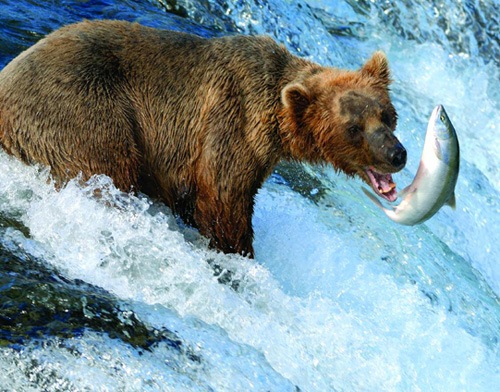
Given that the bear pictured eat many types of food including meats and plants, he is an example of an ______________________.
a)
Autotroph
b)
Omnivore
c)
Herbivore
d)
Producer
224.
The largest part of an ecosystem is always the ________________.
a)
Primary Consumers
b)
Primary Producers
c)
Quarternary Consumers
d)
Secondary Consumers
225.
The smallest part of the ecosystem is always the ____________.
a)
Primary Producers
b)
Secondary Consumers
c)
Primary Consumers
d)
Tertiary Consumers
226.
On average how much energy is passed to a higher level in the food web?
a)
90%
b)
25%
c)
10%
d)
50%
227.
Which of these organisms are in a trophic level that receives a larger percentage of the energy captured by the producers than the percentage received at the bats’ trophic level?
a)
Mountain Lion
b)
Snake
c)
Hawk
d)
Ground Squirrel
228.
Which two processes are identified by the labels X and Y?
a)
X: Respiration Y: Predation
b)
X: Adaptation Y: Decomposition
c)
X: Fermentation Y: Nitrogen fixation
d)
X: Decomposition Y: Respiration
229.

This graphic diagrams a _______________________.

a)

Food Web

b)

Food Chain

c)

Food Pyramid

d)

Food Buffet

230.
The diagram below is an example of _______________
a)
Food Web
b)
Food Chain
c)
Food Pyramid
d)
Food Buffet
231.
An environmental change that removed which of these organisms from the ecosystem would cause the most instability in the ecosystem?
a)
Auklets
b)
Foxes
c)
Salmon
d)
Zooplankton
232.
An ______ is an independent living thing.
a)
consumer
b)
producer
c)
organism
d)
herbivore
233.
_________ cannot make their own food, so they need to consume (eat) plants or animals.
a)
consumers
b)
producers
c)
decomposers
234.
The  ____________ provides all the initial energy to plants.
a)
sun
b)
moon
c)
environment
d)
water
235.
____ make their own food through photosynthesis. 
a)
consumer
b)
decomposer
c)
producer
236.
What does a food chain contain? Choose ALL correct answers.
a)
consumer
b)
producer
c)
decomposer
d)
all of the above
237.
__________ eat decaying matter, dead plants and animals and in the process they break them down. 
a)
consumer
b)
producer
c)
decomposer
238.
_______are animals that eat only plants.
a)
herbivore
b)
carnivore
c)
omnivore
239.
_______ are animals that eat only animals (meat).
a)
herbivore
b)
omnivore
c)
carnivore
240.
_________ are animals that eat BOTH plants and animals. 
a)
omnivore
b)
carnivore
c)
herbivore
241.
a _______ shows how each living thing gets food and how nutrients and energy are passed from organism to organism. 
a)
ecosystem
b)
food chain
242.
What is a daisy considered?
a)
producer
b)
consumer
c)
decomposer
243.
what is bacteria or fungi considered?
a)
producer
b)
consumer
c)
decomposer
244.
what is grass considered?
a)
producer
b)
consumer
c)
decomposer
245.

What would a rabbit be considered in a food chain if it ONLY EATS PLANTS?

a)

herbivore

b)

omnivore

c)

carnivore

d)

producer

246.

What would a human that eats BOTH PLANTS AND ANIMALS be considered in a food chain?

a)

herbivore

b)

carnivore

c)

producer

d)

omnivore

247.

What would a lion be considered in a food chain if they ONLY EAT MEAT?

a)

producer

b)

herbivore

c)

carnivore

d)

omnivore

248.

In a food chain, what breaks down dead material and helps turn it into nutrients in the soil?

a)

producers

b)

decomposers

c)

animals

d)

water

249.

What is the MOST COMMON type of DECOMPOSER?

a)

mushrooms

b)

lions

c)

ants

d)

hawks

250.

Which choice below shows the correct order of a food chain?

a)

sun -> rabbit -> tomato plant -. decomposer -> hawk

b)

tomato plant -> decomposer -> sun -> rabbit -> hawk

c)

sun -> tomato plant -> rabbit -> hawk -> decomposer

251.

Every food chain START WITH?

a)

Water

b)

The sun

c)

Bugs

d)

Animals

252.
Who does the owl get energy from? 
a)
Grass
b)
Grasshopper
c)
Mouse
d)
Ow
253.
Who is the producer in this food chain? 
a)

sun

b)

tree

c)

caterpillar

d)

hawk

254.

If all of the squirrels were removed from the food web above, which organism's population would decrease first?

a)

Mountain Lions

b)

Antelopes

c)

Hawks

d)

Coyotes

255.

If there were a fire in the grasslands, what change would likely occur in the food web there?

a)

There would be an increase in consumers

b)

Producers would need to find a new energy source

c)

Animals that eat plants would move away or starve

256.
All energy on Earth ultimately comes from what source?
a)
Water
b)
Sun
c)
Consumers
d)
Oxygen
257.
What does a food chain represent?
a)
How all living organisms within a habitat are connected.
b)
All of the things that a particular animal eats.
c)
How plants create their own food.
d)
A single path of energy transfer within a habitat.
258.
What does a food web represent?
a)
All connections of energy flow throughout all organisms in a habitat.
b)
The specific ways that mutualism is carried out.
c)
A single pathway or energy flow between organisms. 
d)
How carnivores get their food. 
259.

Why might an organism have more than one arrow coming from them in a food web?

a)

More than one organism may eat them.

b)

They may eat more than one other organism.

c)

This organism gets its energy from multiple sources.

260.
The largest group of organisms found in a food web would be:
a)
Primary Consumers
b)
Producers
c)
Decomposers
d)
Tertiary Consumers
261.
What may happen if the snowshoe hare was removed from the food web pictured?
a)
The insects in the habitat would increase.
b)
The shrew population would decrease due to being only hawk food source.
c)
The willow tree population would decrease.
d)
Foxes would dies due to no food source. 
262.
The shrew provides energy for the _______?
a)
cricket
b)
grasshopper
c)
frog
d)
snake
263.
What is this called?
a)
Food Web
b)
Food Chain
c)
Abiotic Factors
264.
If a frog is the prey, what could be the predator?
a)
Grass
b)
Insect
c)
Snake
d)
Snail
265.
Where does the energy start in this food chain?
a)
Plant
b)
Sun
c)
Deer
d)
Wolf
266.
Which organism has the most energy and which organism has the least amount of energy? Choose the best answer. 
a)
mosquito and grass
b)
mouse and grass
c)
grass and owl
d)
grass and small bird
267.
An animal that eats other animals is a....
a)
carnivore
b)
omnivore
c)
herbivore
d)
decomposer
268.
What is missing from this food chain?
Grass > Grasshopper > Bird > Snake
a)
Producer
b)
Primary Consumer
c)
Secondary Consumer
d)
Decomposer
269.
Bears eat fish, insects, plants, seeds, nuts and young elk. They are called __________.
a)
Franivore
b)
Carnivore
c)
Herbivore
d)
Omnivore
270.
Which organism recieves the least amount of energy from the producer?
a)
Owl
b)
Grasshopper
c)
Lilypad
d)
Mouse
271.
An organism that needs to eat other organisms to obtain energy is known as a:
a)
Autotroph
b)
Producer
c)
Consumer
d)
Mutualist
272.
An organism that uses sunlight to create its own food is known as a:
a)
Producer
b)
Heterotroph
c)
Consumer
d)
Decomposer
273.
What is a producer?
a)
an organism that gets energy from eating other organisms
b)
an organisms that uses sunlight to make its own food
c)
an organism that gets energy from eating dead organisms, non-living material or waste
274.
A community of living and nonliving things in their natural environment makes up a 
a)
food web
b)
ecosystem
c)
food chain
275.
An animal that hunts other animals for food is a ___________
a)
herbivore
b)
predator
c)
prey
d)
omnivore
276.
What is a herbivore?
a)
an animal that gets energy from eating other animals
b)
an organism that gets energy from eating only plants
c)
an animal that gets energy by eating both plants and other animals
277.
An organism that gets energy from eating other organisms is a ______________
a)
producer
b)
consumer
c)
decomposer
278.
A connection of food chains with many food energy paths in an ecosystem is a ____________
a)
ecosystem
b)
food web
c)
environment
279.
An animal that is hunted and eaten for food is a 
a)
predator
b)
prey
280.
An organism that gets energy from eating dead organisms, non-living material or waste
a)
producer
b)
consumer
c)
decomposer
281.
What is a carnivore?
a)
an animal that gets energy by eating other animals
b)
An animal that gets energy by eating only plants
c)
an animal that gets energy by eating both plants and animals
282.
An animal that gets energy from eating both plants and animals is a 
a)
herbivore
b)
carnivore
c)
omnivore
283.
Which of the following is NOT a consumer
a)
grass
b)
dog
c)
shark
d)
fish
284.
Which of the following is a living part of the ecosystem?
a)
Air
b)
Sunlight
c)
Mushroom
d)
Soil
285.
The shrew provides energy for the _______?
a)
cricket
b)
grasshopper
c)
frog
d)
snake
286.
Which of the following is a herbivore?
a)
cricket
b)
frog
c)
hawk
d)
shrew
287.

An area of land that drains into a river system.

a)

divide

b)

water cycle

c)

watershed

288.

A geographical ridge that separates one watershed from another.

a)

tributary

b)

watershed divide

c)

river

d)

aquifer

289.

What is the name of the watershed we live in?

a)

Gulf of Mexico

b)

North Carolina Sound

c)

Atlantic Ocean

d)

Chesapeake Bay

290.

Water that collects in cracks and pores underground in soil and rock layers.

a)

groundwater

b)

surface water

c)

run off

291.

Water on the surface of the land, including rivers, streams, bays, floodwater, and runoff.

a)

groundwater

b)

surface water

c)

watershed

d)

divide

292.

The start of a river is called the ...

a)

mouth

b)

source

c)

divide

293.

The end of a river where it merges into another river, lake or ocean.

a)

divide

b)

source

c)

mouth

294.

The part of the river near the source is called...

a)

upstream

b)

downstream

295.

A flat area of land next to a river that is prone to flooding.

a)

river

b)

floodplain

c)

watershed

d)

groundwater

296.

Why are estuaries important?

a)

productive ecosystems

b)

home for plants & animals

c)

provide protection for wildlife

d)

all the answers are correct

297.

The largest estuary in the United States.

a)

Gulf of Mexico

b)

North Carolina Sound

c)

The Chesapeake Bay

298.

Body of water that helps control flooding by soaking up water.

a)

wetlands

b)

rivers

c)

estuaries

299.

A partially enclosed body of water where freshwater and saltwater mix.

a)

estuary

b)

floodplain

c)

wetland

d)

river

300.

An area of land that is saturated by water permanently or seasonally.

a)

watershed

b)

estuary

c)

river

d)

wetland

301.

Non-living parts of an ecosystem that affect watershed.

a)

biotic factors

b)

abiotic factors

302.

Plants, animals, fungus, and bacteria are examples of _____ factors.

a)

biotic

b)

abiotic

303.

Water evaporates from the leaves of plants in a process called...

a)

collection

b)

transpiration

c)

precipitation

d)

condensation

304.

How does surface water end up underground?

a)

infiltration

b)

precipitation

c)

condensation

d)

evaporation

305.

All the water and any pollution in our watershed drains into an estuary, and eventually the ocean.

a)

true

b)

false

306.

Is this our watershed address? Bull Run Creek > Potomac River > Chesapeake Bay > Atlantic ocean

a)

true

b)

false