
Font size
 Worksheets
Cardiovascular System Overview
Total questions: 72
Worksheet time: 36mins
What does the cardiovascular system help move around your body?
Only food in the stomach
Just hair and nails
Only bones and muscles
Oxygen, nutrients, hormones
Which parts are in the cardiovascular system?
Heart, blood, blood vessels
Lungs, teeth, toenails
Brain, ears, tongue
Skin, hair, eyelashes
What does the blood help take away from the body?
Just sunshine
Only toys and books
Only rainwater
CO2 and waste
Which job helps keep your body warm or cool?
Temperature regulation
Making loud sounds
Jumping very high
Growing taller fast
How many chambers does the heart have?
One big room
Four chambers
Two tiny spaces
Seven secret doors
About how big is a human heart?
As big as a house
As small as a grain
As long as a bus
About an adult’s fist
Where is the heart mostly located?
Left of the midline
Far outside the body
Inside a backpack
Right inside the shoe
The heart sits on the superior surface of which body part?
Diaphragm
Skateboard
Pillow
Paint brush
Which part makes the top border of the heart?
Big blood vessels
Left ventricle
Right ventricle
Right and left atria
Where does the top border go on the chest?
Left 2nd to apex beat
Right 6th to apex beat
Left 5th to left 6th space
Right 2nd to left 2nd cartilage
Which part makes the right border of the heart?
Right atrium
Left atrium
Left ventricle
Right ventricle
The right border is near the sternum from which rib levels?
Right 6th to apex beat
Left 2nd to left 5th space
Right 2nd to right 6th cartilage
Left 2nd to apex beat
Which part makes the left border of the heart?
Right atrium
Both atria
Right ventricle
Left ventricle
The apex beat is felt at which spot on the chest?
Right 6th space side
Left 5th space midclavicular
Left 2nd space edge
Right 2nd space center
Which part makes the bottom border of the heart?
Right ventricle
Left ventricle
Left atrium
Both atria
The bottom border runs between which landmarks?
Right 6th cartilage to apex beat
Left 2nd to apex beat
Right 2nd to right 6th
Left 5th to left 6th
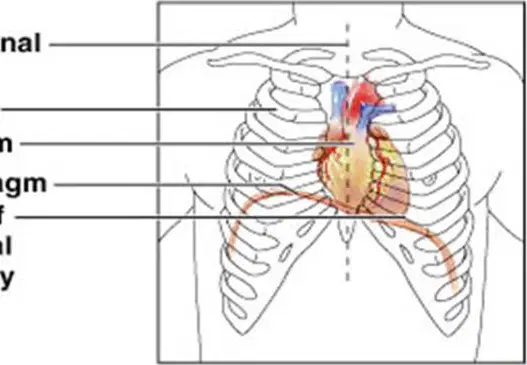
Look at the diagram. Where is the heart mostly located inside the chest?
Between the lungs, above the diaphragm
Inside the right lung, near the shoulder
Behind the back bones, near the spine
Inside the neck, above the ribs
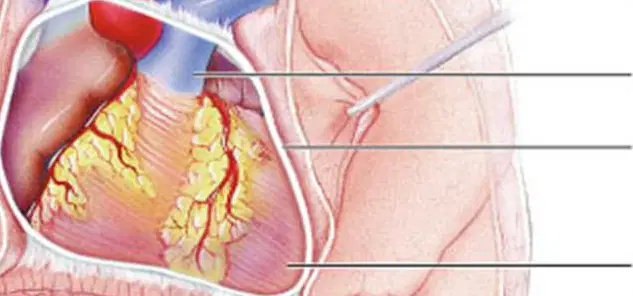
Which part of the heart points down like a tip in the picture?
Apex of the heart
Base of the heart
Right lung top
Superior vena cava

In the picture, what sits under the heart like a floor?
Finger bones
Elbow joint
Diaphragm muscle
Skull bones
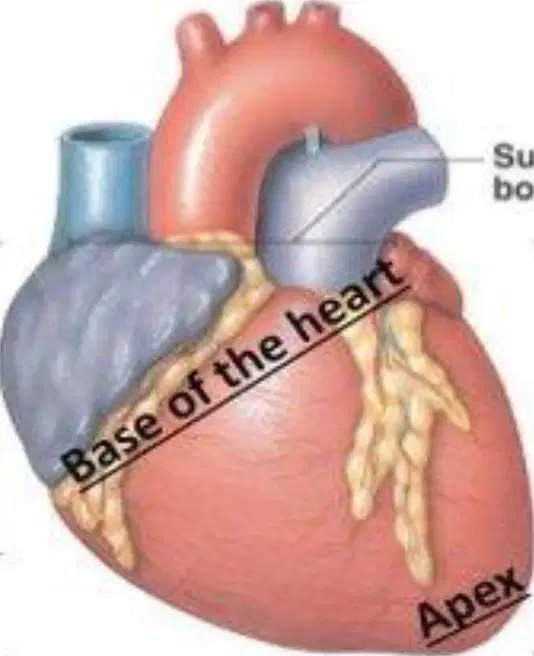
Which words tell about the wide upper part of the heart in the diagram?
Tip of the heart
Base of the heart
Left toe bone
Back of the knee

What two things are on the sides of the heart in the chest picture?
Right lung
Knee cap
Left lung
Stomach bag
Which layer is the heart’s outer layer?
Endocardium
Epicardium
Myocardium
Which layer is the heart’s middle layer?
Endocardium
Epicardium
Myocardium
Which layer lines the inside of the heart?
Endocardium
Epicardium
Myocardium
How many chambers does the heart have?
Four chambers
Six chambers
Two chambers
Which chambers receive blood coming in?
Valves
Atria
Ventricles
Which chambers pump blood out?
Atria
Ventricles
Layers
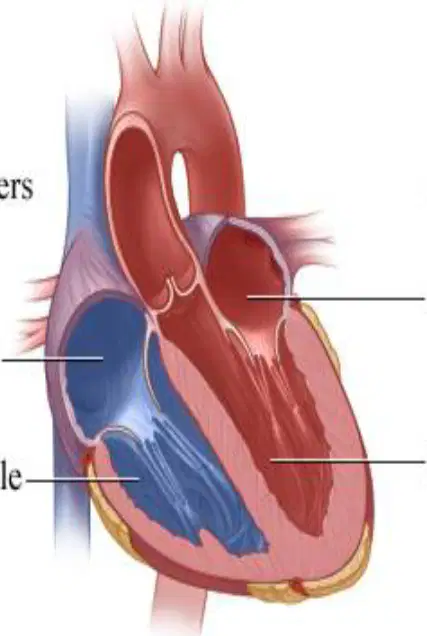
Which side has the right atrium and right ventricle?
Back side
Right side
Left side
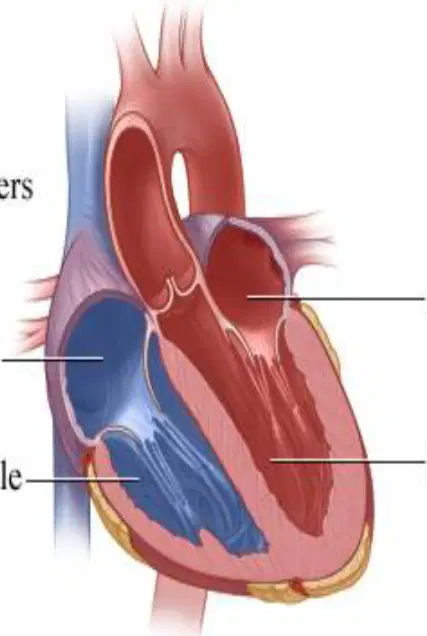
Which side has the left atrium and left ventricle?
Top side
Right side
Left side
Atrioventricular valves sit between which parts?
Between atria and ventricles
Between ventricles and arteries
Between outer and inner layers
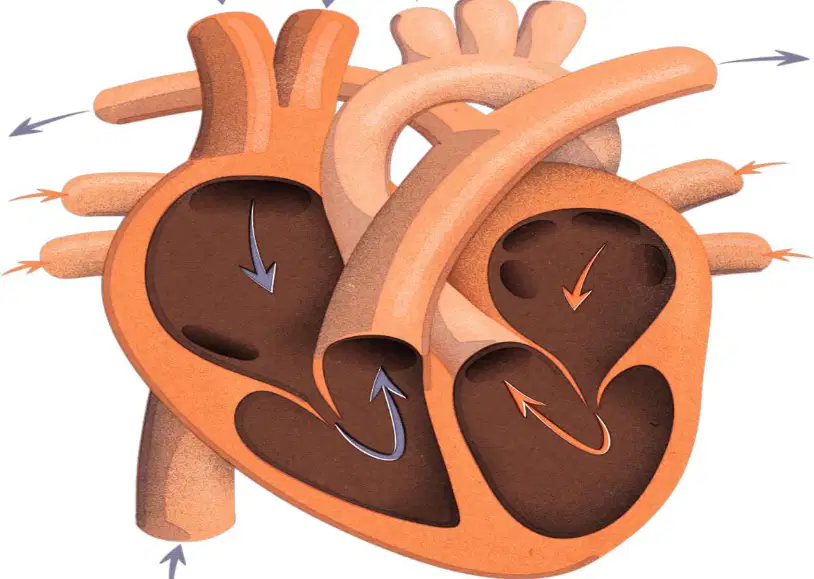
Semilunar valves are found where blood leaves the heart. Which is true?
They are between atria and ventricles
They are at the heart’s exit to arteries
They are inside the endocardium
Which pair are receiving chambers?
Right atrium and left atrium
Right ventricle and left ventricle
Epicardium and myocardium
Which statement about heart layers is correct?
Endocardium is inner
Myocardium is middle
Epicardium is outer
What do heart valves help blood do?
Flow one safe way
Stop in the middle
Go any random way
Jump out of heart
Which valve is between the right atrium and right ventricle?
Aortic valve
Pulmonary valve
Mitral valve
Tricuspid valve
Which valve is between the left atrium and left ventricle?
Tricuspid valve
Pulmonary valve
Aortic valve
Mitral valve
Which valve is at the start of the pulmonary artery?
Pulmonary valve
Tricuspid valve
Aortic valve
Mitral valve
Which valve is at the start of the aorta?
Aortic valve
Pulmonary valve
Mitral valve
Tricuspid valve
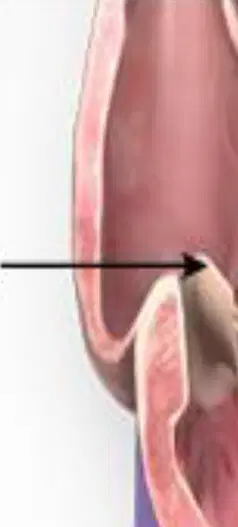
Look at the picture. Which label points to the valve on the left side between atrium and ventricle?
Mitral valve
Pulmonary valve
Tricuspid valve
Aortic valve
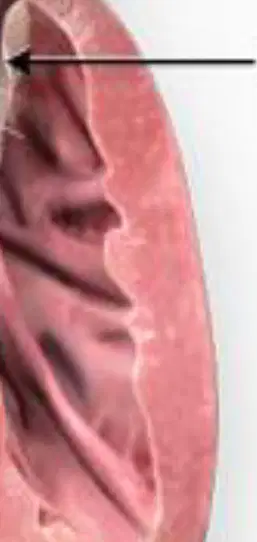
Look at the picture. Which label shows the valve leading to the big body artery?
Mitral valve
Aortic valve
Pulmonary valve
Tricuspid valve
Which great vessel leaves the left ventricle?
Pulmonary arteries
Pulmonary veins
Vena cava
Aorta
Which great vessel enters the right atrium?
Pulmonary veins
Aorta
Vena cava
Pulmonary arteries
Which vessels bring blood to the left atrium from the lungs?
Pulmonary arteries
Aorta
Vena cava
Pulmonary veins
Which vessels leave the right ventricle to go to the lungs?
Pulmonary veins
Vena cava
Aorta
Pulmonary arteries
Which vessel carries blood away from the heart?
Capillary holds blood still
Artery carries blood away
Vein carries blood to heart
Venule brings blood away
What are capillaries?
Smallest blood vessels
Largest blood vessels
Blue air pipes
Heart muscle tubes
Where does the exchange of nutrients and gases happen?
In capillaries mainly
In large arteries
In veins mostly
In the heart chambers
Which vessel carries blood toward the heart?
Artery carries away
Vein carries toward
Capillary carries both
Arteriole carries toward
Arteries end at small branches called what?
Capillaries are large tubes
Arterioles are small arteries
Venules are small veins
Valves are tiny doors
Veins begin from small branches called what?
Capillaries start veins
Arterioles start veins
Valves start veins
Venules start veins
Which side usually has thicker, more rigid walls?
Veins have thicker walls
Arteries have thicker walls
Venules have thick walls
Capillaries have thick walls
Which vessels often contain valves to stop backflow?
Capillaries have many
Veins often contain
Arterioles contain most
Arteries do not usually
Which vessels are located deeper under the skin?
Veins closer to skin
Arteries deeper under
Capillaries only on skin
Venules sit on skin
Which has a smaller lumen (inside space)?
Venules have largest lumen
Capillaries have largest lumen
Arteries have smaller lumen
Veins have smaller lumen
How many lungs are in your chest?
One lung total
Four lungs total
Two lungs total
Three lungs total
What do lungs help carry inside your body?
Only food pieces
Air and blood
Only bones
Only skin
What is the tip at the top of a lung called?
Fissure of lung
Middle of lung
Apex of lung
Base of lung
Which part of the lung rests on the diaphragm?
The apex tip
The base bottom
The fissure line
The lobe center
How many lobes does the left lung have?
Two lobes total
Four lobes total
One lobe only
Three lobes total
How many lobes does the right lung have?
Two lobes total
Three lobes total
One lobe only
Four lobes total
What divides the lungs into lobes?
Muscles straps
Teeth rows
Ribs outside
Fissures lines
Which lung is a little heavier by weight?
Left lung heavier
Right lung heavier
No lungs weigh
Both weigh same
Which list shows two lung surfaces?
Tiny and big
Front and back
Upper and side
Costal and medial
How many lobes does the right lung have?
Four lobes
Three lobes
Two lobes
One lobe
How many lobes does the left lung have?
One lobe
Four lobes
Two lobes
Three lobes
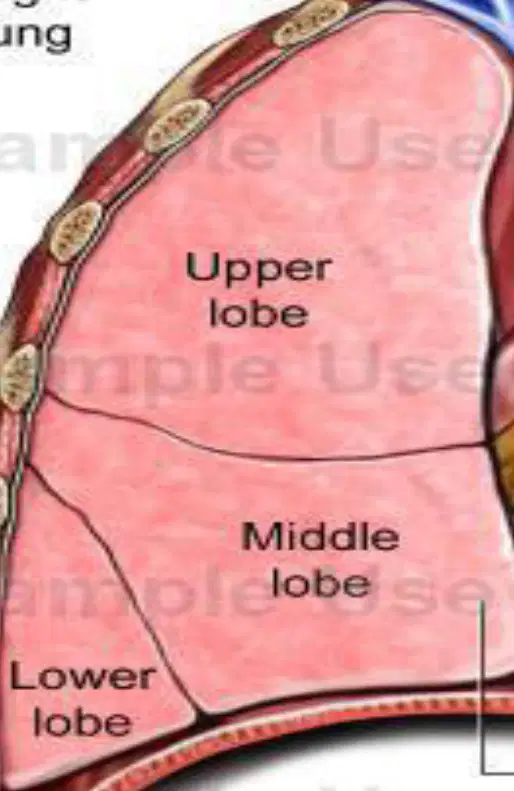
Which lung has a middle lobe shown in the picture?
Both lungs
Left lung
Neither lung
Right lung
Where does the right lung’s horizontal fissure start?
At the 6th rib
At the 4th rib
At the 8th rib
At the 2nd rib
The oblique fissure starts near which vertebra level?
C7 level
T6 level
T3 level
T1 level
Where does the oblique fissure end on the chest?
4th rib midclavicular
8th rib midclavicular
2nd rib midclavicular
6th rib midclavicular
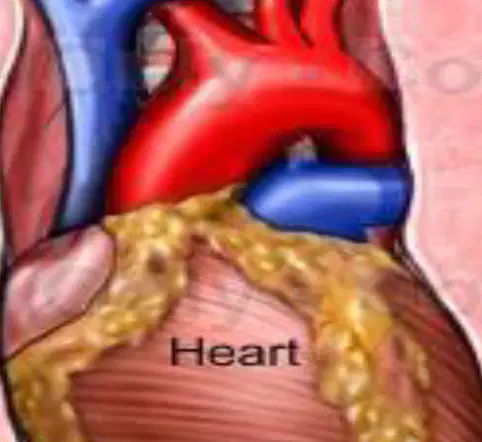
Which part sits between the right and left lungs in the picture?
Trachea
Cardiac notch
Mediastinum
Diaphragm
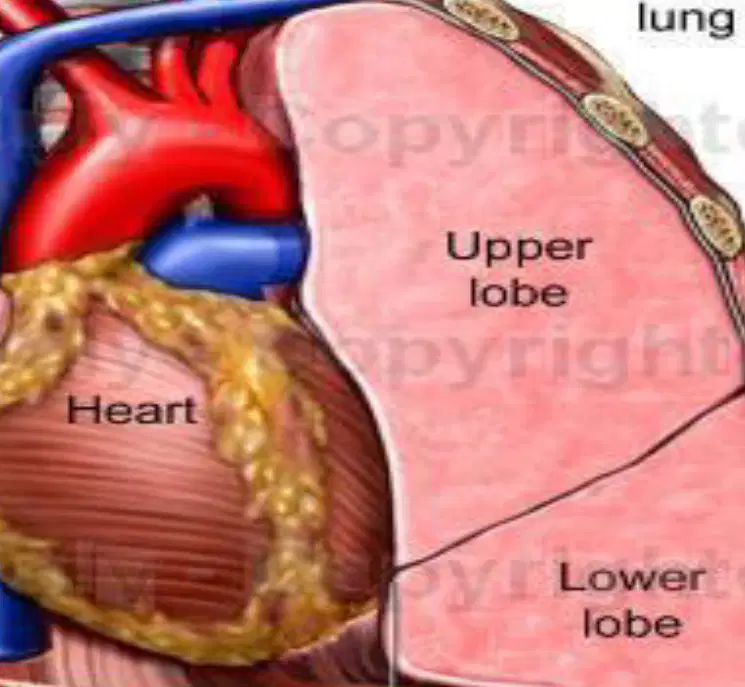
Which lung has the cardiac notch near the heart?
Right lung
Left lung
Both lungs
No lungs
Which borders of the lungs touch the front and back of the chest?
Anterior border
Posterior border
Lateral border
Inner border

