
NEW
Font size
 Worksheets
Great Depression, New Deal, & WWII Test Review
Total questions: 20
Worksheet time: 10mins

Source: A 1932 photo shows dozens of men standing in line outside a Chicago soup kitchen under a sign that reads: “Free Soup, Coffee, and Doughnuts for the Unemployed.”
What does this photo show about life during the Great Depression?
Many Americans were moving to cities in search of new job opportunities.
Many businesses gave away free food because they were wealthy.
Many people lost jobs and depended on charities for food.
The government quickly provided money to all unemployed people.
How was life in the 1920s different from life in the 1930s?
The 1920s had higher unemployment than the 1930s.
Americans bought more goods on credit during the 1920s.
Families grew more crops in the 1930s because of better weather.
Fewer people used radios in the 1920s than the 1930s.

Why did many families leave this region (highlighted in red and yellow) during the 1930s?
The New Deal required farmers to move.
Soil turned to dust and crops failed.
Railroads encouraged families to head west.
Banks promised free farmland in other states.
Which situation was a major effect of the Stock Market Crash of 1929?
Banks closed after too many people demanded their money
People invested more money in the stock market.
Farmers increased crop production because prices rose.
Americans earned higher wages because businesses expanded.
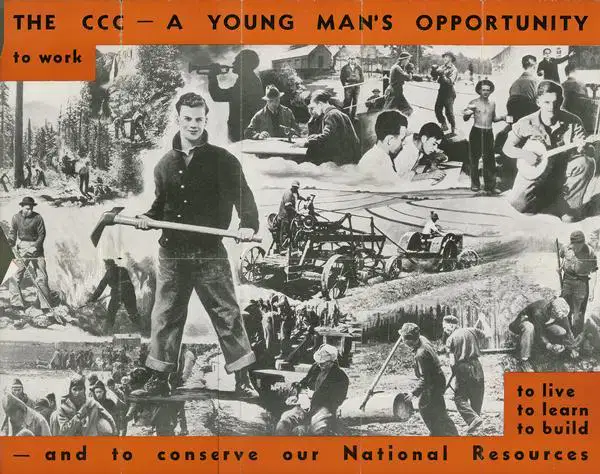
What was type of program was the CCC?
Relief - helping people immediately
Recovery - improving banks
Reform - changing laws permanently
Expansion - creating new states
“I used to work at the factory six days a week. After the banks closed, the factory shut down, and I have not been able to find work.” - Letter from an unemployed worker, 1931
Which cause-and-effect relationship is BEST shown in this source?
Factories closed → banks gained more money
People lost jobs → banks became stronger
Workers chose to leave their jobs → factories expanded
Banks closed → factories closed → people lost jobs
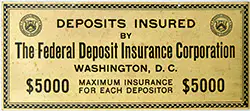
Why was the FDIC created?
To encourage people to invest in the stock market
To prevent factories from laying off workers
To protect people's savings if banks failed
To help farmers buy new equipment
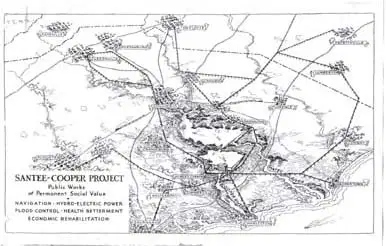
The Santee Cooper Project was created in South Carolina during the Great Depression and was inspired by the Tennessee Valley Authority (TVA). Why did South Carolina leaders support the Santee Cooper Project?
To encourage people to move out of rural areas
To replace farming with factories
To reduce the population living near rivers
To provide electricity, jobs, and economic growth during hard times
How were Hitler in Germany and Mussolini in Italy similar in the years before WWII?
Both supported democracy and individual rights.
Both used fascist ideas and expanded their military power.
Both avoided wars with other countries.
Both encouraged free speech and freedom of the press.
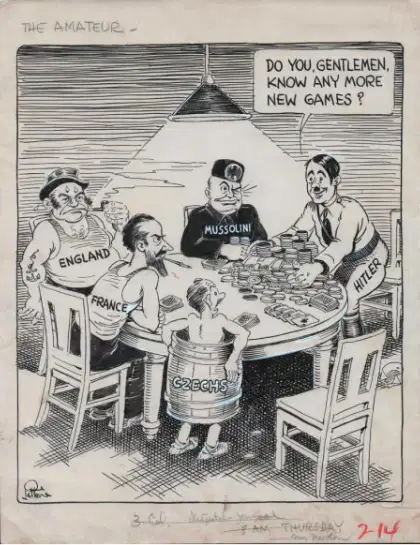
This political cartoon shows leaders labeled England, France, Mussolini (Italy), and Hitler (Germany) sitting at a table playing a game. A small figure labeled “Czechs” stands near the table. Hitler is shown asking, “Do you gentlemen know any more new games?” What message is the cartoonist trying to show about events leading up to World War II?
European countries were working together to stop Hitler early
Germany was satisfied after taking land from Czechoslovakia
England and France allowed Hitler to take more land instead of stopping him
Czechoslovakia had the most power in Europe
Neutrality Acts (1935–39) → Peacetime Draft (1940) → Lend-Lease (1941) → Pearl Harbor Attack (1941) Which statement BEST describes this timeline?
A. The U.S. grew more involved in the war over time.
B. The U.S. stayed completely neutral until 1945.
C. The U.S. refused to help any Allied nations.
D. The U.S. declared war before the attack on Pearl Harbor.
“Yesterday, December 7, 1941 - a date which will live in infamy - the United States of America was suddenly and deliberately attacked…” Franklin D. Roosevelt, 1941
What was the most important result of the event described in this speech?
The United States returned to isolationism
The United States declared war and entered World War II
The United States signed a peace agreement with Japan
The United States ended rationing programs
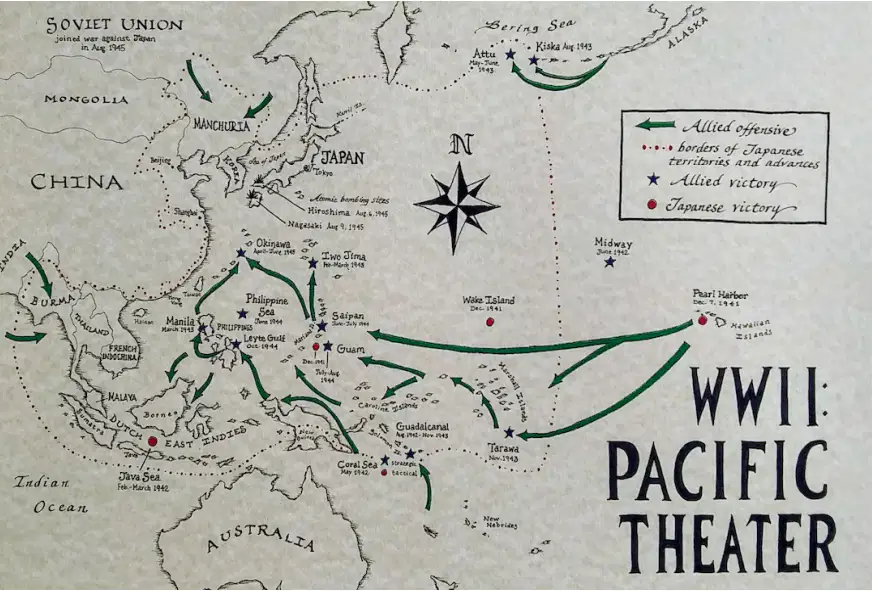
Why did the U.S. use the strategy of island hopping?
To avoid fighting Japan altogether
To help Germany defeat Japan
To protect American cities from invasion
To capture key islands and move closer to Japan
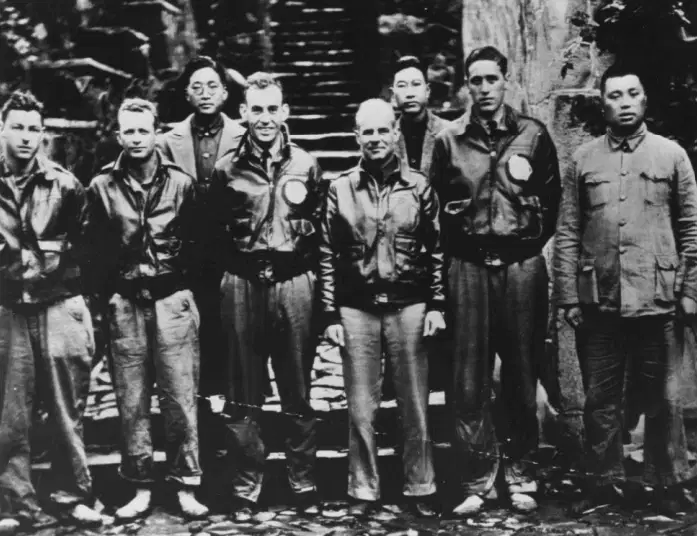
In 1942, American planes led by Lieutenant Colonel James Doolittle launched a surprise bombing raid on Japan. Why was the Doolittle Raid important to the United States?
It caused Japan to surrender immediately
It destroyed all Japanese military bases
It showed that Japan could be attacked and raised U.S. morale
It prevented the attack on Pearl Harbor
Why were the Navajo Code Talkers important to U.S. military success?
They trained soldiers to use new weapons.
They created an unbreakable code that sped up communication.
They built aircraft used in the Pacific.
They planned the D-Day invasion.
Why were Japanese Americans forced into internment camps during WWII?
The government feared they might help Japan after Pearl Harbor.
They refused to join the military.
They protested against rationing laws.
They were required to assist with building war factories.
“We were forced to leave our homes. We could not attend school or own businesses because we were Jewish.” - Holocaust survivor testimony
What does this source show about the Holocaust?
Jewish people were given special protections
Jewish people controlled the government
Jewish people were encouraged to move freely
Jewish people faced discrimination and loss of rights
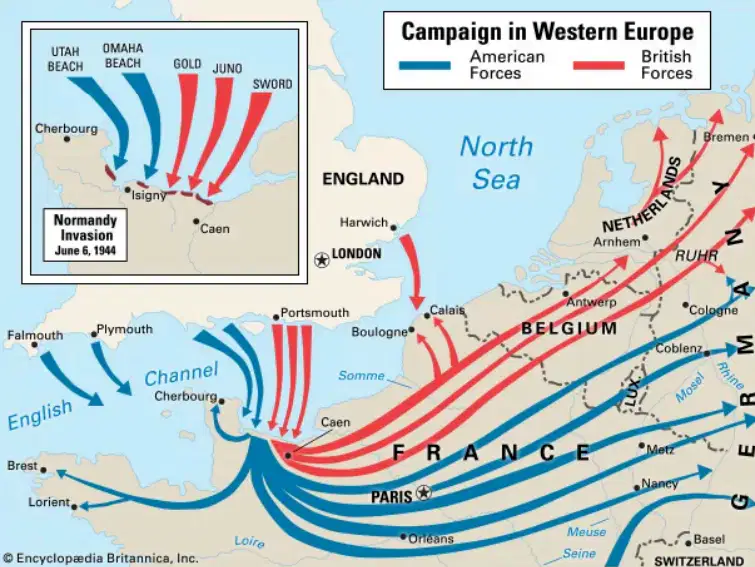
Why was the invasion of Normandy a turning point in World War II?
It ended the war in the Pacific
It caused the United States to leave the war
It opened a new front and helped defeat Germany
It led directly to the bombing of Hiroshima
After WWII, how did the role of the United States change?
It isolated itself from foreign nations.
It stopped forming alliances with other countries.
It gave up its military bases around the world.
It became a world leader involved in rebuilding Europe.
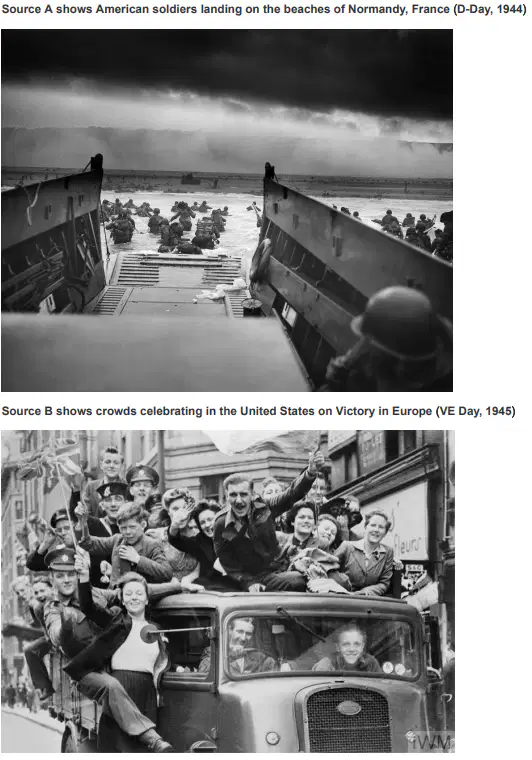
Source A shows American soldiers landing on the beaches of Normandy, France (D-Day, 1944). Source B shows crowds celebrating in the United States on Victory in Europe (VE Day, 1945). What is the relationship between Source A and B?
The fighting at Normandy helped lead to victory in Europe
Both show celebrations after the war ended
Both events happened on the same day
Victory in Europe caused the invasion of Normandy

