Font size
 Worksheets
BIOLOGY FORM 4 ENZYMES
Total questions: 30
Worksheet time: 30mins

Rajah 1 menunjukkan sebahagian sistem alimentari di dalam manusia.
Antara bahagian berikut, yang manakah menghasilkan hempedu?
Diagram 1 shows a part of the alimentary canal in human.
Which of the following parts produces bile?
P
Q
R
S

Rajah 2 menunjukkan sebahagian daripada salur alimentari manusia.
Antara struktur berikut, yang manakah terlibat dalam pencernaan lemak?
Diagram 2 shows a part of the human alimentary canal.
Which of the following structure in involved in the digestion of fats.
R dan S
R and S
Q, R dan S
Q, R and S
P, S dan R
P, S and R
P, R dan Q
P,R and Q
Antara enzim berikut, yang manakah disintesis di pankreas?
Which of the following enzyme is synthesised in pancrease?
Sukrase
Sucrase
Pepsin
Pepsin
Amilase
Amylase
Renin
Rennin
Antara vitamin berikut, yang manakah tidak terdapat dalam lakteal?
Which of the following vitamins are not found in lacteal?
Vitamin A
Vitamin B
Vitamin D
Vitamin K
Rajah 3 menunjukkan struktur hati.
Antara proses berikut, yang manakah berlaku dalam hati?
Diagram 3 shows the structure of a liver.
Which of the following processes occurs in a liver?
Penyerapan
Absorption
Penyahtinjaan
Defaecation
Pencernaan
Digestion
Penyahtoksikan
Detoxification
Antara yang berikut, yang manakah fungsi glukosa yang diasimilasikan oleh sel?
Which of the following is the function of assimilated glucose in cell?
Penghasilan enzim
Production of enzyme
Penghasilan tenaga
Production of energy
Membaiki tisu yang rosak
Repairing damage tissue
Pembentukan membran plasma
Formation of plasma membrane
Antara salur darah berikut, yang manakah mengangkut lipid dari usus kecil ke jantung?
Which of the following blood vessels involved in transporting lipid from the small intestine to the heart?
Aorta / Aorta
Vena portal hepar / Hepatic portal vein
Vena pulmonari / Pulmonary vein
Vena subklavikel / Subclavian vein
Apakah yang akan berlaku kepada hasil sampingan proses deaminasi?
What will happen to the product of deamination process?
Disimpan dalam sel
Stored in cells
Dikumuhkan oleh ginjal
Excreted out by kidney
Dikembalikan semula ke dalam usus kecil
Return back to small intestine
Bertindak sebagai komponen utama enzim
Act as main component of enzyme
Antara yang berikut, yang manakah fungsi serat dalam makanan?
Which of the following, is the function of fibre in food?
Mencegah penyakit
Prevent disease
Merangsang peristalsis
Stimulate peristalsis
Memberikan warna pada tinja
Give colour to faeces
Menjadikan makanan lebih lama dalam usus
Make food stay longer in intestine
Antara penyakit berikut, yang manakah berkaitan dengan masalah penyahtinjaan?
Which of the following disease is related to defaecation?
Gastrik
Gastritis
Obesiti
Obesity
Aneroksia nervosa
Anorexia nervosa
Hemoroid
Haemorrhoids
What is a substance called if it speeds up a chemical reaction?
With what 3 letters do enzymes typically end?
Enzymes are an example of
Lipids
Carbohydrate
Protein
Nucleic Acid
Each enzyme only has 1 substrate that will fit its active site. What is this called?
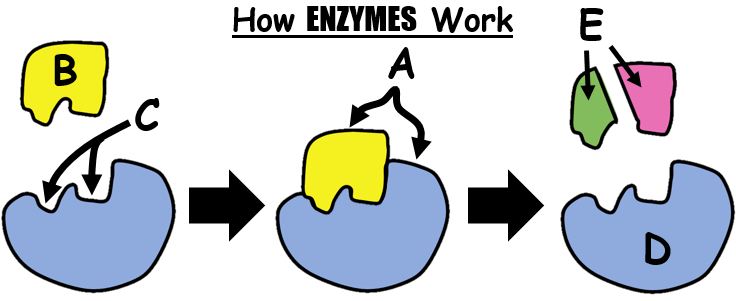
In the diagram, what is letter A?
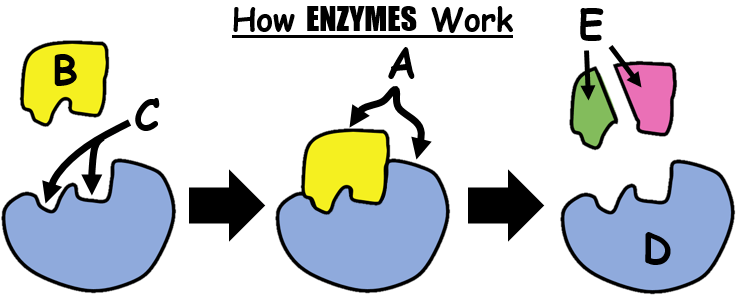
Letter D...
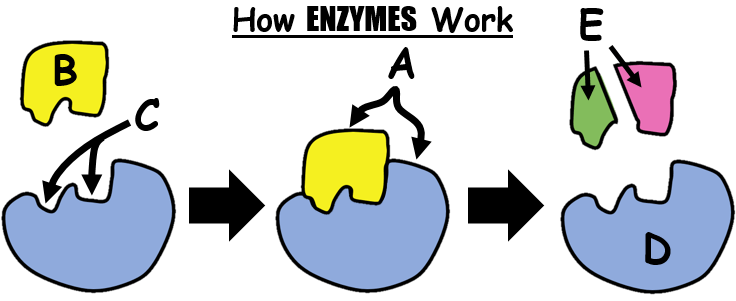
Letter B...
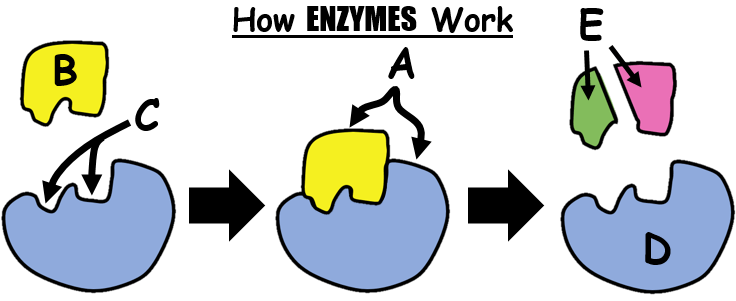
Letter C...
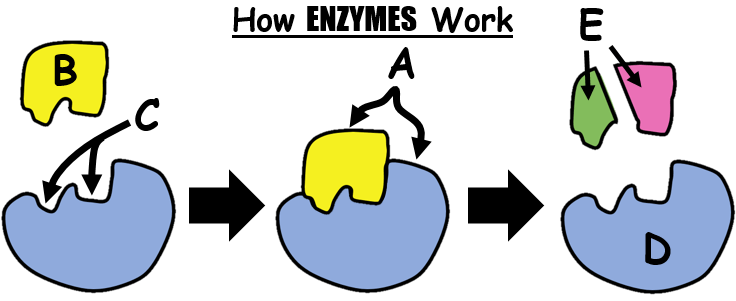
Letter E...
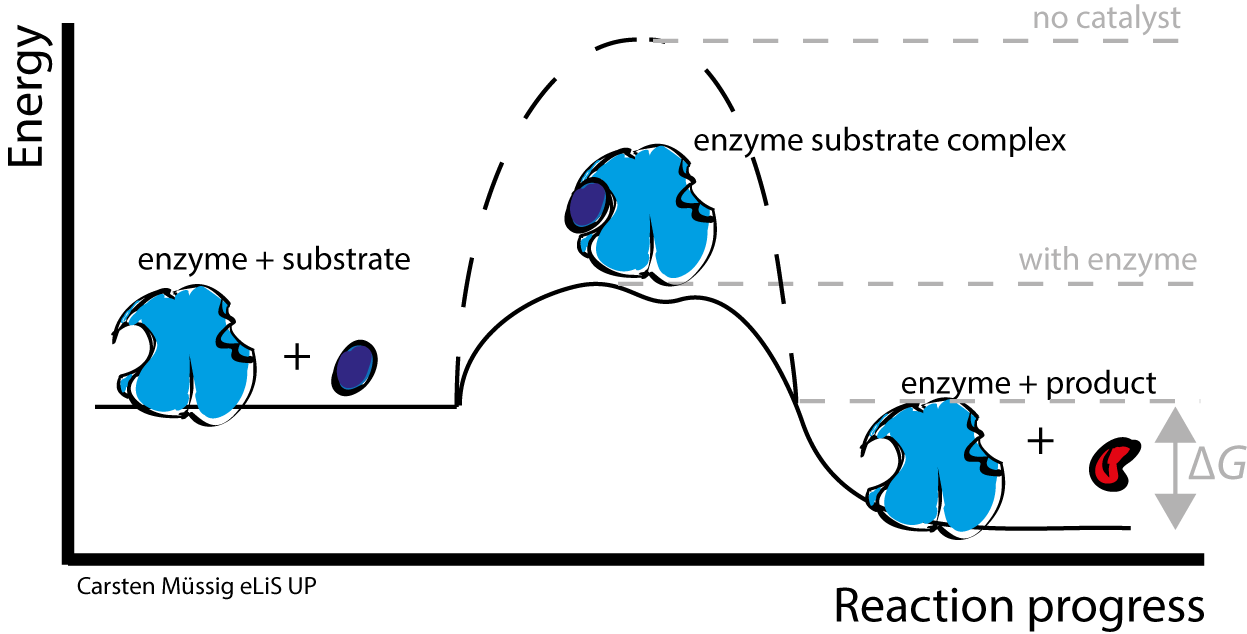
An enzyme speeds up a reaction by
What happens when enzymes are heated to a high temperature?
The enzymes die.
The shape of the enzyme are changed and it denatures
The enzymes' amino acid sequence changes.
The enzymes remain the same
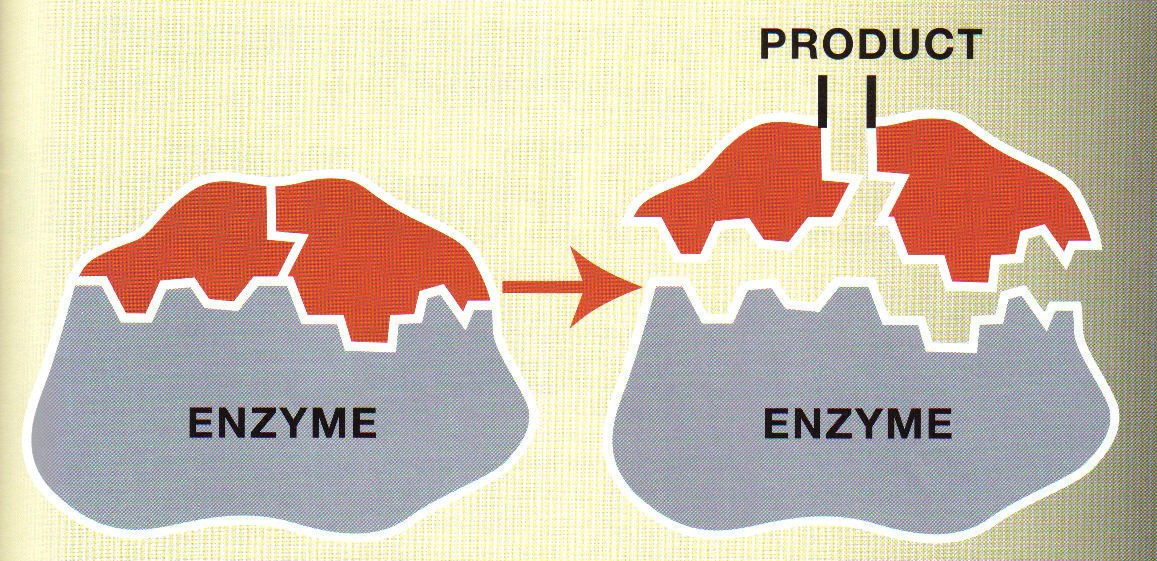
The molecule an enzyme is working on is called the:
Which of these is NOT true?
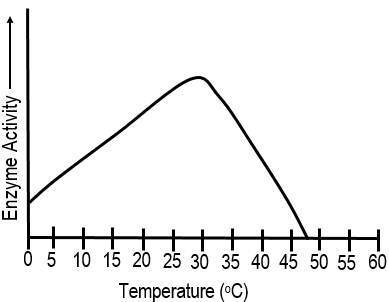
Based on the graph, what temperature does this enzyme work best?