
 Worksheets
FORM 5 CHEMISTRY REVISION
Total questions: 500
Worksheet time: 6hrs 9mins
Which of the following substance is an element?
Water
Neon
Oxygen
Which of the following substances exists as atoms?
Naphthalene
Magnesium
Chlorine gas
Lead(II) bromide

The following table shows the melting point and boiling point of four substances.
Which substance is a liquid at room temperature?
A
B
C
D
Substance X exists in solid state at 200 ⁰C. Which of the following are the melting point and the boiling point of substance X?
Melting point: -50°C
Boiling point: 100°C
Melting point: 35°C
Boiling point: 185°C
Melting point: 115°C
Boiling point: 668°C
Melting point: 250°C
Boiling point: 750°C

What is the nucleon number of atom shown?
11
12
22
23
The following information is about silicon atom.
· Proton number = 14
· Nucleon number = 28
How many valence electrons are in the silicon atom?
2
4
8
14
Ion W2+ has an electron arrangement of 2.8 and nucleon number is 24. What is the number of neutron of atom W?
36
24
12
2
Magnesium has 12 protons in the nucleus of its atom. Which is following the electron arrangement of the magnesium ion?


A silver atom has 47 protons and its nucleon number is 108. A silver ion, Ag+ is formed when a silver atom donates 1 electron.
How many neutrons in a silver ion, Ag+?
59
60
61
62
A calcium atom has 20 protons and its nucleon number is 40. A calcium ion, Ca2+ is formed when a calcium atom donates 2 electrons.
How many neutrons in a calcium ion, Ca2+?
20
22
18
40
Z- ion has 18 neutron and 18 electron.
Which of the following is the proton number for atom Z?
17
18
An ion T2- has an electron arrangement of 2.8. What is the proton number for the atom of element T?
4
6
8
10

The diagram shows the electrons arrangement of an atom of Y. Y is not the actual symbol of the element. What is the position of element Y in the Periodic Table of Elements?
Group 2, Period 3
Group 12, Period 2
Group 12, Period 3
Magnesium exists naturally as three isotopes. The natural abundance of ²⁴ᴹᵍ
is 79%, ²⁵ᴹᵍ is 10% and ²⁶ᴹᵍ is 11%. Calculate the relative atomic mass of magnesium.
12.01
24.32
25.00
36.00
Which of the following isotopes is used to detect the leakage of underground pipe?
Carbon-14
Sodium-24
Cobalt-60
Iodine-131
Which of the following is the use of the isotope iodine-131?
Treat thyroid gland cancer.
Generate electricity for satellites.
Detecting underground pipe leakage.
Estimate the age of fossils.

What is the empirical formula for the compound?
CH2O
C2H2O2
CH2O2
C2H5O2
How many lithium atoms that have the same mass as 2 nitrogen atoms?
[Relative atomic mass: Li = 7; N = 14]
2
4
6
8
What is the relative molecular mass of sulphur hexafluoride?
[Relative atomic mass: F = 19; S = 32]
51
108
133
146
Which of the following substances has 3.01 x 10²³ of atom?
Avogadro Constant : 6.02 x 10²³ mol-
0.25 mole of water
0.5 mole of carbon
0.5 mole of oxygen gas
0.3 mole of hydrogen gas
What is the volume of a sample of ammonia gas, NH3 with a mass of 5.1 g at room condition?
[Gas molar volume = 24 dm3 in room condition; Relative atomic mass H : 1; N : 14]
7.2 dm3
12 dm3
14.4 dm3
18 dm3
Which of the following is the correct chemical formula for copper(II) iodide?
CuI
Cu2I
CuI2
Cu2I2
1.2 g of element Y bonds with bromine to produce 6 g of a compound with the empirical formula of YBr2. What is the relative atomic mass of element Y?
[Relative atomic mass: Br = 80]
20
36
40
56
The following is a chemical equation:
H2SO4(aq) + 2KOH(aq) → K2SO4(aq) + xH2O(l)
What is the value of x?
1
2
3
4
2NaClO3 (s) → 2NaCl (s) + 3O2 (g)
12.00 moles of NaClO3 will produce how many grams of O2?
Given relative atomic mass O = 16
256 g of O2
576 g of O2
288 g O2
How many moles of oxygen are produced when 6.7 moles of KClO3 decompose completely?
6.7 mol
1.0 mol
10.1 mol
4.5 mol
Element X has an proton number of 19. Which group does this element belong to?
Group 1
Group 7
Group 17
Group 19
Element H has an proton number of 11. In which period of the periodic table would you find this element?
Period 1
Period 2
Period 3
Period 4
Element G has a proton number of 11. Where is element D located in the Periodic Table of Elements?
Group 11, Period 3
Group 11, Period 2
Group 1, Period 3
Group 1, Period 2
An atom of Element D has 6 valence electrons and 3 shells occupied with electrons. Where would you find this element in the Periodic Table of Elements?
Group 16, Period 3
Group 13, Period 4
Group 16, Period 2
Group 2, Period 3
Which compound is an ionic compound?
Aluminium chloride
Carbon dioxide
Potassium oxide
Hydrogen chloride
Which of the following substances is a covalent compound?
Antara berikut, bahan yang manakah adalah sebatian kovalen?
Lead(II) iodide / Plumbum(II) iodida
Silver / Argentum
Phosphorus trichloride / Fosforus triklorida
Sodium chloride / Natrium klorida
The electron arrangement of atom M is 2.8.1 whereas the electron arrangement of atom N is 2.6. Atom M forms a compound with atom N. Choose the correct statement regarding this reaction.
Atom N donates six electrons
Atom M donates one electron
A covalent compound is formed
The chemical formula of the compound formed is MN
The electron arrangement of atom B is 2.8.6 and atom C has four valence electron. What is the formula of the compound formed between B and C?
Susunan elektron bagi atom B adalah 2.8.6 dan atom C mempunyai empat elektron valens. Apakah formula sebatian yang terbentuk antara B dan C?
B2C
BC2
CB4
C3B2
Element X has electron arrangement 2.5 and element Y has electron arrangement 2.8.8.1. Write the formula of the compounds that formed between the elements.
Unsur X mempunyai susunan elektron 2.5 dan elemen Y mempunyai susunan elektron 2.8.8.1. Tuliskan formula bagi sebatian yang terbentuk antara unsur-unsur berikut.
X3Y
Y3X
XY
Y6X
In the formation of a dative bond,
the shared electron pair originates from either one atom only.
the shared electron originates from both atoms that are involved.
electrons are transferred from one atom to another.
electrons form a sea of electrons.
How can dative bond form between ammonia, NH3 and hydrogen ion, H+ to form ammonium ion, NH4+?
Ammonia, NH3 and hydrogen ion, H+ will each share one electron
The pair of electrons not involved in covalent bond in ammonia, NH3 will be shared with hydrogen ion, H+
Ammonia, NH3 and hydrogen ion, H+ will each share one electron
Why do metals conduct electricity?
They are shiny
The electrons are delocalised and able to move
The electrons are held tightly within the lattice
The electrons are shared between two metal ions
What is the bond that is found between ammonia molecules?
Covalent bond
Hydrogen bond
Metal bond
Ionic bond
Why can compounds that can form hydrogen bonds have higher boiling points than compounds that cannot form hydrogen bonds?
Compounds that can form hydrogen bonds need to overcome weak Van der Waals attraction forces
Compounds that can form hydrogen bonds need to overcome strong hydrogen bonds
Compounds that can form hydrogen bonds need to overcome weak Van der Waals attraction forces and strong hydrogen bonds

Which chemical formula is correctly named?
Formula kimia yang manakah dinamakan dengan betul ?
A
B
C
D

Diagram shows the apparatus set-up to determine the empirical formula for an oxide of copper. Gas Z is used to reduce the oxide of copper. What is gas Z?
Rajah menunjukkan susunan radas untuk menentukan formula empirik bagi satu oksida kuprum. Gas Z digunakan untuk menurunkan oksida kuprum itu. Apakah gas Z?
Oxygen / Oksigen
Chlorine / Klorin
Hydrogen / Hidrogen
Carbon dioxide / Karban dioksida

Which compound has the correct chemical formula?
Sebatian manakah mempunyai formula kimia yang betul?
A
B
C
D
What is the empirical formula for the compound?
Apakah formula empirik bagi sebatian itu?
CH2O
C2H2O2
CH2O2
C2H5O2
Which substance has the same number of atoms as 12 g of carbon-12?
Bahan manakah yang mempunyai bilangan atom yang sama dengan 12 g carbon-12?
1 mole of sodium chloride, NaCl
1 mol natrium klorida, NaCl
1 mole of ethanol, C2H5OH
1 mol etanol, C2H5OH
1 mole of chlorine gas, Cl2
1 mol gas klorin, Cl2
1 mole of neon, Ne
1 mol neon, Ne

Which of the following equation represents the reaction between elements X and Y?
Antara persamaan berikut, yang manakah mewakili tindak balas antara unsur X dengan unsur Y?


In the experiment, excess chlorine gas is flown into the combustion tube. A brown solid is produced. What is the mass of the brown solid produced? [Relative atomic mass: Cl = 35.5, Fe = 56]
Dalam eksperimen ini,gas klorin berlebihan dialirkan ke dalam tiub pembakaran. Pepejal perang terbentuk. Apakah jisim pepejal perang yang terbentuk?
6.09 g
6.86 g
9.53 g
12.19 g

The flow of dry hydrogen gas must be continued during the cooling process. What is the reason for this action?
Aliran gas hidrogen kering mesti dialirkan semasa proses penyejukan. Apakah sebab tindakan ini diambil?
To remove the air from the combustion tube
Untuk menyingkirkan udara daripada tiub pembakaran
To avoid the oxidation of lead to lead(II) oxide
Untuk mengelakkan pengoksidaan plumbum kepada plumbum(II) oksida
To ensure the complete conversion of lead to lead(II) oxide
Untuk memastikan pertukaran lengkap plumbum kepada plumbum(II) oksida
To increase the mass of lead formed in the combustion tube
Untuk meningkatkan jisim plumbum yang terbentuk dalam tiub pembakaran

Which of the following statement is correct?
Antara pernyataan berikut, yang manakah betul?
Carbon dioxide and oxygen exist as a gas while water and glucose exist as a liquid
Karbon dioksida dan oksigen wujud sebagai gas sementara air dan glukosa adalah cecair
6 moles of carbon dioxide react with 6 moles of water to form 1 mole of glucose and 6 moles of oxygen molecules
6 mol karbon dioksida bertindak balas dengan 6 mol air membentuk I mol glukosa dan 6 mol molekul oksigen
Carbon dioxide and water are products while glucose and oxygen are reactants
Karbon dioksida dan air ialah hasil tindak balas manakala glukosa dan oksigen ialah bahan tindak balas
6 moles of carbon dioxide react with 6 moles of water to form 1 mole of glucose and 6 moles of oxygen atoms
6 mol karbon dioksida bertindak balas dengan 6 mol air membentuk I mol glukosa dan 6 mol atom oksigen
A sample of carbon dioxide has a mass of 88 g. The relative molecular mass of the gas is 44. Which statements are correct about the sample of carbon dioxide?
Suatu sampel karbon dioksida mempunyai jisim 88 g. Jisim
molekul relatif bagi bagi gas ialah 44. Antara pernyataan berikut, yang manakah benar mengenai sampel karbon dioksida tersebut?
It contains 2 moles of carbon dioxide molecules
Mengandungi 2 mol molekul karbon dioksida
It contains 2 moles of carbon atoms
Mengandungi 2 mol atom karbon
It contains 2 moles of oxygen atoms
Mengandungi 2 mol atom oksigen
It contains 2 x 6 x 1023 carbon dioxide molecules
Mengandungi 2 x 6 x 1023 molekul karbon dioksida

XCO3
X2CO3
X(CO3)2
X2(CO3)3

The excess gas that comes out at the end of the combustion tube are collected and tested with burning wooden splinter. This test is repeated until there is no 'pop' sound produced. What is the reason for this action to be taken?
Lebihan gas yang keluar dari hujung tabung pembakaran dikumpulkan dan diuji dengan menggunakan kayu uji bernyala. Ujian ini dilakukan berulang kali sehingga tiada bunyi 'pop' terhasil. Apakah tujuan tindakan ini diambil?
To ensure all the copper(II) oxide has changed into copper
Untuk memastikan semua kuprum(II) oksida telah bertukar kepada kuprum
To prevent copper from reacting with air to form copper(II) oxide
Untuk mengelakkan kuprum daripada bertindak balas dengan udara bagi inembentuk kuprum(II) oksida
To ensure all air has been removed so that explosion can be prevented
Untuk memastikan semua udara dikelua'rkan supaya letupan dapat dielakkan
To prevent the water from flowing towards the hot porcelain dish and cracks the combustion tube
Untuk mengelakkan air daripada mengalir ke arah piring porselin yang panas dan meretakkan tiub pembakaran
Which pair of quantity will be the same for one mole of carbon dioxide, CO2 and one mole of ammonia, NH3 at room temperature and pressure?
Pasangan kuantiti manakah yang sama bagi satu mol karbon dioksida; CO2 dan satu mol ammonia, NH3 pada suhu dan tekanan bilik?
Mass and volume
Jisim dan isi padu
Mass and number of atoms
Jisim dan- bilanganatom
Volume and number of molecules
Isi padu dan bilangan molekul
Number of molecules and number of atoms
Bilangan molekul dan bilangan atom

3.01 X 10²³
6.02 X 10²³
1.505 X 10²³
4.515 X 10²³

Diagram shows the percentage composition of a dye. What is the molecular formula of the dye? [Relative atomic mass: C = 12, H = 1, N = 14, Molar mass of the dye= 237 g mol-1]
Rajah menunjukkan peratus komposisi bagi sesuatu pewarna. Apakah formula molekul bagi pewarna itu?
CHN5
C5H5N
C3H3N15
C15H15N3
Complete combustion of propanol produces carbon dioxide and water. What is the minimum oxygen gas required for complete combustion of 15.0 g of propanol at room condition. [Relative atomic mass: H = 1, C = 12, 0 = 16; Molar volume of gas at room condition = 24 dm3 mol-1]
Pembakaran lengkap propanol menghasilkan karbon dioksida dan air. Berapakah isi padu minimum gas oksigen yang diperlukan untuk pembakaran lengkap 15.0 g propanol pada keadaan bilik.
6.0 dm3
27.0 dm3
29.2 dm3
3 0.0 dm3

What is the volume of nitrogen dioxide gas released when 18.8 g of copper(II) nitrate is heated at room condition? [Relative atomic mass: Cu= 64, 0 = 16, N = 14; Molar volume of gas at room temperature and pressure= 24 dm3 mol-1]
Berapakah isi padu gas nitrogen dioksida yang dibebaskan apabila 18.8 g kuprum(II) nitrat dipanaskan pada keadaan bilik?
1.2 dm3
2.4 dm3
4.8 dm3
9.6 dm3

100% Agree
0% Agree
A patient is diagnosed of having cancer. Which isotope is used to treat the patient?
Phosphorus-32
Carbon-14
Sodium-24
Cobalt-60
Why carbon-12 is chosen as the standard atom to determine the relative atomic mass and relative molecular mass?
Carbon has three isotopes
Carbon is a non-metal element
Carbon is solid at room temperature and can be handled easily
Which characteristic is correct about elements in Group 17 in the Periodic Table as going down the group?
The intensity of colour decreases
The tendency to accept an electron decreases
The physical state changes from liquid to gas
Force of attraction between nucleus and electron become stronger
Which of the following element forms brown coloured compound and functions as a catalyst in industry?
Iron
Carbon
Sodium
Bromine
Diagram 1 shows the ionisation equation for ammonia.
NH3 + H2O ⇌ NH4+ + OH-
Which of the following particle shows that ammonia is an alkali?
NH3
H2O
NH4+
OH-
Which salts is prepared in a laboratory by a titration method?
Magnesium nitrate
Lead(II) chloride
Sodium sulphate
Copper(II) nitrate
Sodium chloride is an ionic compound. Which of the following is correct about sodium chloride?
Dissolves in organic solvent
Has high boiling point
Cannot conduct electricity
Has high volatility
The following are the characteristics of substance needed to produce a new product in industry:
✅Function under the extremely low temperature
✅Transfer information with high speed
Ceramic
Superconductor
Fibre optic
Fibre glass

Diagram 2 shows the apparatus set-up for an experiment to electroplate an iron ring with silver. What are P, Q and R?
P: Ring
Q: Silver
R: Silver nitrate
P: Ring
Q: Silver
R: Iron (II) nitrate
P: Silver
Q: Ring
R: Silver (II) nitrate
P: Silver
Q: Ring
R: Iron (II) nitrate
Synthetic rubber is more resistant to abrasion than natural rubber. Its grease and oil resistance also makes it a popular choice for corrosive environment. A manufacturer needs to produce sealants which are very resistant against chemical solvents and oils.
Which is the most suitable synthetic rubber to produce sealants?
Thiokol
Neoprene
Silicone rubber
Styrene-butadiene rubber

Choose a correct answer.
A
B
C
D

Choose a correct answer.


Choose a correct answer.
27
54
118
123

Choose a correct answer.


Choose a correct answer.


Choose a correct answer.


Choose a correct answer.


Choose a correct answer.


Choose a correct answer.


Choose a correct answer.


Choose a correct answer.


Choose a correct answer.


Choose a correct answer.


Choose a correct answer.


Choose a correct answer.


Choose a correct answer.


Choose a correct answer.


Choose a correct answer.


Choose a correct answer.


Choose a correct answer.


Choose a correct answer.


Choose a correct answer.


Choose a correct answer.


Choose a correct answer.


Choose a correct answer.


Choose a correct answer.


Choose a correct answer.


Choose a correct answer.


Choose a correct answer.


Choose a correct answer.


Choose a correct answer.


Choose a correct answer.


Choose a correct answer.


Choose a correct answer.


Choose a correct answer.


Choose a correct answer.


Choose a correct answer.


Choose a correct answer.


Choose a correct answer.


Choose a correct answer.


If 0.25 mole of a compound releases 150 kJ of heat. What is the heat of this reaction?
37.5 kJ
1.7 x 10⁻³ kJ
600 kJ
150 kJ
Which is the first step in calculating the heat of a reaction?
Calculate the heat change in the reaction: Q = mcθ θ = change in temperature
Calculate the heat change for 1 mole of reactant or 1 mole of product formed in proportion
Determine the number of moles of the reactants and products formed, n mole
State the heat of reaction, ∆H with +/- signs and the correct units: ∆H = +/-X kJ mol−1
Which is the second step in calculating the heat of a reaction?
Calculate the heat change in the reaction: Q = mcθ θ = change in temperature
Calculate the heat change for 1 mole of reactant or 1 mole of product formed in proportion
Determine the number of moles of the reactants and products formed, n mole
State the heat of reaction, ∆H with +/- signs and the correct units: ∆H = +/-X kJ mol−1
Which is the third step in calculating the heat of a reaction?
Calculate the heat change in the reaction: Q = mcθ θ = change in temperature
Calculate the heat change for 1 mole of reactant or 1 mole of product formed in proportion
Determine the number of moles of the reactants and products formed, n mole
State the heat of reaction, ∆H with +/- signs and the correct units: ∆H = +/-X kJ mol−1
Step 1: Number of moles, n represents: Mole of (a) formed for heat of precipitation.
Step 1: Number of moles, n represents: Mole of (a) for heat of displacement.
Step 1: Number of moles, n represents: Mole of (a) formed for heat of neutralisation.
Step 1: Number of moles, n represents: Mole of (a) burnt for heat of combustion.
An experiment is carried out to determine the heat of precipitation of barium sulphate. In this reaction, 25cm3 of 1.0mol dm-3 barium chloride, is poured into a polystyrene cup and the initial temperature of solution is recorded. 25cm3 of 1.0mol dm-3 of sodium sulphate solution is poured into the same polystyrene cup. The resulting solution mixture is stirred and the highest temperature is recorded. The recorded temperatures are shown below.
Initial temperature = 29°C
Highest temperature reached by the solution = 34°C
Calculate the heat of precipitation of barium sulfate.
Solid silver bromide is formed when silver ions combine with bromide ions, as shown by the following thermochemical equation:
Ag+(aq) + Br−(aq) → AgBr(s), ∆H = -50kJ mol-1
In an experiment, 50cm3 of 0.5mol dm-3 silver nitrate solution is added to 100cm3 of 2.0mol dm-3 sodium bromide. Calculate the change in temperature that occurs in this reaction.
50cm3 of 1.0mol dm-3 copper (II) chloride, is poured into a polystyrene cup and the initial temperature of the solution is recorded. 4g of zinc powder (in excess) is added to the copper (II) chloride. The mixture is stirred slowly, and the highest temperature recorded. The experimental results are as follows:
The initial temperature = 28°C
The highest temperature of mixture = 69°C
[Specific heat capacity = 4.2Jg-1 °C-1, density of a solution of 1g cm-3]. Calculate the heat of displacement of copper by zinc metal salt solution.
When 50cm3 of 0.5mol dm-3 NaOH is added to 50cm3 of 0.5mol dm-3 HCl acid in a plastic bottle, the temperature rise by 3.27°C. Find the heat of neutralisation for the reaction in kJ mol-1.
[Specific heat capacity = 4.2Jg-1 °C-1, density of a solution of 1g cm-3]
2.30g ethanol is burned completely in excess oxygen and the heat released can raise the temperature of 800cm3 of water by 20°C. Calculate the heat of combustion of ethanol.
[Specific heat capacity = 4.2Jg-1 °C-1, density of a solution of 1g cm-3, Atomic relative mass: H,1; C, 12; O,16]
1) Organic compounds are derived compounds from living things and contains the element carbon which are covalently bonded .
Sebatian organik ialah sebatian terbitan daripada benda hidup dan mengandungi unsur karbon yang terikat secara kovalen.
True / Benar
False / Salah
2) The following are examples of non-hydrocarbon organic compounds except . . .
Berikut adalah contoh sebatian organik bukan hidrokarbon kecuali . . .
Starch / Kanji
Natural Gas / Gas asli
Gasoline / Petrol
Protein / Protein

3) Diagram show Three structures formula of unsaturated hydrocarbon . Is the statement right ?
Rajah menunjukkan Tiga formula struktur hidrokarbon tak tepu. Adakah kenyataan itu benar?
True / Benar
False / Salah

4) Name homologous series for this functional group .
Namakan siri homolog untuk kumpulan berfungsi ini .
(a)
5) X is the molecule that has same molecular formula but different stuctural molecule. What is X ?
X ialah molekul yang mempunyai formula molekul yang sama tetapi formula struktur yang berbeza. Apakah X?
(a)
6)Which of the following is not addition reaction of Alkene ?
Antara berikut yang manakah bukan tindak balas penambahan Alkena ?
Addition of hydrogen / Penambahan Hidrogen
Polimerization / Pempolimeran
Oxidation of acidified potassium manganate (VII) solution / Pengoksidaan menggunakan larutan Kalium Manganat (VII) berasid
Addition of water / Penambahan air
7) Which of the following is condition undergoes by Ethene, C2H4 during its polymerization addition reaction ?
Antara berikut, yang manakah keadaan yang dialami oleh Etena, C2H4 semasa tindak balas penambahan pempolimeran?
200°C , 1200 atm / 200°C , 1200 atm
600°C , 1200 atm / 600°C , 1200 atm
120°C, 1200 atm / 120°C, 1200 atm
200°C , 600 atm / 200°C , 600 atm
8) Glucose undergoes fermentation and produce the following product except . . .
Glukosa mengalami penapaian dan menghasilkan produk berikut kecuali . .
Ethanol,C2O5H / Etanol,C2O5H
Carbon dioxide ,CO2 / Karbon dioksida ,CO2
Oxygen ,O2
Oksigen ,O2
Water ,H2O / Air ,H2O
9) Which one is functional group for Ester ?
Yang manakah kumpulan berfungsi untuk Ester ?


10) The following are the characteristics of the homologous series :
Berikut ialah ciri-ciri siri homolog :
⋅ Same physical properties
Sifat fizikal yang sama
⋅ Different chemical properties
Sifat kimia yang berbeza
⋅ Different in functional group
Kumpulan berfungsi yang berbeza
Determine whether this statement is true or false.
Tentukan sama ada pernyataan ini benar atau palsu.
True / Benar
False / Salah
11) You are given two test tubes ,one contain Hexene while another one contain Hexane.How would you use chemical test to differentiate between Hexene and Hexane since both solution show same condition and colourless before any reaction occur ?
Anda diberi dua tabung uji, satu mengandungi Heksena manakala satu lagi mengandungi Heksana. Bagaimanakah anda menggunakan ujian kimia untuk membezakan antara Heksena dan Heksana memandangkan kedua-dua larutan menunjukkan keadaan yang sama dan tidak berwarna sebelum sebarang tindak balas berlaku ?
(a)

12) Using your knowledge about IUPAC Nomenclature , what is the name of the compound above ?
Dengan menggunakan pengetahuan anda tentang Penamaan IUPAC, apakah nama bagi kompaun di atas?
3-hexyl met-2-ene / 3-heksil met-2-ena
2-methyl hex-3-ene /
2-metil heks-3-ena
3-methyl hex-2-ene /
3-metil heks-2-ena
2-hexyl met-3-ene /
2-heksil met-3-ena
13) Ester were commonly use in order to make perfume in cosmetic industry . What are the characteristics of ester that make it isuitable for this situation?
Ester biasanya digunakan untuk membuat minyak wangi dalam industri kosmetik. Apakah ciri-ciri ester yang menjadikannya sesuai untuk keadaan ini?
Chemically reactive / Reaktif secara kimia
Natural compound with fruity and sweet smell / Sebatian neutral dengan bau manis buah-buahan
Easily vaporise at room temperature / Meruap dengan mudah pada suhu bilik
Not dissolved in water/
Tidak larut dalam air
14) Which of the answers is true about comparison between Alkane and Alkene ?
Antara jawapan yang manakah benar tentang perbandingan antara Alkana dan Alkena ?
Alkane has single covalent bond while Alkene have double covalent bond / Alkana mempunyai ikatan kovalen tunggal manakala Alkena mempunyai ikatan kovalen ganda dua
Both are saturated hydrocarbon / Kedua-ada ialah hidrokarbon tepu
Alkane has lower boiling point than Alkene / Alkana mempunyai takat didih lebih rendah berbanding Alkena
Both have same physical properties / Kedua-dua mempunyai sifat fizikal yang sama

15) Bromine water test is used in determination of Alkane and Alkene .Based on the figure above ,when bromine water is dropped into test tube that contain propene the brown colour of bromine water will ...
Ujian air bromin digunakan dalam penentuan Alkana dan Alkena .Berdasarkan rajah di atas, apabila air bromin dititiskan ke dalam tabung uji yang mengandungi propena warna perang air bromin akan ...
(a)
16) When comparing physical properties between Alkanes and Alkenes we find that alkenes is more reactive compare to alkane due to presence of ___ between the carbon atom.
Apabila membandingkan sifat fizik antara Alkana dan Alkena kita dapati bahawa alkena lebih reaktif berbanding dengan alkana kerana kehadiran ___ antara atom karbon.
(a)

17) What are reactant A and B that produce an ester and water when they react?
Apakah bahan tindak balas A dan B yang menghasilkan ester dan air apabila bertindak balas?
A) Alcohol
B) Carboxylic acid
A)Alkohol
B)Asid Karboksilik
A) Carbon dioxide, CO2
B) Alcohol
A) Karbon dioksida,CO2
B)Alkohol
A) Carboxylic acid
B) Carbon dioxide, CO2
A) Asid Karboksilik
B) Karbon dioksida,CO2
A)Alcohol
B)Oxygen, O2
A)Alkohol
B)Oksigen, O2

18) Give the name and molecular formula of the product X
from above reaction .
Berikan nama dan formula molekul bagi hasil X daripada tindak balas di atas.
C4H9COOC3H7, Propyl pentanoate
C4H9COOC3H7, Propil pentanoat
C2H5COOC5H11, Pentyl propanoate
C2H5COOC5H11, Pentil propanoat
C8H16O2, Propil pentanoate
C8H16O2, Propyl pentanoat
C8H16O2, Pentyl propanoate
C8H16O2, Pentil propanoat

19) Choose the right Isomers for molecule structure shown above.
Pilih Isomer yang betul untuk struktur molekul yang ditunjukkan di atas.

A

B

C

D

20) Choose possible isomers for type of alcohol structure above.
Pilih isomer yang mungkin untuk jenis struktur alkohol di atas.


1) Organic compounds are derived compounds from living things and contains the element carbon which are covalently bonded .
Sebatian organik ialah sebatian terbitan daripada benda hidup dan mengandungi unsur karbon yang terikat secara kovalen.
True / Benar
False / Salah
2) The following are examples of non-hydrocarbon organic compounds except . . .
Berikut adalah contoh sebatian organik bukan hidrokarbon kecuali . . .
Starch / Kanji
Natural Gas / Gas asli
Gasoline / Petrol
Protein / Protein
3) Diagram show Three structures formula of unsaturated hydrocarbon . Is the statement right ?
Rajah menunjukkan Tiga formula struktur hidrokarbon tak tepu. Adakah kenyataan itu benar?
True / Benar
False / Salah
4) Name homologous series for this functional group .
Namakan siri homolog untuk kumpulan berfungsi ini .
(a)
5) X is the molecule that has same molecular formula but different stuctural molecule. What is X ?
X ialah molekul yang mempunyai formula molekul yang sama tetapi formula struktur yang berbeza. Apakah X?
(a)
6)Which of the following is not addition reaction of Alkene ?
Antara berikut yang manakah bukan tindak balas penambahan Alkena ?
Addition of hydrogen / Penambahan Hidrogen
Polimerization / Pempolimeran
Oxidation of acidified potassium manganate (VII) solution / Pengoksidaan menggunakan larutan Kalium Manganat (VII) berasid
Addition of water / Penambahan air
7) Which of the following is condition undergoes by Ethene, C2H4 during its polymerization addition reaction ?
Antara berikut, yang manakah keadaan yang dialami oleh Etena, C2H4 semasa tindak balas penambahan pempolimeran?
200°C , 1200 atm / 200°C , 1200 atm
600°C , 1200 atm / 600°C , 1200 atm
120°C, 1200 atm / 120°C, 1200 atm
200°C , 600 atm / 200°C , 600 atm
8) Glucose undergoes fermentation and produce the following product except . . .
Glukosa mengalami penapaian dan menghasilkan produk berikut kecuali . .
Ethanol,C2O5H / Etanol,C2O5H
Carbon dioxide ,CO2 / Karbon dioksida ,CO2
Oxygen ,O2
Oksigen ,O2
Water ,H2O / Air ,H2O
9) Which one is functional group for Ester ?
Yang manakah kumpulan berfungsi untuk Ester ?
10) The following are the characteristics of the homologous series :
Berikut ialah ciri-ciri siri homolog :
⋅ Same physical properties
Sifat fizikal yang sama
⋅ Different chemical properties
Sifat kimia yang berbeza
⋅ Different in functional group
Kumpulan berfungsi yang berbeza
Determine whether this statement is true or false.
Tentukan sama ada pernyataan ini benar atau palsu.
True / Benar
False / Salah
11) You are given two test tubes ,one contain Hexene while another one contain Hexane.How would you use chemical test to differentiate between Hexene and Hexane since both solution show same condition and colourless before any reaction occur ?
Anda diberi dua tabung uji, satu mengandungi Heksena manakala satu lagi mengandungi Heksana. Bagaimanakah anda menggunakan ujian kimia untuk membezakan antara Heksena dan Heksana memandangkan kedua-dua larutan menunjukkan keadaan yang sama dan tidak berwarna sebelum sebarang tindak balas berlaku ?
(a)
12) Using your knowledge about IUPAC Nomenclature , what is the name of the compound above ?
Dengan menggunakan pengetahuan anda tentang Penamaan IUPAC, apakah nama bagi kompaun di atas?
3-hexyl met-2-ene / 3-heksil met-2-ena
2-methyl hex-3-ene /
2-metil heks-3-ena
3-methyl hex-2-ene /
3-metil heks-2-ena
2-hexyl met-3-ene /
2-heksil met-3-ena
13) Ester were commonly use in order to make perfume in cosmetic industry . What are the characteristics of ester that make it isuitable for this situation?
Ester biasanya digunakan untuk membuat minyak wangi dalam industri kosmetik. Apakah ciri-ciri ester yang menjadikannya sesuai untuk keadaan ini?
Chemically reactive / Reaktif secara kimia
Natural compound with fruity and sweet smell / Sebatian neutral dengan bau manis buah-buahan
Easily vaporise at room temperature / Meruap dengan mudah pada suhu bilik
Not dissolved in water/
Tidak larut dalam air
14) Which of the answers is true about comparison between Alkane and Alkene ?
Antara jawapan yang manakah benar tentang perbandingan antara Alkana dan Alkena ?
Alkane has single covalent bond while Alkene have double covalent bond / Alkana mempunyai ikatan kovalen tunggal manakala Alkena mempunyai ikatan kovalen ganda dua
Both are saturated hydrocarbon / Kedua-ada ialah hidrokarbon tepu
Alkane has lower boiling point than Alkene / Alkana mempunyai takat didih lebih rendah berbanding Alkena
Both have same physical properties / Kedua-dua mempunyai sifat fizikal yang sama
15) Bromine water test is used in determination of Alkane and Alkene .Based on the figure above ,when bromine water is dropped into test tube that contain propene the brown colour of bromine water will ...
Ujian air bromin digunakan dalam penentuan Alkana dan Alkena .Berdasarkan rajah di atas, apabila air bromin dititiskan ke dalam tabung uji yang mengandungi propena warna perang air bromin akan ...
(a)
16) When comparing physical properties between Alkanes and Alkenes we find that alkenes is more reactive compare to alkane due to presence of ___ between the carbon atom.
Apabila membandingkan sifat fizik antara Alkana dan Alkena kita dapati bahawa alkena lebih reaktif berbanding dengan alkana kerana kehadiran ___ antara atom karbon.
(a)
17) What are reactant A and B that produce an ester and water when they react?
Apakah bahan tindak balas A dan B yang menghasilkan ester dan air apabila bertindak balas?
A) Alcohol
B) Carboxylic acid
A)Alkohol
B)Asid Karboksilik
A) Carbon dioxide, CO2
B) Alcohol
A) Karbon dioksida,CO2
B)Alkohol
A) Carboxylic acid
B) Carbon dioxide, CO2
A) Asid Karboksilik
B) Karbon dioksida,CO2
A)Alcohol
B)Oxygen, O2
A)Alkohol
B)Oksigen, O2
18) Give the name and molecular formula of the product X
from above reaction .
Berikan nama dan formula molekul bagi hasil X daripada tindak balas di atas.
C4H9COOC3H7, Propyl pentanoate
C4H9COOC3H7, Propil pentanoat
C2H5COOC5H11, Pentyl propanoate
C2H5COOC5H11, Pentil propanoat
C8H16O2, Propil pentanoate
C8H16O2, Propyl pentanoat
C8H16O2, Pentyl propanoate
C8H16O2, Pentil propanoat
19) Choose the right Isomers for molecule structure shown above.
Pilih Isomer yang betul untuk struktur molekul yang ditunjukkan di atas.
A
B
C
D
20) Choose possible isomers for type of alcohol structure above.
Pilih isomer yang mungkin untuk jenis struktur alkohol di atas.

A ______________ is a large molecule.
Micromolecule
Polymer
Amino Acid
Macromolecule
Which of the following elements are found in ALL macromolecules? (Select all 3 that apply).


Which of the following is NOT one of the 4 major classes of macromolecules?
Lipids
Carbon
Protein
Carbohydrates
Nucleic Acid
Nucleic acids make up which of the 2 molecules listed below?
FDA
RNA
DNA
FDR
What are the 4 main classes of Macromolecules?
Carbohydrates, Glucose, Proteins & Nucleic Acids
Carbohydrates, Lipids, Amino Acids & Nucleic Acids
Carbohydrates, Lipids, Protein & Nucleic Acids
Carbohydrates, Lipids, Protein & Nucleotides
Which of these is NOT one of the trace elements required by your body for proper functioning of muscles and nerves?
Calcium, Ca
Sulfur, S
Sodium, Na
Potassium, K
The ratio of C, H and O in monosaccharides is 2:1:2.
TRUE
FALSE
The 4 main elements that make up 95% of the body are carbon, C; Hydrogen, H; Nitrogen, N; and Oxygen, O.
TRUE
FALSE
Which of these is NOT a type of bond that carbon can form?
single
double
triple
quintuplet
quadruple
The subunits of carbohydrates are called _____.
polypeptides
monosaccharides
disaccharides
glucose

Methane
Ethane
Propane
Butane

Classify the compound based on the functional group present.
(Pay attention to the classification of bonds.)
alkane
alkene
alkyne
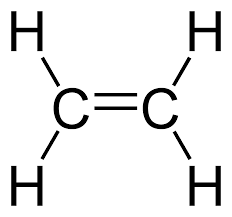
Classify the compound based on the functional group present.
(Pay attention to the classification of bonds.)
alkane
alkene
alkyne
aromatic
Chains of carbon atoms are called compounds.
aliphatic
cyclic
organic
saturated
In which processes are macro molecules broken down into monomers?
anabolism
catabolism
Organisms that make their own food using abiotic (nonliving) factors
heterotrophs
autotrophs
consumers
What does the "TP" in ATP stand for?
2 phosphates
Two proteins
tri (3) phosphates
tri (3) proteins
What is the function of ATP in living things?
provides energy for cells
provides structure in the nucleus
stores genetic information
Protein digestion begins in the _____ and ends in the _____.
small intestines; stomach
large intestines; stomach
mouth; small intestines
mouth; large intestine
stomach; small intestines
What is the original source of energy for almost all of the energy needed by living systems?
sun
moon
plants
meat
Oxidation is the _________ of electrons.
loss
gain
sharing
transfer
Oxidation is the _________ of electrons.
loss
gain
sharing
transfer
Oxidation is the _________ of electrons.
loss
gain
sharing
transfer
Reduction is the ___________ of electrons.
loss
gain
sharing
transfer
Gaining hydrogen is an example of...
oxidation
reduction
Gaining oxygen is an example of...
oxidation
reduction
Which of the following represents oxidation?
C → CH4
Fe3+ → Fe2+
Cl2 → 2Cl-
Zn → ZnO
Mg → Mg2+ + 2e–
Which element is oxidised in the reaction Zn + 2HCl → ZnCl2 + H2
Zinc
Hydrogen
Chlorine
None
What is the oxidation number of nitrogen in N2?
-3
0
+4
-1
The sum of the oxidation numbers in SCN- is equivalent to
0
-1
+1
+3
What is the oxidation number of iodine in KIO3?
0
-1
+5
+1
What is a redox reaction?
A reaction where both reactants get reduced.
A reaction where both reactants get oxidized.
A reaction that involves a transfer of electrons between reactants.
A reaction that involves the combustion of at least one reactant.
What is a reducing agent?
It is the species that gets reduced -- gains electrons.
It is the species that gets oxidized -- loses electrons.
It is the species that creates electrons.
It is the species that destroys electrons.
What is an oxidizing agent?
It is the species that gets reduced -- gains electrons.
It is the species that gets oxidized -- loses electrons.
It is the species that creates electrons.
It is the species that loses electrons.
What is an anode?
It is the electrode where oxidation takes place.
It is the electrode where reduction takes place.
It is an aqueous solution containing an electrode.
It is the salt bridge that connects half-cells.
What is a cathode?
It is the electrode where oxidation takes place.
It is the electrode where reduction takes place.
It is an aqueous solution containing an electrode.
It is the salt bridge that connects half-cells.
Electrons always flow from
cathode to anode
anode to cathode

Given their standard reduction potentials, which of the species is going to be oxidized?
Cu2+/Cu = 0.34V
Zn2+/Zn = -0.76V
Cu
Zn
CuSO4
ZnSO4
Any substance that does not conduct electricity when in solution is called a(n) ―
nonelectrolyte
electrolyte
conductor
semiconductor

The diagram shows what happens when zinc reacts with hydrochloric acid. Which of these best describes the energy transformation that occurs during this reaction?
Thermal energy - kinetic energy
Kinetic energy -potential energy
Chemical energy - thermal energy
Potential energy - chemical energy

The potential energy diagram of a reaction is shown. Which statement below is correct relating to this reaction?
#1 represents the enthalpy change for this exothermic reaction.
#2 represents the enthalpy change for this endothermic reaction.
#3 represents the enthalpy change for this endothermic reaction.
#4 represents the enthalpy change for this exothermic reaction.
During an exothermic reaction, heat content in the surroundings increases because
heat energy is destroyed during reactions
the reaction absorbs heat energy
the energy contained in the reactants is lower then the products
the energy contained in the products is lower than the reactants

The diagram represents two solids and the temperature of each. What occurs when the two solids are placed in contact with each other?
Heat energy flows from solid A to solid B. Solid A decreases in temperature
Heat energy flows from solid A to solid B. Solid A increases in temperature
Heat energy flows from solid B to solid A. Solid B decreases in temperature.
Heat energy flows from solid B to solid A. Solid B increases in temperature.
The amount of heat energy required to change the temperature of 12 g of gold from 45°C to 15°C is -47 J. What is the specific heat capacity of gold?
0.13 J/(g°C)
17,000 J/(g°C)
1600 J/(g°C)
0.065 J/(g°C)

The graph represents the uniform heating of a substance, starting with the substance as a solid below its melting point. Which line segment listed below represents an increase in potential energy and no change in average kinetic energy?
Line segment AB
Line segment BC
Line segment CD
Line segment EF
A cast iron skillet is used to fry bacon. For optimal frying, the pan must be heated to about 178 oC from a room temperature of 22.0 oC. It is known that 1.58 x 10⁵ J of heat energy are absorbed by the pan to reach the desired temperature and the specific heat of iron is 0.450 J/g oC. What must the mass of the skillet be?
12.7 kg
2.25 kg
110 kg
1.97 kg

Experimental Set-up for Calories in a Chocolate Chip Cookie Students designed an experiment to determine the amount of calories in a chocolate chip cookie. A ring stand was used with a clean aluminum soda can hung from the ring that was partially filled with a known mass of water. A thermometer was placed inside the can so that it measured the temperature of the water but did not touch any part of the metal can. Once set-up was complete, an initial water temperature was taken. The cookie was then lit on fire and allowed to completely burn. A final temperature of the water was measured.
Refer to the experimental set-up for calories in a chocolate chip cookie. How does this experiment allow students to measure the calories in a cookie?
The difference in masses before and after the cookie is burned is calculated, then converted into heat energy.
Heat energy from the burning cookie is transferred to the water. The change in water temperature is used to calculate the heat energy from the cookie.
Data from the amount of time for the cookie to burn and the temperature change are used to calculate the heat energy from the cookie.
The cookie is burned until the water reaches a boiling temperature, then masses are compared to calculate the heat energy from the cookie.
When methane, CH4, and oxygen, O2, are mixed in a stove and ignited, a lovely blue flame results. The balanced equation is: CH4(g) + 2O2(g) 2H2O(g) + CO2(g) What can be said about the energy involved in this chemical reaction?
I. The average kinetic energy of the products is greater than that of the reactants.
II. The chemical energy stored in the reactants is greater than the chemical energy stored in the products.
III. Chemical energy in the reactants is changed into heat energy and light energy.
I only
II only
III only
I, II, and III

The nucleus of an atom contains which subatomic particles?
protons and electrons
protons and neutrons
electrons and neutrons
protons, electrons, and neutrons

Typically in an atom, which two subatomic particles are equal in number?
protons and neutrons
all subatomic particles are equal in number
neutrons and electrons
protons and electrons

Which subatomic particle is counted to determine the type of element the atom represents?
proton
neutron
electron
boron
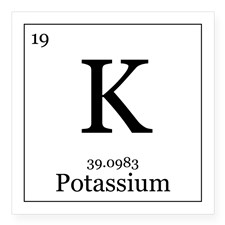
How many neutron are in the atom "K"?
29
19
58
20
Periodic law states that the elements are arranged according to their atomic ________ so that elements with similar chemical properties are in the same ________ and properties repeat periodically.
numbers, rows
masses, rows
masses, column
numbers, column

Which element is found in group 2, period 6?
Oxygen (O)
Barium (Ba)
Selenium (Se)
Carbon (C)
Which halogen is found in period 4?
Krypton (Kr)
Xenon (Xe)
Bromine (Br)
Iodine (I)
Elements that have the same number of energy levels (electron shells) are said to be in the same ______.
group
period
family
classification

What is the formula to solve for the number of neutrons?
Mass + Atomic Number= Neutrons
Mass x Atomic Number = Neutrons
Mass - Atomic Number = Neutrons
Mass + Number of Protons = Neutrons
an atom or group of atoms that has gained or lost one or more electrons and is now either positively or negatively charged
isotope
ion
orbital
nucleus
Frank has a paper clip. It has a mass of 9g and a volume of 3cm3. What is its density?
3 g/cm3
0.33 g/cm3
27 g/cm3
39 g/cm3
A mechanical pencil has the density of 3.0 g/mL. The volume of the pencil is 15.8 mL. What is the mass of the pencil?
47.4 g
50 g
0.190 g
5.27 g
A screwdriver has the density of 5.5 g/mL. It has a mass of 2.3 g. What is the screwdriver’s volume?
2.4 mL
0.42 mL
12.65 mL
0.42 g
Which unit of measurement is used for volume?
g
cm
g/mL
mL


This is a Bohr Diagram of Neon. How many valence electrons does Neon have?
2
4
6
8
How would you draw a Lewis dot diagram for Magnesium?


Rutherford, Dalton, Bohr, Thomson
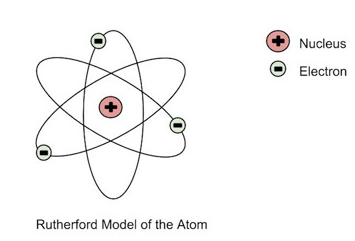
Subatomic particles with a negative charge
Electrons
Neutrons
Protons
Quarks
Which is an image of a beaker?


Which is an image of a Erlenmeyer flask?
Which is an image of a ring stand?


Which is an image of a test tube clamp?

Which piece of lab equipment would be most useful for the following task: Crush a chunk of chemical into a powder?
Watch glass
Thermometer
Beaker
Mortar and pestle
Which piece of lab equipment would be most useful for the following task: Scoop ammonium nitrate out of its container and onto weigh paper to be measured?
Watch glass
Graduated cylinder
Beaker
Scoopula
Which piece of lab equipment would be most useful for the following task: Find the mass of 125 grams of sodium chloride?
Watch glass
Thermometer
Test tube rack
Electronic balance


What is the ground state electron configuration for oxygen?
1s22s12p5
2s22p4
2p42s21s2

What is the ground state electron configuration for Chlorine (Cl)?


What kind of matter is this?
Element
Compound
Mixture of elements
Mixture of compounds
Mixture of elements and compounds

What kind of matter is this?
Element
Compound
Mixture of elements
Mixture of compounds
Mixture of elements and compounds

What kind of matter is this?
Element
Compound
Mixture

What kind of matter is this?
Element
Compound
Mixture of elements
Mixture of compounds
Mixture of elements and compounds
What kind of matter is Calcium (Ca)?
Element
Compound
Homogeneous Mixture
Heterogeneous Mixture
What kind of matter is salt (NaCl)?
Element
Compound
Homogeneous Mixture
Heterogeneous Mixture
What kind of matter is soil?
Element
Compound
Homogeneous Mixture
Heterogeneous Mixture
What kind of matter is Kool-Aid?
Element
Compound
Homogeneous Mixture
Heterogeneous Mixture
Matter is...
everything
anything that takes up space.
anything that has mass.
anything that takes up space and has mass.
How many different elements are in this chemical formula: C2H3OBr?
4
5
6
7
Which of the following is an element?
CO
Co
CO2
CH4
When two or more elements combine chemically, __________ is formed.
a mixture
an element
a compound
a solution
Which of the following is the CORRECT definition of molecules?
anything that has mass and takes up space
a particle that has a positive charge
substance made of two or more elements chemically combined
two or more atoms held together by chemical bonds
Which of the following represents compounds ONLY?
Co, Ni, O, B, NO
NaH, CO, NaCl, HF
F, Fe, Li, Cu, Ne
LiH, N, Ne, HBr
A dish which contains a blackish-yellow powder is given to you. When you move a magnet over it, you see the black particles fly upwards and get stuck to the magnet. Only the yellow powder is left in the dish. Classify the blackish-yellow powder.
element
compound
mixture
solution
Which of the following statements on isotopes is TRUE?
Isotopes are elements of the same group in the Periodic Table.
Isotopes occupy the same position in the Periodic Table.
Isotopes have the same number of protons and neutrons.
Isotopes have the same mass.
The identity of a chemical element is determined by …..
the number of protons it possesses.
the number of electrons it possesses.
the sum of the number of protons and neutrons it possesses.
the sum of the number of protons and electrons it possesses.
A species contains 8 neutrons, 8 protons and 10 electrons. The species is __________.
a cation
an anion
a neutral atom
an isotope
Nitrogen has three occurring isotopes: nitrogen-13, nitrogen-14, nitrogen-15. The average atomic mass of nitrogen is 14.007 amu. Which isotope is the most abundant?
Nitrogen-13
Nitrogen-14
Nitrogen-15
Not enough information to determine
On the 12C scale, the relative atomic mass of 12C is __________.
1.000
6.000
12.000
6.02 × 102312.000
Which of the following is the chemical formula for nitrate ion?
NO3-
NO2-
N3-
N3-
Which is the formula of the ionic compound formed from magnesium ion and chloride ion?
MgCl
MgCl2
Mg2Cl
Mg2Cl3
Choose the name for FeCl3.
iron(II) chloride
iron(III) chloride
iron chloride(II)
iron chloride(III)
What is the amount, in mol, of H atoms in 2 mol of ammonia, NH3?
2
3
6
8
Which of the following contains the largest amount of O atoms?
1 mol of oxygen gas, O2
1 mol of carbon monoxide gas, CO
1 mol of ozone, O3
1 mol of carbon dioxide, CO2
Which of the following contains the same number of atoms as the number of atoms in 1.0 mol of oxygen gas, O2?
2.0 mol of nitrogen gas, N2
0.5 mol of boron trifluoride, BF3
0.5 mol of nitrogen monoxide, NO
2.0 mol of hydrogen gas, H2
Which of the following is the unit for molar mass?
mol
amu
g mol-1
g
Which of the following statements is FALSE?
The numerical value for the molecular mass and molar mass of water is the same.
The molecular mass of water is lighter than the molar mass of water.
1 mol of water and 1 mol of hydrogen gas weighs the same.
1 mol of water and 1 mol of hydrogen gas contains the same number of molecules.
Calculate the amount, in mol, of 1.35 g of sodium hydrogen carbonate, NaHCO3.
0.0161 mol
0.0603 mol
84.0 mol
113.4 mol
What is the value of the temperature, in °C, at standard temperature and pressure(STP)?
22.4
24.0
0
25.0
Which of the following gas occupies the largest volume under room condition?
1 mol of O2
1 mol of CO2
2 mol of He
0.5 mol of CH4
Which of the following statements is FALSE?
The empirical formula and molecular formula of ammonia, NH3 is the same.
The empirical formula of propane, C3H6 and butane, C4H8 are the same.
The molecular formula of glucose, C6H12O6, is the same as its empirical formula.
The empirical formula and molecular formula of methane, CH4 is the same.
Mesitylene, a hydrocarbon found in crude oil, has an empirical formula of C3H4 and an experimentally determined molecular weight of 121 amu. Which is its molecular formula?
C3H4
C6H8
C9H12
C12H16
Isopropyl alcohol, sold as rubbing alcohol, is composed of C, H and O. Combustion of 0.255 g of isopropyl alcohol produces 0.561 g of CO2. Determine the mass of C in isopropyl alcohol.
0.0695 g
0.153 g
0.255 g
0.561 g
Which of the following is NOT the unit for molar concentration of a solution?
M
mol L-1
mol dm-3
mol mL-1
Which of the following solutions has the highest concentration?
0.5 mol of solute dissolved in 1.0 L of solution
1.0 mol of solute dissolved in 2.0 L of solution
1.0 mol of solute dissolved in 0.5 L of solution
3.0 mol of solute dissolved in 2.0 L of solution
Determine the molar concentration for 0.50 mol of sodium chloride, NaCl in 800 mL of solution.
6.25 x 10⁻⁴ mol L-1
0.625 mol L-1
0.500 mol L-1
0.400 mol L-1
Calculate the percentage by mass (%w/w) for 2.00 g of sodium chloride, NaCl in 10.0 g of water.
20.0%
16.7 %
3.42 x 10⁻³ %
0.0615%
Determine the oxidation number of phosphorus, P in phosphorus pentoxide, P2O5?
0
+2
+5
-2
Determine the oxidation number of oxygen atom, O in oxygen gas, O2.
0
+1
+2
-2
A + D + E → G + J
If 1 mol of A, 2 mol of D and 3 mol of E are mixed, the amount of G produced will depend on __________.
reactant A
reactant D
reactant E
product J
L + M → Q
If 1 mol of L and 2 mol of M are mixed, determine the amount, in mol, of Q produced.
1 mol
2 mol
3 mol
4 mol
The reaction
2H2 + O2 → 2H2O
is used to produce electricity in a hydrogen fuel cell. When 1.0 L of hydrogen gas, H2 is mixed with 1.0 L of oxygen gas, O2 0.85 L of water vapour, H2O is produced. 0.85 L of H2O is the ___________.
actual yield
theoretical yield
percentage yield
limiting reactant
4Fe + 3O2 --> 2Fe2O3
Defined as the loss of electrons.
oxidation
reduction
redox
OIL RIG
What is the oxidation number of C in SrCO3?
-4
+2
-6
+4
Defined as the gain of electrons.
oxidation
redox
reduction
LEO GER

What is a half-reaction of this equation, Na + Cl --> NaCl ?
Cl + e- --> Cl-
Cl - e- --> Cl-
Na --> Na + e-
Na° + Cl°--> Na+1Cl-1
Combustion and single-replacement reactions are __________ redox reactions.
always
never
sometimes
mostly
Defined as the gain of electrons.
oxidation
redox
reduction
LEO GER
Cl2 + 2e- --> 2Cl - is an example of:
a chemical reaction
redox
oxidation
reduction
An increase in oxidation number.
more acidic
reduction
less basic
oxidation
A decrease in oxidation number.
concentrated
reduction
oxidation
dilute
Substance that reduces another substance by losing electrons.
reducing agent
half-reaction
electronegative atom
oxidizing agent
Substance that oxidizes another substance by accepting its electrons.
reducing agent
oxidation number
combustion
oxidizing agent
What is the reducing agent here: N2 + 3H2 --> 2NH3
N2
H2
NH3
2NH3

The equations below all show redox reactions.
Which oxide is oxidised in these reactions?
Fe2O3
CO
ZnO
NO
Which change is an oxidation?
FeO to Fe2O3
Fe2O3 to FeO
H2O2 to H2O
H2O to H2
Mg → Mg2+ + 2e–
As an element is oxidized, its oxidation number...
increases as electrons are gained
decreases as electrons are gained
decreases as electrons are lost
increases as electrons are lost
Which equation represents a redox reaction?
NaOH + HNO3 → NaNO3 +H2O
2AgNO3 + Zn → Zn(NO3)2 + 2Ag
2NaCl + Pb(NO3)2 → PbCl2 + 2NaNO3
CaCO3 + 2HCl → CaCl2 + H2O + CO2
NaOH + Li --> LiOH + Na
Oxidation is the _________ of electrons.
loss
gain
sharing
transfer
Reduction is the ___________ of electrons.
loss
gain
sharing
transfer
Which of the following represents oxidation?
C → CH4
Fe3+ → Fe2+
Cl2 → 2Cl-
Zn → ZnO
2CaO--> 2Ca + O2
What is the oxidation number of the chromium element in potassium dichromate (VI), K2Cr2O7 ?
+2
+3
+5
+6
Iron (II) ions, Fe2+ in a solution can be changed to iron (III), Fe3+ by adding solution X. What is X?
Sodium hydroxide
Sodium thiosulphate
Potassium hexacyanoferrate(II)
Acidified potassium manganate (VII)
Which substance is an oxidising agent?
Bromine water
Magnesium powder
Iron(II) chloride solution
Potassium iodide solution
Which substance is used to change iron(III) ion to iron(II) ion?
Bromine water
Potassium iodide solution
Potassium dichromate(VI) solution
Acidified potassium manganate solution
Which of the following is a reduction reaction?
Carbon gains oxygen
Zinc atom loses electrons
Hydrogen sulphide loses hydrogen
Bromine molecule gains electron
The following chemical equation represents the extraction of silicon from quartz using coke.
SiO2 + C → Si + CO2
What is the change in oxidation number of silicon?
+2 to 0
+4 to 0
0 to +2
0 to +4
Iron rusts in the presence of oxygen and water. Which method causes iron to rust faster?
Coating iron with tin
Touching iron with lead
Galvanising iron with zinc
Connecting iron to magnesium
A method to control the rusting of underground iron pipelines is through sacrificial protection. Which of the following is the sacrificial metal?
Copper
Lead
Tin
Zinc
Which metals an displace lead from lead(II) nitrate solution?
Zinc
Silver
Copper
Aluminium
Metals are extracted from their ores.
What is the name of the ores that contain Fe2O3 as the main mineral?
Cassiterite
Hematite
Magnetite
Malachite
What is the position of hydrogen ion in the electrochemical series?
Between lead (II) ion and iron (III) ion
Between zinc iron and iron (II) ion
Between lead (II) ion and copper (II) ion
Between zinc ion and tin (II) ion
Aluminium reacts with iron (III) oxide as shown.
iron(III) oxide + aluminium → iron + aluminium oxide
Which statement about this reaction is correct?
Aluminium is oxidised.
Aluminium oxide is reduced
Iron (III) oxide is reduced.
Iron is oxidised.
Why does the chlorine gas are able to displace the bromide ion from its salt solution?
Because chlorine atoms are more electronegative than the bromide ions.
Because bromide atoms are more electronegative than the chloride ions.
Because chlorine atoms are more electropositive than the bromide atoms.
Because the chlorine atoms transfer electrons from itself to the bromide atoms.
Mg + PbCl2 --> MgCl2 + Pb. Which statement correctly describes the oxidation and reduction that occur?
Mg is oxidized and Cl- is reduced
Mg is oxidized and Pb+2 is reduced
Mg is reduced and Cl- is oxidized
Mg is reduced and Pb+2 is oxidized
What is the oxidation number of Chlorine in HClO4?
+1
+3
+5
+7

I and IV
II and III
I, II and III
II, III and IV

A
B
C
D

Magnesium is reduced
Zinc is an oxidising agent
Oxidation number of zinc decrease from +2 to 0
Magnesium atom gain electron

Chlorine water
Iron(II) sulphate
Hydrogen sulphide
Sodium chloride

Magnesium strip
Sulphur dioxide gas
Potassium iodide solution
Acidified potassium dichromate (VI) solution

Chlorine act as oxidising agent
Hydrogen sulphide undergoes oxidation
Oxidation number of hydrogen increases
Oxidation number of sulphur changes from 0 to -2

A
B
C
D

A
B
C
D

A
B
C
D
Zn + H2O ------> ZnO + H2 During the reaction, which substance is oxidised?


A
B
C
D

A
B
C
D

A
B
C
D

A
B
C
D

A
B
C
D

A
B
C
D

A
B
C
D

A
B
C
D

A
B
C
D

A
B
C
D

A
B
C
D

A
B
C
D
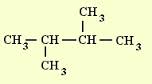

General formula of Alkene is
CnH2n+2
CnH2n+1OH
CnH2n
Propene reacts with steam in the presence of concentrated phosphoric acid as catalyst at temperature 300°C and pressure 60 atm to produce compound X
what is compound X?
C3H6
C3H8
C3H7OH

Hitungkan jisim molekul relatif sebatian Y tersebut .
Calculate the relative molecular mass of compound Y.
[Jisim
atom relatif: H=1, C=12] / [Relative atomic mass: H=1, C=12]
(a)

Apakah yang dimaksudkan dengan isomer ?
What is meant by isomer?
Molecular formula that shows the type and number of atoms of each element in a molecular compound.
A phenomenon where a compound has the same molecular formula but different structural formula
Molecular structures that have different chemical properties but the same physical properties

Nyatakan dua sifat fizik bagi sebatian X dan Y
State two physical properties of compound X and Y
Insoluble in water
Soluble in water
Charged molecules
Conduct electricity in aqueous and molten state
Does not conduct electricity

Dalam tindak balas I, sebatian P ditindakbalaskan dengan
wap air untuk menghasilkan sebatian R.
In reaction I, compound P is reacted with steam to produce compound R.
Nyatakan syarat-syarat bagi tindak balas I
State the conditions for reaction I
Phosphoric acid
temperature 300 degree C
Pressure 60 atm
Heat under reflux
Concentrated sulphuric acid

Sebatian X adalah bukan hidrokarbon. Jelaskan.
Compound X is a nonhydrocarbon compound. Explain.
Produce less soot
Have high melting and boiling points
Have other elements besides C and H in its compounds
Have isomers
Form carbon dioxide and water upon combustion

Which formula represents a saturated hydrocarbon?
A
B
C
D
Which is the structure of
2,2,4-trimethylpentane?


Which is a molecular formula?

C4H9Cl

This structure belongs to the group called
alkane
alkene
alcohol
carboxylic acid
What is a functional group?
Group of atoms that give specific characteristics to a molecule
Group of molecules that give specific characteristics to an atom
Group of molecules that make up a group of atoms
Group of atoms that give specific characteristics to an element
Butane and pentane are in the same homologous series because
they have the same general formula
they are differ from each other by a -CH2 group.
they can be prepared using similar methods.
they have the same physical properties.
A homologous series is series of compounds which
have the same general formula
differ from each other by a -CH2 group in the molecular formula
show a gradual change in physical properties
have similar chemical properties
Both pentane and pentene can react with bromine water under the presence of sunlight but they do not belong to the same homologous series because
they have different molecular size
their melting point and boiling point not the same
they do not have the same functional group
they differ from each other by a -H2 group in the molecular formula
Alcohol exists as liquid at room temperature
yes
no
Carboxylic acid exist as liquid at room temperature
yes
no
Solubility decreases in alcohol when the number of carbon is increases
yes
no
Compound Q has the following properties.
- soluble in water
- boiling point is 780C
What is compound Q
Ethane
Ethene
Ethanol
Ethanoic acid
Possible products of INCOMPLETE combustion
Carbon (C)
Carbon Monoxide (CO)
Carbon Dioxide (CO2)
Water (H2O)
Which of the following can be used to distinguish between alkanes and alkenes?
add a few drops of aqueous bromine
add a few drops of Universal indicator
add a piece of blue litmus paper
add a piece of red litmus paper
Which of the following statement is correct?
Alkenes can turn aqueous bromine from reddish-brown to colourless.
Alkenes can turn aqueous bromine from colourless to reddish-brown.
Alkanes can turn aqueous bromine from reddish-brown to colourless.
Alkanes can turn aqueous bromine from colourless to reddish-brown.
Which are the following are all alkanes?
methane, ethane, propane
methane, ethene, propene
methene, ethene, propene
ethene, propene, butene
What are the conditions for cracking?
solid catalyst of aluminium oxide and silicon dioxide, at 600oC
nickel catalyst at 200oC
nickel catalyst at 600oC
solid catalyst of aluminium oxide and silicon dioxide, at 200oC
Alkanes undergo substitution by chlorine only in the presence of
UV light
oxygen
water
aqueous bromine
Which of the following reactions apply to alkenes only
cracking
substitution
addition
combustion
Alkanes and alkenes molecules are held together by
weak covalent bond
weak London forces of attraction
strong covalent bonds
both covalent and London forces
Which statement is correct regarding the amount of carbon dioxide and water produced when 1 mole of butane and 1 mole of butene burn in excess oxygen?
the amount of carbon dioxide produced by butene is less than butane
the amount of carbon dioxide produced by butene is more than butane
the amount of water produced by butene is less than butane
the amount of water produced by butene is more than butane
Alkenes undergo all the reactions below except
combustion
substitution
addition
polymerisation

1 mole of ethene reacts with 0.5 mole of water according to the equation shown above. The percentage yield of the ethanol produced is 50%. What is the mass of ethanol produced? (RAM C=12, O=16, H=1)
14g
9g
23
11.5g

Which of the following is the monomer for this polymer ?
ethene
ethane
propane
propene
In polymer Z every carbon atom in the polymer chain is bonded to one hydrogen atom and one methyl group.
Which alkene could be polymerised to make polymer Z?
but-1-ene
but-2-ene
methylpropene
propene
What is meant by an isomer?
A molecule with the same structural formula but a different displayed formula
A molecule with the same displayed formula but a different molecular formula
A molecule with the same structural formula but a different molecular formula
A molecule with the same molecular formula but a different displayed formula
What problem is caused by both sulphur dioxide and nitrogen oxides?
Global dimming
Acid rain
Global warming
Toxic; stops haemoglobin transporting oxygen efficiently
How are nitrogen oxides produced when burning fuels?
The nitrogen impurities in the fuel react with oxygen from the air
By complete combustion
By nitrogen and oxygen in the air reacting together at high temperatures
By incomplete combustion
Out of alkanes and alkenes, which are more reactive and why?
Alkanes, because they are more flammable
Alkanes, because C-C are more easily broken than C=C
Alkenes, because C=C are more easily broken than C-C
Alkenes, because they have lost electrons to become ions
What process is used to separate crude oil in hydrocarbons with different chain lengths?
distillation
fractional distillation
cracking
polymerisation
What are the products of incomplete combustion?
carbon monoxide
water
carbon
hydrogen
What are the products of incomplete combustion?
carbon monoxide
water
carbon
hydrogen
What conditions are needed for cracking?
high temperature
high pressure
catalyst
low temperature
What type of chemical reaction is this:
C3H8 + 5O2 --> 3CO2 + 4H2O
Incomplete combustion
Substitution with oxygen
Complete combustion
Substitution with chlorine
What type of chemical reaction is this:
C3H8 + Br2 --> C3H7CBr + HBr
Incomplete combustion
Substitution with chlorine
Complete combustion
Substitution with bromine
The following is a product of the reaction between propane and chlorine: C3H8Cl
TRUE
FALSE
The following is a product of the reaction between propane and chlorine: C3H8Cl2
TRUE
FALSE
The following is a product of the reaction between propane and chlorine: C3H7Cl
TRUE
FALSE
The following is a product of the reaction between propane and chlorine: C3H7Cl2
TRUE
FALSE
The following is a product of the reaction between propane and chlorine: C3HCl7
TRUE
FALSE
The following is a product of the reaction between propane and chlorine: HCl
TRUE
FALSE
What color does bromine water turn in the presence of an alkane?
Orange
Blue
Colorless
Green
What are the first 3 alkenes in increasing carbon chain length?
Methene, ethene, propene
Ethene, propene, pentene
Ethene, propene, butene
Butene, ethene, propene
Methene, ethene, propane
What conditions are necessary in the reaction of alkenes with hydrogen?
300°C, Iron catalyst
60°C, Nickel catalyst
600°C, High pressure
Low temperature, Nickel catalyst
600°C, High temperature
What is the suitable chemical tests to distinguish between propane and propene?
Baeyer's Test and Bromine Test in dichloromethane
Baeyer's Test and Lucas Test
Brady Test and Tollen's Test
Bromine Test in dicloromethane and Lucas Test
Which name of reaction not in chemical reactions of alkene?
Halogenation
Hydrohalogenation
Hydration
Esterification

What is the type of reaction in chemical reactions of dehydration?
Addition
Substitution
Rearrangement
Elimination
What is the Markonikov's Rule?
H atom add to the carbon atom of the duuble bond greater number of C atoms
H atom add to the carbon atom of the double bond greater number of H atoms
H atom add to the carbon atom of the double bond greater number of N atoms
Which of the catalyst can not use in chemical reaction hydrogenation?
Pd
Pt
Ps
Ni
C10H22 --> C5H12 + C3H6 + ?
C2H4
C3H4
CO2
CH4

Alcohol can react with hydrogen halides to produce alkyl halides but not all hydrogen halides react spontaneously (need catalyst). Based on above information, which of the follwing reactions is correct?
A
B
C
D
E
Ether molecules are polar, but do not form hydrogen bonds with other ether molecules because:
Ether molecules are so reactive that they never have an opportunity to form hydrogen bonds
The molecules are generally too large
There are too many hydrogen atoms on the molecules to bond with just one oxygen atom
Only binary compounds form hydrogen bonds.
There is no hydrogen atom bonded to the oxygen.
The molecular formula of pentanoic acid is
C5H11O2
C5H9O2
C5H10O
C5H10O2
C5H12O2
Physical and chemical properties of alcohols are mainly due to the presence of hydroxyl group. Which of the following is not describe the physical properties of alcohols?
Alcohols have higher boiling points than alkanes of similar molecular weight
The boiling point increases with increase in branching in aliphatic carbon chains
The boiling point of alcohols increases with increase in the number of carbon atoms in the aliphatic carbon chain
Low-molecular-weight alcohols are completely soluble in water
ethanol not soluble in n-hexane
Which one of the isomeric alcohols of formula C5H12O can be prepared by reduction of a ketone with LiAlH4 ?
Pentan-1-ol
2-methylbutan-1-ol
3-methylbutan-2-ol
2,2-dimethylpropan-1-ol
3-methylpentan-3-ol
How many chain isomer that C5H10O2 (carboxylic acid only) has?
4
5
6
7
8
which of product will be obtained when 2-methyl-2-pentanol oxidized by K2Cr2O7?
there is no reaction
Ketone
aldehyde
ester
carboxylic acid

This functional group is the product from oxidation of a
primary alcohol
secondary alcohol
tertiary alcohol
no more alcohol please miss!
What can be used to oxidise alcohols?
MnO4-
KMnO4/H+
H+
KMnO4
What can be used to oxidise alcohols?
K2Cr2O72-
Cr2O72-/H+
H+
Cr2O72-

What is the product from the oxidation of propan-2-ol?
propandiol
propanal
propanoic acid
propanone
What is the functional group formed when conc. H2SO4 reacts with alcohols?
alkene
chloroalkane
diol
alkane
How could you form an alcohol from an alkene?
H2O/H+
KOH(alc)
KOH(aq)
SOCl2

Which would be the major product from the reaction of butan-2-ol with conc. H2SO4?
but-1-ene
but-2-ene
Can propan-2-ol form major and minor products when reacted with conc. H2SO4?
yes
no

Which would be the major product from the reaction of propene with H2O/H+?
propan-1-ol
propan-2-ol


Select the formula for the following name: Butanol
C4H9OH
C4H10OH
C4H10
C4H7OH
Which of the following must be true about ethanol?
It has an amine functional group
It is made from a 3 carbon chain
It contains only single bonds
All the above are true

What is the name of the compound?
2-chloropropan-1-ol
2-chloropentan-1-ol
3-chloropropanol
2-bromopropan-1-ol

What is the name of this compound?
2-2,dichloropropane
2,2-chloropropane
2,2-dichloropropene
2,2-dichloropropane

What is the name of this compound?
2,4-chlorohex-3-ene
2,4-dichlorohexene
2,4-dichlorohex-3-ene
2,3,4-trichlorohexane

What is the name of this compound?
ethanoic acid
methanoic acid
propanoic acid
carboxylic acid
‘Bronze is harder than copper’. Which of the following is the best to explain the statement?
Atoms in bronze are arranged closely packed and less empty spaces.
Layers of atoms in bronze are not easily slide over each other.
Atomic size of copper and tin is different.
Bronze is a mixture of copper and tin
What is the composition of brass?
30% tin and 70% copper
10% tin and 90% copper
30% zinc and 70% copper
10% zinc and 90% copper
Which of the following statements below is true?
Copper is more ductile than brass
Brass is more malleable than copper
Iron is shinier than stainless steel
Iron is more resistant to corrosion than steel
Which of the following mixture forms a light and strong alloy to make the body of a speeding boat?
iron and carbon
Aluminium and copper
Copper and nickel
Tin and lead
Which of the following properties does not belong to an alloy as compared to its pure metal?
Stronger
More corrosion resistant
Harder
More malleable

Diagram above shows the arrangement of atoms in brass. Which of the following could be atoms X and Y?
X : Copper Y: Tin
X: Zinc Y: Copper
X: Iron Y: Carbon
X: Copper Y: Zinc
Brass is an alloy consisting of a mixture of
copper and zinc
copper and lead
copper and tin
tin and lead
The main element present in brass and bronze is
copper
lead
zinc
tin
Which of the following alloy is used to make the body of an aeroplane?
Brass
Duralumin
Steel
Pewter
Which of the following is not the aim of alloying?
To increase the strength and hardness of metal.
To prevent corrosion of metal.
To improve the appearance of metal
To increase the melting point.
This alloy contain 93% aluminium, 3% copper, 3% magnesium and 1% manganese. This alloy is known as
Brass
Bronze
Steel
Duralumin
Alloy is a ...
A chemical compound with combination between metal and non-metal
A salt contain of two or more elements where the main element is non-metal
Mixture of two or more elements where the main element is metal
What is the main metal used to made pewter?
Tin
Copper
Antimony
Aluminium
Which is the follow processes increases the hardness of a metal?
Purification
Plating
Alloying
Electrolysis
Alloy that can be used for jewellery, machine bearings, and door furniture
brass
bronze
pewter
duralumin
All alloys are mixtures.
True
False
The type of glass used to make laboratory glass ware is
Borosilicate glass
Fused glass
Lead glass
Soda glass
Silicon carbide, SiC, is an example of advanced ceramic which can be used to make
car brakes
window panes
electrical cables
water tanks
Which of the following is correct about the properties of soda-lime glass and borosilicate glass?
Soda-lime glass has a low density and a high melting point, whereas borosilicate glass has a high density and a low melting point.
Soda-lime glass has a low density and a low expansion coefficient, whereas borosilicate glass has a high density and a high expansion coefficient.
Soda-lime glass has a high melting point and a low thermal shock resistance, whereas borosilicate glass has a low melting point and a high thermal shock resistance.
Soda-lime glass has a low expansion coefficient and a low thermal shock resistance, whereas borosilicate glass has a high expansion coefficient and a high thermal shock resistance.
What type of glass is formed when calcium carbonate is heated with silicon dioxide?
Fused glass
Borosilicate glass
Lead crystal glass
Soda lime glass

Diagram 1 shows several products of a substance. Which of the following is the substance?
Optic glass
Fused glass
Fibre glass
Photochromic glass
Which of the following composite materials is DURABLE?
Reinforced concrete
Optical fibre
Superconductor
Fibre glass
Which of the following is NOT the use for superconductor?
Particle accelerator
NMR
Neutron producer
MRI
Traditional ceramics are made from (a)
(a) ceramic is used in dental implants.
(a) is a composite material made up of hydroxyapatite and collagen
(a) is the matrix substance for the photochromic glass.
The atom is the smallest unit of a(n) _________________.
element
compound
fraction
none of these
The molecule is the smallest unit of a(n) _________________ .
compound
element
mixture
none of these
Each element has its own unique number of __________________.
protons
neutrons
electrons
nuclei

What two particles are in the nucleus of an atom?
protons and electrons
electrons and neutrons
protons and neutrons
