

Wayground
Reading Comprehension Strategies - Printable English Worksheets โรงเรียนอนุบาล - Wayground

Reading Comprehension Strategies

18 คำถาม

4th - 4th ระดับชั้น

English

แบบฝึกหัดภาษาอังกฤษสำหรับนักเรียนชั้นประถมศึกษาปีที่ 4 นี้ ช่วยเสริมสร้างความเข้าใจของนักเรียนเกี่ยวกับกลยุทธ์การอ่านเพื่อความเข้าใจและคำศัพท์ทางวรรณกรรมหลักๆ ผ่านคำถามแบบเลือกตอบ 18 ข้อ นักเรียนจะได้ระบุความหมายและจุดประสงค์ของการเปรียบเทียบและเปรียบต่าง การอนุมาน การสรุป การถอดความ การเชื่อมโยงใจความสำคัญ ใจความหลัก การคาดเดา แก่นเรื่อง เบาะแสจากบริบท มุมมอง การจินตนาการ รายละเอียดสนับสนุน การเล่าเรื่องใหม่ ลำดับเหตุการณ์ และข้อเท็จจริงกับความคิดเห็น ชุดคำถามช่วยให้นักเรียนแยกแยะแนวคิดที่เกี่ยวข้องกันอย่างใกล้ชิด เช่น ใจความสำคัญและแก่นเรื่อง การสรุปและการถอดความ หรือการคาดเดาและการอนุมาน แบบฝึกหัดนี้เหมาะสำหรับการแนะนำคำศัพท์ การทบทวนกลยุทธ์การอ่าน หรือการตรวจสอบว่านักเรียนสามารถจดจำคุณลักษณะเฉพาะของแต่ละคำได้หรือไม่ แบบฝึกหัดที่พิมพ์ได้ฟรีนี้ออกแบบมาสำหรับนักเรียนชั้นประถมศึกษาปีที่ 4 และมีเฉลยคำตอบครบถ้วนเพื่อการทบทวนและประเมินผลอย่างมีประสิทธิภาพ

การตั้งค่าแผ่นงาน

ขนาดตัวอักษร

S
M
L
XL
แผ่นงาน

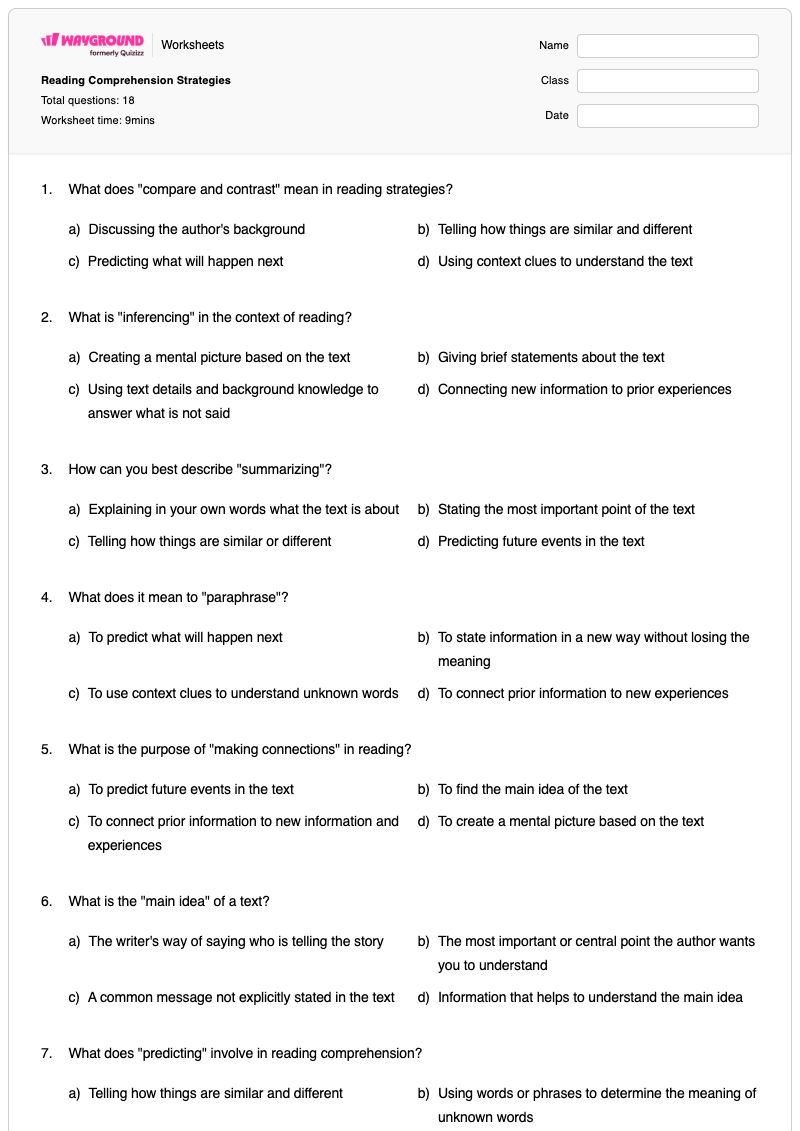
Reading Comprehension Strategies

คำถามทั้งหมด: 18

ชื่อ
ระดับ
วันที่
1.

What does "compare and contrast" mean in reading strategies?

a)

Discussing the author's background

b)

Telling how things are similar and different

c)

Predicting what will happen next

d)

Using context clues to understand the text

2.

What is "inferencing" in the context of reading?

a)

Creating a mental picture based on the text

b)

Giving brief statements about the text

c)

Using text details and background knowledge to answer what is not said

d)

Connecting new information to prior experiences

3.

How can you best describe "summarizing"?

a)

Explaining in your own words what the text is about

b)

Stating the most important point of the text

c)

Telling how things are similar or different

d)

Predicting future events in the text

4.

What does it mean to "paraphrase"?

a)

To predict what will happen next

b)

To state information in a new way without losing the meaning

c)

To use context clues to understand unknown words

d)

To connect prior information to new experiences

5.

What is the purpose of "making connections" in reading?

a)

To predict future events in the text

b)

To find the main idea of the text

c)

To connect prior information to new information and experiences

d)

To create a mental picture based on the text

6.

What is the "main idea" of a text?

a)

The writer's way of saying who is telling the story

b)

The most important or central point the author wants you to understand

c)

A common message not explicitly stated in the text

d)

Information that helps to understand the main idea

7.

What does "predicting" involve in reading comprehension?

a)

Telling how things are similar and different

b)

Using words or phrases to determine the meaning of unknown words

c)

Telling what is going to happen next or in the future

d)

Creating a mental picture or image in your mind

8.

What is a "theme" in literature?

a)

The most important or central point of the text

b)

A common message, not explicitly stated in the text

c)

The writer's way of saying who is telling the story

d)

Information that helps to understand the main idea

9.

How are "context clues" used in reading?

a)

To predict what will happen next

b)

To summarize the text in your own words

c)

To determine the meaning of unknown words

d)

To connect new information to prior experiences

10.

What does "point of view" refer to in a story?

a)

The central message of the story

b)

The writer's way of saying who is telling the story to whom

c)

The background knowledge used to understand the story

d)

The mental picture created by the story

11.

What is "visualize" in the context of reading?

a)

To use context clues to understand the text

b)

To create a mental picture or image in your mind based on the words we read or hear

c)

To connect prior information to new information

d)

To state information in a new way

12.

What are "supporting/key details" in a text?

a)

The writer's way of saying who is telling the story

b)

The most important or central point of the text

c)

Information that helps to understand the main idea

d)

A common message not explicitly stated in the text

13.

What does "retelling" involve in storytelling?

a)

Presenting facts and figures

b)

Listing steps or events in order

c)

Describing a problem and its solution

d)

Telling or writing what happened in a story using a beginning, middle, and ending

14.

What is a "sequence"?

a)

A cause and its effects

b)

Steps or events in order

c)

A fact that can be proven to be true

d)

The reason an author writes a story

15.

What distinguishes a "fact" from an "opinion"?

a)

A fact is what you think, feel, or believe

b)

An opinion is a statement that can be proven to be true

c)

A fact is a statement that can be proven to be true

d)

An opinion is why something happens

16.

What is "cause and effect"?

a)

When the author describes a problem and explains how it is solved

b)

The reason an author writes a story

c)

A cause is why something happens, and an effect is what happens

d)

Listing steps or events in order

17.

What is "problem and solution" in literature?

a)

Telling or writing what happened in a story

b)

Listing steps or events in order

c)

When the author describes a problem and explains how the problem is solved

d)

A fact that can be proven to be true

18.

What is the "author's purpose"?

a)

A statement that can be proven to be true

b)

Why something happens and what happens as a result

c)

The reason an author writes a story: to describe, explain/inform, entertain, or to persuade

d)

Listing steps or events in order

แป้นคำตอบ

Reading Comprehension Strategies

คำถามทั้งหมด: 18

1.
b)

Telling how things are similar and different

2.
c)

Using text details and background knowledge to answer what is not said

3.
a)

Explaining in your own words what the text is about

4.
b)

To state information in a new way without losing the meaning

5.
c)

To connect prior information to new information and experiences

6.
b)

The most important or central point the author wants you to understand

7.
c)

Telling what is going to happen next or in the future

8.
b)

A common message, not explicitly stated in the text

9.
c)

To determine the meaning of unknown words

10.
b)

The writer's way of saying who is telling the story to whom

11.
b)

To create a mental picture or image in your mind based on the words we read or hear

12.
c)

Information that helps to understand the main idea

13.
d)

Telling or writing what happened in a story using a beginning, middle, and ending

14.
b)

Steps or events in order

15.
c)

A fact is a statement that can be proven to be true

16.
c)

A cause is why something happens, and an effect is what happens

17.
c)

When the author describes a problem and explains how the problem is solved

18.
c)

The reason an author writes a story: to describe, explain/inform, entertain, or to persuade

คำถามที่พบบ่อย

แบบฝึกหัดกลยุทธ์การอ่านเพื่อความเข้าใจครอบคลุมหัวข้ออะไรบ้าง?

แบบฝึกหัดสำหรับนักเรียนชั้นประถมศึกษาปีที่ 4 นี้ ประกอบด้วยคำถามแบบเลือกตอบ 18 ข้อ เพื่อตรวจสอบความเข้าใจของนักเรียนเกี่ยวกับกลยุทธ์การอ่านและศัพท์วรรณกรรมเฉพาะด้าน รวมถึงการอนุมาน การสรุปความ การถอดความ ใจความสำคัญ แก่นเรื่อง เบาะแสจากบริบท มุมมอง ลำดับเหตุการณ์ และข้อเท็จจริงกับความคิดเห็น การเลือกคำตอบที่ตรงกับความหมายจะช่วยให้นักเรียนแยกแยะความหมายของแต่ละกลยุทธ์และรู้ว่าเมื่อใดจึงจะช่วยให้เข้าใจเนื้อหาได้ดียิ่งขึ้น

ฉันจะใช้แบบฝึกหัดนี้ในการสอนกลยุทธ์การอ่านเพื่อความเข้าใจได้อย่างไร?

แนะนำคำศัพท์ต่างๆ เป็นกลุ่มเล็กๆ เช่น กลยุทธ์การสร้างความหมาย ทักษะโครงสร้างของข้อความ และแนวคิดทางวรรณกรรม จากนั้นสาธิตความแตกต่างทีละอย่าง เช่น การอนุมานเป็นการผสมผสานรายละเอียดในข้อความกับความรู้พื้นฐาน ในขณะที่การจินตนาการสร้างภาพในใจ ให้นักเรียนอธิบายว่าทำไมคำตอบจึงตรงกับคำจำกัดความในแต่ละข้อ และใช้ตัวเลือกที่ไม่ถูกต้องเพื่ออภิปรายความแตกต่างระหว่างคำศัพท์ที่เกี่ยวข้อง เช่น ใจความสำคัญและแก่นเรื่อง

ฉันควรสังเกตข้อผิดพลาดอะไรบ้างเมื่อนักเรียนทำแบบฝึกหัดนี้เสร็จ?

นักเรียนอาจสับสนระหว่างการอนุมานกับการคาดเดา การสรุปกับการถอดความ หรือใจความสำคัญกับแก่นเรื่อง เพราะคำศัพท์เหล่านี้มีความเกี่ยวข้องกันแต่ใช้แทนกันไม่ได้ นอกจากนี้ พวกเขาอาจเลือกใช้บริบทเพื่อหาคำตอบสำหรับคำถามใดๆ เกี่ยวกับการทำความเข้าใจเนื้อหา มองข้ามรายละเอียดสนับสนุนที่ช่วยอธิบายใจความสำคัญ หรือสับสนระหว่างลำดับเหตุการณ์กับการเล่าเรื่องที่ประกอบด้วยตอนต้น ตอนกลาง และตอนจบ

ฉันจะมอบหมายและให้คะแนนแบบฝึกหัดนี้อย่างไร?

แบบฝึกหัดกลยุทธ์การอ่านเพื่อความเข้าใจมีให้ดาวน์โหลดในรูปแบบไฟล์ PDF สำหรับพิมพ์ และเป็นแบบทดสอบดิจิทัลบน Wayground พร้อมเฉลยคำตอบครบถ้วน คุณสามารถตรวจคำตอบดิจิทัลโดยอัตโนมัติ หรือสแกนงานที่นักเรียนทำเสร็จแล้วด้วยแอป Wayground for Teachers

ฉันจะปรับแบบฝึกหัดกลยุทธ์การอ่านเพื่อความเข้าใจให้เหมาะสมกับนักเรียนของฉันได้อย่างไร?

ใช้การตั้งค่าขั้นสูงของแบบฝึกหัดเพื่อปรับระยะห่างระหว่างตัวอักษรหรือเพิ่มขนาดตัวอักษร เพื่อให้ข้อสอบแบบเลือกตอบ 18 ข้ออ่านง่ายขึ้น นอกจากนี้ คุณยังสามารถเลือกแบบอักษรที่เหมาะสำหรับผู้ที่มีภาวะดิสเล็กเซีย หรือแปลแบบฝึกหัดเป็นภาษาอื่นได้โดยยังคงรักษาคำจำกัดความของกลยุทธ์การอ่านและตัวเลือกคำตอบไว้ให้เข้าถึงได้

ฉันจะหาแบบฝึกหัดแบบนี้เพิ่มเติมได้ที่ไหนบน Wayground?

Wayground นำเสนอชุดแบบฝึกหัดและโจทย์ฝึกหัดฟรีที่ครอบคลุมทุกวิชา พร้อมไฟล์ PDF และเฉลยคำตอบ เพื่อช่วยให้นักเรียนเชี่ยวชาญทักษะและแนวคิดที่สำคัญ ดูแหล่งข้อมูลเพิ่มเติมได้ที่ https://wayground.com/en-us/worksheets