

Wayground
Zones of Emotional Regulation - Printable Other Worksheets - Wayground

Zones of Emotional Regulation

14 คำถาม

9th - 9th ระดับชั้น

Other

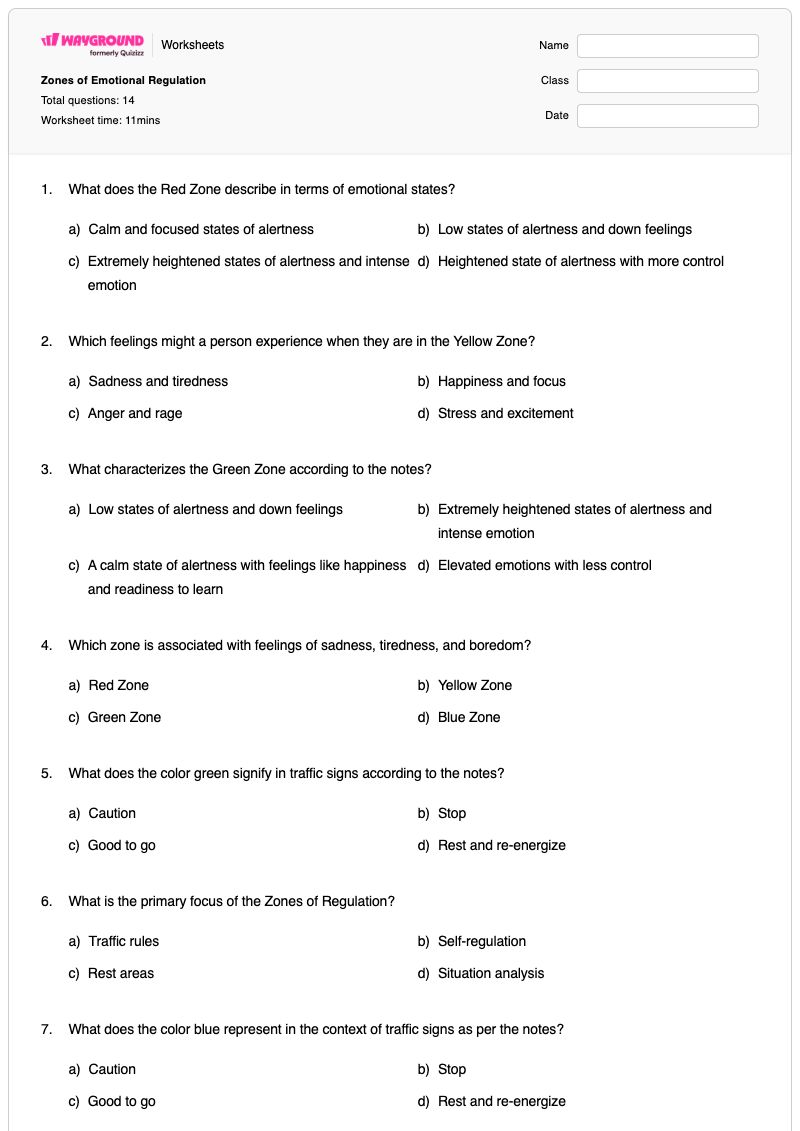
แบบฝึกหัดเรื่อง "โซนการควบคุมอารมณ์" สำหรับนักเรียนชั้น ม.3 สามารถพิมพ์ได้ฟรี แบบฝึกหัดนี้แนะนำโซนอารมณ์ 4 โซนที่แบ่งตามสี และระดับความตื่นตัวของแต่ละโซน โดยมีคำถามแบบเลือกตอบ 14 ข้อ นักเรียนจะได้ระบุว่า โซนสีแดง คือ อารมณ์รุนแรง โซนสีเหลือง คือ ความตื่นตัวสูงแต่ควบคุมอารมณ์ได้น้อยลง โซนสีเขียว คือ ความสงบพร้อมที่จะเรียนรู้ และโซนสีน้ำเงิน คือ พลังงานต่ำหรือความรู้สึกหดหู่ แบบฝึกหัดนี้ยังใช้การเปรียบเทียบกับสัญญาณไฟจราจรและสถานการณ์ในชีวิตประจำวันเพื่อเชื่อมโยงแต่ละโซนกับสถานการณ์ต่างๆ เช่น การเจ็บป่วย ความตื่นเต้น ความผิดหวัง หรือความหงุดหงิด นักเรียนจะได้ทบทวนว่า การควบคุมตนเองเป็นสิ่งสำคัญ และการประสบกับอารมณ์ในทุกโซนเป็นเรื่องธรรมชาติ แบบฝึกหัดนี้มีประโยชน์ในการตรวจสอบว่านักเรียนสามารถจดจำสภาวะทางอารมณ์และนำป้ายกำกับโซนไปใช้กับสถานการณ์สั้นๆ ได้หรือไม่ แทนที่จะท่องจำคำจำกัดความเพียงอย่างเดียว แบบฝึกหัดนี้มีเฉลยคำตอบครบถ้วนเพื่อการทบทวนอย่างมีประสิทธิภาพ และสามารถดาวน์โหลดได้ฟรีเพื่อใช้ในการเรียนการสอนในห้องเรียน การฝึกฝนด้วยตนเอง หรือการประเมินผลระหว่างเรียน

การตั้งค่าแผ่นงาน

ขนาดตัวอักษร

S
M
L
XL
แผ่นงาน

Zones of Emotional Regulation

คำถามทั้งหมด: 14

ชื่อ
ระดับ
วันที่
1.

What does the Red Zone describe in terms of emotional states?

a)

Calm and focused states of alertness

b)

Low states of alertness and down feelings

c)

Extremely heightened states of alertness and intense emotion

d)

Heightened state of alertness with more control

2.

Which feelings might a person experience when they are in the Yellow Zone?

a)

Sadness and tiredness

b)

Happiness and focus

c)

Anger and rage

d)

Stress and excitement

3.

What characterizes the Green Zone according to the notes?

a)

Low states of alertness and down feelings

b)

Extremely heightened states of alertness and intense emotion

c)

A calm state of alertness with feelings like happiness and readiness to learn

d)

Elevated emotions with less control

4.

Which zone is associated with feelings of sadness, tiredness, and boredom?

a)

Red Zone

b)

Yellow Zone

c)

Green Zone

d)

Blue Zone

5.

What does the color green signify in traffic signs according to the notes?

a)

Caution

b)

Stop

c)

Good to go

d)

Rest and re-energize

6.

What is the primary focus of the Zones of Regulation?

a)

Traffic rules

b)

Self-regulation

c)

Rest areas

d)

Situation analysis

7.

What does the color blue represent in the context of traffic signs as per the notes?

a)

Caution

b)

Stop

c)

Good to go

d)

Rest and re-energize

8.

What is advised to be natural according to the concluding notes?

a)

Experiencing all the zones

b)

Ignoring traffic signs

c)

Focusing only on green and red

d)

Avoiding self-regulation

9.

Scenario where the blue zone would be expected.

a)

You win the lottery.

b)

You see your best friend after a long time.

c)

You're sick and cannot go to an event.

10.

What does the Yellow Zone typically indicate in terms of traffic signal colors?

a)

Proceed with caution

b)

Stop immediately

c)

Go if the way is clear

d)

General warning

11.

Which emotional state is not typically associated with the Red Zone?

a)

Excitement

b)

Calmness

c)

Frustration

d)

Anxiety

12.

Scenario where the green zone would be expected.

a)

Any Saturday or Sunday.

b)

You're in a car accident.

c)

You fail a test.

13.

Scenario where the yellow zone would be expected.

a)

You win a trip.

b)

Your friend moved away.

c)

Your favorite team lost their game.

14.

Scenario where the red zone would be expected.

a)

You play your favorite game for hours.

b)

You lose the game by 35 points.

c)

You get to spend the day doing everything you want to do.

แป้นคำตอบ

Zones of Emotional Regulation

คำถามทั้งหมด: 14

1.
c)

Extremely heightened states of alertness and intense emotion

2.
d)

Stress and excitement

3.
c)

A calm state of alertness with feelings like happiness and readiness to learn

4.
d)

Blue Zone

5.
c)

Good to go

6.
b)

Self-regulation

7.
d)

Rest and re-energize

8.
a)

Experiencing all the zones

9.
c)

You're sick and cannot go to an event.

10.
a)

Proceed with caution

11.
b)

Calmness

12.
a)

Any Saturday or Sunday.

13.
a)

You win a trip.

14.
b)

You lose the game by 35 points.

คำถามที่พบบ่อย

แบบฝึกหัดเรื่อง "โซนการควบคุมอารมณ์" ช่วยให้นักเรียนชั้น ม.3 เรียนรู้อะไรบ้าง?

แบบฝึกหัดนี้ช่วยให้นักเรียนแยกแยะโซนสีน้ำเงิน สีเขียว สีเหลือง และสีแดง ตามสภาวะทางอารมณ์และระดับความตื่นตัว แบบฝึกหัดประกอบด้วยคำถามแบบเลือกตอบ 14 ข้อ และยังกระตุ้นให้นักเรียนนำคำจำกัดความเหล่านั้นไปประยุกต์ใช้ในสถานการณ์ในชีวิตประจำวัน เช่น การเจ็บป่วย การชนะการเดินทาง หรือการแพ้เกม พร้อมทั้งเชื่อมโยงโซนต่างๆ เข้ากับความหมายของสัญญาณไฟจราจร

ฉันจะใช้แบบฝึกหัดนี้สอนเรื่องโซนการควบคุมอารมณ์ทั้งสี่ได้อย่างไร?

แนะนำโซนทั้งสี่และลักษณะทางอารมณ์ของแต่ละโซนก่อนที่นักเรียนจะทำแบบทดสอบแบบเลือกตอบ จากนั้นให้หยุดที่คำถามสถานการณ์และขอให้นักเรียนอธิบายว่ารายละเอียดใดบ่งชี้ถึงการตอบสนองในโซนสีน้ำเงิน สีเขียว สีเหลือง หรือสีแดง เพื่อเน้นย้ำว่าเป้าหมายคือการควบคุมตนเอง และการประสบกับแต่ละโซนเป็นเรื่องธรรมชาติ

ฉันควรสังเกตข้อผิดพลาดอะไรบ้างเมื่อนักเรียนทำแบบฝึกหัดการควบคุมอารมณ์นี้?

นักเรียนอาจสับสนระหว่างความตื่นตัวที่สูงขึ้นในโซนสีเหลืองกับอารมณ์ที่รุนแรงและการควบคุมที่ลดลงในโซนสีแดง นอกจากนี้ พวกเขาอาจสลับโซนสีน้ำเงินและสีเขียว โดยเลือกสีเขียวสำหรับความรู้สึกที่ผ่อนคลาย หรือเลือกสีน้ำเงินสำหรับความสงบพร้อมที่จะเรียนรู้ ในแบบฝึกหัดสถานการณ์ ให้ตรวจสอบว่านักเรียนใช้สถานการณ์ที่อธิบายไว้ แทนที่จะเลือกโซนโดยพิจารณาจากว่าเหตุการณ์นั้นฟังดูเป็นบวกหรือลบเท่านั้น

ฉันจะมอบหมายและให้คะแนนแบบฝึกหัดเรื่อง "โซนของการควบคุมอารมณ์" ได้อย่างไร?

แบบฝึกหัดนี้มีให้ดาวน์โหลดในรูปแบบ PDF สำหรับพิมพ์ และเป็นแบบทดสอบดิจิทัลบน Wayground โดยมีเฉลยคำตอบครบถ้วนสำหรับคำถามแบบเลือกตอบทั้ง 14 ข้อ คุณสามารถตรวจงานที่ส่งมาในรูปแบบไฟล์พิมพ์ได้โดยการสแกนงานของนักเรียนด้วยแอป Wayground for Teachers หรือใช้แบบทดสอบดิจิทัลสำหรับการตอบและดูผลทางออนไลน์

ฉันจะปรับแบบฝึกหัดการควบคุมอารมณ์นี้ให้เหมาะสมกับนักเรียนของฉันได้อย่างไร?

ในส่วนการตั้งค่าขั้นสูงของแบบฝึกหัด ให้ปรับระยะห่างระหว่างตัวอักษรและขนาดตัวอักษรเพื่อให้คำจำกัดความของโซน การเปรียบเทียบสัญญาณไฟจราจร และตัวเลือกสถานการณ์อ่านง่ายขึ้น นอกจากนี้ คุณยังสามารถเปิดใช้งานแบบอักษรที่เหมาะสำหรับผู้ที่มีภาวะดิสเล็กเซีย หรือแปลแบบฝึกหัดเป็นภาษาอื่นหากช่วยให้เข้าถึงคำศัพท์เกี่ยวกับการควบคุมอารมณ์ได้ดียิ่งขึ้น

ฉันจะหาแบบฝึกหัดแบบนี้เพิ่มเติมได้ที่ไหนบน Wayground?

Wayground นำเสนอชุดแบบฝึกหัดและโจทย์ฝึกหัดฟรีที่ครอบคลุมหลากหลายวิชา พร้อมไฟล์ PDF และเฉลยคำตอบ เพื่อสนับสนุนทักษะและแนวคิดที่สำคัญ ดูแหล่งข้อมูลเพิ่มเติมได้ที่ https://wayground.com/en-us/worksheets