

Wayground
Application of Genetic Engineering  - Printable ศาสตร์ Worksheets ระดับ 9 - Wayground

Application of Genetic Engineering

Abeda Khanam

สร้างโดย Abeda Khanam

15 คำถาม

9th ระดับชั้น

ศาสตร์

อัปเดตแล้ว เม.ย. 2569

แบบฝึกหัดวิทยาศาสตร์สำหรับนักเรียนชั้น ม.3 ชุดนี้จะสำรวจการประยุกต์ใช้พันธุวิศวกรรมในด้านการเกษตร การแพทย์ การตรวจทางพันธุกรรม นิติวิทยาศาสตร์ และการอภิปรายด้านจริยธรรม นักเรียนจะได้ระบุตัวอย่างเช่น ข้าวสีทอง เชื่อมโยงพันธุวิศวกรรมกับการต้านทานยาฆ่าแมลงและโรคในพืช และตระหนักถึงการประยุกต์ใช้ต่างๆ เช่น การบำบัดด้วยยีน การวิจัยทางการแพทย์ การวิเคราะห์เครื่องหมายดีเอ็นเอ และการตรวจลายนิ้วมือดีเอ็นเอ แบบฝึกหัดชุดนี้มีทั้งหมด 15 ข้อ ประกอบด้วยคำถามแบบเลือกตอบ 14 ข้อ และคำถามปลายเปิด 1 ข้อ นักเรียนจะต้องแยกแยะความแตกต่างระหว่างวัตถุประสงค์ของการตรวจทางพันธุกรรม การวิเคราะห์ดีเอ็นเอทางนิติวิทยาศาสตร์ พืชดัดแปลงพันธุกรรม และการประยุกต์ใช้ทางการแพทย์ จากนั้นอธิบายบทบาทของพันธุวิศวกรรมในการต่อสู้กับความผิดปกติทางพันธุกรรม แบบฝึกหัดที่พิมพ์ได้ฟรีนี้มีเฉลยคำตอบครบถ้วนเพื่อตรวจสอบความเข้าใจและสนับสนุนการทบทวน

การตั้งค่าแผ่นงาน

ขนาดตัวอักษร

S
M
L
XL
Waygroundแผ่นงาน

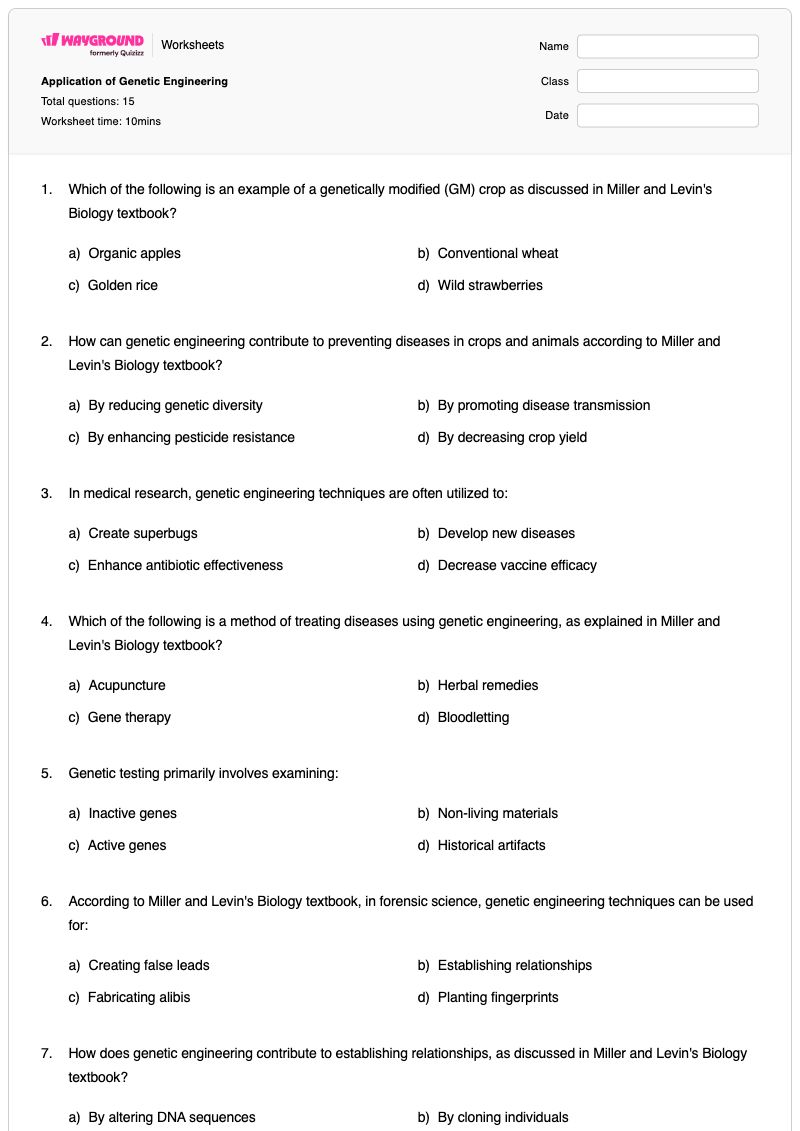
Application of Genetic Engineering

คำถามทั้งหมด: 15

ชื่อ
ระดับ
วันที่
1.

Which of the following is an example of a genetically modified (GM) crop as discussed in Miller and Levin's Biology textbook?

a)

Organic apples

b)

Conventional wheat

c)

Golden rice

d)

Wild strawberries

2.

How can genetic engineering contribute to preventing diseases in crops and animals according to Miller and Levin's Biology textbook?

a)

By reducing genetic diversity

b)

By promoting disease transmission

c)

By enhancing pesticide resistance

d)

By decreasing crop yield

3.

In medical research, genetic engineering techniques are often utilized to:

a)

Create superbugs

b)

Develop new diseases

c)

Enhance antibiotic effectiveness

d)

Decrease vaccine efficacy

4.

Which of the following is a method of treating diseases using genetic engineering, as explained in Miller and Levin's Biology textbook?

a)

Acupuncture

b)

Herbal remedies

c)

Gene therapy

d)

Bloodletting

5.

Genetic testing primarily involves examining:

a)

Inactive genes

b)

Non-living materials

c)

Active genes

d)

Historical artifacts

6.

According to Miller and Levin's Biology textbook, in forensic science, genetic engineering techniques can be used for:

a)

Creating false leads

b)

Establishing relationships

c)

Fabricating alibis

d)

Planting fingerprints

7.

How does genetic engineering contribute to establishing relationships, as discussed in Miller and Levin's Biology textbook?

a)

By altering DNA sequences

b)

By cloning individuals

c)

By analyzing DNA markers

d)

By conducting psychological tests

8.

Which of the following is a potential benefit of genetically modified (GM) crops according to Miller and Levin's Biology textbook?

a)

Decreased pesticide use

b)

Increased biodiversity

c)

Reduced crop yield

d)

Enhanced soil degradation

9.

Which of the following is NOT a potential application of genetic engineering in medical research, as outlined in Miller and Levin's Biology textbook?

a)

Developing personalized medicine

b)

Creating genetically modified humans

c)

Producing insulin for diabetes treatment

d)

Enhancing organ transplantation success rates

10.

What is the primary purpose of genetic testing in medical diagnosis according to Miller and Levin's Biology textbook?

a)

To predict future illnesses

b)

To analyze active genes

c)

To examine non-genetic factors

d)

To identify historical lineage

11.

How does genetic engineering contribute to agricultural sustainability according to Miller and Levin's Biology textbook?

a)

By promoting excessive pesticide use

b)

By reducing genetic diversity

c)

By increasing crop resilience to pests and diseases

d)

By accelerating soil erosion

12.

In forensic science, DNA fingerprinting is primarily used for:

a)

Identifying individuals

b)

Fabricating evidence

c)

Planting false leads

d)

Establishing alibis

13.

What role does genetic engineering play in combating genetic disorders according to Miller and Levin's Biology textbook?

4 เส้น
14.

Which of the following is NOT a potential ethical concern associated with genetic engineering according to Miller and Levin's Biology textbook?

a)

Environmental impact

b)

Genetic discrimination

c)

Loss of biodiversity

d)

Unintended consequences

15.

How does genetic engineering contribute to improving crop resilience according to Miller and Levin's Biology textbook?

a)

By decreasing pesticide resistance

b)

By reducing genetic diversity

c)

By enhancing disease resistance

d)

By promoting soil depletion

Waygroundแป้นคำตอบ

Application of Genetic Engineering

คำถามทั้งหมด: 15

1.
c)

Golden rice

2.
c)

By enhancing pesticide resistance

3.
c)

Enhance antibiotic effectiveness

4.
c)

Gene therapy

5.
c)

Active genes

6.
b)

Establishing relationships

7.
c)

By analyzing DNA markers

8.
a)

Decreased pesticide use

9.
d)

Enhancing organ transplantation success rates

10.
a)

To predict future illnesses

11.
c)

By increasing crop resilience to pests and diseases

12.
a)

Identifying individuals

13.
ไม่มี
14.
c)

Loss of biodiversity

15.
c)

By enhancing disease resistance

คำถามที่พบบ่อย

แบบฝึกหัดเรื่องการประยุกต์ใช้พันธุวิศวกรรมครอบคลุมหัวข้ออะไรบ้าง?

แบบฝึกหัดวิทยาศาสตร์สำหรับนักเรียนชั้น ม.3 นี้ ประกอบด้วยคำถามแบบเลือกตอบ 14 ข้อ และคำถามปลายเปิด 1 ข้อ เพื่อสำรวจการประยุกต์ใช้พันธุวิศวกรรมในโลกแห่งความเป็นจริง นักเรียนจะต้องระบุการใช้งานในพืชดัดแปลงพันธุกรรม การวิจัยทางการแพทย์และการบำบัดด้วยยีน การตรวจทางพันธุกรรม การวิเคราะห์ดีเอ็นเอทางนิติวิทยาศาสตร์ และการอภิปรายด้านจริยธรรม จากนั้นอธิบายว่าพันธุวิศวกรรมสามารถช่วยต่อสู้กับความผิดปกติทางพันธุกรรมได้อย่างไร

ฉันจะใช้แบบฝึกหัดนี้ในการสอนเรื่องการประยุกต์ใช้พันธุวิศวกรรมได้อย่างไร?

เริ่มแบบฝึกหัดโดยจัดกลุ่มการประยุกต์ใช้เป็นหมวดหมู่เกษตรกรรม การแพทย์ นิติวิทยาศาสตร์ และจริยธรรม จากนั้นให้นักเรียนอธิบายเหตุผลว่าทำไมแต่ละตัวอย่างจึงอยู่ในหมวดหมู่นั้นๆ ใช้ตัวเลือกที่ไม่ถูกต้องเพื่ออธิบายความแตกต่าง เช่น การบำบัดด้วยยีนกับการรักษาที่ไม่เกี่ยวข้อง และเครื่องหมายดีเอ็นเอกับการทดสอบทางจิตวิทยา ปิดท้ายด้วยคำถามปลายเปิดเพื่อให้นักเรียนเชื่อมโยงการประยุกต์ใช้กับความผิดปกติทางพันธุกรรมในคำอธิบายที่เป็นลายลักษณ์อักษร

ฉันควรระวังข้อผิดพลาดอะไรบ้างเมื่อนักเรียนทำแบบฝึกหัดด้านวิศวกรรมพันธุกรรมนี้?

นักเรียนอาจสับสนระหว่างการประยุกต์ใช้เฉพาะกับตัวเลือกที่ไม่เกี่ยวข้อง เช่น เลือกการรักษาทั่วไปแทนการบำบัดด้วยยีน หรือเลือกการทดสอบทางจิตวิทยาแทนการวิเคราะห์เครื่องหมายดีเอ็นเอ ให้ระวังข้อผิดพลาดในคำถามประเภท "ไม่ใช่" ซึ่งนักเรียนต้องระบุตัวเลือกที่ไม่ตรงกับการประยุกต์ใช้หรือข้อกังวลที่ระบุไว้ในตำราเรียน ในคำตอบแบบปลายเปิด ให้ตรวจสอบว่านักเรียนอธิบายบทบาทของวิศวกรรมพันธุกรรมในการต่อสู้กับความผิดปกติทางพันธุกรรม แทนที่จะเพียงแค่เอ่ยชื่อเทคนิคเท่านั้น

ฉันจะมอบหมายและให้คะแนนแบบฝึกหัดวิศวกรรมพันธุกรรมนี้อย่างไร?

แบบฝึกหัดนี้มีให้ดาวน์โหลดในรูปแบบไฟล์ PDF ที่สามารถพิมพ์ได้ และเป็นแบบทดสอบดิจิทัลบน Wayground โดยมีเฉลยคำตอบครบถ้วนสำหรับคำถามแบบเลือกตอบ 14 ข้อ และคำถามแบบตอบปลายเปิด การส่งงานแบบพิมพ์สามารถตรวจได้โดยการสแกนงานของนักเรียนด้วยแอป Wayground for Teachers นอกจากนี้ ตัวเลือกไฟล์ PDF ยังช่วยสนับสนุนโรงเรียนที่ต้องการลดเวลาการใช้หน้าจออีกด้วย

ฉันจะปรับแบบฝึกหัดวิศวกรรมพันธุกรรมนี้ให้เหมาะสมกับนักเรียนของฉันได้อย่างไร?

ใช้การตั้งค่าขั้นสูงของแบบฝึกหัดเพื่อปรับระยะห่างระหว่างตัวอักษรหรือเพิ่มขนาดตัวอักษร เพื่อให้ตัวเลือกแบบปรนัยและส่วนคำตอบแบบปลายเปิดอ่านง่ายขึ้น นอกจากนี้ คุณยังสามารถเปิดใช้งานแบบอักษรที่เหมาะสำหรับผู้ที่มีภาวะดิสเล็กเซีย หรือแปลแบบฝึกหัดเป็นภาษาอื่นได้ การปรับแต่งเหล่านี้จะยังคงเน้นที่การระบุการประยุกต์ใช้ด้านวิศวกรรมพันธุกรรมและอธิบายบทบาทของวิศวกรรมพันธุกรรมในการต่อสู้กับความผิดปกติทางพันธุกรรม

ฉันจะหาแบบฝึกหัดแบบนี้เพิ่มเติมได้ที่ไหนบน Wayground?

Wayground นำเสนอชุดแบบฝึกหัดและโจทย์ฝึกหัดฟรีที่ครอบคลุมหลากหลายวิชา พร้อมไฟล์ PDF และเฉลยคำตอบ เพื่อช่วยให้นักเรียนเชี่ยวชาญทักษะและแนวคิดที่สำคัญ ดูแหล่งข้อมูลเพิ่มเติมได้ที่ https://wayground.com/en-us/worksheets