
Wayground
Cell Transport - Printable ศาสตร์ Worksheets 12th - 12th ระดับชั้น - Wayground

Cell Transport

Laura Weston

By Laura Weston

13 คำถาม

12th - 12th ระดับชั้น

ศาสตร์

อัปเดตแล้ว พ.ค. 2568

แบบฝึกหัดชีววิทยาสำหรับนักเรียนชั้นมัธยมศึกษาปีที่ 6 เรื่องการขนส่งสารผ่านเยื่อหุ้มเซลล์ ประกอบด้วยคำถามแบบเลือกตอบ 13 ข้อ ที่ให้นักเรียนวิเคราะห์ว่าสารต่างๆ เคลื่อนที่ผ่านเยื่อหุ้มเซลล์ได้อย่างไร นักเรียนจะต้องตีความแผนภาพและสถานการณ์ทดลองที่เกี่ยวข้องกับการแพร่ การออสโมซิส การขนส่งแบบแอคทีฟ ความแตกต่างของความเข้มข้น ATP การซึมผ่านของเยื่อหุ้มเซลล์ ขนาดโมเลกุล และการเปลี่ยนแปลงในเซลล์พืชและเซลล์เม็ดเลือดแดง คำถามเหล่านี้ต้องการให้นักเรียนเชื่อมโยงความแตกต่างของความเข้มข้นกับการตอบสนองของเซลล์ที่คาดการณ์ไว้ ระบุถึงกระบวนการขนส่งจากแบบจำลองภาพ และแยกแยะสารที่สามารถผ่านเยื่อหุ้มเซลล์ได้โดยไม่ต้องย่อย แบบฝึกหัดที่พิมพ์ได้ฟรีนี้มีประโยชน์สำหรับการทบทวนเรื่องการขนส่งสารผ่านเยื่อหุ้มเซลล์ ตรวจสอบความเข้าใจหลังการเรียนการสอน หรือเตรียมความพร้อมนักเรียนสำหรับการประเมินผลทางชีววิทยา แบบฝึกหัดนี้มีเฉลยคำตอบครบถ้วนเพื่อการตรวจสอบและตรวจให้คะแนนอย่างมีประสิทธิภาพ

การตั้งค่าแผ่นงาน

ขนาดตัวอักษร

S
M
L
XL
Waygroundแผ่นงาน

Cell Transport

คำถามทั้งหมด: 13

ชื่อ
ระดับ
วันที่
1.
A biologist observed a plant cell in a drop of water as shown in diagram A . The biologist added a 10% salt solution to the…

A biologist observed a plant cell in a drop of water as shown in diagram A. The biologist added a 10% salt solution to the slide and observed the cell as shown in diagram B.

The change in appearance of the cell resulted from

a)

more salt moving out of the cell than into the cell

b)

more salt moving into the cell than out of the cell

c)

more water moving into the cell than out of the cell

d)

more water moving out of the cell than into the cell

2.
The accompanying diagram represents a cell in water. Formulas of molecules that can move freely across the cell membrane are…

The accompanying diagram represents a cell in water. Formulas of molecules that can move freely across the cell membrane are shown. Some molecules are located inside the cell and others are in the water outside the cell.

Based on the distribution of these molecules, what would most likely happen after a period of time?

a)

The concentration of O₂ will increase inside the cell.

b)

The concentration of O₂ will remain the same inside the cell.

c)

The concentration of CO2 will remain the same inside the cell.

d)

The concentration of CO2 will decrease outside the cell.

3.

The energy an organism requires to transport materials and eliminate wastes is obtained directly from

a)

starch

b)

hormones

c)

02

d)

CO2

4.
The accompanying diagram represents movement of a large molecule across a membrane. Which process is best represented in…

The accompanying diagram represents movement of a large molecule across a membrane.

Which process is best represented in this diagram?

a)

active transport

b)

diffusion

c)

protein building

d)

gene manipulation

5.
An investigation was set up to study the movement of water through a membrane. The results are shown in the diagram below.…

An investigation was set up to study the movement of water through a membrane. The results are shown in the diagram below.

Based on these results, which statement correctly predicts what will happen to red blood cells when they are placed in a beaker containing a water solution in which the salt concentration is much higher than the salt concentration in the red blood cells?

a)

The red blood cells will absorb water and increase in size.

b)

The red blood cells will lose water and decrease in size.

c)

The red blood cells will first absorb water, then lose water and maintain their normal size.

d)

The red blood cells will first lose water, then absorb water, and finally double in size.

6.
A red onion cell has undergone a change, as represented in the diagram below. This change is most likely due to the cell…

A red onion cell has undergone a change, as represented in the diagram below.

This change is most likely due to the cell being placed in

a)

distilled water

b)

salt water

c)

light

d)

darkness

7.
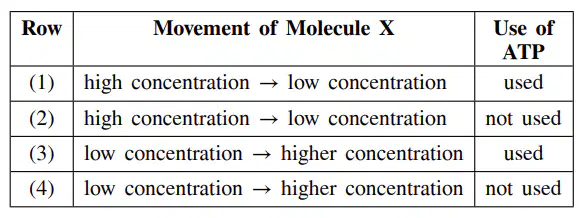
Molecule X moves across a cell membrane by diffusion. Which row in the chart below best indicates the relationship between…

Molecule X moves across a cell membrane by diffusion. Which row in the chart below best indicates the relationship between the relative concentrations of molecule X and the use of ATP for diffusion?

a)

Row (1)

b)

Row (2)

c)

Row (3)

d)

Row (4)

8.
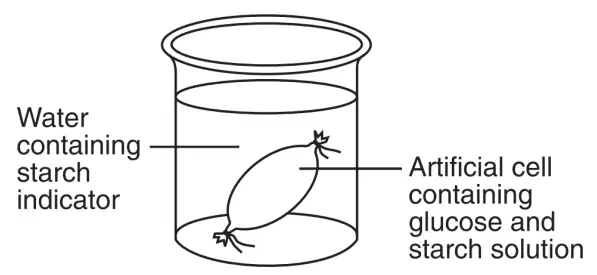
Base your answers to the following questions on the laboratory setup illustrated below and on your knowledge of biology.…

Base your answers to the following questions on the laboratory setup illustrated below and on your knowledge of biology.

This laboratory setup would most likely be used to demonstrate

a)

carbohydrate synthesis

b)

active transport

c)

diffusion

d)

dehydration

9.
Base your answer to the following questions on the information below and on your knowledge of biology. A student prepared…

Base your answer to the following questions on the information below and on your knowledge of biology.

A student prepared four different red blood cell suspensions, as shown in the chart below.

Which suspension would contain red blood cells that would appear wrinkled and reduced in volume?

a)

A

b)

B

c)

C

d)

D

10.

A substance is most likely to diffuse into a cell when

a)

it is a large organic food molecule such as protein or starch

b)

it is enclosed in an organelle such as a vacuole

c)

the concentration of the substance is greater outside the cell than inside

d)

the pH of the substance is greater than the pH of the cell
11.
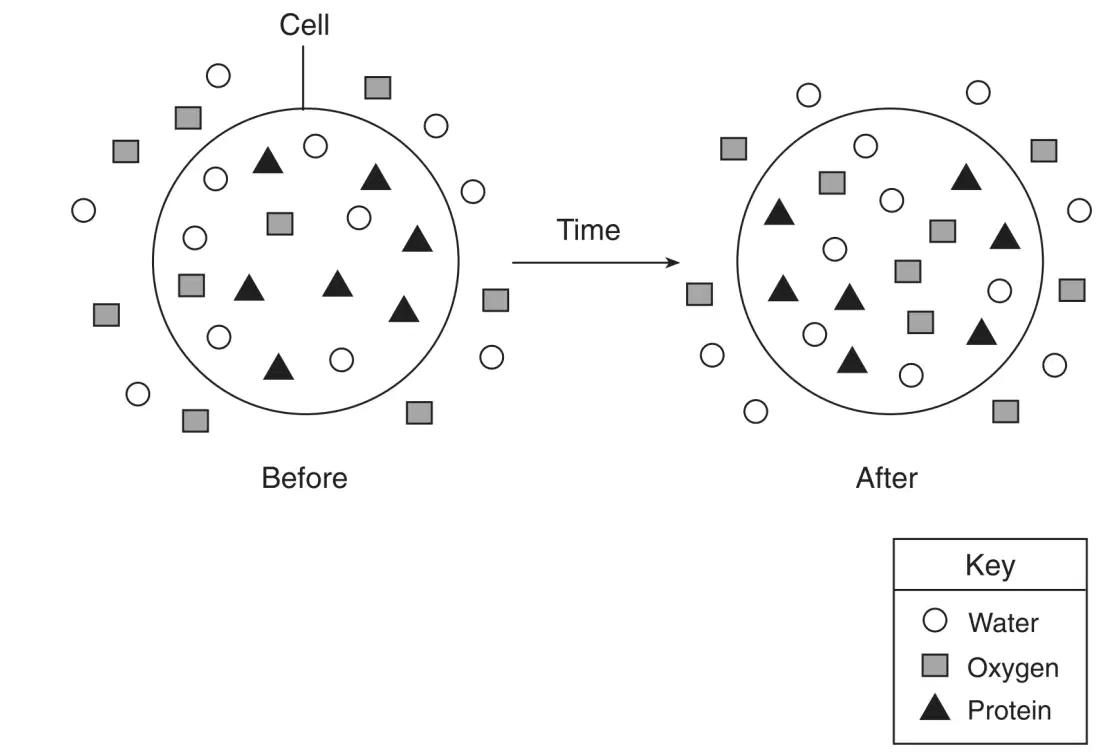
The diagram below represents the distribution of some molecules inside and outside. Which factor prevented the protein…

The diagram below represents the distribution of some molecules inside and outside.

Which factor prevented the protein molecules from moving out of the cell?

a)

temperature

b)

pH

c)

molecule size

d)

molecule concentration

12.

Which substance can enter a cell by diffusion without having to be digested?

a)

water

b)

protein

c)

starch

d)

fat

13.
Red onion cells undergo the change represented in the diagram below. This change is most likely caused by the cell being…

Red onion cells undergo the change represented in the diagram below.

This change is most likely caused by the cell being transferred from...

a)

distilled water to starch indicator

b)

distilled water to salt water

c)

salt water to tap water

d)

salt water to distilled water

Waygroundแป้นคำตอบ

Cell Transport

คำถามทั้งหมด: 13

1.
a)

more salt moving out of the cell than into the cell

2.
b)

The concentration of O₂ will remain the same inside the cell.

3.
d)

CO2

4.
a)

active transport

5.
b)

The red blood cells will lose water and decrease in size.

6.
a)

distilled water

7.
c)

Row (3)

8.
c)

diffusion

9.
a)

A

10.
c)

the concentration of the substance is greater outside the cell than inside

11.
c)

molecule size

12.
a)

water

13.
b)

distilled water to salt water

คำถามที่พบบ่อย

แบบฝึกหัดการลำเลียงสารภายในเซลล์นี้ช่วยให้นักเรียนชั้นมัธยมศึกษาปีที่ 6 ฝึกฝนอะไรบ้าง?

แบบฝึกหัดนี้ช่วยให้นักเรียนตีความแผนภาพและสถานการณ์แบบเลือกตอบ 13 ข้อที่เกี่ยวข้องกับการแพร่ การออสโมซิส การขนส่งแบบแอคทีฟ ความแตกต่างของความเข้มข้น ATP การซึมผ่านของเยื่อหุ้มเซลล์ และการเปลี่ยนแปลงขนาดเซลล์ โดยการเลือกและให้เหตุผลเกี่ยวกับการคาดการณ์เกี่ยวกับเซลล์พืช เซลล์เม็ดเลือดแดง โมเลกุล และเยื่อหุ้มเซลล์ นักเรียนจะได้ฝึกฝนการระบุกระบวนการขนส่งและเชื่อมโยงการเคลื่อนที่ของเยื่อหุ้มเซลล์กับความเข้มข้นและขนาดของโมเลกุล

ฉันจะใช้แบบฝึกหัดนี้ในการสอนเรื่องการลำเลียงสารภายในเซลล์ได้อย่างไร?

เริ่มแบบฝึกหัดโดยทบทวนเรื่องความแตกต่างของความเข้มข้น เยื่อเลือกผ่าน ออสโมซิส การแพร่ และการขนส่งแบบแอคทีฟ จากนั้นสาธิตวิธีการอ่านแผนภาพเยื่อหนึ่งภาพก่อนที่นักเรียนจะทำงานด้วยตนเอง ขอให้นักเรียนอธิบายหลักฐานที่อยู่เบื้องหลังการเลือกของพวกเขา เช่น ทำไมเซลล์เม็ดเลือดแดงจึงเปลี่ยนปริมาตรในสารละลายเกลือเข้มข้น หรือทำไมโมเลกุลขนาดใหญ่จึงต้องการกระบวนการขนส่งที่แตกต่างกัน

ฉันควรระวังข้อผิดพลาดอะไรบ้างเมื่อนักเรียนทำแบบฝึกหัดการลำเลียงสารในเซลล์นี้?

ระวังนักเรียนที่สลับทิศทางการเคลื่อนที่ของน้ำและสารละลาย มองว่าการแพร่เป็นกระบวนการที่ต้องใช้พลังงาน หรือเลือกคำตอบจากชื่อของสารแทนที่จะพิจารณาจากความเข้มข้นและขนาดของสาร นอกจากนี้ นักเรียนอาจสับสนระหว่างการขนส่งแบบแอคทีฟกับการแพร่เมื่อตีความแผนภาพโมเลกุลขนาดใหญ่ หรือมองข้ามไปว่าสถานการณ์เกี่ยวกับเซลล์เม็ดเลือดแดงและหัวหอมแดงนั้นต้องมีการคาดการณ์เกี่ยวกับการเปลี่ยนแปลงปริมาตรหรือลักษณะของเซลล์

ฉันจะมอบหมายและตรวจงานการลำเลียงสารในเซลล์นี้อย่างไร?

คุณสามารถมอบหมายงานเป็นไฟล์ PDF ที่พิมพ์ได้ หรือเป็นแบบทดสอบดิจิทัลบน Wayground โดยทั้งสองรูปแบบครอบคลุมคำถามเกี่ยวกับการเคลื่อนที่ของเซลล์ทั้ง 13 ข้อในแบบฝึกหัด มีเฉลยคำตอบครบถ้วน และสามารถตรวจงานที่ส่งในรูปแบบไฟล์พิมพ์ได้โดยการสแกนงานของนักเรียนด้วยแอป Wayground for Teachers

ฉันจะปรับแบบฝึกหัดการลำเลียงสารในเซลล์นี้ให้เหมาะสมกับนักเรียนของฉันได้อย่างไร?

ใช้การตั้งค่าขั้นสูงของแบบฝึกหัดเพื่อปรับระยะห่างระหว่างตัวอักษรและขนาดตัวอักษร เพื่อให้ข้อสอบแบบปรนัยที่มีภาพประกอบอ่านง่ายขึ้น นอกจากนี้ คุณยังสามารถเลือกใช้แบบอักษรที่เหมาะสำหรับผู้ที่มีภาวะดิสเล็กเซีย หรือแปลแบบฝึกหัดเป็นภาษาอื่นได้ เมื่อการสนับสนุนดังกล่าวเหมาะสมกับผู้เรียนของคุณ

ฉันจะหาแบบฝึกหัดแบบนี้เพิ่มเติมได้ที่ไหนบน Wayground?

Wayground มีแบบฝึกหัดและโจทย์ฝึกหัดมากมายให้ดาวน์โหลดฟรีในหลากหลายวิชา พร้อมไฟล์ PDF และเฉลยคำตอบ เพื่อช่วยเสริมสร้างทักษะและความเข้าใจในเนื้อหาสำคัญ ดูแหล่งข้อมูลเพิ่มเติมได้ที่ https://wayground.com/en-us/worksheets