

Wayground
Daycare and Incentives Check for Understanding - Printable Social Studies Worksheets ระดับ 9 - Wayground

Daycare and Incentives Check for Understanding

11 คำถาม

9th - 9th ระดับชั้น

Social Studies

แบบฝึกหัดวิชาสังคมศึกษา ชั้น ม.3 นี้ ตรวจสอบความสามารถของนักเรียนในการจำแนกการตอบสนองต่อปัญหาการมาสายที่ศูนย์รับเลี้ยงเด็กในสถานการณ์จริง ว่าเป็นแรงจูงใจทางสังคม เศรษฐกิจ หรือศีลธรรม แบบฝึกหัดประกอบด้วย 11 ข้อ: 8 ข้อเป็นแบบเลือกตอบ และ 3 ข้อเป็นแบบเลือกคำตอบ นักเรียนจะวิเคราะห์สถานการณ์ต่างๆ เช่น งานเลี้ยงชมเชยประจำเดือน ค่าปรับที่เพิ่มขึ้นและเปลี่ยนแปลงได้ การเปลี่ยนแปลงนโยบาย ส่วนลด ระบบการประท้วง การสื่อสารโดยตรง รางวัลประจำปี และการบริการชุมชน คำถามสุดท้ายถามนักเรียนให้ประเมินวิธีการต่างๆ ที่เสนอเพื่อเพิ่มอัต attendance ของนักเรียนมัธยมปลาย และระบุว่าไม่มีวิธีการใดในรายการเป็นคำตอบที่ดีที่สุด แบบฝึกหัดที่พิมพ์ได้ฟรีนี้ ออกแบบมาสำหรับใช้ในการสอนวิชาสังคมศึกษาในระดับมัธยมต้นและมัธยมปลาย ช่วยให้นักเรียนแยกแยะได้ว่าแรงจูงใจมีอิทธิพลต่อพฤติกรรมอย่างไร และรู้จักเมื่อใดที่การตอบสนองนั้นรวมเอาแรงจูงใจมากกว่าหนึ่งประเภทเข้าด้วยกัน คำถามแบบเลือกคำตอบต้องการให้นักเรียนระบุการจำแนกประเภทที่ดีที่สุดสองแบบ ซึ่งส่งเสริมการวิเคราะห์อย่างรอบคอบมากกว่าการจับคู่คำหลักแบบง่ายๆ แบบฝึกหัดนี้ใช้เป็นเครื่องมือตรวจสอบความเข้าใจ การฝึกฝนด้วยตนเอง หรือการติดตามผลจากการอภิปรายในชั้นเรียนเกี่ยวกับอัต attendance และแรงจูงใจด้านพฤติกรรม และมีเฉลยคำตอบเพื่อการทบทวนอย่างมีประสิทธิภาพ

การตั้งค่าแผ่นงาน

ขนาดตัวอักษร

S
M
L
XL
แผ่นงาน

Daycare and Incentives Check for Understanding

คำถามทั้งหมด: 11

ชื่อ
ระดับ
วันที่
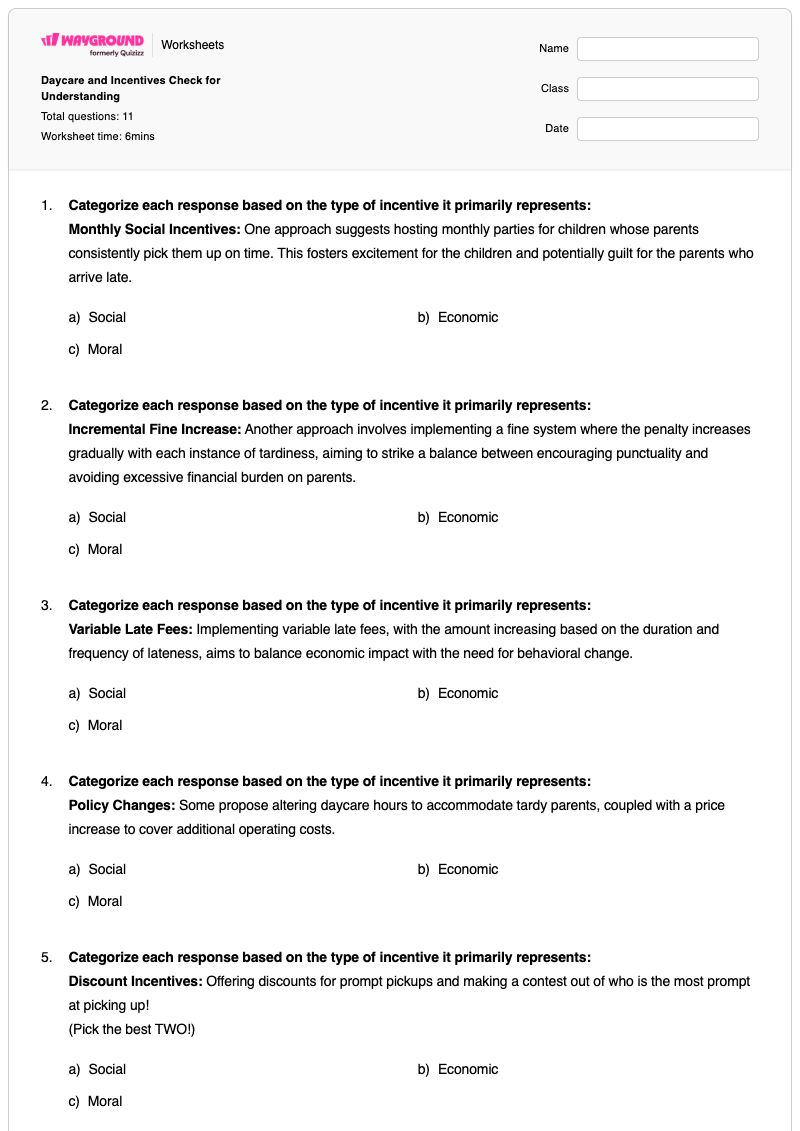
1.

Categorize each response based on the type of incentive it primarily represents:
Monthly Social Incentives: One approach suggests hosting monthly parties for children whose parents consistently pick them up on time. This fosters excitement for the children and potentially guilt for the parents who arrive late.

a)

Social

b)

Economic

c)

Moral

2.

Categorize each response based on the type of incentive it primarily represents:
Incremental Fine Increase: Another approach involves implementing a fine system where the penalty increases gradually with each instance of tardiness, aiming to strike a balance between encouraging punctuality and avoiding excessive financial burden on parents.

a)

Social

b)

Economic

c)

Moral

3.

Categorize each response based on the type of incentive it primarily represents:
Variable Late Fees: Implementing variable late fees, with the amount increasing based on the duration and frequency of lateness, aims to balance economic impact with the need for behavioral change.

a)

Social

b)

Economic

c)

Moral

4.

Categorize each response based on the type of incentive it primarily represents:
Policy Changes: Some propose altering daycare hours to accommodate tardy parents, coupled with a price increase to cover additional operating costs.

a)

Social

b)

Economic

c)

Moral

5.

Categorize each response based on the type of incentive it primarily represents:
Discount Incentives: Offering discounts for prompt pickups and making a contest out of who is the most prompt at picking up!

(Pick the best TWO!)

a)

Social

b)

Economic

c)

Moral

6.

Categorize each response based on the type of incentive it primarily represents:
Strike System with Fines: Introducing a strike system, where repeated tardiness results in fines or exclusion from the daycare

(Pick the best TWO!)

a)

Social

b)

Economic

c)

Moral

7.

Categorize each response based on the type of incentive it primarily represents:
Direct Communication: Using direct communication methods such as letters, emails, and personal conversations to remind parents of their responsibilities and the impact of their actions on daycare staff and other parents.

(Pick the best TWO!)

a)

Social

b)

Economic

c)

Moral

8.

Categorize each response based on the type of incentive it primarily represents:
Annual Recognition Awards: Offering annual awards to parents who consistently pick up their children on time, aiming to foster a sense of pride and community recognition.

a)

Social

b)

Economic

c)

Moral

9.

Categorize each response based on the type of incentive it primarily represents:
Discounted Fees for Punctuality: Providing a discount on daycare fees for parents who maintain a record of punctual pickups, encouraging timely behavior through financial savings.

a)

Social

b)

Economic

c)

Moral

10.

Categorize each response based on the type of incentive it primarily represents:
Community Service Requirement: Requiring parents who are frequently late to participate in community service activities, aiming to instill a sense of responsibility and moral obligation.

a)

Social

b)

Economic

c)

Moral

11.

Based on yesterdays question from class (There was a study done with 10,000 high school students, from 14 different school districts in California. They wanted to study what happens when you give an award for good attendance in high school.) What is the best answer to the question of how to increase attendance? (What of these will really work?)

a)

Detention for absences

b)

A perfect attendance award

c)

Homework for absences

d)

None of the above

แป้นคำตอบ

Daycare and Incentives Check for Understanding

คำถามทั้งหมด: 11

1.
a)

Social

2.
b)

Economic

3.
b)

Economic

4.
b)

Economic

5.
a)

Social

, b)

Economic

6.
a)

Social

, b)

Economic

7.
a)

Social

, c)

Moral

8.
a)

Social

9.
b)

Economic

10.
c)

Moral

11.
d)

None of the above

คำถามที่พบบ่อย

แบบฝึกหัดตรวจสอบความเข้าใจเกี่ยวกับการดูแลเด็กและการให้สิ่งจูงใจครอบคลุมหัวข้ออะไรบ้าง?

แบบฝึกหัดวิชาสังคมศึกษา ชั้น ม.3 นี้ ให้นักเรียนจำแนกการตอบสนองต่อการมาสายของศูนย์รับเลี้ยงเด็กว่าเป็นแรงจูงใจทางสังคม เศรษฐกิจ หรือศีลธรรม แบบฝึกหัดนี้มีคำถามแบบเลือกตอบ 8 ข้อ และคำถามแบบเลือกคำตอบ 3 ข้อ ซึ่งจะกระตุ้นให้นักเรียนวิเคราะห์ตัวอย่างต่างๆ เช่น รางวัลชมเชย ค่าปรับกรณีมาสาย ส่วนลด การสื่อสารโดยตรง และการบริการชุมชน รวมถึงกรณีที่ใช้แรงจูงใจสองประเภทพร้อมกัน

ฉันจะใช้แบบฝึกหัดนี้ในการสอนเรื่องแรงจูงใจทางสังคม เศรษฐกิจ และศีลธรรมได้อย่างไร?

แนะนำประเภทของสิ่งจูงใจทั้งสามประเภทโดยใช้ตัวอย่างจากศูนย์รับเลี้ยงเด็ก จากนั้นให้นักเรียนอธิบายว่าส่วนใดของแต่ละการตอบสนองมีอิทธิพลต่อพฤติกรรม ได้แก่ การได้รับการยอมรับหรือสถานะในชุมชน ค่าใช้จ่ายทางการเงินหรือการประหยัด หรือความรับผิดชอบและภาระผูกพัน ก่อนที่นักเรียนจะทำแบบทดสอบแบบเลือกตอบสามข้อ ให้พวกเขาพิจารณาผลกระทบที่แตกต่างกันสองประการในตัวอย่าง เช่น ส่วนลดสำหรับการมารับตรงเวลาและการสื่อสารโดยตรงเกี่ยวกับผลกระทบของการมาสาย ใช้คำถามสุดท้ายเกี่ยวกับการเข้าเรียนเพื่อเชื่อมโยงการจำแนกประเภทของสิ่งจูงใจกับการอภิปรายในวงกว้างว่ารางวัลหรือการลงโทษที่เสนอไปนั้นเปลี่ยนแปลงพฤติกรรมได้จริงหรือไม่

ฉันควรระวังข้อผิดพลาดอะไรบ้างเมื่อนักเรียนทำแบบฝึกหัดเรื่องแรงจูงใจนี้?

นักเรียนอาจจัดประเภทผลกระทบทุกอย่างว่าเป็นผลทางเศรษฐกิจเพียงเพราะมันเปลี่ยนแปลงพฤติกรรมของผู้ปกครอง โดยมองข้ามการได้รับการยอมรับทางสังคมในงานเลี้ยงหรือรางวัล และความรับผิดชอบทางศีลธรรมในตัวอย่างการบริการชุมชนและการสื่อสาร นอกจากนี้ พวกเขาอาจเลือกคำตอบเพียงข้อเดียวในข้อที่เลือกได้หลายข้อ หรือเลือกสามข้อแทนที่จะเลือกสองข้อที่ดีที่สุด สำหรับข้อสุดท้ายเกี่ยวกับการเข้าเรียน ให้สังเกตนักเรียนที่เลือกรางวัลการเข้าเรียนครบโดยไม่พิจารณาว่าคำตอบที่ถูกต้องในแบบฝึกหัดคือ “ไม่มีข้อใดถูกต้อง”

ฉันจะมอบหมายและให้คะแนนแบบฝึกหัดตรวจสอบความเข้าใจเรื่องศูนย์รับเลี้ยงเด็กและสิ่งจูงใจได้อย่างไร?

คุณสามารถมอบหมายแบบฝึกหัดนี้เป็นไฟล์ PDF ที่พิมพ์ได้ หรือเป็นแบบทดสอบดิจิทัลบน Wayground ก็ได้ แบบฝึกหัดนี้มีเฉลยคำตอบครบถ้วนสำหรับหัวข้อแรงจูงใจทางสังคม เศรษฐกิจ และศีลธรรม รวมถึงหัวข้อการเข้าเรียน สำหรับการส่งงานแบบพิมพ์ได้ ให้สแกนงานของนักเรียนด้วยแอป Wayground for Teachers เพื่อตรวจคำตอบได้อย่างมีประสิทธิภาพ

ฉันจะปรับแบบฝึกหัดเรื่องแรงจูงใจนี้ให้เหมาะสมกับนักเรียนของฉันได้อย่างไร?

ในส่วนการตั้งค่าขั้นสูงของแบบฝึกหัด ให้ปรับระยะห่างระหว่างตัวอักษรหรือขนาดตัวอักษรเพื่อให้คำอธิบายสถานการณ์และตัวเลือกด้านสังคม/เศรษฐกิจ/ศีลธรรมอ่านง่ายขึ้น นอกจากนี้ คุณยังสามารถเปิดใช้งานแบบอักษรที่เหมาะสำหรับผู้ที่มีภาวะดิสเล็กเซีย หรือแปลสถานการณ์และคำถามเกี่ยวกับแรงจูงใจในการดูแลเด็กเป็นภาษาอื่นได้ตามความเหมาะสม

ฉันจะหาแบบฝึกหัดแบบนี้เพิ่มเติมได้ที่ไหนบน Wayground?

Wayground มีแบบฝึกหัดและโจทย์ฝึกหัดมากมายให้ดาวน์โหลดฟรีในหลากหลายวิชา พร้อมไฟล์ PDF และเฉลยคำตอบ เพื่อช่วยเสริมสร้างทักษะและความเข้าใจในเนื้อหาสำคัญ ดูแหล่งข้อมูลเพิ่มเติมได้ที่ https://wayground.com/en-us/worksheets