
Wayground
Layers of Earth - Printable ศาสตร์ Worksheets 7th - 7th ระดับชั้น - Wayground

Layers of Earth

C Cardwell

By C Cardwell

20 คำถาม

7th - 7th ระดับชั้น

ศาสตร์

311 เล่น

อัปเดตแล้ว ก.ย. 2569

แบบฝึกหัดวิทยาศาสตร์สำหรับนักเรียนชั้น ม.1 เรื่อง ชั้นต่างๆ ของโลก ประกอบด้วยคำถามแบบเลือกตอบ 20 ข้อ เพื่อช่วยเสริมสร้างความเข้าใจของนักเรียนเกี่ยวกับชั้นต่างๆ ทางกายภาพและองค์ประกอบของโลก นักเรียนจะได้ระบุชั้นธรณีภาค เปลือกโลก เนื้อโลก ชั้นแอสเทโนสเฟียร์ ชั้นเมโซสเฟียร์ แกนโลกชั้นนอก และแกนโลกชั้นใน เปรียบเทียบอุณหภูมิ ความดัน ความหนาแน่น องค์ประกอบ และสถานะทางกายภาพของแต่ละชั้น และเชื่อมโยงแกนโลกชั้นนอกกับสนามแม่เหล็กโลก นอกจากนี้ยังมีคำถามเกี่ยวกับการตีความภาพแสดงชั้นต่างๆ ที่มีป้ายกำกับหรือรหัสสีด้วย แบบฝึกหัดที่พิมพ์ได้ฟรีนี้ช่วยให้นักเรียนแยกแยะคำศัพท์ทางวิทยาศาสตร์เกี่ยวกับโลกที่มักสับสนกัน เช่น เปลือกโลกกับธรณีภาค และแกนโลกชั้นในกับแกนโลกชั้นนอก เหมาะสำหรับการแนะนำโครงสร้างของโลก เสริมบทเรียนที่เรียนจบไปแล้ว หรือตรวจสอบว่านักเรียนสามารถนำลักษณะของชั้นต่างๆ ไปใช้กับคำถามแบบเลือกตอบได้หรือไม่ มีเฉลยคำตอบครบถ้วนเพื่อการตรวจสอบและตรวจให้คะแนนอย่างมีประสิทธิภาพ

การตั้งค่าแผ่นงาน

ขนาดตัวอักษร

S
M
L
XL
Waygroundแผ่นงาน

Layers of Earth

คำถามทั้งหมด: 20

ชื่อ
ระดับ
วันที่
1.

What is the outermost physical layer of earth?

a)

crust

b)

outer core

c)

mantle

d)

lithosphere

2.
Which layer is made of solid iron & nickel?
a)
inner core
b)
outer core
c)
mantle
d)
crust
3.
Which layer has the coolest temperatures?
a)
outer core
b)
inner core
c)
mantle
d)
crust
4.
Which layer has the hottest temperatures?
a)
inner core
b)
outer core
c)
mantle
d)
crust
5.

Which compositional layer is the least dense?

a)

inner core

b)

lithosphere

c)

mantle

d)

crust

6.
Which layer causes the earth's magnetic field?
a)
inner core
b)
outer core
c)
mantle
d)
crust
7.
Out of all the layers, which one would be the easiest for us to drill through?
a)
inner core
b)
outer core
c)
mantle
d)
crust
8.
Which statement is correct?
a)
As you move up through the layers, the pressure increases.
b)
As you move down through the layers pressure increases.
c)
As you move down through the layers, pressure decreases.
d)
As you move up down through the layers, pressure remains the same.
9.
What happens to temperature as you move down through the layers?
a)
it remains the same
b)
it increases then decreases
c)
it increases
d)
it decreases
10.
Which physical layer is represented by the yellow layer?

Which physical layer is represented by the yellow layer?

a)

lithosphere

b)

mesosphere

c)

core

d)

inner core

11.
The core is mostly made up mostly of which elements?
a)
Oxygen and Silicon
b)
Silicon and Magnesium
c)
Nickel and Iron
d)
Iron and Magnesium
12.
This is the plastic layer of the mantle on which pieces of the lithosphere move.
a)
Lithosphere
b)
Asthenosphere
c)
Mesosphere
d)
Crust
13.
A layer made of rock that is softer and can flow
a)
crust
b)
lithosphere
c)
asthenosphere
d)
mesosphere
14.
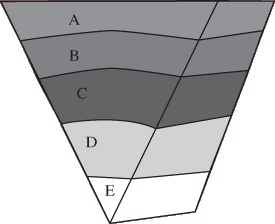
What does layer D show?

What does layer D show?

a)

upper mantle

b)

lower mantle

c)

outer core

d)

inner core

15.
Which of the following is a major difference between Earth's inner core and outer core?
a)
The inner core is liquid, and the outer core is solid
b)
The inner core is solid, and the outer core is liquid
c)
The inner core is gas, and the outer core is solid
d)
The inner core is solid, and the outer core is gas
16.
Earth can be divided into 5 layers: the lithosphere, the asthenosphere, the mesosphere, the outer core, and the inner core. Which properties are used to make these divisions?
a)
Compositional properties
b)
Physical properties
c)
Chemical properties
d)
Elemental properties
17.
This is the plastic layer of the mantle on which pieces of the lithosphere move.
a)
Lithosphere
b)
Asthenosphere
c)
Mesosphere
d)
Crust
18.

Which element make up the largest amount of the Earth's crust

a)

nitrogen

b)

carbon

c)

silicon

d)

plutonium

19.

List the layers from innermost to outermost.

a)

crust, inner core, lower mantle, upper mantle

b)

crust, mantle, outer core, inner core

c)

inner core, outer core lower mantle, upper mantle

d)

inner core, upper mantle, lower mantle, crust

20.

What are Earth's Chemical Compositional Layers?

a)

Lithosphere, Astenosphere, Mantle, Crust

b)

Lithosphere, Asthenosphere, Mesosphere, Inner Core, Outer Core

c)

Crust, Mantle, Core

d)

Crust, Lithosphere, Astenosphere, Mantle

Waygroundแป้นคำตอบ

Layers of Earth

คำถามทั้งหมด: 20

1.
d)

lithosphere

2.
a) inner core
3.
d) crust
4.
a) inner core
5.
d)

crust

6.
b) outer core
7.
d) crust
8.
b) As you move down through the layers pressure increases.
9.
c) it increases
10.
d)

inner core

11.
c) Nickel and Iron
12.
b) Asthenosphere
13.
c) asthenosphere
14.
c)

outer core

15.
b) The inner core is solid, and the outer core is liquid
16.
b) Physical properties
17.
b) Asthenosphere
18.
c)

silicon

19.
c)

inner core, outer core lower mantle, upper mantle

20.
c)

Crust, Mantle, Core

คำถามที่พบบ่อย

แบบฝึกหัดเรื่องชั้นต่างๆ ของโลกครอบคลุมหัวข้ออะไรบ้าง?

แบบฝึกหัดวิทยาศาสตร์สำหรับนักเรียนชั้น ม.1 นี้ ประกอบด้วยคำถามแบบเลือกตอบ 20 ข้อ เพื่อประเมินว่านักเรียนสามารถระบุชั้นต่างๆ ของโลกทั้งทางกายภาพและองค์ประกอบได้อย่างไร นักเรียนจะต้องเปรียบเทียบธรณีภาค เปลือกโลก เนื้อโลก ชั้นแอสเทโนสเฟียร์ ชั้นเมโซสเฟียร์ แกนโลกชั้นนอก และแกนโลกชั้นใน โดยพิจารณาจากอุณหภูมิ ความดัน ความหนาแน่น องค์ประกอบ สถานะทางกายภาพ และบทบาทในการสร้างสนามแม่เหล็กโลก

ฉันจะใช้แบบฝึกหัดนี้ในการสอนเรื่องชั้นต่างๆ ของโลกได้อย่างไร?

นำเสนอภาพตัดขวางของโลกที่มีป้ายกำกับ และให้นักเรียนแยกแยะชั้นทางกายภาพ เช่น ธรณีภาคและธรณีภาคเนื้อโลก ออกจากชั้นทางองค์ประกอบ เช่น เปลือกโลก เนื้อโลก และแก่นโลก จากนั้นใช้ข้อสอบแบบเลือกตอบเพื่อกระตุ้นคำอธิบาย เช่น ถามนักเรียนว่าทำไมความดันและอุณหภูมิจึงเพิ่มขึ้นตามความลึก ทำไมแก่นโลกชั้นในจึงเป็นของแข็งในขณะที่แก่นโลกชั้นนอกเป็นของเหลว และธรณีภาคเนื้อโลกช่วยให้ชิ้นส่วนของธรณีภาคเคลื่อนที่ได้อย่างไร

ฉันควรสังเกตข้อผิดพลาดอะไรบ้างเมื่อนักเรียนทำแบบฝึกหัดนี้เสร็จ?

นักเรียนอาจสับสนระหว่างเปลือกโลกกับธรณีภาค แม้ว่าแบบฝึกหัดนี้จะระบุว่าเป็นชั้นที่แตกต่างกันก็ตาม นอกจากนี้ พวกเขาอาจสลับสถานะทางกายภาพของแก่นโลกชั้นในและชั้นนอก ระบุชั้นแอสเทโนสเฟียร์ว่าเป็นชั้นแข็งแทนที่จะเป็นชั้นแมนเทิลที่อ่อนนุ่มและไหลได้ หรือเลือกเปลือกโลกเมื่อคำถามถามถึงชั้นที่มีความหนาแน่นน้อยที่สุด โปรดตรวจสอบคำถามเกี่ยวกับแนวโน้มของอุณหภูมิและความดันอย่างละเอียด เนื่องจากทั้งสองค่าจะเพิ่มขึ้นเมื่อนักเรียนเคลื่อนที่ลึกลงไปในโลก

ฉันจะมอบหมายและตรวจงานเรื่องชั้นต่างๆ ของโลกนี้อย่างไร?

คุณสามารถส่งแบบฝึกหัดนี้เป็นไฟล์ PDF ที่พิมพ์ได้ หรือใช้เป็นแบบทดสอบดิจิทัลบน Wayground ก็ได้ แบบฝึกหัดนี้มีเฉลยคำตอบครบถ้วน และสามารถตรวจงานของนักเรียนที่พิมพ์ออกมาได้โดยการสแกนด้วยแอป Wayground for Teachers ตัวเลือก PDF ยังช่วยสนับสนุนห้องเรียนที่ลดเวลาการใช้หน้าจอขณะสอนเรื่องคุณสมบัติของชั้นต่างๆ ของโลกด้วย

ฉันจะปรับแบบฝึกหัดเรื่องชั้นต่างๆ ของโลกนี้ให้เหมาะสมกับนักเรียนของฉันได้อย่างไร?

ใช้การตั้งค่าขั้นสูงของแบบฝึกหัดเพื่อปรับระยะห่างระหว่างตัวอักษรหรือเพิ่มขนาดตัวอักษร ทำให้คำถามเกี่ยวกับการระบุชั้นดินและการเปรียบเทียบคุณสมบัติอ่านง่ายขึ้น นอกจากนี้ คุณยังสามารถเปิดใช้งานแบบอักษรที่เหมาะสำหรับผู้ที่มีภาวะดิสเล็กเซีย หรือแปลแบบฝึกหัดเป็นภาษาอื่นได้ หากนั่นช่วยสนับสนุนนักเรียนที่เรียนรู้คำศัพท์ทางวิทยาศาสตร์โลกได้ดียิ่งขึ้น

ฉันจะหาแบบฝึกหัดแบบนี้เพิ่มเติมได้ที่ไหนบน Wayground?

Wayground นำเสนอชุดแบบฝึกหัดและโจทย์ฝึกหัดฟรีที่ครอบคลุมหลากหลายวิชา พร้อมไฟล์ PDF และเฉลยคำตอบ เพื่อช่วยให้นักเรียนเชี่ยวชาญทักษะและแนวคิดที่สำคัญ ดูแหล่งข้อมูลเพิ่มเติมได้ที่ https://wayground.com/en-us/worksheets