

Wayground
Child Development - Stages & Areas - Printable พลศึกษา Worksheets 7th ระดับชั้น - Wayground

Child Development - Stages & Areas

Jennifer Sachs

สร้างโดย Jennifer Sachs

16 คำถาม

7th ระดับชั้น

พลศึกษา

อัปเดตแล้ว ธ.ค. 2568

แบบฝึกหัดทักษะชีวิตสำหรับนักเรียนชั้น ม.1 เรื่องพัฒนาการเด็ก - ขั้นตอนและด้านต่างๆ สามารถพิมพ์ได้ฟรี พร้อมเฉลยคำตอบ แบบฝึกหัดนี้ช่วยให้นักเรียนระบุด้านและขั้นตอนสำคัญของพัฒนาการเด็กได้ โดยมีคำถามแบบเลือกตอบ 16 ข้อ นักเรียนจะต้องจำแนกตัวอย่างต่างๆ ว่าเป็นพัฒนาการทางด้านร่างกาย สังคม อารมณ์ หรือสติปัญญา/การคิด และเชื่อมโยงกิจกรรมต่างๆ เช่น การคลาน การอ่าน การเล่นบล็อก และการใช้จักรยานสามล้อ กับทักษะที่เกี่ยวข้อง แบบฝึกหัดนี้ยังตรวจสอบความเข้าใจของนักเรียนเกี่ยวกับทักษะการเคลื่อนไหวกล้ามเนื้อเล็กและใหญ่ การแสดงออกทางอารมณ์ ความสัมพันธ์ทางสังคม ความแตกต่างระหว่างบุคคลในด้านพัฒนาการ และการแบ่งช่วงวัยทั่วไป เช่น ทารก เด็กเล็ก เด็กวัยเรียน และวัยรุ่น แบบฝึกหัดนี้มีประโยชน์สำหรับการแนะนำหรือทบทวนคำศัพท์เกี่ยวกับพัฒนาการเด็ก การเสริมสร้างความแตกต่างระหว่างแนวคิดที่เกี่ยวข้องกัน และการตรวจสอบว่านักเรียนสามารถนำคำจำกัดความไปใช้กับตัวอย่างในชีวิตประจำวันได้หรือไม่ แทนที่จะท่องจำคำศัพท์เพียงอย่างเดียว

การตั้งค่าแผ่นงาน

ขนาดตัวอักษร

S
M
L
XL
Waygroundแผ่นงาน

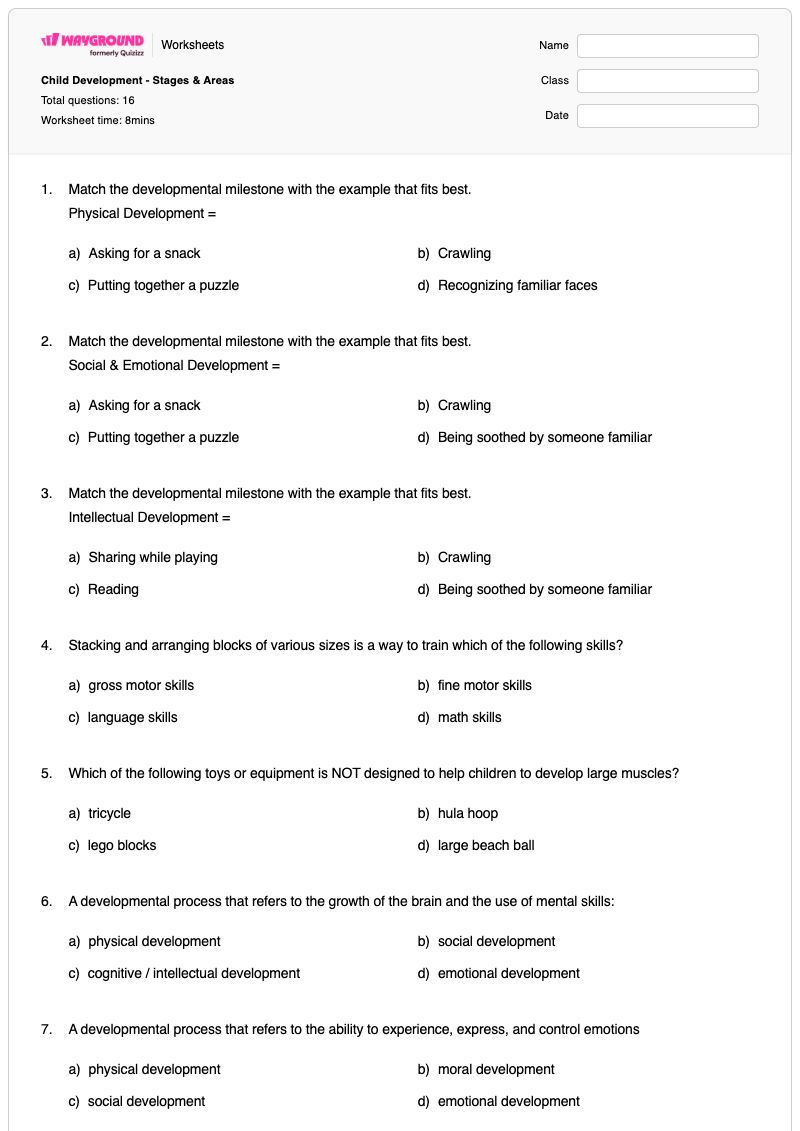
Child Development - Stages & Areas

คำถามทั้งหมด: 16

ชื่อ
ระดับ
วันที่
1.

Match the developmental milestone with the example that fits best.

Physical Development =

a)

Asking for a snack

b)

Crawling

c)

Putting together a puzzle

d)

Recognizing familiar faces

2.

Match the developmental milestone with the example that fits best.

Social & Emotional Development =

a)

Asking for a snack

b)

Crawling

c)

Putting together a puzzle

d)

Being soothed by someone familiar

3.

Match the developmental milestone with the example that fits best.

Intellectual Development =

a)

Sharing while playing

b)

Crawling

c)

Reading

d)

Being soothed by someone familiar

4.

Stacking and arranging blocks of various sizes is a way to train which of the following skills?

a)

gross motor skills

b)

fine motor skills

c)

language skills

d)

math skills

5.

Which of the following toys or equipment is NOT designed to help children to develop large muscles?

a)

tricycle

b)

hula hoop

c)

lego blocks

d)

large beach ball

6.

A developmental process that refers to the growth of the brain and the use of mental skills:

a)

physical development

b)

social development

c)

cognitive / intellectual development

d)

emotional development

7.

A developmental process that refers to the ability to experience, express, and control emotions

a)

physical development

b)

moral development

c)

social development

d)

emotional development

8.

A developmental process that refers to the physical growth of a person's body:

a)

physical development

b)

social development

c)

cognitive / intellectual development

d)

emotional development

9.

There are general patterns to how children develop, but each child is...

a)

unique

b)

the same

c)

born knowing to say "no"

d)

knowledgeable at birth

10.

The social stage of child development deals with...

a)

walking

b)

running

c)

eating on their own

d)

getting along with others

11.

The emotional stage of child development deals with...

a)

how children learn

b)

how children grow

c)

teaching a child to eat

d)

having feelings of happy, sad, mad, fearful

12.

Children ages about one or walking age through age two are known as...

a)

toddlers

b)

preschoolers

c)

infants

d)

adoslescents

13.

Children ages birth through about one are known as...

a)

toddlers

b)

preschoolers

c)

infants

d)

adoslescents

14.

Children ages 5 - 11 are known as...

a)

toddlers

b)

preschoolers

c)

school agers

d)

adoslescents

15.

Children ages 11+ are known as...

a)

toddlers

b)

preschoolers

c)

school agers

d)

adoslescents

16.

Children ages three or four...

a)

toddlers

b)

preschoolers

c)

school agers

d)

adoslescents

Waygroundแป้นคำตอบ

Child Development - Stages & Areas

คำถามทั้งหมด: 16

1.
b)

Crawling

2.
d)

Being soothed by someone familiar

3.
c)

Reading

4.
b)

fine motor skills

5.
c)

lego blocks

6.
c)

cognitive / intellectual development

7.
d)

emotional development

8.
a)

physical development

9.
a)

unique

10.
d)

getting along with others

11.
d)

having feelings of happy, sad, mad, fearful

12.
a)

toddlers

13.
c)

infants

14.
c)

school agers

15.
d)

adoslescents

16.
b)

preschoolers

คำถามที่พบบ่อย

แบบฝึกหัดเรื่องพัฒนาการเด็ก - ขั้นตอนและด้านต่างๆ ครอบคลุมหัวข้ออะไรบ้าง?

แบบฝึกหัดทักษะชีวิตสำหรับนักเรียนชั้น ม.1 นี้ ประกอบด้วยคำถามแบบเลือกตอบ 16 ข้อ เพื่อประเมินว่านักเรียนระบุพัฒนาการทางด้านร่างกาย สังคม อารมณ์ และสติปัญญา/การคิดได้อย่างไร นักเรียนจะนำหมวดหมู่เหล่านี้ไปใช้กับตัวอย่างต่างๆ เช่น การคลาน การอ่าน การได้รับการปลอบโยนจากบุคคลที่คุ้นเคย และการเข้ากับผู้อื่นได้ดี พร้อมทั้งแยกแยะความแตกต่างระหว่างทักษะการเคลื่อนไหวกล้ามเนื้อเล็กและกล้ามเนื้อใหญ่ และระบุช่วงวัยต่างๆ ด้วย

ฉันจะใช้แบบฝึกหัดนี้ในการสอนเรื่องพัฒนาการและด้านต่างๆ ของเด็กได้อย่างไร?

แนะนำพัฒนาการทั้งสี่ด้านด้วยแผนภูมิอย่างง่าย จากนั้นให้นักเรียนอธิบายว่าทำไมแต่ละตัวอย่างจึงอยู่ในหมวดหมู่ใด ก่อนที่จะทำแบบทดสอบแบบเลือกตอบ ใช้คำถามเกี่ยวกับทารก เด็กเล็ก เด็กวัยเรียน และวัยรุ่นเป็นกิจกรรมจัดกลุ่มเพิ่มเติม โดยขอให้นักเรียนอธิบายเหตุผลในการจัดกลุ่มแต่ละช่วงวัย และอภิปรายว่าทำไมเด็กแต่ละคนจึงมีพัฒนาการในระยะเวลาที่แตกต่างกัน

ฉันควรระวังข้อผิดพลาดอะไรบ้างเมื่อนักเรียนทำแบบฝึกหัดพัฒนาการเด็กชุดนี้?

สังเกตดูว่านักเรียนสับสนระหว่างพัฒนาการทางกายภาพกับทักษะการเคลื่อนไหวกล้ามเนื้อเล็กหรือกล้ามเนื้อใหญ่หรือไม่ เช่น เลือกใช้ทักษะการเคลื่อนไหวกล้ามเนื้อใหญ่สำหรับการต่อบล็อก หรือระบุว่าบล็อกเลโก้เป็นอุปกรณ์สำหรับการพัฒนากล้ามเนื้อขนาดใหญ่ นักเรียนอาจสับสนระหว่างพัฒนาการทางสังคมกับพัฒนาการทางอารมณ์ หรือสับสนเรื่องช่วงอายุของทารก เด็กเล็ก เด็กวัยเรียน และวัยรุ่นหรือไม่

ฉันจะมอบหมายและให้คะแนนแบบฝึกหัดพัฒนาการเด็กนี้อย่างไร?

คุณสามารถมอบหมายงานพัฒนาเด็ก - ขั้นตอนและช่วงวัย ในรูปแบบไฟล์ PDF ที่พิมพ์ได้ หรือเป็นแบบทดสอบดิจิทัลบน Wayground งานนี้รวมถึงเฉลยคำตอบครบถ้วน และสามารถตรวจให้คะแนนงานที่ส่งมาได้โดยการสแกนงานของนักเรียนด้วยแอป Wayground for Teachers รูปแบบที่พิมพ์ได้ยังช่วยสนับสนุนโรงเรียนที่กำลังลดเวลาการใช้หน้าจอได้อีกด้วย

ฉันจะปรับแบบฝึกหัดพัฒนาการเด็กนี้ให้เหมาะสมกับนักเรียนของฉันได้อย่างไร?

ในการตั้งค่าขั้นสูงของแบบฝึกหัด ให้ปรับระยะห่างระหว่างตัวอักษรหรือเลือกขนาดตัวอักษรที่ใหญ่ขึ้น เพื่อให้คำถามแบบเลือกตอบ 16 ข้อและตัวเลือกคำตอบอ่านง่ายขึ้น นอกจากนี้ คุณยังสามารถเปิดใช้งานแบบอักษรที่เหมาะสำหรับผู้ที่มีภาวะดิสเล็กเซีย หรือแปลแบบฝึกหัดเป็นภาษาอื่น ซึ่งอาจช่วยให้นักเรียนเข้าถึงคำศัพท์เกี่ยวกับการพัฒนาเด็กและป้ายกำกับช่วงวัยได้ง่ายขึ้น

ฉันจะหาแบบฝึกหัดแบบนี้เพิ่มเติมได้ที่ไหนบน Wayground?

Wayground มีแบบฝึกหัดและโจทย์ฝึกหัดมากมายให้ดาวน์โหลดฟรีในหลากหลายวิชา พร้อมไฟล์ PDF และเฉลยคำตอบ เพื่อช่วยให้นักเรียนพัฒนาทักษะและความเข้าใจในแนวคิดสำคัญๆ ดูแหล่งข้อมูลเพิ่มเติมได้ที่ https://wayground.com/en-us/worksheets