

Wayground
Quiz on Building Strong Social Skills for Teens - Printable Education Worksheets - Wayground

Quiz on Building Strong Social Skills for Teens

20 คำถาม

11th - 11th ระดับชั้น

Education

แบบฝึกหัดสำหรับนักเรียนชั้นมัธยมศึกษาปีที่ 4 นี้ ช่วยพัฒนาความเข้าใจของนักเรียนเกี่ยวกับทักษะทางสังคมที่ดี ผ่านคำถามแบบเลือกตอบ 20 ข้อ นักเรียนจะได้เรียนรู้คุณค่าของมิตรภาพที่มีความหมาย ความเห็นอกเห็นใจ การฟังอย่างตั้งใจ การทำงานเป็นทีม การฝึกฝนการสนทนา การรู้เท่าทันสื่อ การแสดงออกทางอารมณ์ และการมีส่วนร่วมในชุมชน นอกจากนี้ พวกเขายังจะรู้จักสัญญาณและผลกระทบที่อาจเกิดขึ้นจากปัญหาด้านทักษะทางสังคม เช่น การโต้เถียงบ่อยครั้ง การถอนตัวจากกิจกรรมทางสังคม และความยากลำบากในการหาเพื่อน แบบฝึกหัดนี้ออกแบบมาสำหรับใช้ในบทเรียนการศึกษาในระดับมัธยมปลาย ช่วงเวลาให้คำปรึกษา การสอนด้านสุขภาพ หรือการทบทวนด้วยตนเอง เพื่อตรวจสอบว่านักเรียนสามารถเชื่อมโยงพฤติกรรมเฉพาะกับปฏิสัมพันธ์ทางสังคมที่มีประสิทธิภาพได้หรือไม่ คำถามเหล่านี้เป็นแนวทางที่มุ่งเน้นในการอภิปรายว่าวัยรุ่นสร้างทักษะการสื่อสาร เข้าใจอารมณ์ของผู้อื่น ตอบสนองในกลุ่ม และมีส่วนร่วมในสังคมได้อย่างประสบความสำเร็จมากขึ้นได้อย่างไร นี่คือแบบฝึกหัดที่พิมพ์ได้ฟรีพร้อมเฉลยคำตอบสำหรับการทบทวน การสอน หรือการประเมินผลอย่างรวดเร็ว

การตั้งค่าแผ่นงาน

ขนาดตัวอักษร

S
M
L
XL
แผ่นงาน

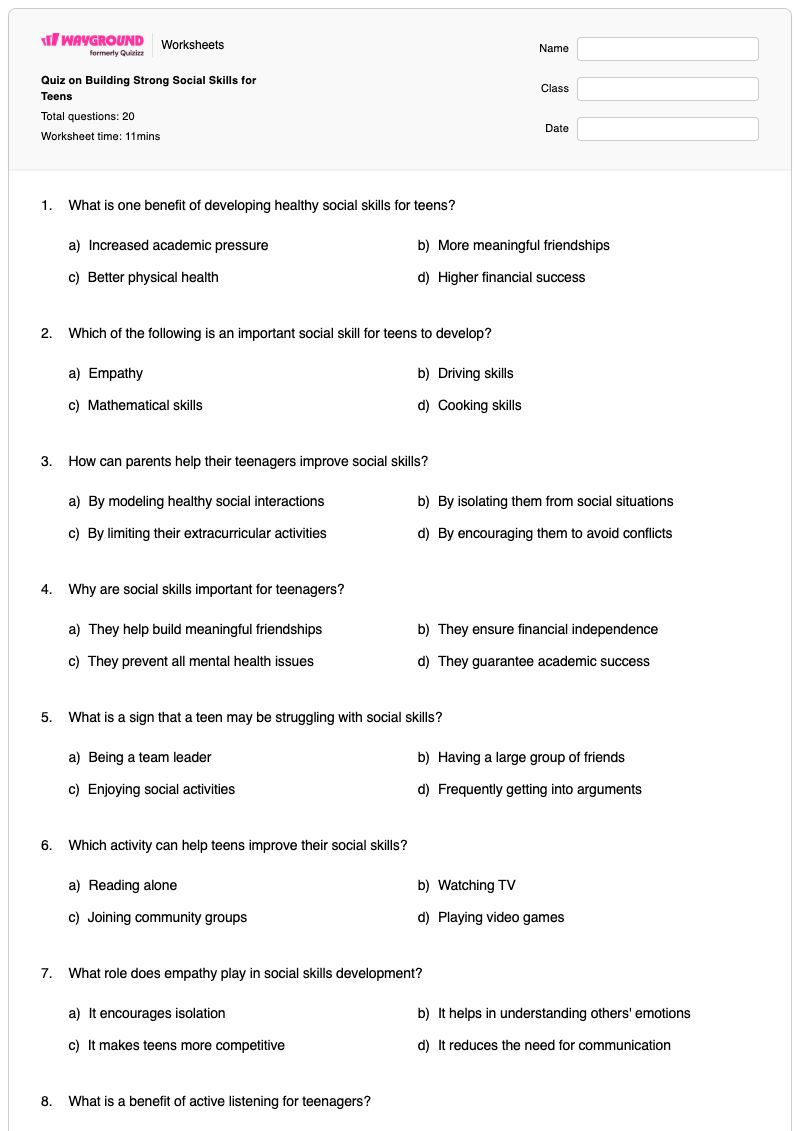
Quiz on Building Strong Social Skills for Teens

คำถามทั้งหมด: 20

ชื่อ
ระดับ
วันที่
1.

What is one benefit of developing healthy social skills for teens?

a)

Increased academic pressure

b)

More meaningful friendships

c)

Better physical health

d)

Higher financial success

2.

Which of the following is an important social skill for teens to develop?

a)

Empathy

b)

Driving skills

c)

Mathematical skills

d)

Cooking skills

3.

How can parents help their teenagers improve social skills?

a)

By modeling healthy social interactions

b)

By isolating them from social situations

c)

By limiting their extracurricular activities

d)

By encouraging them to avoid conflicts

4.

Why are social skills important for teenagers?

a)

They help build meaningful friendships

b)

They ensure financial independence

c)

They prevent all mental health issues

d)

They guarantee academic success

5.

What is a sign that a teen may be struggling with social skills?

a)

Being a team leader

b)

Having a large group of friends

c)

Enjoying social activities

d)

Frequently getting into arguments

6.

Which activity can help teens improve their social skills?

a)

Reading alone

b)

Watching TV

c)

Joining community groups

d)

Playing video games

7.

What role does empathy play in social skills development?

a)

It encourages isolation

b)

It helps in understanding others' emotions

c)

It makes teens more competitive

d)

It reduces the need for communication

8.

What is a benefit of active listening for teenagers?

a)

It improves their argumentative skills

b)

It makes them better at picking up social cues

c)

It reduces their need to communicate

d)

It helps them ignore others

9.

How can expanding media literacy benefit teenagers?

a)

By encouraging oversharing

b)

By improving digital communication skills

c)

By increasing screen time

d)

By reducing face-to-face interactions

10.

What is a recommended way to practice conversational skills?

a)

Only talking to close friends

b)

Greeting at least five people daily

c)

Focusing on deep conversations only

d)

Avoiding small talk

11.

What is a potential outcome of poor social skills in teens?

a)

Improved mental health

b)

Increased self-esteem

c)

Better adaptability

d)

Difficulty in making friends

12.

Which of the following is NOT a sign of struggling with social skills?

a)

Withdrawing from social activities

b)

Preferring digital communication

c)

Limiting eye contact

d)

Enjoying social activities

13.

What is a key takeaway from the guide on social skills?

a)

Teens should avoid social interactions

b)

Social skills training is critical for future success

c)

Social skills are not important for teens

d)

Social skills are innate and cannot be developed

14.

What is an effective way for teens to understand their emotions?

a)

Providing a safe space for expression

b)

Judging their feelings

c)

Encouraging them to suppress emotions

d)

Ignoring their emotional needs

15.

What is the role of teamwork in social skills development?

a)

It isolates teens from others

b)

It reduces the need for collaboration

c)

It encourages individual success

d)

It helps in sharing responsibilities

16.

What should you do if you disagree with someone to resolve a conflict?

a)

Yell louder than the other person

b)

Stop talking to them

c)

Listen to their perspective and explain yours calmly

d)

Insist that you are right

17.

How can you demonstrate empathy towards a friend who is upset?

a)

By telling them to stop feeling upset

b)

By listening to them and acknowledging their feelings

c)

By ignoring their feelings and changing the subject

d)

By giving advice immediately without listening

18.

How can you show you are actively listening?

a)

By looking at your phone

b)

Nodding and making eye contact

c)

Thinking about what to say next

d)

Turning away from the speaker

19.

Active listening can help in which of the following ways?

a)

Making the speaker feel ignored

b)

Reducing misunderstandings

c)

Making conversations shorter

d)

Increasing conflicts

20.

Why is it important to use "I" statements in a conflict?

a)

They make the other person defensive

b)

They express personal feelings without blaming the other person

c)

They help in proving the other person wrong

d)

They are not important in conflicts

แป้นคำตอบ

Quiz on Building Strong Social Skills for Teens

คำถามทั้งหมด: 20

1.
b)

More meaningful friendships

2.
a)

Empathy

3.
a)

By modeling healthy social interactions

4.
a)

They help build meaningful friendships

5.
d)

Frequently getting into arguments

6.
c)

Joining community groups

7.
b)

It helps in understanding others' emotions

8.
b)

It makes them better at picking up social cues

9.
b)

By improving digital communication skills

10.
b)

Greeting at least five people daily

11.
d)

Difficulty in making friends

12.
d)

Enjoying social activities

13.
b)

Social skills training is critical for future success

14.
a)

Providing a safe space for expression

15.
d)

It helps in sharing responsibilities

16.
c)

Listen to their perspective and explain yours calmly

17.
b)

By listening to them and acknowledging their feelings

18.
b)

Nodding and making eye contact

19.
b)

Reducing misunderstandings

20.
b)

They express personal feelings without blaming the other person

คำถามที่พบบ่อย

แบบฝึกหัดนี้ครอบคลุมเนื้อหาอะไรบ้าง และช่วยให้นักเรียนพัฒนาทักษะทางสังคมได้อย่างไร?

แบบฝึกหัดสำหรับนักเรียนชั้นมัธยมศึกษาปีที่ 4 นี้ ประกอบด้วยคำถามแบบเลือกตอบ 20 ข้อ เพื่อสำรวจว่าวัยรุ่นพัฒนาทักษะทางสังคมที่ดีได้อย่างไร ซึ่งรวมถึงความเห็นอกเห็นใจ การฟังอย่างตั้งใจ การทำงานเป็นทีม การฝึกฝนการสนทนา การรู้เท่าทันสื่อ และการแสดงออกทางอารมณ์ โดยการแยกแยะกลยุทธ์ที่มีประสิทธิภาพออกจากพฤติกรรมที่ไม่เป็นประโยชน์ นักเรียนจะสร้างความรู้เกี่ยวกับวิธีการที่ทักษะทางสังคมสนับสนุนมิตรภาพที่มีความหมาย การสื่อสาร และการมีส่วนร่วมในกลุ่ม

ฉันจะใช้แบบฝึกหัดนี้สอนวัยรุ่นเกี่ยวกับการสร้างทักษะทางสังคมที่แข็งแกร่งได้อย่างไร?

เริ่มแบบฝึกหัดโดยให้นักเรียนบอกพฤติกรรมที่ช่วยให้ผู้คนเข้าใจผู้อื่นและสื่อสารได้อย่างมีประสิทธิภาพ จากนั้นใช้ข้อสอบแบบเลือกตอบเพื่อตรวจสอบความคิดเหล่านั้น หลังจากที่นักเรียนตอบแล้ว ให้พูดคุยกันว่าเหตุใดทางเลือกต่างๆ เช่น การเป็นแบบอย่างที่ดีในการปฏิสัมพันธ์ การเข้าร่วมกลุ่มชุมชน การฝึกทักทาย และการสร้างพื้นที่ปลอดภัยสำหรับการแสดงออกทางอารมณ์ จึงมีประสิทธิภาพมากกว่าการแยกตัว การหลีกเลี่ยง หรือการเก็บกดอารมณ์

ฉันควรสังเกตข้อผิดพลาดอะไรบ้างเมื่อนักเรียนทำแบบฝึกหัดทักษะทางสังคมนี้เสร็จ?

นักเรียนอาจสับสนระหว่างสัญญาณของความยากลำบากด้านทักษะทางสังคมกับพฤติกรรมทางสังคมที่ดี โดยเฉพาะอย่างยิ่งในคำถามเกี่ยวกับการโต้เถียง การถอนตัว การสบตาที่น้อยลง และการสนุกกับกิจกรรมทางสังคม พวกเขาอาจมองข้ามจุดประสงค์เฉพาะของการเอาใจใส่และการฟังอย่างตั้งใจ โดยเลือกคำตอบเกี่ยวกับความโดดเดี่ยว การแข่งขัน หรือการโต้เถียง แทนที่จะเข้าใจอารมณ์ของผู้อื่นและสังเกตสัญญาณทางสังคม

ฉันจะมอบหมายและให้คะแนนแบบฝึกหัดทักษะทางสังคมนี้อย่างไร?

แบบฝึกหัดนี้มีให้เลือกทั้งในรูปแบบไฟล์ PDF ที่สามารถพิมพ์ได้ และแบบทดสอบดิจิทัลบน Wayground โดยมีเฉลยคำตอบครบถ้วนสำหรับตรวจสอบคำตอบแบบเลือกตอบ 20 ข้อ การส่งงานในรูปแบบไฟล์พิมพ์สามารถตรวจได้โดยการสแกนงานของนักเรียนด้วยแอป Wayground for Teachers ในขณะที่เวอร์ชันดิจิทัลรองรับการทำและตรวจงานทางออนไลน์

ฉันจะปรับแบบฝึกหัดนี้ให้เหมาะสมกับนักเรียนของฉันได้อย่างไร?

ใช้การตั้งค่าขั้นสูงของแบบฝึกหัดเพื่อปรับระยะห่างระหว่างตัวอักษรหรือขนาดตัวอักษร เพื่อให้คำถามแบบเลือกตอบและตัวเลือกคำตอบอ่านง่ายขึ้น นอกจากนี้ คุณยังสามารถใช้แบบอักษรที่เหมาะสำหรับผู้ที่มีภาวะดิสเล็กเซีย หรือแปลคำถามและตัวเลือกเกี่ยวกับทักษะทางสังคมเป็นภาษาอื่นได้ตามความเหมาะสม

ฉันจะหาแบบฝึกหัดแบบนี้เพิ่มเติมได้ที่ไหนบน Wayground?

Wayground มีแบบฝึกหัดและโจทย์ฝึกหัดมากมายให้ดาวน์โหลดฟรีในหลากหลายวิชา พร้อมไฟล์ PDF และเฉลยคำตอบ เพื่อช่วยเสริมสร้างทักษะและความเข้าใจในแนวคิดสำคัญ ดูแหล่งข้อมูลเพิ่มเติมได้ที่ https://wayground.com/en-us/worksheets