

Wayground
6.L.2.3 Abiotic/Biotic Factors Test 2022 - Printable ศาสตร์ Worksheets 6th ระดับชั้น - Wayground

6.L.2.3 Abiotic/Biotic Factors Test 2022

Jack Losco

สร้างโดย Jack Losco

20 คำถาม

6th ระดับชั้น

ศาสตร์

อัปเดตแล้ว ต.ค. 2569

แบบฝึกหัดวิทยาศาสตร์สำหรับนักเรียนชั้นประถมศึกษาปีที่ 6 นี้ ประเมินความสามารถของนักเรียนในการแยกแยะปัจจัยทางชีวภาพ เช่น ต้นไม้ พืชที่แข่งขันกัน และสิ่งมีชีวิต ออกจากปัจจัยทางอชีวภาพ เช่น อุณหภูมิ น้ำ แสงแดด ดิน ปริมาณน้ำฝน และขนาดของแหล่งที่อยู่อาศัย แบบฝึกหัดประกอบด้วยคำถามแบบเลือกตอบ 20 ข้อ นักเรียนจะต้องระบุองค์ประกอบของสิ่งแวดล้อม รู้จักปัจจัยจำกัดทางชีวภาพและอชีวภาพ และพิจารณาว่าสภาพแวดล้อมที่ไม่มีชีวิตส่งผลกระทบต่อสิ่งมีชีวิต ชีวนิเวศ และระบบนิเวศอย่างไร นอกจากนี้ คำถามยังนำการจำแนกประเภทเหล่านี้ไปประยุกต์ใช้กับสภาพแวดล้อมที่คุ้นเคย เช่น ทุนดรา ทะเลทราย ป่าไม้ ทุ่งหญ้า มหาสมุทร ตู้ปลา และหนองน้ำ นักเรียนจะต้องใช้เหตุผลจากหลักฐานในแต่ละสถานการณ์ ตัวอย่างเช่น การเชื่อมโยงอุณหภูมิต่ำกับการเจริญเติบโตของพืชในทุนดราที่จำกัด ปริมาณน้ำฝนกับการสืบพันธุ์ของพืชในทะเลทราย หรือขนาดของแหล่งที่อยู่อาศัยกับประชากรกบ แบบฝึกหัดที่พิมพ์ได้ฟรีนี้มีเฉลยคำตอบครบถ้วน ทำให้มีประโยชน์สำหรับการฝึกฝน ทบทวน หรือประเมินคำศัพท์และความสัมพันธ์ของปัจจัยระบบนิเวศในวิชาวิทยาศาสตร์ชั้นประถมศึกษาปีที่ 6

การตั้งค่าแผ่นงาน

ขนาดตัวอักษร

S
M
L
XL
Waygroundแผ่นงาน

6.L.2.3 Abiotic/Biotic Factors Test 2022

คำถามทั้งหมด: 20

ชื่อ
ระดับ
วันที่
1.

Which statement describes how an abiotic factor in a tundra affects plant

life?

a)

Microbes reproduce rapidly, enhancing plant growth.

b)

Average temperature is low, restricting plant growth.

c)

Plants experience little competition with each other, limiting plant

populations.

d)

Consumers have adapted to eat other organisms, increasing plant

populations.

2.
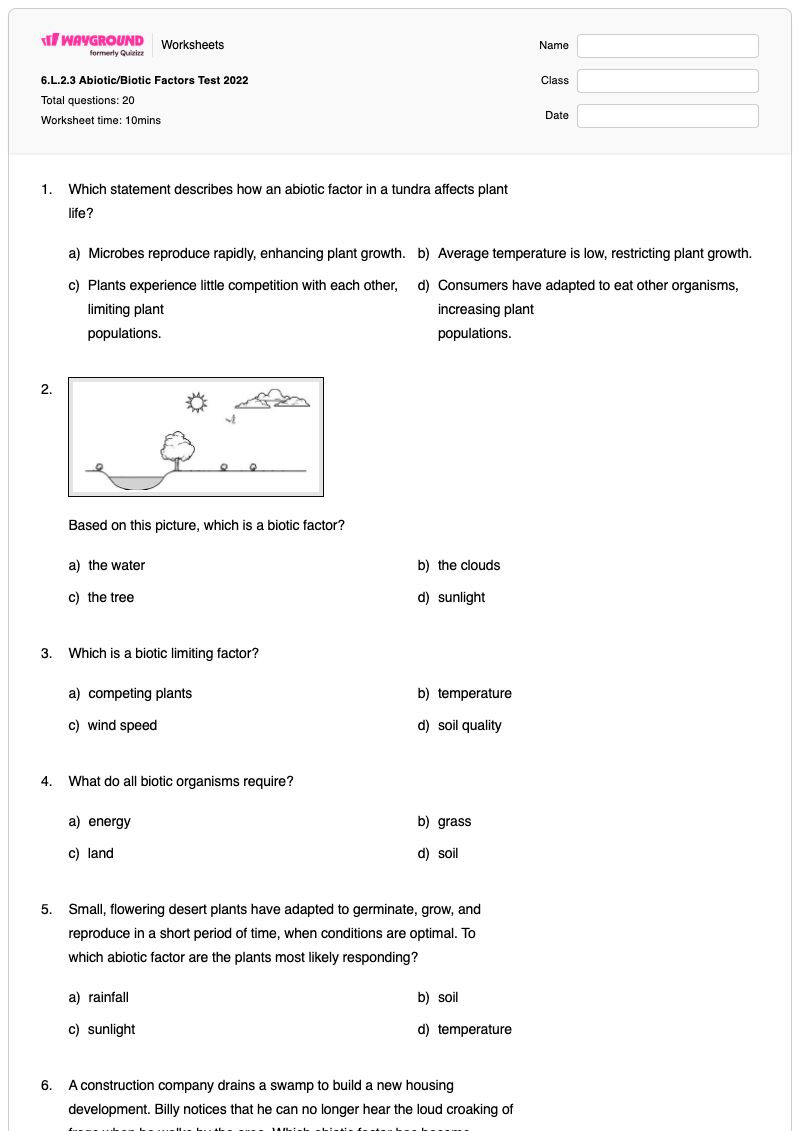
Based on this picture, which is a biotic factor?

Based on this picture, which is a biotic factor?

a)

the water

b)

the clouds

c)

the tree

d)

sunlight

3.

Which is a biotic limiting factor?

a)

competing plants

b)

temperature

c)

wind speed

d)

soil quality

4.

What do all biotic organisms require?

a)

energy

b)

grass

c)

land

d)

soil

5.

Small, flowering desert plants have adapted to germinate, grow, and

reproduce in a short period of time, when conditions are optimal. To

which abiotic factor are the plants most likely responding?

a)

rainfall

b)

soil

c)

sunlight

d)

temperature

6.

A construction company drains a swamp to build a new housing

development. Billy notices that he can no longer hear the loud croaking of

frogs when he walks by the area. Which abiotic factor has become

limiting because of the company’s action?

a)

soil quality

b)

air temperature

c)

size of the frog’s habitat

d)

competition between insects and frogs

7.

Which list includes only abiotic parts of an environment?

a)

soil, rocks, water

b)

soil, leaves, flowers

c)

rocks, leaves, water

d)

water, rocks, tadpoles

8.

A student is studying an aquarium that contains goldfish, snails, and

plants. Which abiotic factor will have the most impact on the health of

the aquarium ecosystem?

a)

size of goldfish

b)

height of plants

c)

number of snails

d)

temperature of water

9.

Which list includes only abiotic factors?

a)

air, grass, soil, water

b)

sunlight, soil, water, and air

c)

soil, grasshoppers, snails, frogs

d)

sunlight, flowers, chlorophyll, water

10.

What abiotic factor may affect the survival of a flower in a forest?

a)

the population of herbivores

b)

the number of daylight hours

c)

the type of pollinators available

d)

the presence of harmful bacteria

11.

Which abiotic factor is added to the ocean by algae and phytoplankton

during photosynthesis?

a)

heat

b)

oxygen

c)

salt

d)

sugar

12.

Which is an abiotic factor that affects the condition of a biome?

a)

birds

b)

decomposers

c)

grass

d)

water

13.

Which is an abiotic limiting factor?

a)

disease

b)

flooding

c)

parasites

d)

predators

14.

Which is an abiotic factor in a grassland?

a)

bacteria

b)

lion

c)

sunlight

d)

tree

15.

Which of these is an abiotic element in an ecosystem?

a)

the average yearly rainfall in the ecosystem

b)

the types of producers found in the ecosystem

c)

the size of a predator population in the ecosystem

d)

the microorganisms living in the soil of the ecosystem

16.

Which abiotic factor is the basis for a pond ecosystem?

a)

insects

b)

frogs

c)

water

d)

wind

17.

Which of the following is an abiotic factor in a river ecosystem?

a)

dragonfly

b)

trout

c)

water

d)

frog

18.

A spring-fed stream forms a pond that contains watercress plants, minnows, and crayfish.

The pond receives 5 hours of direct sunlight every day. Which of the following is an abiotic factor in this ecosystem?

a)

the pond water

b)

the watercress plants

c)

the minnows

d)

the crayfish

19.

Which list includes only abiotic factors that affect plants’ ability to grow?

a)

amount of sunlight, soil temperature, amount of nutrients in the soil,

amount of water present

b)

amount of sunlight, number of decomposers in the soil, amount of

carbon dioxide in the air, air temperature

c)

number of animals in the area to complete oxygen and carbon dioxide

exchange, soil temperature, air temperature, length of day

d)

number of decomposers in the soil, amount of water present, length

of day, number of animals in the area to complete oxygen and carbon

dioxide exchange

20.

Which abiotic factor has the greatest impact on grassland and prairie

ecosystems, increasing the effects of wildfires and reducing wetland

habitat areas?

a)

increased soil quality

b)

increased precipitation

c)

decreased precipitation

d)

decreased soil quality

Waygroundแป้นคำตอบ

6.L.2.3 Abiotic/Biotic Factors Test 2022

คำถามทั้งหมด: 20

1.
b)

Average temperature is low, restricting plant growth.

2.
c)

the tree

3.
a)

competing plants

4.
a)

energy

5.
a)

rainfall

6.
c)

size of the frog’s habitat

7.
a)

soil, rocks, water

8.
d)

temperature of water

9.
b)

sunlight, soil, water, and air

10.
b)

the number of daylight hours

11.
b)

oxygen

12.
d)

water

13.
b)

flooding

14.
c)

sunlight

15.
a)

the average yearly rainfall in the ecosystem

16.
c)

water

17.
c)

water

18.
a)

the pond water

19.
a)

amount of sunlight, soil temperature, amount of nutrients in the soil,

amount of water present

20.
c)

decreased precipitation

คำถามที่พบบ่อย

แบบฝึกหัดนี้ครอบคลุมหัวข้ออะไรบ้างเกี่ยวกับปัจจัยทางชีวภาพและปัจจัยทางกายภาพ?

แบบฝึกหัดสำหรับนักเรียนชั้นประถมศึกษาปีที่ 6 นี้ ประกอบด้วยคำถามแบบเลือกตอบ 20 ข้อ เพื่อประเมินว่านักเรียนสามารถจำแนกองค์ประกอบที่มีชีวิต (biotic) และองค์ประกอบที่ไม่มีชีวิต (abiotic) ได้หรือไม่ นอกจากนี้ยังถามให้นักเรียนระบุปัจจัยจำกัด และเชื่อมโยงสภาวะต่างๆ เช่น อุณหภูมิ ปริมาณน้ำฝน แสงแดด น้ำ น้ำท่วม และขนาดของแหล่งที่อยู่อาศัย กับผลกระทบที่มีต่อสิ่งมีชีวิตและระบบนิเวศ

ฉันจะใช้แบบฝึกหัดนี้ในการสอนเรื่องปัจจัยทางชีวภาพและปัจจัยทางกายภาพได้อย่างไร?

เริ่มต้นด้วยการให้นักเรียนจัดเรียงตัวอย่างจากแบบฝึกหัด เช่น ต้นไม้ พืชที่แข่งขันกัน น้ำ ดิน และแสงแดด ออกเป็นหมวดหมู่สิ่งมีชีวิตและสิ่งไม่มีชีวิต จากนั้นอภิปรายคำถามตามสถานการณ์ โดยขอให้นักเรียนอธิบายว่าเหตุใดปัจจัยใดปัจจัยหนึ่งจึงจำกัดการเจริญเติบโต การอยู่รอด หรือขนาดประชากรในสภาพแวดล้อมต่างๆ เช่น ทุนดรา ทะเลทราย ตู้ปลา หรือหนองน้ำ ใช้ตัวเลือกแบบเลือกตอบเป็นตัวกระตุ้นให้ชี้แจงว่าทำไมทางเลือกอื่นๆ จึงไม่เหมาะสมกับสถานการณ์

ฉันควรสังเกตข้อผิดพลาดอะไรบ้างเมื่อนักเรียนทำแบบฝึกหัดนี้เสร็จ?

นักเรียนอาจสับสนระหว่างสิ่งมีชีวิตกับสภาวะที่ไม่ใช่สิ่งมีชีวิตที่ส่งผลกระทบต่อมัน เช่น เลือกกบหรือแมลงแทนขนาดของแหล่งที่อยู่อาศัย หรือเลือกพืชแทนน้ำหรืออุณหภูมิ พวกเขาอาจมองข้ามคำว่า “จำกัด” และเลือกปัจจัยที่มีชีวิตเมื่อคำถามถามถึงปัจจัยที่ไม่ใช่สิ่งมีชีวิต หรือเลือกปัจจัยด้านสิ่งแวดล้อมที่ดูสมเหตุสมผลโดยไม่เชื่อมโยงกับสถานการณ์ ควรทบทวนความแตกต่างระหว่างการจำแนกปัจจัยและการอธิบายผลกระทบของมัน โดยเฉพาะอย่างยิ่งในหัวข้อเกี่ยวกับทุนดรา ทะเลทราย ตู้ปลา และหนองน้ำ

ฉันจะมอบหมายและให้คะแนนแบบฝึกหัดเรื่องปัจจัยทางชีวภาพและอชีวภาพนี้ได้อย่างไร?

แบบฝึกหัดนี้มีให้ดาวน์โหลดในรูปแบบไฟล์ PDF ที่สามารถพิมพ์ได้ และเป็นแบบทดสอบดิจิทัลบน Wayground คุณสามารถใช้ข้อสอบปรนัย 20 ข้อนี้สำหรับการฝึกฝนด้วยตนเอง การทบทวน หรือการประเมินผล แบบฝึกหัดนี้มีเฉลยคำตอบครบถ้วน และสามารถตรวจให้คะแนนงานที่ส่งมาได้โดยการสแกนงานของนักเรียนด้วยแอป Wayground for Teachers นอกจากนี้ ตัวเลือกไฟล์ PDF ยังช่วยสนับสนุนโรงเรียนที่ต้องการลดเวลาการใช้หน้าจอได้อีกด้วย

ฉันจะปรับแบบฝึกหัดนี้ให้เหมาะสมกับนักเรียนของฉันได้อย่างไร?

ใช้การตั้งค่าขั้นสูงของแบบฝึกหัดเพื่อปรับระยะห่างระหว่างตัวอักษรและขนาดตัวอักษร เพื่อให้ตัวเลือกแบบปรนัยและสถานการณ์ระบบนิเวศอ่านง่ายขึ้น นอกจากนี้ คุณยังสามารถใช้แบบอักษรที่เหมาะสำหรับผู้ที่มีภาวะดิสเล็กเซีย หรือแปลแบบฝึกหัดเป็นภาษาอื่นได้ ตัวเลือกเหล่านี้จะแก้ไขไฟล์แบบฝึกหัด แต่ยังคงรักษาคำถามเกี่ยวกับปัจจัยทางชีวภาพ ปัจจัยทางกายภาพ และปัจจัยจำกัดเอาไว้

ฉันจะหาแบบฝึกหัดแบบนี้เพิ่มเติมได้ที่ไหนบน Wayground?

Wayground นำเสนอชุดแบบฝึกหัดและโจทย์ฝึกหัดฟรีที่ครอบคลุมทุกวิชา พร้อมไฟล์ PDF และเฉลยคำตอบ เพื่อช่วยให้นักเรียนเชี่ยวชาญทักษะและแนวคิดที่สำคัญ ดูแหล่งข้อมูลเพิ่มเติมได้ที่ https://wayground.com/en-us/worksheets