
Wayground
End Behavior of Polynomial Functions - Printable Mathematics Worksheets - Wayground

End Behavior of Polynomial Functions

17 คำถาม

9th - 9th ระดับชั้น

Mathematics

แบบฝึกหัดคณิตศาสตร์ระดับชั้น ม.3 เรื่อง "พฤติกรรมปลายกราฟของฟังก์ชันพหุนาม" ช่วยพัฒนาความสามารถของนักเรียนในการตีความพฤติกรรมของกราฟพหุนามเมื่อ x เข้าใกล้ค่าอนันต์บวกและอนันต์ลบ แบบฝึกหัดนี้ประกอบด้วยคำถามแบบเลือกตอบ 17 ข้อ นักเรียนจะได้อธิบายพฤติกรรมปลายกราฟ ระบุว่าดีกรีเป็นเลขคู่หรือเลขคี่ กำหนดเครื่องหมายของสัมประสิทธิ์นำหน้า และเชื่อมโยงคุณลักษณะเหล่านี้กับทิศทางของกราฟ แบบฝึกหัดนี้ยังให้นักเรียนวิเคราะห์สมการพหุนาม รวมถึงการเขียนพหุนามให้อยู่ในรูปมาตรฐานก่อนที่จะกำหนดพฤติกรรมปลายกราฟ การเติมลิมิตที่เขียนด้วยสัญลักษณ์อนันต์ การระบุเครื่องหมายของสัมประสิทธิ์นำหน้าจากกราฟ และการเลือกสมการที่ตรงกับพฤติกรรมปลายกราฟที่กำหนด แบบฝึกหัดนี้ออกแบบมาสำหรับการฝึกฝนแบบมีผู้แนะนำ การทบทวนด้วยตนเอง หรือการประเมินความเข้าใจของนักเรียนชั้น ม.3 เกี่ยวกับวิธีการที่ดีกรีและเครื่องหมายของสัมประสิทธิ์นำหน้าควบคุมกราฟพหุนาม แบบฝึกหัดที่พิมพ์ได้ฟรีนี้มีเฉลยคำตอบครบถ้วน

การตั้งค่าแผ่นงาน

ขนาดตัวอักษร

S
M
L
XL
แผ่นงาน

End Behavior of Polynomial Functions

คำถามทั้งหมด: 17

ชื่อ
ระดับ
วันที่
1.
Describe the end behavior of the graph.
a)
x → ∞, y→ ∞ and
x→ ∞, y→⁻∞
b)
x → ∞, y→ ∞ and
x→⁻∞, y→∞
c)
None of these
d)
x →∞,y→⁻∞ and
x→∞, y→⁻∞
2.
Describe the end behavior of the graph.
a)
x →∞, y→∞ and x→∞, y→⁻∞
b)
x →∞, y→∞ and x→⁻∞, y→∞
c)
x →∞, y→∞ and x→⁻∞, y→0
d)
x →∞,y→0 and x→∞, y→⁻∞
3.
Describe the end behavior of the graph.
a)
x → ∞, y→ ∞ and x→∞, y→⁻∞
b)
x → ∞, y→ ∞ and x→⁻∞, y→∞
c)
x → ∞, y→ ∞ and x→⁻∞, y→ 0
d)
x → ∞,y→ ∞and x→ ⁻∞, y→ ⁻∞
4.
Describe the end behavior of the graph.
a)
x →∞, y→⁻∞ and x →⁻∞,y→⁻∞
b)
x →∞, y→∞ and x→⁻∞, y→∞
c)
x →∞, y→∞ and x→⁻∞, y→0
d)
x →∞,y→∞ and x→⁻∞, y→⁻∞
5.

Identify the degree of the polynomial and the sign of the leading coefficient

a)

Leading Coefficient Positive

Degree - Even

b)

Leading Coefficient Positive

Degree - Odd

c)

Leading Coefficient Negative

Degree - Even

d)

Leading Coefficient Negative

Degree - Odd

6.

Identify the degree of the polynomial and the sign of the leading coefficient

a)

Leading Coefficient Positive

Degree - Even

b)

Leading Coefficient Positive

Degree - Odd

c)

Leading Coefficient Negative

Degree - Even

d)

Leading Coefficient Negative

Degree - Odd

7.
The end behavior of a polynomial function is determined by the degree and the sign of the leading coefficient.
Identify the degree of the polynomial and the sign of the leading coefficient 
a)
Leading Coefficient Positive
Degree - Even
b)
Leading Coefficient Positive
Degree - Odd
c)
Leading Coefficient Negative
Degree - Even
d)
Leading Coefficient Negative
Degree - Odd
8.

Identify the degree of the polynomial and the sign of the leading coefficient

a)

Leading Coefficient Positive

Degree - Even

b)

Leading Coefficient Positive

Degree - Odd

c)

Leading Coefficient Negative

Degree - Even

d)

Leading Coefficient Negative

Degree - Odd

9.
Describe the end behavior of the function.
y = 4x10
a)
down and down
b)
down and up
c)
up and down
d)
up and up
10.
Describe the end behavior of the function. (Put the polynomial in standard form first*)
y = -6x + 4 + 9x3
a)
down and down
b)
down and up
c)
up and down
d)
up and up
11.
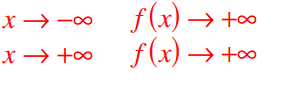
In the above graph complete the following end behavior:
As x --> -∞, f(x) --> ____
As x --> +∞, f(x) --> ____
a)
-∞
-∞
b)
+∞
-∞
c)
-∞
+∞
d)
+∞
+∞
12.
In the above graph complete the following end behavior: (f(x)=y)
As x --> -∞, f(x) --> ____
As x --> +∞, f(x) --> ____
a)
-∞
-∞
b)
+∞
-∞
c)
-∞
+∞
d)
+∞
+∞
13.
Using the above graph what is the sign of the leading coefficient?
a)
Positive
b)
Negative
14.
Which function has this end behavior?
Note: f(x)=y
a)
-x2-3x+1
b)
-x3+2x2+3
c)
x4+3x3-4x+1
d)
x5-4x4+2x2-1
15.
Which function has this end behavior?
Note: f(x)=y
a)
-1x4-3x3+3
b)
-2x7+2x4+4
c)
3x8+3x5-4x+7
d)
4x5-4x4+2x3-9
16.

Determine the end behavior of the graph of

f(x) = 3x4 + 2x - 5

a)

As x →∞, f(x) →∞.

As x→-∞, f(x) →-∞.

b)

As x →∞, f(x) →∞.

As x→-∞, f(x) →∞.

c)

As x →∞, f(x) →-∞.

As x→-∞, f(x) →∞.

d)

As x →∞, f(x) →-∞.

As x→-∞, f(x) →-∞.

17.

What is the degree of this polynomial function? Is the leading coefficient positive or negative?

(Note: quartic means 4th degree, cubic means 3rd degree polynomials)

a)

A fourth degree polynomial with a negative leading coefficient.

b)

A fourth degree polynomial with a positive leading coefficient.

c)

A cubic polynomial with a negative leading coefficient.

d)

A cubic polynomial with a positive leading coefficient.

แป้นคำตอบ

End Behavior of Polynomial Functions

คำถามทั้งหมด: 17

1.
b) x → ∞, y→ ∞ and
x→⁻∞, y→∞
2.
c) x →∞, y→∞ and x→⁻∞, y→0
3.
d) x → ∞,y→ ∞and x→ ⁻∞, y→ ⁻∞
4.
a) x →∞, y→⁻∞ and x →⁻∞,y→⁻∞
5.
b)

Leading Coefficient Positive

Degree - Odd

6.
a)

Leading Coefficient Positive

Degree - Even

7.
d) Leading Coefficient Negative
Degree - Odd
8.
c)

Leading Coefficient Negative

Degree - Even

9.
d) up and up
10.
b) down and up
11.
a) -∞
-∞
12.
d) +∞
+∞
13.
b) Negative
14.
c) x4+3x3-4x+1
15.
b) -2x7+2x4+4
16.
b)

As x →∞, f(x) →∞.

As x→-∞, f(x) →∞.

17.
b)

A fourth degree polynomial with a positive leading coefficient.

คำถามที่พบบ่อย

แบบฝึกหัดเรื่อง "พฤติกรรมปลายของฟังก์ชันพหุนาม" ครอบคลุมเนื้อหาอะไรบ้าง?

แบบฝึกหัดสำหรับนักเรียนชั้น ม.3 นี้ ประกอบด้วยคำถามแบบเลือกตอบ 17 ข้อ เพื่อฝึกฝนการอธิบายสิ่งที่เกิดขึ้นกับกราฟพหุนามเมื่อ x เข้าใกล้ค่าอนันต์บวกหรือลบ นักเรียนจะได้อนุมานพฤติกรรมปลายกราฟ จำแนกความเท่ากันของดีกรีและเครื่องหมายของสัมประสิทธิ์นำหน้า ประเมินสมการ เช่น y = 4x¹⁰ และจับคู่พฤติกรรมปลายกราฟกับฟังก์ชันพหุนาม งานเหล่านี้จะช่วยสร้างทักษะในการเชื่อมโยงพจน์นำหน้าของพหุนามกับทิศทางของปลายทั้งสองข้างของกราฟ

ฉันจะใช้แบบฝึกหัดนี้สอนเรื่องพฤติกรรมปลายพจน์ของพหุนามได้อย่างไร?

เริ่มต้นด้วยการทบทวนการรวมกันสี่แบบของดีกรีคู่หรือคี่ และสัมประสิทธิ์นำหน้าเป็นบวกหรือลบ จากนั้นให้นักเรียนทำนายว่าปลายกราฟแต่ละอันจะสูงขึ้นหรือลดลง ใช้คำถามที่อิงจากกราฟในแบบฝึกหัดก่อนที่จะไปยังรายการที่อิงจากสมการ เพื่อให้นักเรียนเชื่อมโยงพฤติกรรมทางภาพกับพจน์นำหน้า สำหรับนิพจน์เช่น y = -6x + 4 + 9x³ ให้ขอให้นักเรียนเขียนพหุนามใหม่ในรูปแบบมาตรฐานและระบุพจน์ที่มีดีกรีสูงสุดก่อนที่จะเลือกคำตอบ

ฉันควรสังเกตข้อผิดพลาดอะไรบ้างเมื่อนักเรียนทำแบบฝึกหัดนี้เสร็จ?

นักเรียนอาจสับสนความหมายของการที่ x เข้าใกล้ลบอนันต์และบวกอนันต์ หรือรายงานพฤติกรรมด้านซ้ายของกราฟเป็นพฤติกรรมด้านขวา นอกจากนี้ พวกเขาอาจสับสนระหว่างผลกระทบของความเท่ากันของดีกรีกับผลกระทบของสัมประสิทธิ์นำหน้า โดยเฉพาะอย่างยิ่งเมื่อต้องเลือกจากสี่ประเภท ในข้อสอบสมการ ให้ตรวจสอบว่านักเรียนเขียนพหุนาม เช่น -6x + 4 + 9x³ ให้อยู่ในรูปมาตรฐานและใช้พจน์ที่มีดีกรีสูงสุดแทนที่จะใช้พจน์ที่มีดีกรีต่ำกว่า

ฉันจะมอบหมายและให้คะแนนแบบฝึกหัดพฤติกรรมปลายพหุนามนี้ได้อย่างไร?

ใน Wayground ใบงานมีให้เลือกทั้งในรูปแบบไฟล์ PDF ที่สามารถพิมพ์ได้ และแบบทดสอบดิจิทัล โดยมีเฉลยคำตอบครบถ้วนสำหรับคำถามแบบเลือกตอบ 17 ข้อ คุณสามารถตรวจงานที่ส่งมาในรูปแบบไฟล์พิมพ์ได้โดยการสแกนงานของนักเรียนด้วยแอป Wayground for Teachers หรือใช้แบบทดสอบดิจิทัลสำหรับการรวบรวมและตรวจงานทางออนไลน์

ฉันจะปรับแบบฝึกหัดนี้ให้เหมาะสมกับนักเรียนของฉันได้อย่างไร?

ใช้การตั้งค่าขั้นสูงของแบบฝึกหัดเพื่อปรับระยะห่างระหว่างตัวอักษรหรือเพิ่มขนาดตัวอักษร เพื่อให้ตัวเลือกที่อิงตามกราฟ สัญลักษณ์อนันต์ และนิพจน์พหุนามอ่านง่ายขึ้น นอกจากนี้ คุณยังสามารถเปิดใช้งานแบบอักษรที่เหมาะสำหรับผู้ที่มีภาวะดิสเล็กเซีย หรือแปลแบบฝึกหัดเป็นภาษาอื่นได้โดยยังคงโครงสร้างตัวเลือกหลายข้อที่เน้นพฤติกรรมปลายของพหุนามไว้

ฉันจะหาแบบฝึกหัดฟรีแบบนี้เพิ่มเติมได้ที่ไหนบน Wayground?

Wayground นำเสนอชุดแบบฝึกหัดและโจทย์ฝึกหัดฟรีที่ครอบคลุมทุกวิชา พร้อมไฟล์ PDF และเฉลยคำตอบ เพื่อสนับสนุนทักษะและแนวคิดที่สำคัญ ดูแหล่งข้อมูลเพิ่มเติมได้ที่ https://wayground.com/en-us/worksheets