
Wayground
DNA and Punnett squares - Printable Science Worksheets ระดับ 7 - Wayground

DNA and Punnett squares

19 คำถาม

7th - 7th ระดับชั้น

Science

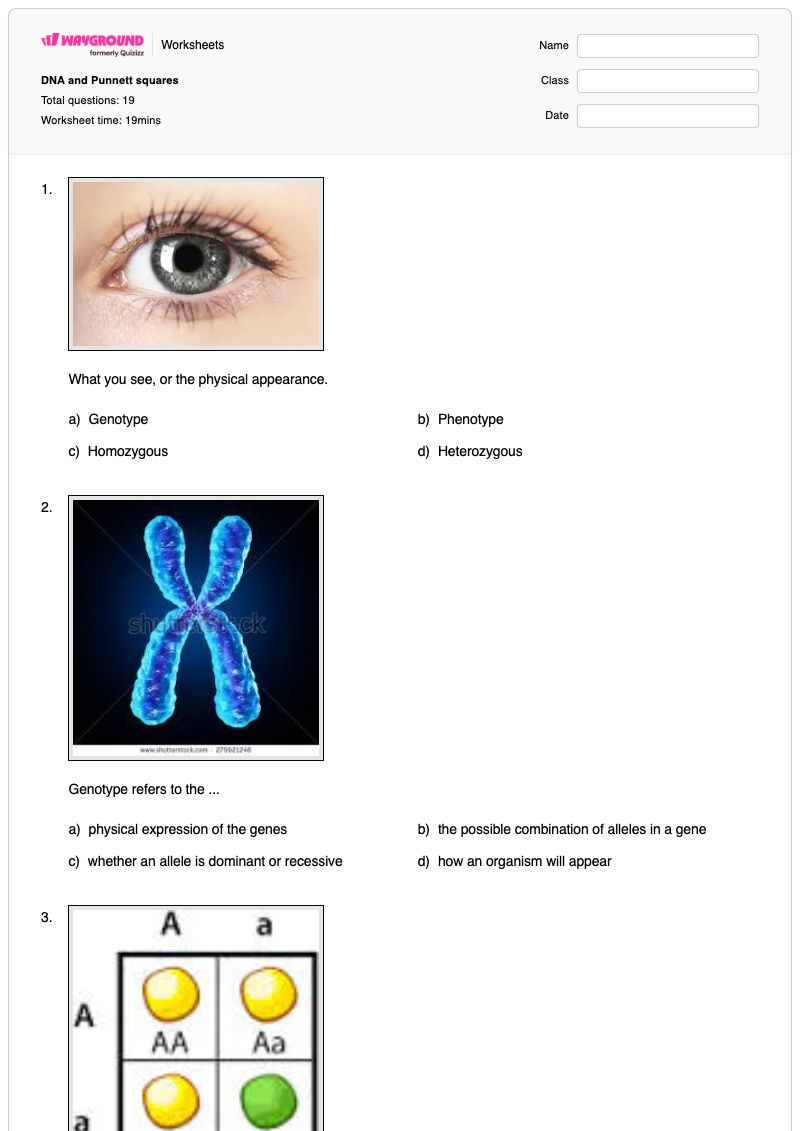
แบบฝึกหัดวิทยาศาสตร์สำหรับนักเรียนชั้น ม.1 เรื่อง DNA และตารางพุนเน็ตต์ ช่วยสร้างพื้นฐานความรู้ทางพันธุศาสตร์ผ่านคำถาม 19 ข้อ: 18 ข้อเป็นแบบเลือกตอบ และ 1 ข้อเป็นแบบเลือกตอบหลายตัวเลือก นักเรียนจะได้เรียนรู้การระบุจีโนไทป์ ฟีโนไทป์ โฮโมไซกัส และเฮเทโรไซกัส แยกแยะลักษณะทางพันธุกรรม และเชื่อมโยงอัลลีลเด่นและอัลลีลด้อยกับลักษณะที่สังเกตได้ แบบฝึกหัดนี้ยังแนะนำเกรเกอร์ เมนเดล โครโมโซม แผนผังลำดับวงศ์ตระกูล และจุดประสงค์ของตารางพุนเน็ตต์ด้วย นักเรียนจะนำแนวคิดเหล่านี้ไปประยุกต์ใช้กับสถานการณ์การถ่ายทอดทางพันธุกรรม รวมถึงการทำนายจีโนไทป์และฟีโนไทป์ของลูกหลาน การคำนวณความน่าจะเป็นของลูกหลานที่เป็นเฮเทโรไซกัส การตีความแผนผังลำดับวงศ์ตระกูล และการระบุจีโนไทป์ที่น่าจะเป็นไปได้จากลักษณะที่สังเกตได้ คำถามที่หลากหลายเหล่านี้ช่วยให้นักเรียนพัฒนาจากการจดจำคำศัพท์ไปสู่การใช้ข้อมูลทางพันธุกรรมในปัญหาการถ่ายทอดทางพันธุกรรมขั้นพื้นฐาน ใบงานวิทยาศาสตร์สำหรับพิมพ์ฟรีนี้ พร้อมเฉลยคำตอบ ออกแบบมาเพื่อใช้ในการสอนวิทยาศาสตร์ระดับชั้น ม.1 การฝึกฝนด้วยตนเอง การทบทวน หรือการประเมินผลระหว่างเรียน

การตั้งค่าแผ่นงาน

ขนาดตัวอักษร

S
M
L
XL
แผ่นงาน

DNA and Punnett squares

คำถามทั้งหมด: 19

ชื่อ
ระดับ
วันที่
1.
What you see, or the physical appearance.
a)
Genotype
b)
Phenotype
c)
Homozygous
d)
Heterozygous
2.
Genotype refers to the ...
a)
physical expression of the genes
b)
the possible combination of alleles in a gene
c)
whether an allele is dominant or recessive
d)
how an organism will appear
3.
What is the dominant trait?
a)
yellow pea seeds
b)
green pea seeds
c)
there is no dominant seed
d)
Jolly green giant
4.
What are the possible combinations of a pea plant with the alleles PP and a male pea plant with the alleles pp.
P= purple
p= white
a)
all Pp
b)
all PP
c)
Pp,PP,Pp,PP
d)
all pp
5.
When the allele combination is a dominate and a recessive trait together which trait will be seen?
a)
Dominate
b)
Recessive
c)
none
d)
both
6.
What is a phenotype?
a)
The expression of a trait; physical appearance.
b)
refers to the genetic makeup of an individual
c)
An organism that has the same genes for a trait (ex. TT or tt)
d)
the passing of traits from parent to offspring
7.
Black fur is dominant (B) over white fur (b).  Find the probability of heterozygous offspring using the following genotype of these parents.
Bb + bb
a)
0%
b)
25%
c)
50%
d)
100%
8.
Gregor Mendel is often called ....
a)
The father of heredity.
b)
The father of genetics.
c)
The king of peas
d)
The father of punnett squares.
9.
It is NOT possible for two purebred black rabbits (both BB) to produce white offspring.
a)
True
b)
False
10.
Bob the abominable snowman lives in the snowy Andes mountains. He has white fur, which blends in nicely. He is therefore dismayed when his mate keeps having red-furred babies. What is Bob's likely genotype?
a)
Homozygous Dominant
b)
Heterozygous
c)
Homozygous Recessive
11.
Which characteristic is inherited?
a)
hair color
b)
sleeping late
c)
enjoying hiking
d)
loving to read
12.

How many chromosomes are present in a human cell nucleus?

a)

23 chromosomes or 46 pairs

b)

46 pairs or 92 chromosomes

c)

46 chromosomes or 23 pairs

d)

32 chromosomes or 16 pairs

13.

A pedigree chart is used to _______.

a)

predict percentage of offspring with a trait

b)

predict genotypic probabilities

c)

track inherited traits through generations

d)

identify the genotype of parents

14.

A Punnett square is used to _______.

a)

predict the genotypic and phenotypic probabilities of possible offspring

b)

determine if a trait runs in a family

c)

track inherited traits through many generations

d)

identify organisms that are carriers of a specific trait

15.

Sickle cell anemia is known to run in a family. A pedigree chart for this family is shown below.

What best describes offspring 4?

a)

A female carrier of the disease

b)

A female having the disease

c)

A male carrier of the disease

d)

A male having the disease

16.

Which of the following genotypes are Purebred? Select 2 answers.

a)

aA

b)

Aa

c)

AA

d)

aa

17.

If A = green pods and a = yellow pods, what are the GENOTYPIC RATIOS of the offspring in the Punnett square?

a)

100% green pods

b)

100% yellow pods

c)

100% heterozygous

d)

100% homozygous dominant

18.

Why is DNA important?

a)

it is very small and very complicated

b)

because we eat it every day for energy

c)

it serves as the blueprint (directions) for traits of all living things

19.
Which organelle is DNA usually found in?
a)
cell membrane
b)
vacuole
c)
ribosome
d)
nucleus
แป้นคำตอบ

DNA and Punnett squares

คำถามทั้งหมด: 19

1.
b) Phenotype
2.
b) the possible combination of alleles in a gene
3.
a) yellow pea seeds
4.
a) all Pp
5.
a) Dominate
6.
a) The expression of a trait; physical appearance.
7.
c) 50%
8.
b) The father of genetics.
9.
a) True
10.
c) Homozygous Recessive
11.
a) hair color
12.
c)

46 chromosomes or 23 pairs

13.
c)

track inherited traits through generations

14.
a)

predict the genotypic and phenotypic probabilities of possible offspring

15.
d)

A male having the disease

16.
c)

AA

, d)

aa

17.
c)

100% heterozygous

18.
c)

it serves as the blueprint (directions) for traits of all living things

19.
d) nucleus

คำถามที่พบบ่อย

แบบฝึกหัดเรื่อง DNA และตารางพุนเน็ตต์ครอบคลุมเนื้อหาอะไรบ้าง?

แบบฝึกหัดวิทยาศาสตร์สำหรับนักเรียนชั้น ม.1 นี้ ประกอบด้วยคำถามแบบเลือกตอบ 18 ข้อ และคำถามแบบเลือกคำตอบ 1 ข้อ เพื่อประเมินคำศัพท์ทางพันธุศาสตร์และการให้เหตุผลเกี่ยวกับการถ่ายทอดทางพันธุกรรม นักเรียนจะได้แยกแยะความแตกต่างระหว่างจีโนไทป์และฟีโนไทป์ ระบุลักษณะโฮโมไซกัสและเฮเทโรไซกัส กำหนดผลลัพธ์ของลักษณะเด่น ใช้ตารางพุนเน็ตต์เพื่อทำนายความน่าจะเป็นของลูกหลาน และตีความแผนผังลำดับวงศ์ตระกูล

ฉันจะใช้แบบฝึกหัดนี้ในการสอนเรื่อง DNA และตารางพุนเน็ตต์ได้อย่างไร?

แนะนำจีโนไทป์ ฟีโนไทป์ ลักษณะเด่น ลักษณะด้อย โฮโมไซกัส และเฮเทโรไซกัส พร้อมตัวอย่างลักษณะง่ายๆ ก่อนที่นักเรียนจะเริ่มตอบคำถาม จากนั้นสาธิตวิธีการเติมแอลลีลของพ่อแม่ลงในตารางพุนเน็ตต์ ถามนักเรียนให้Wอธิบายความแตกต่างระหว่างจีโนไทป์และฟีโนไทป์ และใช้สถานการณ์การถ่ายทอดทางพันธุกรรมและแผนผังลำดับวงศ์ตระกูลในแบบฝึกหัดเพื่อการอภิปรายแบบมีแนวทางก่อนที่นักเรียนจะทำแบบฝึกหัดด้วยตนเอง

ฉันควรระวังข้อผิดพลาดอะไรบ้างเมื่อนักเรียนทำแบบฝึกหัดพันธุศาสตร์นี้?

สังเกตนักเรียนที่สับสนระหว่างจีโนไทป์ (การรวมกันของอัลลีล) กับฟีโนไทป์ (การแสดงออกทางกายภาพของลักษณะ) นักเรียนอาจสับสนระหว่างคู่โฮโมไซกัสและเฮเทโรไซกัส รายงานว่าอัลลีลเด่นหมายถึงจีโนไทป์โฮโมไซกัสโดยอัตโนมัติ หรือสับสนระหว่างความน่าจะเป็นของจีโนไทป์และฟีโนไทป์เมื่อแก้โจทย์ในตารางพุนเน็ตต์ ในคำถามเกี่ยวกับแผนผังครอบครัว ให้ตรวจสอบว่านักเรียนใช้สัญลักษณ์และป้ายกำกับในแผนผังแทนที่จะเดาจากเรื่องราวของครอบครัวเพียงอย่างเดียว

ฉันจะมอบหมายและให้คะแนนแบบฝึกหัดเรื่อง DNA และตารางพุนเน็ตต์ได้อย่างไร?

คุณสามารถมอบหมายแบบฝึกหัดนี้เป็นไฟล์ PDF ที่พิมพ์ได้ หรือเป็นแบบทดสอบดิจิทัลบน Wayground ก็ได้ และแบบฝึกหัดนี้มีเฉลยคำตอบครบถ้วนสำหรับตรวจสอบคำตอบแบบเลือกตอบ 18 ข้อ และแบบเลือกหลายคำตอบ 1 ข้อ นอกจากนี้ ยังสามารถตรวจงานของนักเรียนที่ส่งมาในรูปแบบไฟล์พิมพ์ได้โดยการสแกนงานของนักเรียนด้วยแอป Wayground for Teachers

ฉันจะปรับแบบฝึกหัดเรื่อง DNA และตาราง Punnett นี้ให้เหมาะสมกับนักเรียนของฉันได้อย่างไร?

ในการตั้งค่าขั้นสูงของแบบฝึกหัด ให้ปรับระยะห่างระหว่างตัวอักษรหรือขนาดตัวอักษรเพื่อให้คำจำกัดความทางพันธุศาสตร์ การรวมกันของอัลลีล และคำถามเกี่ยวกับตารางพุนเน็ตต์อ่านง่ายขึ้น นอกจากนี้ คุณยังสามารถใช้แบบอักษรที่เหมาะสำหรับผู้ที่มีภาวะดิสเล็กเซีย หรือแปลแบบฝึกหัดเป็นภาษาอื่นหากช่วยให้เข้าถึงคำศัพท์และสถานการณ์การถ่ายทอดทางพันธุกรรมได้ง่ายขึ้น

ฉันจะหาแบบฝึกหัดแบบนี้เพิ่มเติมได้ที่ไหนบน Wayground?

Wayground นำเสนอชุดแบบฝึกหัดและโจทย์ฝึกหัดฟรีที่ครอบคลุมหลากหลายวิชา พร้อมไฟล์ PDF และเฉลยคำตอบ เพื่อช่วยให้นักเรียนเชี่ยวชาญทักษะและแนวคิดที่สำคัญ ดูแหล่งข้อมูลเพิ่มเติมได้ที่ https://wayground.com/en-us/worksheets