

Wayground
Lesson 5.17 - Review Electric and Magnetic Forces - Printable ศาสตร์ Worksheets ระดับ 3 - Wayground

Lesson 5.17 - Review Electric and Magnetic Forces

Danica Rosales

สร้างโดย Danica Rosales

10 คำถาม

ชั้นประถมศึกษาปีที่ 3

ศาสตร์

แบบฝึกหัดวิทยาศาสตร์ชั้นประถมศึกษาปีที่ 3 บทที่ 5.17 - ทบทวนแรงไฟฟ้าและแรงแม่เหล็ก นี้จะทบทวนการเปลี่ยนแปลงของแรงไฟฟ้าและแรงแม่เหล็กในสถานการณ์ต่างๆ ที่คุ้นเคย แบบฝึกหัดประกอบด้วย 10 ข้อ—9 ข้อเป็นแบบเลือกตอบ และ 1 ข้อเป็นการเลือกคำตอบที่ถูกต้อง—นักเรียนจะได้ระบุวัตถุที่ดึงดูดกัน ตระหนักว่าการถูสามารถทำให้เกิดไฟฟ้าสถิต และพิจารณาว่าการเปลี่ยนแปลงประจุหรือระยะทางทำให้แรงไฟฟ้าอ่อนลงหรือแข็งแรงขึ้นได้อย่างไร นอกจากนี้ นักเรียนยังจะได้เปรียบเทียบวัสดุต่างๆ เพื่อหาแรงดึงดูดของแม่เหล็ก และพิจารณาว่าแม่เหล็กไฟฟ้าที่มีกำลังสูงสามารถส่งผลต่อเข็มทิศแม่เหล็กได้อย่างไร แบบฝึกหัดที่พิมพ์ได้ฟรีนี้ช่วยให้นักเรียนนำแนวคิดเรื่องแรงไปประยุกต์ใช้ในสถานการณ์ต่างๆ เช่น ลูกโป่ง เศษโลหะ แม่เหล็ก ช้อน และโดรน แทนที่จะเพียงแค่ท่องจำคำจำกัดความ แบบฝึกหัดนี้เหมาะสำหรับการฝึกฝนด้วยตนเอง บทเรียนทบทวน หรือการตรวจสอบความเข้าใจอย่างรวดเร็วหลังจากการสอนเรื่องแรงไฟฟ้าและแรงแม่เหล็ก มีเฉลยคำตอบครบถ้วนเพื่อการตรวจสอบและให้ข้อเสนอแนะที่มีประสิทธิภาพ

การตั้งค่าแผ่นงาน

ขนาดตัวอักษร

S
M
L
XL
Waygroundแผ่นงาน

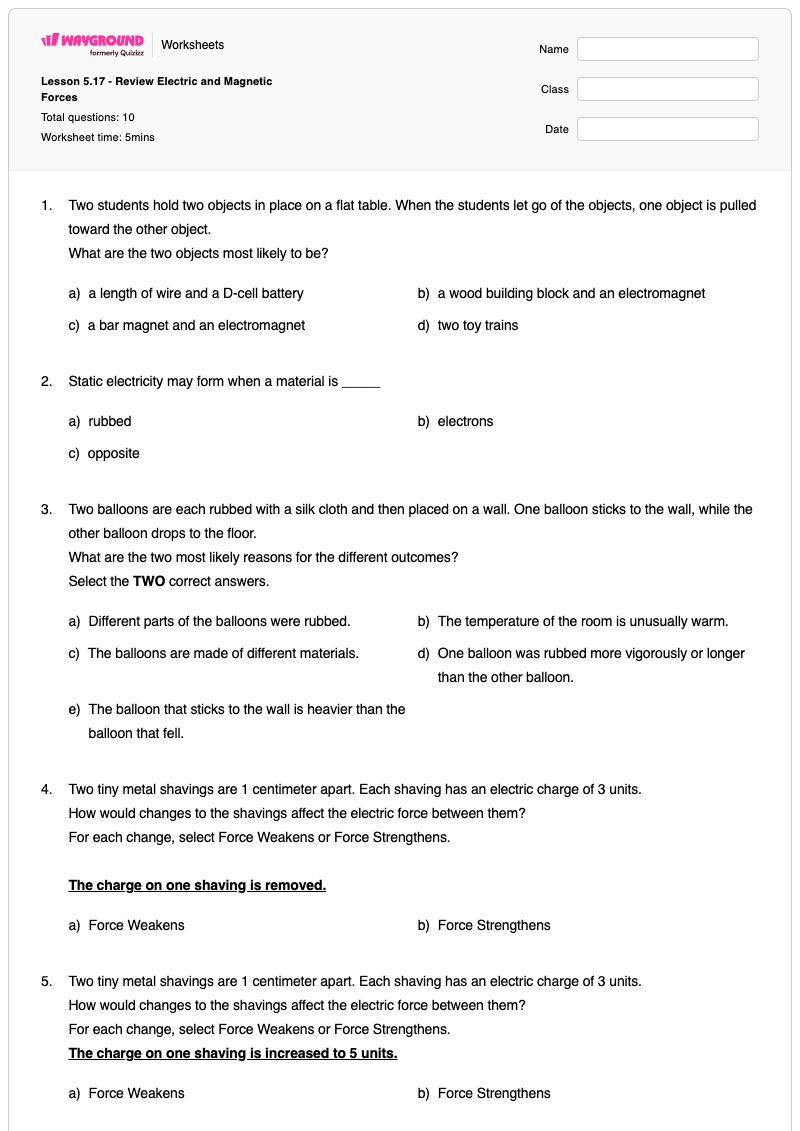
Lesson 5.17 - Review Electric and Magnetic Forces

คำถามทั้งหมด: 10

ชื่อ
ระดับ
วันที่
1.

Two students hold two objects in place on a flat table. When the students let go of the objects, one object is pulled toward the other object. 

What are the two objects most likely to be?

a)

a length of wire and a D-cell battery

b)

a wood building block and an electromagnet

c)

a bar magnet and an electromagnet

d)

two toy trains

2.

Static electricity may form when a material is _____​

a)

rubbed

b)

electrons

c)

opposite

3.

Two balloons are each rubbed with a silk cloth and then placed on a wall. One balloon sticks to the wall, while the other balloon drops to the floor.

What are the two most likely reasons for the different outcomes?

Select the TWO correct answers.

a)

Different parts of the balloons were rubbed.

b)

The temperature of the room is unusually warm.

c)

The balloons are made of different materials.

d)

One balloon was rubbed more vigorously or longer than the other balloon.

e)

The balloon that sticks to the wall is heavier than the balloon that fell.

4.

Two tiny metal shavings are 1 centimeter apart. Each shaving has an electric charge of 3 units.

How would changes to the shavings affect the electric force between them?

For each change, select Force Weakens or Force Strengthens.


The charge on one shaving is removed.

a)

Force Weakens

b)

Force Strengthens

5.

Two tiny metal shavings are 1 centimeter apart. Each shaving has an electric charge of 3 units.

How would changes to the shavings affect the electric force between them?

For each change, select Force Weakens or Force Strengthens.

The charge on one shaving is increased to 5 units.

a)

Force Weakens

b)

Force Strengthens

6.

Two tiny metal shavings are 1 centimeter apart. Each shaving has an electric charge of 3 units.

How would changes to the shavings affect the electric force between them?

For each change, select Force Weakens or Force Strengthens.

The charge on each shaving is increased to 5 units.

a)

Force Weakens

b)

Force Strengthens

7.

Two tiny metal shavings are 1 centimeter apart. Each shaving has an electric charge of 3 units.

How would changes to the shavings affect the electric force between them?

For each change, select Force Weakens or Force Strengthens.

The distance between the shavings is increased to 2 centimeters.

a)

Force Weakens

b)

Force Strengthens

8.

Two tiny metal shavings are 1 centimeter apart. Each shaving has an electric charge of 3 units.

How would changes to the shavings affect the electric force between them?

For each change, select Force Weakens or Force Strengthens.

The distance between the shavings decreased to one half a centimeter.

a)

Force Weakens

b)

Force Strengthens

9.

Two small spoons are placed at the same distance from the poles of a bar magnet. One spoon is attracted to the magnet, while the other spoon experiences no magnetic force.

What property must differ between the two spoons?


a)

  • size

b)

texture

c)

type of material

d)

mass

10.

A drone uses a magnetic compass to find its way. The drone flies near a powerful electromagnet, such as a magnet that lifts scrap metal at a junkyard.

How would the drone most likely be affected?

a)

The drone would fly faster and more accurately.

b)

The drone would stop flying and drop to the ground.

c)

The drone would fly in the wrong direction, and soon crash.

d)

The drone would be pushed away from the electromagnet.

Waygroundแป้นคำตอบ

Lesson 5.17 - Review Electric and Magnetic Forces

คำถามทั้งหมด: 10

1.
c)

a bar magnet and an electromagnet

2.
a)

rubbed

3.
c)

The balloons are made of different materials.

, d)

One balloon was rubbed more vigorously or longer than the other balloon.

4.
a)

Force Weakens

5.
b)

Force Strengthens

6.
b)

Force Strengthens

7.
a)

Force Weakens

8.
b)

Force Strengthens

9.
c)

type of material

10.
c)

The drone would fly in the wrong direction, and soon crash.

คำถามที่พบบ่อย

แบบฝึกหัดเรื่องแรงไฟฟ้าและแรงแม่เหล็กนี้ครอบคลุมหัวข้ออะไรบ้าง?

แบบฝึกหัดสำหรับนักเรียนชั้นประถมศึกษาปีที่ 3 นี้ ประกอบด้วยคำถามแบบเลือกตอบ 9 ข้อ และคำถามแบบเลือกคำตอบ 1 ข้อ เพื่อทบทวนเรื่องไฟฟ้าสถิต แรงไฟฟ้า วัสดุแม่เหล็ก แม่เหล็กไฟฟ้า และการแทรกสอดของเข็มทิศ นักเรียนจะต้องพิจารณาว่าการเพิ่มหรือลดประจุ และการเปลี่ยนระยะห่างระหว่างวัตถุที่มีประจุส่งผลต่อแรงอย่างไร จากนั้นจึงนำแนวคิดเรื่องแรงแม่เหล็กไปประยุกต์ใช้กับวัตถุต่างๆ เช่น ช้อน ลูกโป่ง และโดรนที่อยู่ใกล้แม่เหล็กไฟฟ้า

ฉันจะใช้แบบฝึกหัดนี้ในการสอนเรื่องแรงไฟฟ้าและแรงแม่เหล็กได้อย่างไร?

ใช้แบบฝึกหัดนี้หลังจากสาธิตกิจกรรมต่างๆ เช่น การถูลูกโป่งกับผ้า การทดสอบว่าวัสดุใดตอบสนองต่อแม่เหล็ก หรือการอธิบายว่าเข็มทิศตอบสนองอย่างไรเมื่ออยู่ใกล้แม่เหล็กไฟฟ้ากำลังสูง ก่อนที่นักเรียนจะตอบ ให้พวกเขาลองคาดเดาว่าการเปลี่ยนแปลงแต่ละอย่างของเศษโลหะ—ประจุมากขึ้น ประจุน้อยลง ระยะทางมากขึ้น หรือระยะทางน้อยลง—จะทำให้แรงไฟฟ้าเพิ่มขึ้นหรือลดลง จากนั้นให้พวกเขาอธิบายเหตุผลในการเลือกโดยใช้สถานการณ์ในแบบฝึกหัด

ฉันควรสังเกตข้อผิดพลาดอะไรบ้างเมื่อนักเรียนทำแบบฝึกหัดนี้เสร็จ?

สังเกตนักเรียนที่เลือกคำตอบโดยพิจารณาจากขนาด น้ำหนัก หรือลักษณะของวัตถุ แทนที่จะพิจารณาจากวัสดุหรือสภาวะที่เกี่ยวข้องกับประจุไฟฟ้า ในข้อสอบแบบเลือกตอบหลายข้อเกี่ยวกับลูกโป่ง นักเรียนอาจเลือกเพียงเหตุผลเดียว หรือมองข้ามไปว่าทั้งวัสดุของลูกโป่ง ความรุนแรง หรือระยะเวลาในการถู สามารถส่งผลให้เกิดผลลัพธ์ที่แตกต่างกันได้ นักเรียนอาจสลับผลกระทบของการเปลี่ยนแปลงประจุและระยะทางต่อแรงทางไฟฟ้า หรือสันนิษฐานว่าแม่เหล็กไฟฟ้าที่อยู่ใกล้เคียงช่วยปรับปรุงทิศทางของโดรนที่ควบคุมด้วยเข็มทิศ

ฉันจะมอบหมายและตรวจงานแบบฝึกหัดเรื่องแรงไฟฟ้าและแรงแม่เหล็กนี้อย่างไร?

แบบฝึกหัดนี้มีให้ดาวน์โหลดในรูปแบบไฟล์ PDF สำหรับพิมพ์ และเป็นแบบทดสอบดิจิทัลบน Wayground พร้อมเฉลยคำตอบครบถ้วนสำหรับทั้ง 10 ข้อ คุณสามารถตรวจงานที่นักเรียนส่งมาในรูปแบบเอกสารได้โดยการสแกนงานด้วยแอป Wayground for Teachers ในขณะที่แบบทดสอบดิจิทัลรองรับการรวบรวมและตรวจสอบคำตอบทางออนไลน์

ฉันจะปรับแบบฝึกหัดนี้ให้เหมาะสมกับนักเรียนของฉันได้อย่างไร?

ในการตั้งค่าขั้นสูงของแบบฝึกหัด ให้ปรับระยะห่างระหว่างตัวอักษรหรือเลือกขนาดตัวอักษรที่ใหญ่ขึ้น เพื่อให้สถานการณ์การเปลี่ยนแปลงแบบบังคับและตัวเลือกคำตอบอ่านง่ายขึ้น นอกจากนี้ คุณยังสามารถเปิดใช้งานแบบอักษรที่เหมาะสำหรับผู้ที่มีภาวะดิสเล็กเซีย หรือแปลแบบฝึกหัดเป็นภาษาอื่นได้ โดยยังคงรูปแบบคำถามแบบปรนัยและเลือกหลายข้อไว้เหมือนเดิม

ฉันจะหาแบบฝึกหัดฟรีแบบนี้เพิ่มเติมได้ที่ไหนบน Wayground?

Wayground นำเสนอชุดแบบฝึกหัดและโจทย์ฝึกหัดฟรีที่ครอบคลุมหลากหลายวิชา พร้อมไฟล์ PDF และเฉลยคำตอบ เพื่อช่วยให้นักเรียนเชี่ยวชาญทักษะและแนวคิดที่สำคัญ ดูแหล่งข้อมูลเพิ่มเติมได้ที่ https://wayground.com/en-us/worksheets