
Wayground
Graphing Motion - Printable คณิตศาสตร์ Worksheets 8th ระดับชั้น - Wayground

Graphing Motion

Janet Wiener

สร้างโดย Janet Wiener

20 คำถาม

8th ระดับชั้น

คณิตศาสตร์

อัปเดตแล้ว ต.ค. 2569

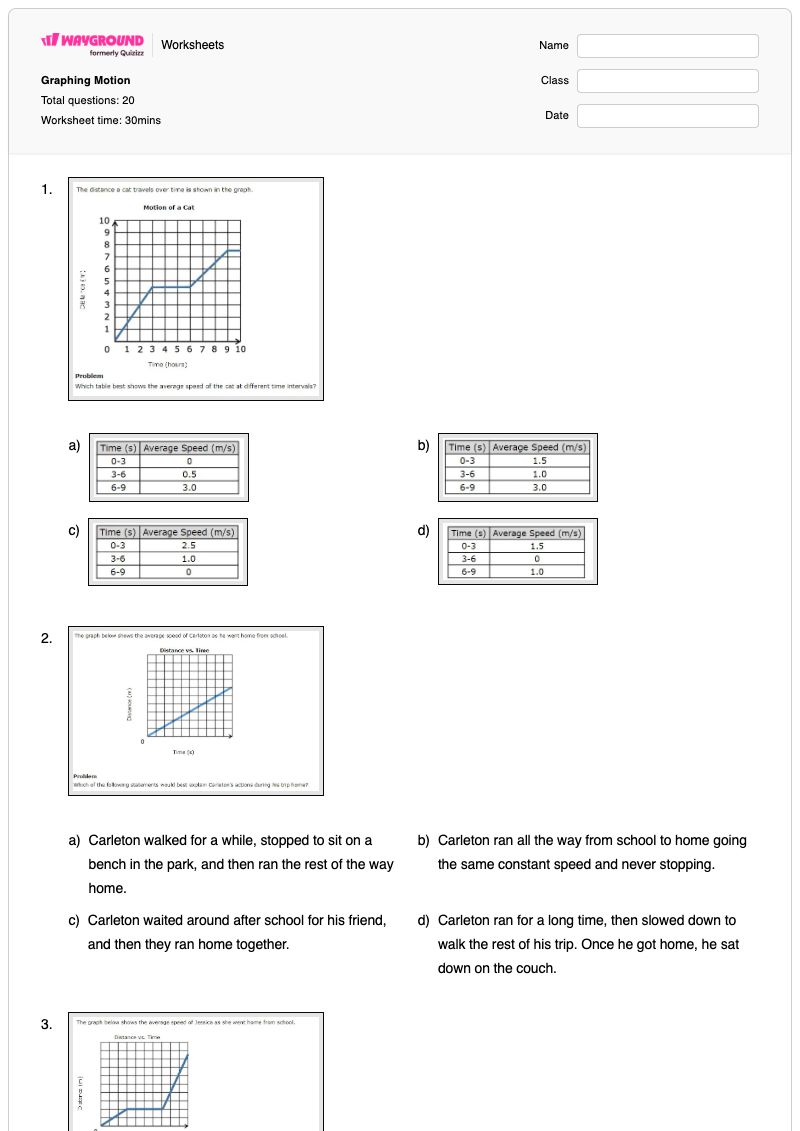
แบบฝึกหัดการเขียนกราฟการเคลื่อนที่สำหรับนักเรียนชั้น ม.2 ช่วยเสริมสร้างความสามารถในการตีความกราฟระยะทาง-เวลาและกราฟตำแหน่ง-เวลา นักเรียนจะได้ศึกษาความชัน ส่วนของเส้นตรง จุดเริ่มต้น จุดหยุด การเปลี่ยนแปลงความเร็ว ระยะทางรวม และทิศทางการเคลื่อนที่ เพื่อเชื่อมโยงคุณลักษณะของกราฟกับการเคลื่อนไหวในโลกแห่งความเป็นจริง แบบฝึกหัดนี้มีคำถามแบบเลือกตอบ 20 ข้อ รวมถึงการตีความกราฟ การเปรียบเทียบความเร็ว การคำนวณระยะทาง และสถานการณ์การเลือกกราฟ นักเรียนจะได้ระบุว่าเมื่อใดที่วัตถุหยุดนิ่ง กำหนดว่านักวิ่งคนใดเริ่มต้นนำหน้าหรือเคลื่อนที่เร็วที่สุด และตระหนักว่าเมื่อใดที่ความชันเป็นลบแสดงถึงการเดินทางกลับไปยังจุดเริ่มต้น แบบฝึกหัดที่พิมพ์ได้ฟรีนี้มีเฉลยคำตอบครบถ้วนเพื่อความสะดวกในการสอน การทบทวน หรือการประเมินผล

การตั้งค่าแผ่นงาน

ขนาดตัวอักษร

S
M
L
XL
Waygroundแผ่นงาน

Graphing Motion

คำถามทั้งหมด: 20

ชื่อ
ระดับ
วันที่
1.
ภาพคำถาม
a)
b)
c)
d)
2.
ภาพคำถาม

a)

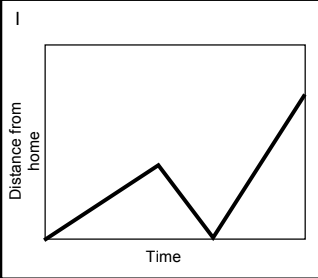
Carleton walked for a while, stopped to sit on a bench in the park, and then ran the rest of the way home.

b)

Carleton ran all the way from school to home going the same constant speed and never stopping.

c)

Carleton waited around after school for his friend, and then they ran home together.

d)

Carleton ran for a long time, then slowed down to walk the rest of his trip. Once he got home, he sat down on the couch.

3.
ภาพคำถาม

a)

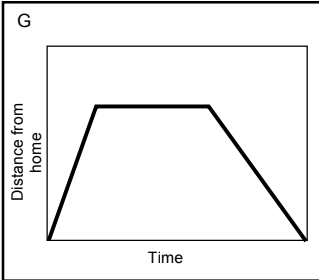
Jessica ran all the way from school to home going the same constant speed and never stopping.

b)

Jessica waited around after school for her friend, and then they ran home together.

c)

Jessica ran for a long time, then slowed down to walk the rest of her trip. Once she got home, she sat down on the couch.

d)

Jessica walked for a while, stopped to sit on a bench in the park, and then ran the rest of the way home.

4.
ภาพคำถาม
a)

0.8 m/s

b)

0.08 m/s

c)

1.25 m/s

d)

0.125 m/s

5.
ภาพคำถาม
a)

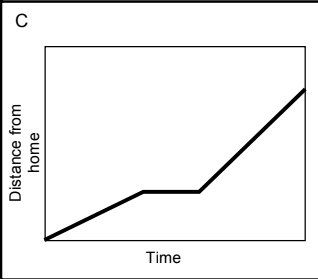
Sam ran for a long time, then slowed down to walk the rest of his trip. Once he got home, he sat down on the couch.

b)

Sam waited around after school for his friend, and then they ran home together.

c)

Sam walked for a while, stopped to sit on a bench in the park, and then ran the rest of the way home.

d)

Sam ran all the way from school to home going the same constant speed and never stopping.

6.
After how much time did the train make its first stop?
a)
0 hours
b)
4 hours
c)
6 hours
d)
12 hours
7.
What was the speed of the train between 0 and 4 hours?
a)
1 km/h
b)
10 km/h
c)
100 km/h
d)
100 h/km
8.
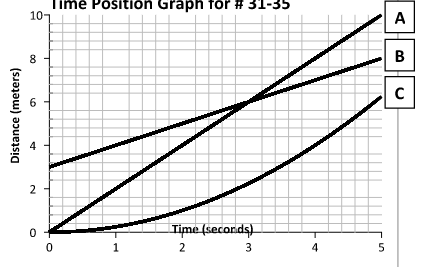
Which runner had a head start?
a)
A
b)
B
c)
C
d)
none
9.
from 3rd second to 5th second, the object is
a)
moving at a constant speed
b)
speeding up
c)
not moving
d)
slowing down
10.
On a distance vs. time graph, the steeper the slope _____
a)
the slower the speed
b)
the faster the speed
c)
less acceleration
d)
greater acceleration
11.
What is the total distance covered by 2 pm?
a)
40 miles
b)
30 miles
c)
60 miles
d)
10 miles
12.
ภาพคำถาม
a)
b)
c)
d)
13.
Which runner complete the 100 meter race in the least amount of time?
a)
Albert
b)
Bob
c)
Charlie
14.
Which runner started out the fastest?
a)
Albert
b)
Bob
c)
Charlie
15.
Which segment shows the faster speed?

Which segment shows the faster speed?

a)

A to B

b)

C to D

c)

B to C

16.
What is the motion of the object from segment D to E?

What is the motion of the object from segment D to E?

a)

It is moving slowly

b)

It is returning to the starting point

c)

It is moving quickly

d)

It is not moving

17.
What does a negative sloped line mean on a position vs time graph?

What does a negative sloped line mean on a position vs time graph?

a)

The object is not moving at all

b)

The object is slowing down.

c)

The object is moving at a constant speed back to where it started.

18.

Choose the graph that matches the following scenario:

A student walked to his locker at a constant speed, stopped for a few seconds and then continued on the same path to class but a little faster than before.

a)
Choose the graph that matches the following scenario: A student walked to his locker at a constant speed, stopped for a few…
b)
Choose the graph that matches the following scenario: A student walked to his locker at a constant speed, stopped for a few…
c)
Choose the graph that matches the following scenario: A student walked to his locker at a constant speed, stopped for a few…
d)
Choose the graph that matches the following scenario: A student walked to his locker at a constant speed, stopped for a few…
19.

Choose the graph that matches the following scenario:

A student ran to the cafeteria at a constant speed, then stopped and looked around for his lunch kit, and then ran back to the class to get it at a constant speed.

a)
Choose the graph that matches the following scenario: A student ran to the cafeteria at a constant speed, then stopped and…
b)
Choose the graph that matches the following scenario: A student ran to the cafeteria at a constant speed, then stopped and…
c)
Choose the graph that matches the following scenario: A student ran to the cafeteria at a constant speed, then stopped and…
d)
Choose the graph that matches the following scenario: A student ran to the cafeteria at a constant speed, then stopped and…
20.
Which slope represents the fastest speed?

Which slope represents the fastest speed?

a)

A

b)

B

c)

C

d)

D

Waygroundแป้นคำตอบ

Graphing Motion

คำถามทั้งหมด: 20

1.
d)
2.
b)

Carleton ran all the way from school to home going the same constant speed and never stopping.

3.
d)

Jessica walked for a while, stopped to sit on a bench in the park, and then ran the rest of the way home.

4.
b)

0.08 m/s

5.
b)

Sam waited around after school for his friend, and then they ran home together.

6.
b) 4 hours
7.
c) 100 km/h
8.
b) B
9.
c) not moving
10.
b) the faster the speed
11.
a) 40 miles
12.
b)
13.
a) Albert
14.
c) Charlie
15.
b)

C to D

16.
d)

It is not moving

17.
c)

The object is moving at a constant speed back to where it started.

18.
a)
19.
b)
20.
d)

D

คำถามที่พบบ่อย

แบบฝึกหัดเรื่องการสร้างกราฟแสดงการเคลื่อนที่ครอบคลุมหัวข้ออะไรบ้าง?

แบบฝึกหัดวิทยาศาสตร์สำหรับนักเรียนชั้น ม.2 นี้ ประกอบด้วยคำถามแบบเลือกตอบ 20 ข้อ เพื่อประเมินว่านักเรียนตีความกราฟระยะทาง-เวลาและกราฟตำแหน่ง-เวลาอย่างไร นักเรียนใช้ความชันและส่วนของกราฟเพื่อระบุความเร็ว การหยุด การออกตัวก่อน ระยะทางรวม และการเคลื่อนที่กลับไปยังจุดเริ่มต้น และเลือกกราฟที่ตรงกับสถานการณ์การเคลื่อนที่ที่อธิบายไว้

ฉันจะใช้แบบฝึกหัดนี้สอนนักเรียนเกี่ยวกับการตีความกราฟการเคลื่อนที่ได้อย่างไร?

เริ่มแบบฝึกหัดโดยทบทวนว่าแกนต่างๆ แทนอะไรบ้าง และสาธิตให้เห็นว่าเส้นแนวนอนแสดงถึงการไม่มีการเคลื่อนไหว ในขณะที่เส้นระยะทาง-เวลาที่มีความชันสูงกว่าแสดงถึงการเคลื่อนไหวที่เร็วกว่า จากนั้นให้นักเรียนอธิบายเหตุผลในการเลือกหัวข้อเกี่ยวกับการเปรียบเทียบนักวิ่ง การหยุด การลาดเอียงติดลบ และการจับคู่สถานการณ์การเดินหรือวิ่งกับกราฟ ใช้ตัวเลือกแบบปรนัยเพื่ออภิปรายว่าทำไมกราฟจึงสามารถแสดงการเปลี่ยนแปลงของความเร็วหรือทิศทางได้ แทนที่จะมองว่าความชันทุกแบบเป็นการเคลื่อนไหวประเภทเดียวกัน

ฉันควรระวังข้อผิดพลาดอะไรบ้างเมื่อนักเรียนทำแบบฝึกหัดแผนภาพการเคลื่อนที่นี้?

ระวังนักเรียนที่สับสนระหว่างเส้นแนวนอนกับการเคลื่อนที่ช้า แทนที่จะเป็นการหยุดนิ่ง หรือตีความความชันที่เป็นลบว่าเป็นการชะลอตัว แทนที่จะเป็นการเคลื่อนที่กลับไปยังจุดเริ่มต้น นักเรียนอาจกลับความหมายของความชันที่สูงขึ้น เลือกนักวิ่งที่ออกตัวเร็วที่สุดแทนที่จะเป็นคนที่เข้าเส้นชัยเป็นคนแรก หรือรายงานเวลาที่ผ่านไปในกราฟว่าเป็นระยะทาง ตรวจสอบให้แน่ใจว่าพวกเขาอ่านแกนและเปรียบเทียบส่วนที่ถูกต้องก่อนที่จะเลือกคำตอบ

ฉันจะมอบหมายและให้คะแนนแบบฝึกหัดการวาดกราฟการเคลื่อนที่ได้อย่างไร?

Wayground จัดเตรียมแบบฝึกหัดนี้ในรูปแบบไฟล์ PDF ที่สามารถพิมพ์ได้ และในรูปแบบแบบทดสอบดิจิทัล โดยมีเฉลยคำตอบครบถ้วนสำหรับการตรวจให้คะแนนคำถามแบบเลือกตอบ 20 ข้อ สำหรับการส่งงานแบบพิมพ์ คุณสามารถสแกนงานของนักเรียนด้วยแอป Wayground for Teachers เพื่อให้การตรวจให้คะแนนง่ายขึ้น ตัวเลือก PDF ยังช่วยสนับสนุนห้องเรียนที่ต้องการลดเวลาการใช้หน้าจอในขณะที่นักเรียนฝึกฝนการตีความกราฟการเคลื่อนที่

ฉันจะปรับแบบฝึกหัดแผนภาพการเคลื่อนที่นี้ให้เหมาะสมกับนักเรียนของฉันได้อย่างไร?

ในการตั้งค่าขั้นสูงของแบบฝึกหัด ให้ปรับระยะห่างระหว่างตัวอักษรหรือเลือกขนาดตัวอักษรที่ใหญ่ขึ้นเพื่อให้ข้อความคำถามและตัวเลือกคำตอบที่อิงตามกราฟอ่านง่ายขึ้น นอกจากนี้ คุณยังสามารถเปิดใช้งานแบบอักษรที่เป็นมิตรต่อผู้ที่มีภาวะดิสเล็กเซีย หรือแปลแบบฝึกหัดเป็นภาษาอื่นได้ ตัวเลือกเหล่านี้ช่วยให้นักเรียนมุ่งเน้นไปที่การตีความความชัน จุดหยุด ระยะทาง และทิศทางในกราฟการเคลื่อนที่

ฉันจะหาแบบฝึกหัดแบบนี้เพิ่มเติมได้ที่ไหนบน Wayground?

Wayground นำเสนอชุดแบบฝึกหัดและโจทย์ฝึกหัดฟรีที่ครอบคลุมหลากหลายวิชา พร้อมไฟล์ PDF และเฉลยคำตอบ เพื่อช่วยเสริมสร้างทักษะและความเข้าใจในแนวคิดสำคัญ ดูแหล่งข้อมูลเพิ่มเติมได้ที่ https://wayground.com/en-us/worksheets