

Wayground
Monohybrid and Dihybrid Crosses - Printable ศาสตร์ Worksheets ระดับ 11 - Wayground

Monohybrid and Dihybrid Crosses

Shannon Lawless

สร้างโดย Shannon Lawless

20 คำถาม

9th - 12th ระดับชั้น

ศาสตร์

อัปเดตแล้ว ก.ค. 2569

แบบฝึกหัดเรื่องการผสมแบบโมโนไฮบริดและไดไฮบริด เป็นแบบฝึกหัดวิทยาศาสตร์ที่สามารถดาวน์โหลดได้ฟรี สำหรับนักเรียนชั้นมัธยมศึกษาปีที่ 9-12 แบบฝึกหัดนี้มีคำถามแบบเลือกตอบ 20 ข้อ ช่วยสร้างพื้นฐานความรู้ทางพันธุศาสตร์ โดยให้นักเรียนจำแนกจีโนไทป์ว่าเป็นโฮโมไซกัสหรือเฮเทโรไซกัส แยกแยะความแตกต่างระหว่างจีโนไทป์และฟีโนไทป์ ระบุแอลลีล และประยุกต์ใช้กฎของลักษณะเด่น การแยกตัว และการจัดเรียงอย่างอิสระ นอกจากนี้ นักเรียนยังต้องตีความผลลัพธ์จากตารางพุนเน็ตต์แบบโมโนไฮบริด รวมถึงลักษณะเด่นและลักษณะด้อย อัตราส่วนฟีโนไทป์และจีโนไทป์ ความน่าจะเป็นของการถ่ายทอดทางพันธุกรรม และความหมายของการผสมแบบโมโนไฮบริด แบบฝึกหัดนี้เน้นการฝึกฝนการเชื่อมโยงคำศัพท์ทางพันธุศาสตร์กับผลลัพธ์ของการผสม ทำให้มีประโยชน์สำหรับการสอนแบบมีผู้แนะนำ การทบทวนด้วยตนเอง หรือการตรวจสอบความเข้าใจก่อนเรียนปัญหาทางพันธุกรรมที่ซับซ้อนขึ้น แบบฝึกหัดนี้มีให้ดาวน์โหลดฟรีพร้อมเฉลยคำตอบครบถ้วน

การตั้งค่าแผ่นงาน

ขนาดตัวอักษร

S
M
L
XL
Waygroundแผ่นงาน

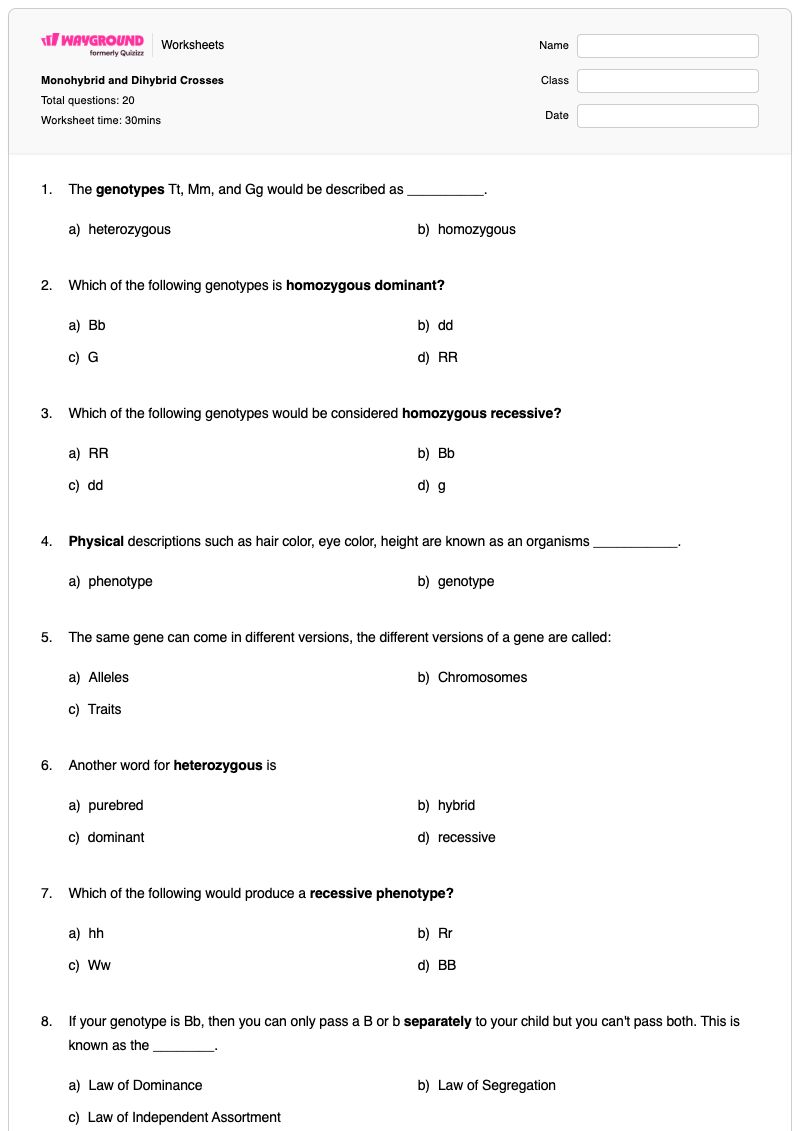
Monohybrid and Dihybrid Crosses

คำถามทั้งหมด: 20

ชื่อ
ระดับ
วันที่
1.

The genotypes Tt, Mm, and Gg would be described as __________.

a)

heterozygous

b)

homozygous

2.

Which of the following genotypes is homozygous dominant?

a)

Bb

b)

dd

c)

G

d)

RR

3.

Which of the following genotypes would be considered homozygous recessive?

a)

RR

b)

Bb

c)

dd

d)

g

4.

Physical descriptions such as hair color, eye color, height are known as an organisms ___________.

a)

phenotype

b)

genotype

5.

The same gene can come in different versions, the different versions of a gene are called:

a)

Alleles

b)

Chromosomes

c)

Traits

6.

Another word for heterozygous is

a)

purebred

b)

hybrid

c)

dominant

d)

recessive

7.

Which of the following would produce a recessive phenotype?

a)

hh

b)

Rr

c)

Ww

d)

BB

8.

If your genotype is Bb, then you can only pass a B or b separately to your child but you can't pass both. This is known as the ________.

a)

Law of Dominance

b)

Law of Segregation

c)

Law of Independent Assortment

9.

The ___________ states that a recessive allele is only expressed when a dominant allele is not present.

a)

Law of Dominance

b)

Law of Inheritance

10.

Different traits are inherited independently of each other

a)

Law of independent assortment

b)

Genetics law

11.
What is the phenotypic ratio for the monohybrid cross between blue and brown eyes?

What is the phenotypic ratio for the monohybrid cross between blue and brown eyes?

a)

3:1

b)

2:2

c)

0:2:1

d)

1:2:1

12.
Based on the genotypes present in this Monohybrid Punnett square, which eye color is dominant?

Based on the genotypes present in this Monohybrid Punnett square, which eye color is dominant?

a)

brown

b)

blue

13.
Based on the results in the monohybrid punnett square, what is the percent chance of having a child with blue eyes?

Based on the results in the monohybrid punnett square, what is the percent chance of having a child with blue eyes?

a)

75%

b)

50%

c)

25%

d)

0%

14.
Based on the results in the monohybrid punnett square, what is the genotypic ratio?

Based on the results in the monohybrid punnett square, what is the genotypic ratio?

a)

1:2:1

b)

0:2:2

c)

0:0:4

d)

none

15.

What is the term for a cross that involves just one trait, such as pod shape?

a)

test cross

b)

dihybrid cross

c)

monohybrid cross

d)

homozygous cross

16.
What goes in box 1?

What goes in box 1?

a)

AABb

b)

AABB

c)

aabb

d)

AaBB

17.
This image is an example of a ________ cross.

This image is an example of a ________ cross.

a)

Monohybrid

b)

Dihybrid

c)

Purebred

d)

Heterozygous

18.
What are the possible genotypes for this cross?

What are the possible genotypes for this cross?

a)

TT=25%, Tt=50%, tt=25%

b)

all tall

c)

TT=75%, tt=25%

d)

Tt=100%

19.
In cacti, long arms (A) are dominant to short arms (a). Suppose 2 heterozygous cacti are crossed. What percentage of their…

In cacti, long arms (A) are dominant to short arms (a). Suppose 2 heterozygous cacti are crossed. What percentage of their offspring are expected to have short arms?

a)

0%

b)

25%

c)

75%

d)

100%

20.
In watermelons, green rinds (G) are dominant to striped rinds (g). What is the genotype of a heterozygous green watermelon?

In watermelons, green rinds (G) are dominant to striped rinds (g). What is the genotype of a heterozygous green watermelon?

a)

GG

b)

Gg

c)

gg

d)

green

Waygroundแป้นคำตอบ

Monohybrid and Dihybrid Crosses

คำถามทั้งหมด: 20

1.
a)

heterozygous

2.
d)

RR

3.
c)

dd

4.
a)

phenotype

5.
a)

Alleles

6.
b)

hybrid

7.
a)

hh

8.
b)

Law of Segregation

9.
a)

Law of Dominance

10.
a)

Law of independent assortment

11.
b)

2:2

12.
a)

brown

13.
c)

25%

14.
a)

1:2:1

15.
c)

monohybrid cross

16.
a)

AABb

17.
b)

Dihybrid

18.
a)

TT=25%, Tt=50%, tt=25%

19.
b)

25%

20.
b)

Gg

คำถามที่พบบ่อย

แบบฝึกหัดเรื่องการผสมแบบโมโนไฮบริดและไดไฮบริดครอบคลุมเนื้อหาอะไรบ้าง?

แบบฝึกหัดวิทยาศาสตร์สำหรับนักเรียนระดับชั้น ม.3-ม.6 นี้ ประกอบด้วยคำถามแบบเลือกตอบ 20 ข้อ เพื่อฝึกฝนการจำแนกจีโนไทป์ การแยกแยะความแตกต่างระหว่างจีโนไทป์และฟีโนไทป์ การระบุแอลลีล และการประยุกต์ใช้กฎของลักษณะเด่น การแยกตัว และการจัดเรียงอย่างอิสระ นอกจากนี้ นักเรียนยังต้องตีความผลลัพธ์จากตารางพุนเน็ตต์แบบโมโนไฮบริด โดยการระบุลักษณะเด่น การคำนวณเปอร์เซ็นต์การถ่ายทอดทางพันธุกรรม และการหาอัตราส่วนของฟีโนไทป์และจีโนไทป์

ฉันจะใช้แบบฝึกหัดนี้สอนเรื่องการผสมแบบโมโนไฮบริดและไดไฮบริดได้อย่างไร?

เริ่มด้วยการแนะนำคำศัพท์โดยให้นักเรียนอธิบายความแตกต่างระหว่างจีโนไทป์ ฟีโนไทป์ โฮโมไซกัส เฮเทโรไซกัส และแอลลีล จากนั้นใช้คำถามตารางพุนเน็ตต์เพื่อจำลองวิธีการที่นักเรียนเปลี่ยนจากจีโนไทป์ไปสู่ฟีโนไทป์ อัตราส่วน และความน่าจะเป็น โดยถามพวกเขาว่าทำไมผลลัพธ์เช่น 1:2:1 จึงเป็นจีโนไทป์ ในขณะที่อัตราส่วนฟีโนไทป์อธิบายลักษณะที่สังเกตได้ จบด้วยคำถามที่ระบุถึงกฎการแยกตัวและการจัดเรียงอย่างอิสระเพื่อเป็นสะพานเชื่อมไปสู่การวิเคราะห์แบบไขว้

ฉันควรระวังข้อผิดพลาดอะไรบ้างเมื่อนักเรียนทำแบบฝึกหัดพันธุศาสตร์นี้?

ระวังนักเรียนที่สับสนระหว่างจีโนไทป์และฟีโนไทป์ หรือติดป้ายกำกับคู่ผสม เช่น Bb ว่าเป็นโฮโมไซกัสแทนที่จะเป็นเฮเทโรไซกัส นักเรียนอาจสับสนระหว่างโฮโมไซกัสเด่นกับโฮโมไซกัสด้อย ปฏิบัติต่อฟีโนไทป์ด้อยราวกับว่าเป็นไปได้เมื่อมีอัลลีลเด่นอยู่ หรือเลือกอัตราส่วนฟีโนไทป์เมื่อคำถามถามถึงอัตราส่วนจีโนไทป์ ในข้อสอบแบบตารางพันเน็ตต์ ตรวจสอบว่านักเรียนแปลงผลลัพธ์เป็นเปอร์เซ็นต์หรืออัตราส่วนตามที่ต้องการ แทนที่จะนับจำนวนอัลลีลเพียงอย่างเดียว

ฉันจะมอบหมายและตรวจงานแบบฝึกหัดเรื่องการผสมพันธุ์แบบโมโนไฮบริดและไดไฮบริดอย่างไร?

แบบฝึกหัดนี้มีให้ดาวน์โหลดในรูปแบบ PDF ที่สามารถพิมพ์ได้ และเป็นแบบทดสอบดิจิทัลบน Wayground โดยมีเฉลยคำตอบครบถ้วนสำหรับคำถามแบบเลือกตอบ 20 ข้อ สำหรับการส่งงานแบบพิมพ์ คุณสามารถตรวจงานของนักเรียนได้โดยการสแกนด้วยแอป Wayground for Teachers รูปแบบที่พิมพ์ได้ยังช่วยสนับสนุนโรงเรียนที่ต้องการลดเวลาการใช้หน้าจอได้อีกด้วย

ฉันจะปรับแบบฝึกหัดนี้ให้เหมาะสมกับนักเรียนของฉันได้อย่างไร?

ใช้การตั้งค่าขั้นสูงของแบบฝึกหัดเพื่อปรับระยะห่างระหว่างตัวอักษรหรือขนาดตัวอักษร เพื่อให้คำศัพท์ทางพันธุศาสตร์และตัวเลือกคำตอบอ่านง่ายขึ้น นอกจากนี้ คุณยังสามารถเลือกแบบอักษรที่เหมาะสำหรับผู้ที่มีภาวะดิสเล็กเซีย หรือแปลแบบฝึกหัดเป็นภาษาอื่นได้ โดยยังคงรูปแบบคำถามแบบเลือกตอบและโจทย์การตีความตารางพุนเน็ตต์ไว้เหมือนเดิม

ฉันจะหาแบบฝึกหัดฟรีแบบนี้เพิ่มเติมได้ที่ไหนบน Wayground?

Wayground นำเสนอชุดแบบฝึกหัดและโจทย์ฝึกหัดฟรีที่ครอบคลุมหลากหลายวิชา พร้อมไฟล์ PDF และเฉลยคำตอบ เพื่อช่วยให้นักเรียนเชี่ยวชาญทักษะและแนวคิดที่สำคัญ ดูแหล่งข้อมูลเพิ่มเติมได้ที่ https://wayground.com/en-us/worksheets