

Wayground
Rocks and Minerals - Printable Science Worksheets ระดับ 3 - Wayground

Rocks and Minerals

11 คำถาม

3rd - ชั้นประถมศึกษาปีที่ 3

Science

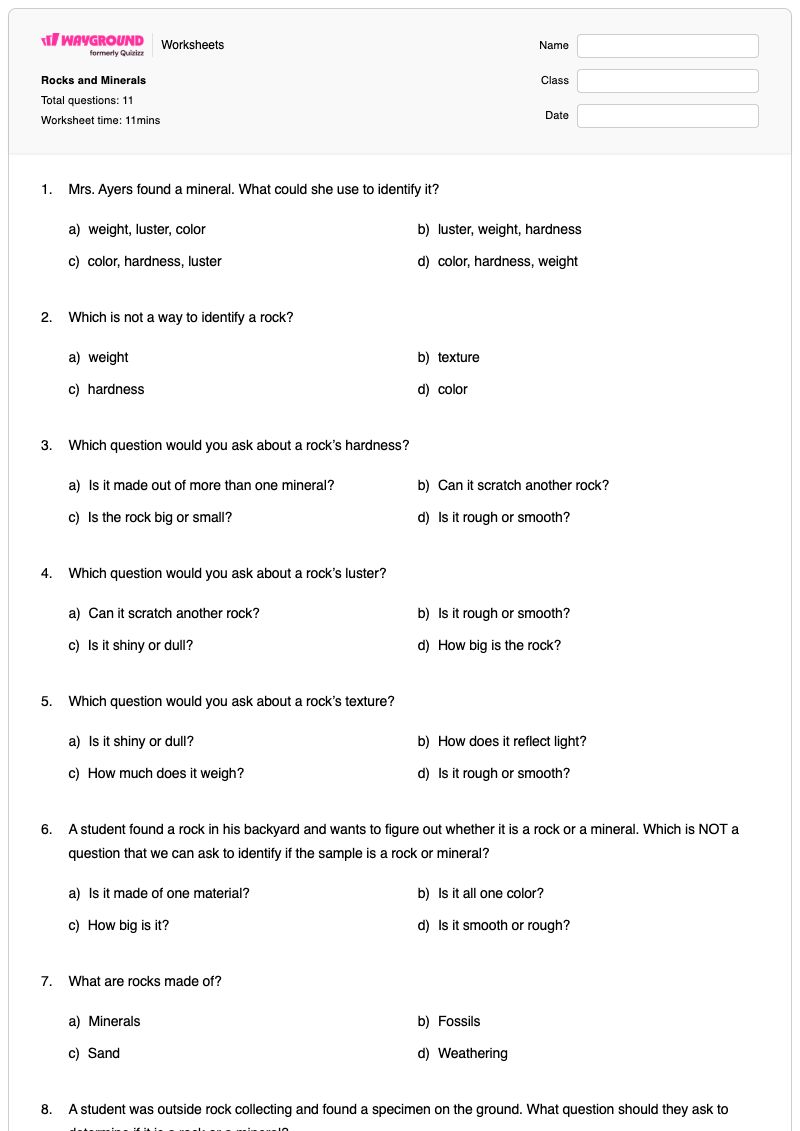
แบบฝึกหัดวิทยาศาสตร์เรื่องหินและแร่ สำหรับนักเรียนชั้นประถมศึกษาปีที่ 3 ประกอบด้วยคำถามแบบเลือกตอบ 11 ข้อ ที่ช่วยให้นักเรียนระบุและจำแนกประเภทของหินและแร่โดยใช้คุณสมบัติที่สังเกตได้ นักเรียนจะได้เรียนรู้การแยกแยะความแข็ง ความมันวาว เนื้อสัมผัส สี และองค์ประกอบ เชื่อมโยงความแข็งกับความสามารถของแร่ในการขูดขีดวัสดุอื่น และตระหนักว่าหินทำมาจากแร่ แบบฝึกหัดหลายข้อจะให้นักเรียนเลือกคำถามเชิงสืบสวนที่ดีที่สุดสำหรับการระบุตัวอย่างหรือการจัดกลุ่มแร่ตามความมันวาว แบบฝึกหัดนี้ช่วยให้นักเรียนได้ฝึกฝนการใช้คำศัพท์และการให้เหตุผลเชิงประจักษ์กับสิ่งที่สังเกตได้เกี่ยวกับหินและแร่ แทนที่จะเพียงแค่ท่องจำคำจำกัดความ แบบฝึกหัดนี้มีประโยชน์สำหรับการแนะนำคุณสมบัติของหินและแร่ การเสริมสร้างการสืบสวนในชั้นเรียน หรือการตรวจสอบความเข้าใจหลังจากกิจกรรมการสังเกตแบบลงมือปฏิบัติ แบบฝึกหัดที่พิมพ์ได้ฟรีนี้มีเฉลยคำตอบครบถ้วนเพื่อการตรวจสอบและตรวจให้คะแนนอย่างมีประสิทธิภาพ

การตั้งค่าแผ่นงาน

ขนาดตัวอักษร

S
M
L
XL
แผ่นงาน

Rocks and Minerals

คำถามทั้งหมด: 11

ชื่อ
ระดับ
วันที่
1.

Mrs. Ayers found a mineral. What could she use to identify it?

a)

weight, luster, color

b)

luster, weight, hardness

c)

color, hardness, luster

d)

color, hardness, weight

2.

Which is not a way to identify a rock?

a)

weight

b)

texture

c)

hardness

d)

color

3.

Which question would you ask about a rock’s hardness?

a)

Is it made out of more than one mineral?

b)

Can it scratch another rock?

c)

Is the rock big or small?

d)

Is it rough or smooth?

4.

Which question would you ask about a rock’s luster?

a)

Can it scratch another rock?

b)

Is it rough or smooth?

c)

Is it shiny or dull?

d)

How big is the rock?

5.

Which question would you ask about a rock’s texture?

a)

Is it shiny or dull?

b)

How does it reflect light?

c)

How much does it weigh?

d)

Is it rough or smooth?

6.

A student found a rock in his backyard and wants to figure out whether it is a rock or a mineral. Which is NOT a question that we can ask to identify if the sample is a rock or mineral?

a)

Is it made of one material?

b)

Is it all one color?

c)

How big is it?

d)

Is it smooth or rough?

7.

What are rocks made of?

a)

Minerals

b)

Fossils

c)

Sand

d)

Weathering

8.

A student was outside rock collecting and found a specimen on the ground. What question should they ask to determine if it is a rock or a mineral?

a)

How heavy is the specimen?

b)

Is the specimen made of the same material throughout?

c)

How big is the specimen?

d)

Is the specimen hard or soft?

9.

John rubs together a soft mineral and a hard mineral. What will most likely happen when the minerals are rubbed against each other?

a)

The harder mineral will scratch the softer mineral.

b)

The minerals will both leave scratches on the other

c)

The minerals will not leave any scratches on each other.

d)

The softer mineral will scratch the harder mineral

10.

There are several examples of rocks and minerals on a lab table. Josh chooses a sample that is gray, with black layers. When he uses a hand lens, he observes small crystals throughout the sample. The sample weighs about 12 grams and it breaks very easily. What questions could Josh ask that would help him determine if the sample is a rock or a mineral?

a)

How many materials make up the sample? How many grams does the sample weigh?

b)

Is the sample easy to break open? What is the color of the sample?

c)

Does the sample have crystals? How much does the sample weigh?

d)

Is the sample made out of only one material?

11.

The students in Mrs. Hagerty's third grade class are observing and classifying minerals. One group has decided they want to group their minerals by luster. Which question will best help the students classify the minerals?

a)

What does the mineral feel like?

b)

Is the mineral metallic?

c)

What color is each mineral?

d)

Can the mineral be scratched?

แป้นคำตอบ

Rocks and Minerals

คำถามทั้งหมด: 11

1.
c)

color, hardness, luster

2.
a)

weight

3.
b)

Can it scratch another rock?

4.
c)

Is it shiny or dull?

5.
d)

Is it rough or smooth?

6.
c)

How big is it?

7.
a)

Minerals

8.
b)

Is the specimen made of the same material throughout?

9.
a)

The harder mineral will scratch the softer mineral.

10.
d)

Is the sample made out of only one material?

11.
b)

Is the mineral metallic?

คำถามที่พบบ่อย

แบบฝึกหัดเรื่องหินและแร่ธาตุครอบคลุมเนื้อหาอะไรบ้าง?

แบบฝึกหัดวิทยาศาสตร์สำหรับชั้นประถมศึกษาปีที่ 3 นี้ประกอบด้วยคำถามแบบเลือกตอบ 11 ข้อ เพื่อประเมินว่านักเรียนสามารถระบุและจำแนกหินและแร่ธาตุตามสี ความแข็ง ความมันวาว เนื้อสัมผัส และองค์ประกอบได้อย่างไร นักเรียนจะนำคุณสมบัติเหล่านี้ไปใช้ในการเลือกคำถามการสำรวจที่น่าสนใจ กำหนดว่าตัวอย่างนั้นทำจากวัสดุชนิดใด และให้เหตุผลว่าแร่ที่แข็งกว่าสามารถขูดแร่ที่อ่อนกว่าได้

ฉันจะใช้แบบฝึกหัดนี้สอนนักเรียนเกี่ยวกับการระบุชนิดของหินและแร่ธาตุได้อย่างไร?

เริ่มแบบฝึกหัดโดยยกตัวอย่างการสังเกตหินหรือแร่ พร้อมกับคำถามสำคัญที่แบบฝึกหัดเน้นย้ำ เช่น ผิวหยาบหรือเรียบ เงาวาวหรือด้าน สามารถขูดขีดวัสดุอื่นได้หรือไม่ หรือทำจากวัสดุชนิดเดียวตลอดทั้งชิ้น? ให้นักเรียนอธิบายว่าเหตุใดน้ำหนักและขนาดจึงมีประโยชน์น้อยกว่าคุณสมบัติอื่นๆ เช่น ความแข็งและความมันวาว ในการระบุชนิดของหินหรือแร่ จากนั้นใช้ข้อสอบแบบเลือกตอบเป็นแบบฝึกหัดนำทาง ก่อนที่จะมอบหมายคำถามที่เหลือให้นักเรียนทำด้วยตนเอง

ฉันควรสังเกตข้อผิดพลาดอะไรบ้างเมื่อนักเรียนทำแบบฝึกหัดนี้เสร็จ?

นักเรียนอาจเลือกน้ำหนักหรือขนาดเป็นคุณสมบัติในการระบุ แม้ว่าแบบฝึกหัดจะเน้นที่สี ความแข็ง ความมันวาว เนื้อสัมผัส และองค์ประกอบก็ตาม นอกจากนี้ พวกเขาอาจสับสนระหว่างความแข็งกับเนื้อสัมผัส โดยเลือก "หยาบหรือเรียบ" แทนที่จะพิจารณาว่าตัวอย่างนั้นสามารถขูดหินก้อนอื่นได้หรือไม่ หรือแร่ธาตุใดสามารถขูดแร่ธาตุอื่นได้บ้าง โปรดระวังความสับสนระหว่างหินที่ประกอบด้วยแร่ธาตุหลายชนิดกับตัวอย่างที่ทำจากวัสดุชนิดเดียวตลอดทั้งชิ้น

ฉันจะมอบหมายและให้คะแนนแบบฝึกหัดเรื่องหินและแร่ธาตุนี้อย่างไร?

แบบฝึกหัดนี้มีให้ดาวน์โหลดในรูปแบบไฟล์ PDF ที่สามารถพิมพ์ได้ และเป็นแบบทดสอบดิจิทัลบน Wayground พร้อมเฉลยคำตอบครบถ้วนสำหรับคำถามแบบเลือกตอบทั้ง 11 ข้อ สำหรับการส่งงานในรูปแบบไฟล์พิมพ์ คุณสามารถสแกนงานของนักเรียนด้วยแอป Wayground for Teachers เพื่อใช้ในการตรวจและให้คะแนน นอกจากนี้ รูปแบบไฟล์พิมพ์ยังช่วยให้โรงเรียนมีทางเลือกในการฝึกฝนแนวคิดทางวิทยาศาสตร์เหล่านี้โดยใช้เวลาอยู่หน้าจอน้อยลง

ฉันจะปรับแบบฝึกหัดเรื่องหินและแร่ธาตุนี้ให้เหมาะสมกับนักเรียนของฉันได้อย่างไร?

ใช้การตั้งค่าขั้นสูงของแบบฝึกหัดเพื่อสร้างเวอร์ชันที่มีระยะห่างระหว่างตัวอักษรมากขึ้นหรือขนาดตัวอักษรใหญ่ขึ้น ซึ่งจะทำให้คำถามแบบเลือกตอบ 11 ข้ออ่านง่ายขึ้น นอกจากนี้ คุณยังสามารถเปิดใช้งานแบบอักษรที่เหมาะสำหรับผู้ที่มีภาวะดิสเล็กเซีย หรือแปลคำถามเกี่ยวกับหินและแร่เป็นภาษาอื่นเมื่อเหมาะสมกับผู้เรียนของคุณ

ฉันจะหาแบบฝึกหัดแบบนี้เพิ่มเติมได้ที่ไหนบน Wayground?

Wayground นำเสนอชุดแบบฝึกหัดและโจทย์ฝึกหัดฟรีที่ครอบคลุมทุกวิชา พร้อมไฟล์ PDF และเฉลยคำตอบ เพื่อช่วยให้นักเรียนเชี่ยวชาญทักษะและแนวคิดที่สำคัญ ดูแหล่งข้อมูลเพิ่มเติมได้ที่ https://wayground.com/en-us/worksheets