
Wayground
Law of Conservation of Matter - Printable ศาสตร์ Worksheets ระดับ 8 - Wayground

Law of Conservation of Matter

Laurie Palomino

By Laurie Palomino

24 คำถาม

8th - 8th ระดับชั้น

ศาสตร์

567 เล่น

อัปเดตแล้ว ต.ค. 2569

แบบฝึกหัดวิทยาศาสตร์สำหรับนักเรียนชั้น ม.2 เรื่องกฎการอนุรักษ์มวล มีคำถามแบบเลือกตอบ 24 ข้อ เน้นการประยุกต์ใช้กฎการอนุรักษ์มวลในปฏิกิริยาเคมี นักเรียนจะได้เรียนรู้เกี่ยวกับกฎการอนุรักษ์มวล แยกแยะโมเลกุลจากสารประกอบ ตีความสูตรและสมการเคมี และระบุสัมประสิทธิ์ สารตั้งต้น และผลิตภัณฑ์ แบบฝึกหัดนี้ยังให้นักเรียนใช้กฎการอนุรักษ์มวลในสถานการณ์เชิงตัวเลข เช่น การละลายน้ำตาล ปฏิกิริยาการเกิดแก๊ส มวลของสารตั้งต้นหรือผลิตภัณฑ์ที่หายไป และการนับอะตอมในสมการเคมี นักเรียนจะประเมินว่าสมการสมดุลหรือไม่โดยการเปรียบเทียบอะตอมทั้งสองข้าง แบบฝึกหัดที่พิมพ์ได้ฟรีนี้มีประโยชน์สำหรับการฝึกฝน ทบทวน หรือประเมินผลระหว่างเรียน และมีเฉลยคำตอบครบถ้วนเพื่อการตรวจสอบที่มีประสิทธิภาพ

การตั้งค่าแผ่นงาน

ขนาดตัวอักษร

S
M
L
XL
Waygroundแผ่นงาน

Law of Conservation of Matter

คำถามทั้งหมด: 24

ชื่อ
ระดับ
วันที่
1.

a different way to say Law of Conservation of Matter

a)

Law of Conservation of Volume

b)

Law of Conservation of Energy

c)

Law of Conservation of Mass

d)

Law of Conservation of Environment

2.

two or more atoms joined together (can be from the same element or different elements)

a)

molecule

b)

compound

c)

mixture

d)

solution

3.

two or more atoms joined together (can be from the same element or different elements)

a)

molecule

b)

compound

c)

mixture

d)

solution

4.

a combination of symbols that shows the element(s) in a molecule or compound and the ratio of atoms

a)

mathematical formula

b)

mathematical equation

c)

chemical formula

d)

chemical equation

5.

a representation of a chemical reaction that uses symbols to show the relationship between the reactants and the products

a)

mathematical formula

b)

mathematical equation

c)

chemical formula

d)

chemical equation

6.

a number in front of a chemical formula that indicates how many molecules or compounds of each reactant and product are involved in a reaction

a)

denominator

b)

coefficient

c)

numerator

d)

subscript

7.

a substance that takes part in and undergoes change during a reaction.

a)

coefficient

b)

subscript

c)

reactant

d)

product

8.

a substance that forms in a chemical reaction

a)

coefficient

b)

subscript

c)

reactant

d)

product

9.

If 20g of sugar is stirred into a beaker containing 100g of water. What would the mass of the dissolved solution be after the sugar is dissolved fully?

a)

20g

b)

100g

c)

80g

d)

120g

10.

Suppose you have 15g of baking soda and mix it with 15g of vinegar. When they are combined they bubble and fizz a lot. The final solution has a mass of 25g. What happened to the "lost" 5g?

a)

it dissappears

b)

it is still there just not weighted

c)

it is in the gas that is formed

d)

nothing happened

11.

How many atoms of aluminum are on each side of the following equation?

4Al + 3O2 --> 2Al2 O3

a)

2

b)

6

c)

4

d)

1

12.
If reaction starts with 20g of reactants it should produce 
a)
a total of 40g of products
b)
a total of 10g of products
c)
a total of 80 g of products
d)
a total of 20g of products
13.

How many oxygen atoms are in the products for the chemical reaction below?
4Fe + 3O2 → 2Fe2O34Fe\ +\ 3O_{2\ }\rightarrow\ 2Fe_2O_3  

a)

2

b)

3

c)

5

d)

6

14.
In a reaction A + B ----> C,  reactant A has 5g and product  C has 9g. How many grams does reactant B should have? 
a)
4g
b)
5g
c)
9g
d)
14g
15.
Is this equation balanced or unbalanced? 
H2 + O2 --> H2O
a)
balanced
b)
unbalanced
16.
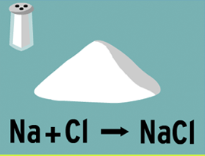
When sodium and chlorine combine to form sodium chloride, sodium chloride is the:

When sodium and chlorine combine to form sodium chloride, sodium chloride is the:

a)

Originator

b)

Reactant

c)

Product

d)

Produce

17.
Which of the models of a chemical reaction best represents the Law of Conservation of Mass?

Which of the models of a chemical reaction best represents the Law of Conservation of Mass?

a)

A

b)

B

c)

C

d)

D

18.
Which of the models of a chemical reaction best represents the Law of Conservation of Mass?

Which of the models of a chemical reaction best represents the Law of Conservation of Mass?

a)

A

b)

B

c)

C

d)

D

19.

Based on the Law of Conservation of Matter, describe the relationship between the mass of the reactants and the mass of the products.

a)

The mass of the products is always greater than the mass of the reactants.

b)

The mass of the reactants is less than the mass of the products.

c)

The mass of the reactants equals the mass of the products.

d)

The mass of the reactants is greater than the mass of the products.

20.
12g of Carbon react with 16g of Oxygen, how much carbon monoxide (CO) is formed? 
a)
28 g
b)
4g
c)
30g
d)
12g
21.

What happens to atoms in a chemical reaction?

a)

they are destroyed

b)

they are created

c)

they are rearranged

22.
Which section represents the yield sign?

Which section represents the yield sign?

a)

A

b)

B

c)

C

23.
Which section represents the products?

Which section represents the products?

a)

A

b)

B

c)

C

24.
Which section represents the reactants?

Which section represents the reactants?

a)

A

b)

B

c)

C

Waygroundแป้นคำตอบ

Law of Conservation of Matter

คำถามทั้งหมด: 24

1.
c)

Law of Conservation of Mass

2.
a)

molecule

3.
a)

molecule

4.
c)

chemical formula

5.
d)

chemical equation

6.
b)

coefficient

7.
c)

reactant

8.
d)

product

9.
d)

120g

10.
c)

it is in the gas that is formed

11.
c)

4

12.
d) a total of 20g of products
13.
d)

6

14.
a) 4g
15.
b) unbalanced
16.
c)

Product

17.
a)

A

18.
a)

A

19.
c)

The mass of the reactants equals the mass of the products.

20.
a) 28 g
21.
c)

they are rearranged

22.
b)

B

23.
c)

C

24.
a)

A

คำถามที่พบบ่อย

แบบฝึกหัดเรื่องกฎการอนุรักษ์มวลนี้ครอบคลุมหัวข้ออะไรบ้าง?

แบบฝึกหัดวิทยาศาสตร์สำหรับนักเรียนชั้น ม.2 นี้ ประกอบด้วยคำถามแบบเลือกตอบ 24 ข้อ เพื่อฝึกฝนการประยุกต์ใช้กฎการอนุรักษ์มวลกับสูตรและสมการทางเคมี นักเรียนจะได้ระบุโมเลกุล สารประกอบ สัมประสิทธิ์ สารตั้งต้น และผลิตภัณฑ์ นับอะตอมในแต่ละด้านของสมการ คำนวณมวลที่ไม่ทราบค่า และตรวจสอบว่าสมการนั้นสมดุลหรือไม่

ฉันจะใช้แบบฝึกหัดนี้สอนเรื่องการอนุรักษ์มวลในปฏิกิริยาเคมีได้อย่างไร?

เริ่มด้วยการแนะนำคำศัพท์โดยให้นักเรียนแยกแยะความแตกต่างระหว่างสูตรเคมีกับสมการเคมี และสารตั้งต้นกับผลิตภัณฑ์ จากนั้นใช้คำถามเกี่ยวกับการคำนวณมวลและการนับอะตอมเพื่อจำลองว่าสสารไม่ได้ถูกสร้างขึ้นหรือถูกทำลาย รวมถึงอธิบายว่าก๊าซที่เกิดขึ้นในปฏิกิริยาทำให้มวลที่เห็นได้ชัดลดลงได้อย่างไร จบด้วยคำถามเกี่ยวกับสมการที่สมดุลและไม่สมดุล และขอให้นักเรียนอธิบายว่าอะตอมใดที่ไม่ตรงกัน

ฉันควรสังเกตข้อผิดพลาดอะไรบ้างเมื่อนักเรียนทำแบบฝึกหัดนี้เสร็จ?

นักเรียนอาจสับสนระหว่างโมเลกุลกับสารประกอบ หรือเข้าใจผิดว่าสัมประสิทธิ์เป็นตัวห้อยเมื่ออ่านสัญลักษณ์ทางเคมี นอกจากนี้ พวกเขาอาจคิดว่าการเกิดฟองหมายถึงสารหายไป มองข้ามแก๊สเมื่อเปรียบเทียบมวลของปฏิกิริยา หรือนับเฉพาะตัวเลขที่มองเห็นได้แทนที่จะคูณสัมประสิทธิ์ด้วยตัวห้อย ในโจทย์การดุลสมการ ให้ตรวจสอบว่านักเรียนเปรียบเทียบแต่ละธาตุในทั้งสองข้างของสมการ แทนที่จะตัดสินสมการจากลักษณะที่ปรากฏ

ฉันจะมอบหมายและให้คะแนนแบบฝึกหัดนี้อย่างไร?

แบบฝึกหัดเรื่องกฎการอนุรักษ์มวลนี้ มีให้เลือกทั้งในรูปแบบไฟล์ PDF ที่สามารถพิมพ์ได้ และแบบทดสอบดิจิทัลบน Wayground แบบฝึกหัดนี้มีเฉลยคำตอบครบถ้วน และสามารถตรวจให้คะแนนได้โดยการสแกนงานของนักเรียนด้วยแอป Wayground for Teachers แบบฝึกหัดฉบับพิมพ์นี้ยังเหมาะสำหรับห้องเรียนที่ต้องการลดเวลาการใช้หน้าจออีกด้วย

ฉันจะปรับแบบฝึกหัดเรื่องปฏิกิริยาเคมีนี้ให้เหมาะสมกับนักเรียนของฉันได้อย่างไร?

ใช้การตั้งค่าขั้นสูงของแบบฝึกหัดเพื่อปรับระยะห่างระหว่างตัวอักษรหรือขนาดตัวอักษร เพื่อให้สูตรเคมี สมการ และตัวเลือกแบบปรนัยอ่านง่ายขึ้น นอกจากนี้ คุณยังสามารถเลือกแบบอักษรที่เหมาะสำหรับผู้ที่มีภาวะดิสเล็กเซีย หรือแปลแบบฝึกหัดเป็นภาษาอื่นได้ หากตัวเลือกเหล่านั้นช่วยให้เข้าถึงคำศัพท์และการคำนวณปฏิกิริยาได้ดีขึ้น

ฉันจะหาแบบฝึกหัดแบบนี้เพิ่มเติมได้ที่ไหนบน Wayground?

Wayground นำเสนอชุดแบบฝึกหัดและโจทย์ฝึกหัดฟรีที่ครอบคลุมทุกวิชา พร้อมไฟล์ PDF และเฉลยคำตอบ เพื่อช่วยให้นักเรียนเชี่ยวชาญทักษะและแนวคิดที่สำคัญ ดูแหล่งข้อมูลเพิ่มเติมได้ที่ https://wayground.com/en-us/worksheets