

Wayground
Making Connections/Summary - Printable English Worksheets โรงเรียนอนุบาล - Wayground

Making Connections/Summary

15 คำถาม

6th - 6th ระดับชั้น

English

แบบฝึกหัดภาษาอังกฤษสำหรับนักเรียนชั้นประถมศึกษาปีที่ 6 นี้ ช่วยให้นักเรียนสร้างและจำแนกความสัมพันธ์ของเนื้อหาขณะอ่าน ผ่านสถานการณ์แบบเลือกตอบเจ็ดแบบ นักเรียนจะได้แยกแยะความสัมพันธ์ระหว่างเนื้อหากับตนเอง เนื้อหาต่อเนื้อหา และเนื้อหาต่อโลก รวมถึงความสัมพันธ์ที่เกี่ยวข้องกับตัวละคร หนังสือหรือผู้เขียนอื่น ๆ ประสบการณ์ส่วนตัว เหตุการณ์ปัจจุบัน และประเด็นในโลกแห่งความเป็นจริง แบบฝึกหัดนี้ยังพัฒนาความเข้าใจในการสรุปเนื้อหาผ่านคำถามแบบเลือกตอบแปดข้อ นักเรียนจะได้ระบุว่าการสรุปเนื้อหาประกอบด้วยอะไรบ้าง รู้จักโครงสร้าง "ใครบางคนต้องการ-แต่-ดังนั้น-แล้ว" ระบุความขัดแย้ง วิธีแก้ปัญหา และบทสรุปของเรื่อง และแยกแยะแก่นเรื่องออกจากองค์ประกอบอื่น ๆ ของเรื่อง แบบฝึกหัดที่พิมพ์ได้ฟรีนี้เหมาะสำหรับการสอนการอ่าน การฝึกฝนแบบมีผู้แนะนำ หรือการตรวจสอบความเข้าใจด้วยตนเอง และมีเฉลยคำตอบครบถ้วนเพื่อการตรวจสอบและให้คะแนนอย่างมีประสิทธิภาพ

การตั้งค่าแผ่นงาน

ขนาดตัวอักษร

S
M
L
XL
แผ่นงาน

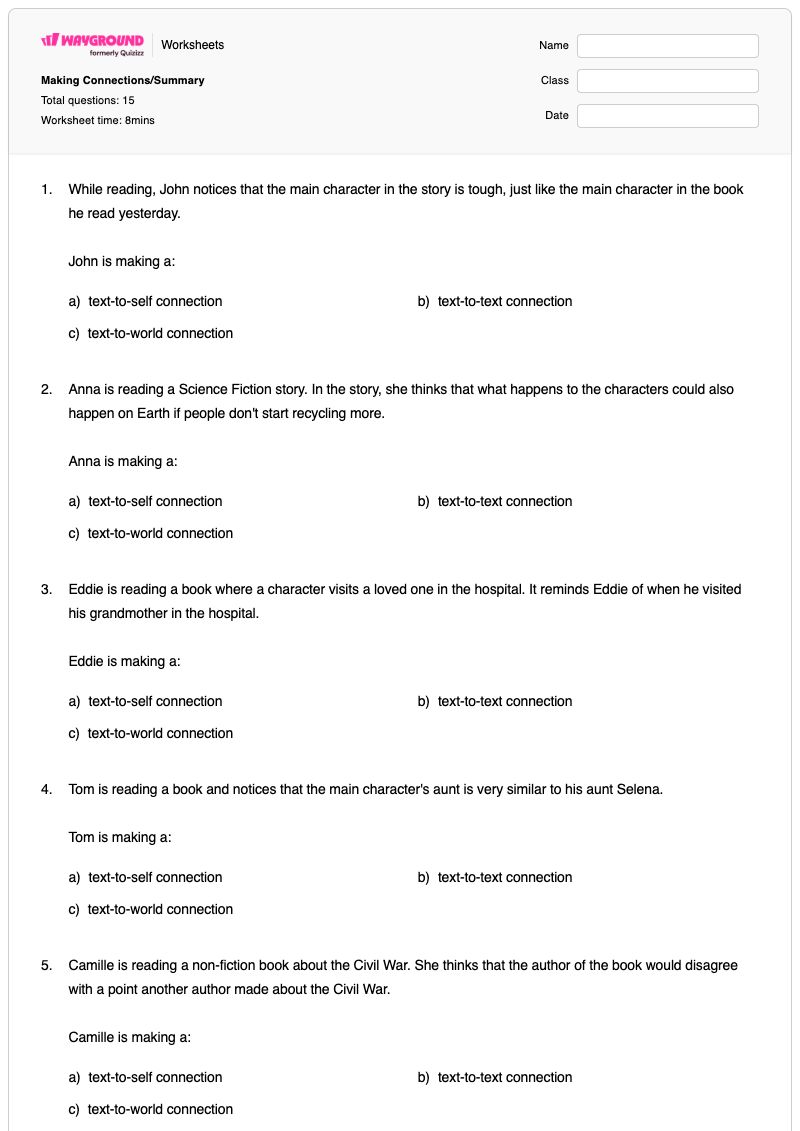
Making Connections/Summary

คำถามทั้งหมด: 15

ชื่อ
ระดับ
วันที่
1.

While reading, John notices that the main character in the story is tough, just like the main character in the book he read yesterday.


John is making a:

a)

text-to-self connection

b)

text-to-text connection

c)

text-to-world connection

2.

Anna is reading a Science Fiction story. In the story, she thinks that what happens to the characters could also happen on Earth if people don't start recycling more.


Anna is making a:

a)

text-to-self connection

b)

text-to-text connection

c)

text-to-world connection

3.

Eddie is reading a book where a character visits a loved one in the hospital. It reminds Eddie of when he visited his grandmother in the hospital.


Eddie is making a:

a)

text-to-self connection

b)

text-to-text connection

c)

text-to-world connection

4.

Tom is reading a book and notices that the main character's aunt is very similar to his aunt Selena.


Tom is making a:

a)

text-to-self connection

b)

text-to-text connection

c)

text-to-world connection

5.

Camille is reading a non-fiction book about the Civil War. She thinks that the author of the book would disagree with a point another author made about the Civil War.


Camille is making a:

a)

text-to-self connection

b)

text-to-text connection

c)

text-to-world connection

6.

Mike is reading an article about different viruses that ravaged many countries. While he is reading, he thinks about the news report he just watched on the television about this new variant of covid-19.


Mike is making a:

a)

text-to-self connection

b)

text-to-text connection

c)

text-to-world connection

7.

What is a summary?

a)

briefly retelling a story using important details

b)

a short story you write

c)

a paragraph

d)

a detailed piece of writing that tells a story

8.

What information should go in your summary?

a)

small details

b)

the most important information

c)

your opinion

d)

a list of characters

9.

What main parts should be in your summary?

a)

Somebody, Wanted, Then, And Later That

b)

Beginning, Middle, End

c)

Somebody, Wanted Something, But, So, Then

d)

Somebody, wanted, but, so then what

10.

What question do you ask when identifying the SOMEBODY part in the Summary? (PICK 2 ANSWERS)

a)

Who is the main character of the story?

b)

Who is the story about?

c)

Can anybody find me somebody to love?

d)

Who is the villain?

11.

You should ask this question when determining the WANTED: What does the character want?

a)

False

b)

True

12.

What is the BUT in a story?

a)

Conflict (problem) in a story

b)

Something smelly

c)

Who the story is about

d)

The correct answer

13.

What is the SO part of a summary?

a)

What does the character do to solve the problem?

b)

What events happen?

c)

Who else gets involved?

d)

How does the story end?

14.

What is the THEN part of your summary?

a)

The problem in the story

b)

One of the events in the story

c)

The character's feelings

d)

What was the resolution? How did the story end?

15.

What is the lesson or message the author wants you to take away from the story?

a)

Conflict

b)

Summary

c)

Theme

d)

Main idea

แป้นคำตอบ

Making Connections/Summary

คำถามทั้งหมด: 15

1.
b)

text-to-text connection

2.
c)

text-to-world connection

3.
a)

text-to-self connection

4.
a)

text-to-self connection

5.
b)

text-to-text connection

6.
c)

text-to-world connection

7.
a)

briefly retelling a story using important details

8.
b)

the most important information

9.
c)

Somebody, Wanted Something, But, So, Then

10.
a)

Who is the main character of the story?

, b)

Who is the story about?

11.
b)

True

12.
a)

Conflict (problem) in a story

13.
a)

What does the character do to solve the problem?

14.
d)

What was the resolution? How did the story end?

15.
c)

Theme

คำถามที่พบบ่อย

แบบฝึกหัด "การเชื่อมโยง/สรุป" ครอบคลุมเนื้อหาอะไรบ้าง?

แบบฝึกหัดภาษาอังกฤษสำหรับนักเรียนชั้นประถมศึกษาปีที่ 6 นี้ ใช้สถานการณ์แบบเลือกตอบ 7 สถานการณ์ เพื่อช่วยให้นักเรียนจำแนกความเชื่อมโยงจากการอ่านว่าเป็น ความเชื่อมโยงระหว่างข้อความกับตนเอง ข้อความกับข้อความอื่น หรือข้อความกับโลกภายนอก จากนั้นคำถามแบบเลือกตอบ 8 ข้อ จะประเมินความเข้าใจในแนวคิดหลัก รวมถึงโครงสร้าง "มีคนต้องการ-แต่-ดังนั้น-แล้ว" ความขัดแย้ง วิธีแก้ปัญหา การคลี่คลาย และแก่นเรื่อง

ฉันจะใช้แบบฝึกหัดนี้ในการสอนเรื่องการเชื่อมโยงเนื้อหาและโครงสร้างการสรุปได้อย่างไร?

แนะนำรูปแบบการเชื่อมโยงทั้งสามแบบโดยใช้สถานการณ์จำลองในแบบฝึกหัด และขอให้นักเรียนอธิบายว่าเบาะแสใดเชื่อมโยงเรื่องราวที่อ่านกับประสบการณ์ของพวกเขา ข้อความอื่น หรือโลกที่กว้างขึ้น จากนั้น ยกตัวอย่างเรื่องสั้นที่มีเนื้อหาว่า "ใครบางคน ต้องการบางสิ่ง แต่ ดังนั้น แล้ว" และให้นักเรียนใช้คำถามในแบบฝึกหัดเพื่อระบุองค์ประกอบแต่ละอย่าง รวมถึงความขัดแย้ง วิธีแก้ปัญหา และตอนจบ

ฉันควรสังเกตข้อผิดพลาดอะไรบ้างเมื่อนักเรียนทำแบบฝึกหัดนี้เสร็จ?

นักเรียนอาจสับสนระหว่างการเชื่อมโยงระหว่างเนื้อหาในเรื่องกับการเชื่อมโยงระหว่างเนื้อหากับโลกภายนอก เมื่อทั้งสองอย่างเกี่ยวข้องกับข้อมูลที่อยู่นอกเรื่องราว หรือเลือกการเชื่อมโยงกับตนเองโดยไม่ระบุประสบการณ์ส่วนตัว ในส่วนสรุป ให้สังเกตนักเรียนที่ใช้รายละเอียดเล็กๆ น้อยๆ ความคิดเห็น หรือรายชื่อตัวละครเป็นบทสรุป สับสนระหว่างองค์ประกอบ "แต่" และ "ดังนั้น" หรือเลือกใจความสำคัญแทนที่จะเป็นแก่นเรื่อง

ฉันจะมอบหมายและให้คะแนนแบบฝึกหัด "การเชื่อมโยง/สรุป" นี้ได้อย่างไร?

Wayground จัดเตรียมแบบฝึกหัดนี้ในรูปแบบไฟล์ PDF ที่สามารถพิมพ์ได้ และในรูปแบบแบบทดสอบดิจิทัล พร้อมเฉลยคำตอบครบถ้วนทั้ง 15 ข้อ สำหรับการส่งงานในรูปแบบเอกสารพิมพ์ คุณสามารถสแกนงานของนักเรียนด้วยแอป Wayground for Teachers เพื่อใช้ในการตรวจและให้คะแนนได้

ฉันจะปรับแบบฝึกหัดนี้ให้เหมาะสมกับนักเรียนของฉันได้อย่างไร?

ในการตั้งค่าขั้นสูงของแบบฝึกหัด ให้ปรับระยะห่างระหว่างตัวอักษรหรือเลือกขนาดตัวอักษรที่ใหญ่ขึ้นเพื่อให้สถานการณ์การเชื่อมโยงและตัวเลือกคำตอบสรุปอ่านง่ายขึ้น นอกจากนี้ คุณยังสามารถใช้แบบอักษรที่เหมาะสำหรับผู้ที่มีภาวะดิสเล็กเซีย หรือแปลแบบฝึกหัดเป็นภาษาอื่นโดยคงรูปแบบการเลือกหลายตัวเลือกและคำตอบหลายข้อเอาไว้ได้

ฉันจะหาแบบฝึกหัดแบบนี้เพิ่มเติมได้ที่ไหนบน Wayground?

Wayground นำเสนอชุดแบบฝึกหัดและโจทย์ฝึกหัดฟรีที่ครอบคลุมทุกวิชา พร้อมไฟล์ PDF และเฉลยคำตอบ เพื่อสนับสนุนทักษะและแนวคิดที่สำคัญ ดูแหล่งข้อมูลเพิ่มเติมได้ที่ https://wayground.com/en-us/worksheets