

Wayground
Solute Solvent Solution - Printable Chemistry Worksheets ระดับ 7 - Wayground

Solute Solvent Solution

10 คำถาม

7th - 7th ระดับชั้น

Chemistry

แบบฝึกหัดเคมีสำหรับนักเรียนชั้น ม.1 เรื่อง ตัวละลาย ตัวทำละลาย และสารละลาย ช่วยเสริมสร้างความเข้าใจเกี่ยวกับความสัมพันธ์ระหว่างตัวละลาย ตัวทำละลาย และสารละลาย นักเรียนจะต้องตอบคำถามแบบเลือกตอบหลายตัวเลือก โดยให้นิยามแต่ละคำ แยกแยะสารที่ถูกละลายออกจากสารที่ทำหน้าที่ละลาย ระบุความเข้มข้น และพิจารณาว่าอุณหภูมิมีผลต่อการละลายอย่างไร นอกจากนี้ยังมีคำถามแบบเลือกตอบหลายข้อที่ถามนักเรียนเกี่ยวกับปัจจัยที่มีผลต่อการละลาย ได้แก่ อุณหภูมิ พื้นที่ผิว การกวน และความเข้มข้น แบบฝึกหัด 10 ข้อนี้ใช้รูปแบบที่หลากหลายเพื่อเสริมสร้างการประยุกต์ใช้ ไม่ใช่แค่การท่องจำ นักเรียนจะต้องจับคู่ภาพกับปัจจัยของปฏิกิริยาเคมี เติมคำศัพท์เกี่ยวกับปฏิกิริยาดูดความร้อนและคายความร้อน ระบุตัวละลาย ตัวทำละลาย และสารละลายในกระบวนการทำช็อกโกแลตร้อน และระบุว่าการบดของแข็งให้เป็นผงมีผลต่ออัตราการเกิดปฏิกิริยาอย่างไร แบบฝึกหัดที่พิมพ์ได้ฟรีนี้ออกแบบมาสำหรับการสอน การทบทวน หรือการประเมินผลระหว่างเรียนวิชาเคมีชั้น ม.1 และมีเฉลยคำตอบครบถ้วนเพื่อการตรวจสอบที่มีประสิทธิภาพ

การตั้งค่าแผ่นงาน

ขนาดตัวอักษร

S
M
L
XL
แผ่นงาน

Solute Solvent Solution

คำถามทั้งหมด: 10

ชื่อ
ระดับ
วันที่
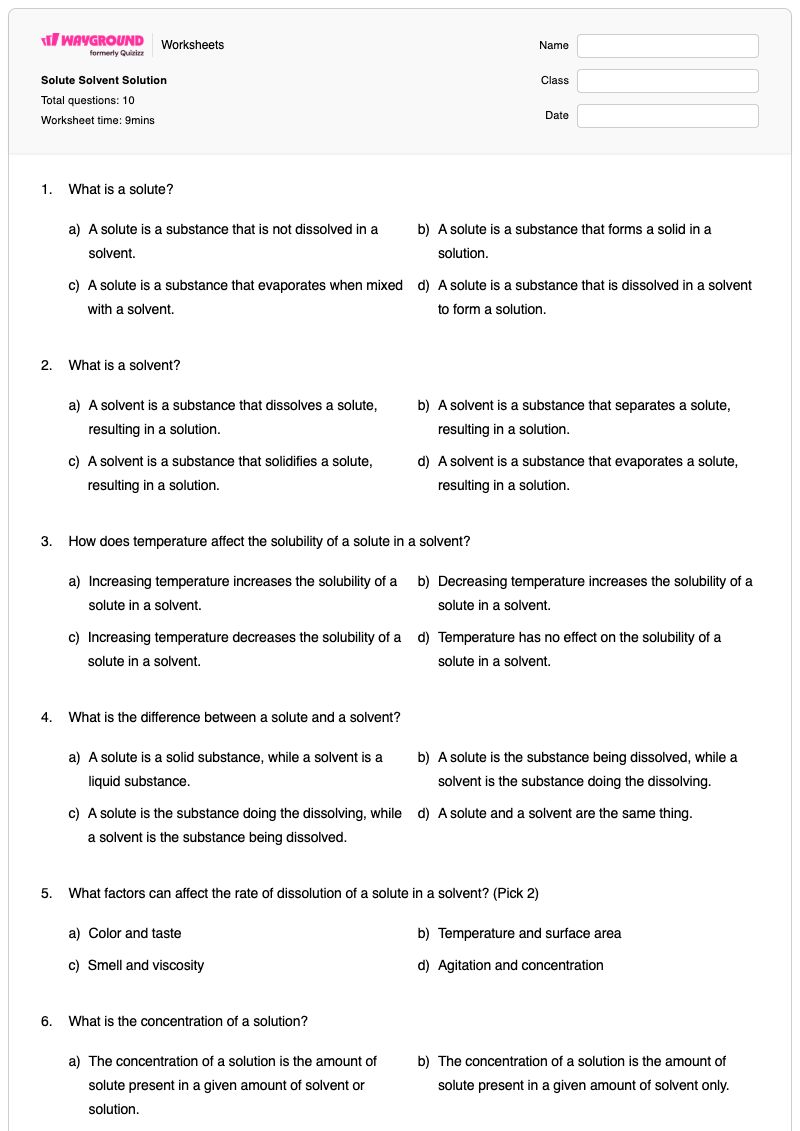
1.

What is a solute?

a)

A solute is a substance that is not dissolved in a solvent.

b)

A solute is a substance that forms a solid in a solution.

c)

A solute is a substance that evaporates when mixed with a solvent.

d)

A solute is a substance that is dissolved in a solvent to form a solution.

2.

What is a solvent?

a)

A solvent is a substance that dissolves a solute, resulting in a solution.

b)

A solvent is a substance that separates a solute, resulting in a solution.

c)

A solvent is a substance that solidifies a solute, resulting in a solution.

d)

A solvent is a substance that evaporates a solute, resulting in a solution.

3.

How does temperature affect the solubility of a solute in a solvent?

a)

Increasing temperature increases the solubility of a solute in a solvent.

b)

Decreasing temperature increases the solubility of a solute in a solvent.

c)

Increasing temperature decreases the solubility of a solute in a solvent.

d)

Temperature has no effect on the solubility of a solute in a solvent.

4.

What is the difference between a solute and a solvent?

a)

A solute is a solid substance, while a solvent is a liquid substance.

b)

A solute is the substance being dissolved, while a solvent is the substance doing the dissolving.

c)

A solute is the substance doing the dissolving, while a solvent is the substance being dissolved.

d)

A solute and a solvent are the same thing.

5.

What factors can affect the rate of dissolution of a solute in a solvent? (Pick 2)

a)

Color and taste

b)

Temperature and surface area

c)

Smell and viscosity

d)

Agitation and concentration

6.

What is the concentration of a solution?

a)

The concentration of a solution is the amount of solute present in a given amount of solvent or solution.

b)

The concentration of a solution is the amount of solute present in a given amount of solvent only.

c)

The concentration of a solution is the amount of solvent present in a given amount of solute or solution.

d)

The concentration of a solution is the amount of solute present in a given amount of solution only.

7.

Match the following images with the correct factor of chemical reaction.

Temperature

Surface Area

Concentration

Agitation

8.

Some chemical reactions are ​ (a)   where the heat energy is absorbed. Other chemical reactions release heat energy are known as ​ (b)   .​

เลือกจากคำด้านล่าง
endothermic
exothermic
thermal
geothermal
9.

Label these parts of the hot chocolate process!

10.

If you grind a solid into a powder, this ​ (a)   the rate of the chemical reaction.

เลือกจากคำด้านล่าง
increases
decreases
แป้นคำตอบ

Solute Solvent Solution

คำถามทั้งหมด: 10

1.
d)

A solute is a substance that is dissolved in a solvent to form a solution.

2.
a)

A solvent is a substance that dissolves a solute, resulting in a solution.

3.
a)

Increasing temperature increases the solubility of a solute in a solvent.

4.
b)

A solute is the substance being dissolved, while a solvent is the substance doing the dissolving.

5.
b)

Temperature and surface area

, d)

Agitation and concentration

6.
a)

The concentration of a solution is the amount of solute present in a given amount of solvent or solution.

7.

 - 

Temperature

, 

 - 

Surface Area

, 

 - 

Concentration

, 

 - 

Agitation

8.
endothermic, exothermic
9.
10.
increases

คำถามที่พบบ่อย

แบบฝึกหัดเรื่องสารละลายและตัวถูกละลายนี้ครอบคลุมเนื้อหาอะไรบ้าง?

แบบฝึกหัดวิชาเคมี ชั้น ม.1 นี้ ฝึกฝนการระบุตัวถูกละลาย ตัวทำละลาย และสารละลาย รวมถึงการประยุกต์ใช้แนวคิดที่เกี่ยวข้องกับความสามารถในการละลาย ความเข้มข้น และการละลาย แบบฝึกหัดประกอบด้วย 10 ข้อ โดยใช้รูปแบบคำถามแบบเลือกตอบ เลือกหลายข้อ จับคู่ ลากและวาง การติดป้ายกำกับรูปภาพ และแบบดรอปดาวน์ รวมถึงการติดป้ายกำกับส่วนประกอบต่างๆ ในกระบวนการทำช็อกโกแลตร้อน และการแยกแยะความแตกต่างระหว่างปฏิกิริยาดูดความร้อนและคายความร้อน

ฉันจะใช้แบบฝึกหัดนี้สอนเรื่องตัวถูกละลาย ตัวทำละลาย และสารละลายได้อย่างไร?

เริ่มต้นด้วยการแนะนำคำศัพท์ทั้งสามคำโดยใช้ส่วนผสมที่คุ้นเคย เช่น ช็อกโกแลตร้อน ถามนักเรียนว่าสารใดละลาย สารใดเป็นตัวละลาย และสารละลายที่ได้คืออะไร จากนั้นใช้แบบฝึกหัดแบบเลือกตอบและแบบติดป้ายภาพเพื่อตรวจสอบความสัมพันธ์เหล่านั้น ก่อนที่จะอธิบายเกี่ยวกับอุณหภูมิ พื้นที่ผิว การกวน ความเข้มข้น และผลของการบดของแข็งให้เป็นผง

ฉันควรสังเกตข้อผิดพลาดอะไรบ้างเมื่อนักเรียนทำแบบฝึกหัดนี้เสร็จ?

ระวังนักเรียนที่สลับตัวถูกละลายและตัวทำละลาย มองว่าสารละลายเป็นเพียงตัวทำละลาย หรือเลือกตัวเลือกน้อยกว่าหรือมากกว่าสองตัวเลือกในข้อเกี่ยวกับปัจจัยการละลาย นอกจากนี้ นักเรียนอาจสับสนระหว่างปฏิกิริยาดูดความร้อนกับคายความร้อน ติดป้ายตัวถูกละลายและตัวทำละลายผิดในแผนภาพช็อกโกแลตร้อน หรือเลือกว่าวัสดุที่เป็นผงทำให้ความเร็วของปฏิกิริยาลดลงแทนที่จะเพิ่มขึ้น

ฉันจะมอบหมายและให้คะแนนแบบฝึกหัดเรื่องสารละลายตัวถูกละลายนี้ได้อย่างไร?

แบบฝึกหัดนี้มีให้ดาวน์โหลดในรูปแบบ PDF สำหรับพิมพ์ และในรูปแบบแบบทดสอบดิจิทัลบน Wayground โดยมีเฉลยคำตอบครบถ้วน คุณสามารถตรวจงานพิมพ์ของนักเรียนได้โดยการสแกนงานของนักเรียนด้วยแอป Wayground for Teachers ในขณะที่แบบฝึกหัดดิจิทัลสามารถมอบหมายและตรวจสอบผ่าน Wayground ได้

ฉันจะปรับแบบฝึกหัดนี้ให้เหมาะสมกับนักเรียนของฉันได้อย่างไร?

ใช้การตั้งค่าขั้นสูงของแบบฝึกหัดเพื่อปรับระยะห่างระหว่างตัวอักษรและขนาดตัวอักษร เพื่อให้ง่ายต่อการใช้งานคำถามในรูปแบบผสม ป้ายกำกับรูปภาพ และตัวเลือกคำตอบ นอกจากนี้ คุณยังสามารถใช้แบบอักษรที่เหมาะสำหรับผู้ที่มีภาวะดิสเล็กเซีย หรือแปลแบบฝึกหัดเป็นภาษาอื่นได้ หากตัวเลือกเหล่านั้นช่วยสนับสนุนนักเรียนที่กำลังเรียนรู้เกี่ยวกับตัวถูกละลาย ตัวทำละลาย และสารละลายได้ดีกว่า

ฉันจะหาแบบฝึกหัดแบบนี้เพิ่มเติมได้ที่ไหนบน Wayground?

Wayground นำเสนอชุดแบบฝึกหัดและโจทย์ฝึกหัดฟรีที่ครอบคลุมทุกวิชา พร้อมไฟล์ PDF และเฉลยคำตอบ เพื่อช่วยให้นักเรียนเชี่ยวชาญทักษะและแนวคิดที่สำคัญ ดูแหล่งข้อมูลเพิ่มเติมได้ที่ https://wayground.com/en-us/worksheets