

Wayground
Financial Literacy 3rd Grade - Printable Mathematics Worksheets ระดับ 3 - Wayground

Financial Literacy 3rd Grade

10 คำถาม

3rd - ชั้นประถมศึกษาปีที่ 3

Mathematics

แบบฝึกหัดคณิตศาสตร์เรื่องความรู้ทางการเงินสำหรับนักเรียนชั้นประถมศึกษาปีที่ 3 สามารถพิมพ์ได้ฟรี ประกอบด้วยคำถามแบบเลือกตอบ 10 ข้อ เพื่อสร้างความเข้าใจเชิงปฏิบัติเกี่ยวกับเงินและการตัดสินใจทางการเงินในชีวิตประจำวัน นักเรียนจะได้ระบุว่าประสบการณ์การทำงานและชั่วโมงการทำงานส่งผลต่อรายได้อย่างไร เข้าใจว่าทำไมผู้กู้จึงต้องจ่ายดอกเบี้ย และอธิบายว่าอุปทานที่จำกัดส่งผลต่อราคาอย่างไร แบบฝึกหัดนี้ยังให้นักเรียนหาค่าของธนบัตรและเหรียญที่แสดงในภาพ ระบุชุดค่าผสมที่เป็นไปได้หรือเป็นไปไม่ได้สำหรับจำนวนเงินที่กำหนด และตีความเงินที่ได้รับหรือใช้ไปในสถานการณ์ที่คุ้นเคย สิ่งเหล่านี้ช่วยให้นักเรียนเชื่อมโยงการคำนวณเหรียญและธนบัตรกับแนวคิดความรู้ทางการเงิน เช่น รายได้ การออม การกู้ยืม ดอกเบี้ย และอุปทาน มีเฉลยคำตอบให้ครบถ้วน ทำให้แบบฝึกหัดที่พิมพ์ได้ฟรีนี้มีประโยชน์สำหรับการฝึกฝนด้วยตนเอง การทบทวน หรือการประเมินผลคณิตศาสตร์ชั้นประถมศึกษาปีที่ 3 สั้นๆ

การตั้งค่าแผ่นงาน

ขนาดตัวอักษร

S
M
L
XL
แผ่นงาน

Financial Literacy 3rd Grade

คำถามทั้งหมด: 10

ชื่อ
ระดับ
วันที่
1.

Ms. Patterson works for a company. Which factor would most likely affect the amount of money Ms. Patterson gets paid by the company?

a)

The size of Ms. Patterson’s family

b)

The amount of money Ms. Patterson has to pay in bills

c)

The amount of money Ms. Patterson saves every month

d)

The work experience Ms. Patterson has

2.

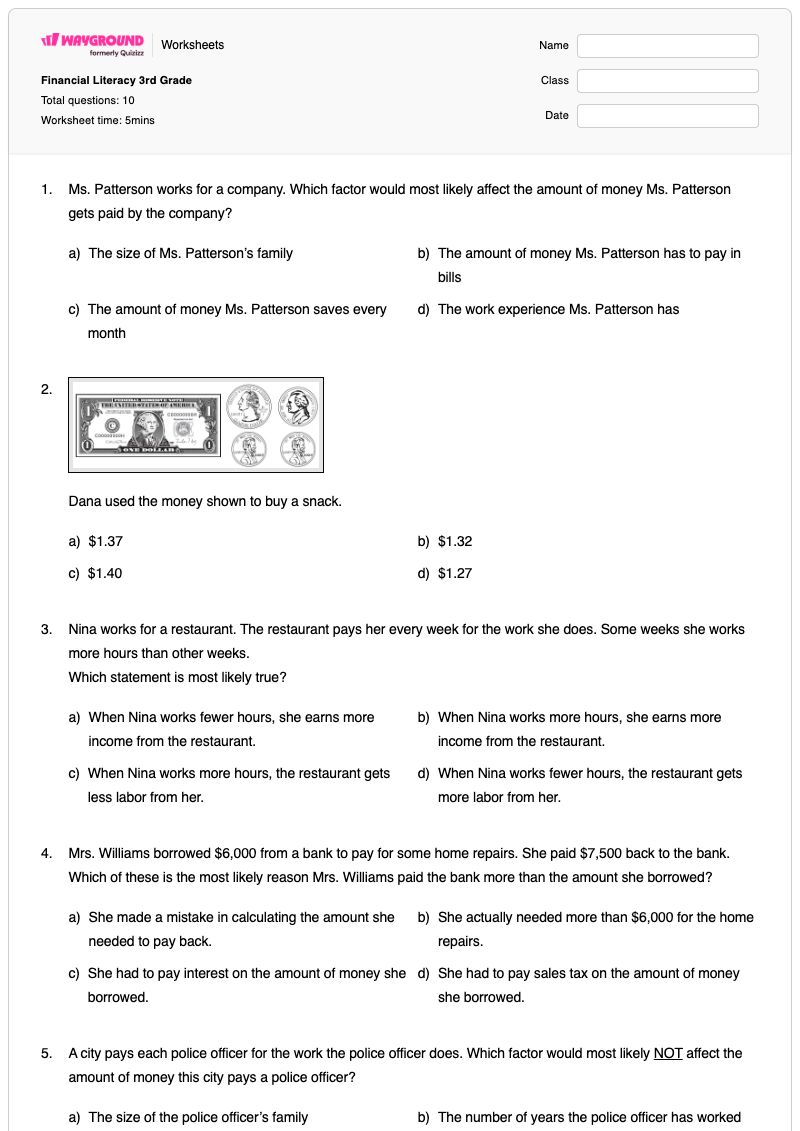
Dana used the money shown to buy a snack.

a)

$1.37

b)

$1.32

c)

$1.40

d)

$1.27

3.

Nina works for a restaurant. The restaurant pays her every week for the work she does. Some weeks she works more hours than other weeks.

Which statement is most likely true?

a)

When Nina works fewer hours, she earns more income from the restaurant.

b)

When Nina works more hours, she earns more income from the restaurant.

c)

When Nina works more hours, the restaurant gets less labor from her.

d)

When Nina works fewer hours, the restaurant gets more labor from her.

4.

Mrs. Williams borrowed $6,000 from a bank to pay for some home repairs. She paid $7,500 back to the bank. Which of these is the most likely reason Mrs. Williams paid the bank more than the amount she borrowed?

a)

She made a mistake in calculating the amount she needed to pay back.

b)

She actually needed more than $6,000 for the home repairs.

c)

She had to pay interest on the amount of money she borrowed.

d)

She had to pay sales tax on the amount of money she borrowed.

5.

A city pays each police officer for the work the police officer does. Which factor would most likely NOT affect the amount of money this city pays a police officer?

a)

The size of the police officer’s family

b)

The number of years the police officer has worked for the city

c)

The special skills that the police officer has

d)

The level of education that the police officer has

6.

Charlie emptied his piggy bank and counted $5.63 in savings. Which set of bills and coins could NOT BE the total amount of money that was in Charlie’s piggy bank?

a)
b)
c)
d)
7.

Bad weather destroyed most of the peaches on the peach trees in an orchard.This will have an effect on the price of the remaining peaches. Which statementbest describes the effect on the price?

a)

The price will likely increase, because there are more peaches available to buy.

b)

The price will likely decrease, because there are more peaches available tobuy.

c)

The price will likely increase, because there are fewer peaches available tobuy.

d)

The price will likely decrease, because there are fewer peaches available tobuy.

8.

Claire borrowed $20 from her mom in order to buy game tokens at a festival. Hermom said Claire would have to pay the money back with interest. Which statement best explains what Claire’s mom meant?

a)

She expected Claire to pay back only the money she borrowed.

b)

She expected Claire to pay back only part of the money she borrowed.

c)

She expected Claire to keep the money she borrowed and not pay any of it back.

d)

She expected Claire to pay back the money she borrowed plus an additional amount of money.

9.

Owen received the coins and bills shown when he sold lemonade.

What is the value of the coins and bills Owen received?

a)

$8.85

b)

$9.00

c)

$9.10

d)

$8.90

10.

Inez did laundry. She found $6.47 in the pocket of her dad’s pants. Which of the following could NOT represent the amount of money Inez found?

a)
b)
c)
d)
แป้นคำตอบ

Financial Literacy 3rd Grade

คำถามทั้งหมด: 10

1.
d)

The work experience Ms. Patterson has

2.
b)

$1.32

3.
b)

When Nina works more hours, she earns more income from the restaurant.

4.
c)

She had to pay interest on the amount of money she borrowed.

5.
a)

The size of the police officer’s family

6.
b)
7.
c)

The price will likely increase, because there are fewer peaches available tobuy.

8.
d)

She expected Claire to pay back the money she borrowed plus an additional amount of money.

9.
c)

$9.10

10.
c)

คำถามที่พบบ่อย

แบบฝึกหัดความรู้ทางการเงินสำหรับนักเรียนชั้นประถมศึกษาปีที่ 3 นี้ครอบคลุมหัวข้ออะไรบ้าง?

แบบฝึกหัดนี้ประกอบด้วยคำถามแบบเลือกตอบ 10 ข้อ เพื่อฝึกฝนการนับธนบัตรและเหรียญ การระบุปัจจัยที่มีผลต่อรายได้ การทำความเข้าใจเกี่ยวกับการกู้ยืมและดอกเบี้ย และการรับรู้ว่าสินค้าที่มีจำนวนน้อยลงสามารถทำให้ราคาสูงขึ้นได้อย่างไร นักเรียนจะนำแนวคิดเหล่านี้ไปประยุกต์ใช้ในสถานการณ์ต่างๆ ที่เกี่ยวข้องกับค่าจ้าง เงินออม การซื้อ การกู้ยืม และราคาของลูกพีช ซึ่งจะช่วยพัฒนาทั้งทักษะการเข้าใจมูลค่าของเงินและทักษะการให้เหตุผลทางการเงินขั้นพื้นฐาน

ฉันจะใช้แบบฝึกหัดนี้สอนนักเรียนชั้นประถมศึกษาปีที่ 3 เกี่ยวกับรายได้ ดอกเบี้ย และราคาได้อย่างไร?

ก่อนเริ่มเรียน ให้แนะนำคำศัพท์เกี่ยวกับเงิน เช่น รายได้ เงินออม การกู้ยืม ดอกเบี้ย และปริมาณสินค้า ขณะที่นักเรียนทำแบบฝึกหัดแบบเลือกตอบ ให้พวกเขาอธิบายว่าเหตุใดประสบการณ์การทำงานหรือชั่วโมงทำงานจึงส่งผลต่อค่าจ้าง เหตุใดผู้กู้จึงชำระคืนมากกว่าเงินกู้เดิม และเหตุใดปริมาณลูกพีชที่น้อยลงจึงทำให้ราคาสูงขึ้น จากนั้นให้พวกเขาอธิบายวิธีการนับธนบัตรและเหรียญในตัวอย่างการซื้อของและการทำน้ำมะนาว

ฉันควรระวังข้อผิดพลาดอะไรบ้างเมื่อนักเรียนทำแบบฝึกหัดความรู้ทางการเงินนี้?

นักเรียนอาจสับสนระหว่างค่าใช้จ่ายส่วนตัวหรือขนาดครอบครัวกับปัจจัยที่กำหนดค่าจ้างของคนทำงาน หรือมองข้ามความสัมพันธ์ระหว่างชั่วโมงทำงานกับรายได้ พวกเขาอาจคิดว่าดอกเบี้ยเป็นส่วนหนึ่งของเงินกู้เดิมแทนที่จะเป็นจำนวนเงินที่ต้องชำระคืนเพิ่มเติม กลับด้านผลกระทบของลูกพีชที่น้อยลงต่อราคา หรือนับเหรียญและธนบัตรผิดพลาดเมื่อหาผลรวมและตรวจสอบจำนวนเงินที่เทียบเท่ากัน เตือนนักเรียนให้ระมัดระวังในการอ่านคำถามที่ถามว่าสิ่งใดไม่สามารถแทนจำนวนเงินได้

ฉันจะมอบหมายและให้คะแนนแบบฝึกหัดความรู้ทางการเงินนี้อย่างไร?

แบบฝึกหัดนี้มีให้เลือกทั้งในรูปแบบไฟล์ PDF ที่สามารถพิมพ์ได้ และแบบทดสอบดิจิทัลบน Wayground โดยมีเฉลยคำตอบครบถ้วนสำหรับตรวจสอบคำตอบแบบเลือกตอบ 10 ข้อ สำหรับการส่งงานแบบพิมพ์ คุณสามารถตรวจงานของนักเรียนได้โดยการสแกนด้วยแอป Wayground for Teachers นอกจากนี้ ตัวเลือก PDF ยังเหมาะสำหรับห้องเรียนที่ลดเวลาการใช้หน้าจออีกด้วย

ฉันจะปรับแบบฝึกหัดเรื่องเงินสำหรับนักเรียนชั้นประถมศึกษาปีที่ 3 นี้ให้เหมาะสมกับนักเรียนของฉันได้อย่างไร?

ในการตั้งค่าขั้นสูงของแบบฝึกหัด ให้ปรับระยะห่างระหว่างตัวอักษรหรือเลือกขนาดตัวอักษรที่ใหญ่ขึ้นเพื่อให้สถานการณ์ทางการเงินและตัวเลือกคำตอบอ่านง่ายขึ้น นอกจากนี้ คุณยังสามารถใช้แบบอักษรที่เหมาะสำหรับผู้ที่มีภาวะดิสเล็กเซีย หรือแปลแบบฝึกหัดเป็นภาษาอื่นในขณะที่นักเรียนกำลังทำแบบฝึกหัดเกี่ยวกับธนบัตรและเหรียญ และคำถามเกี่ยวกับการให้เหตุผลทางการเงินได้อีกด้วย

ฉันจะหาแบบฝึกหัดแบบนี้เพิ่มเติมได้ที่ไหนบน Wayground?

Wayground นำเสนอชุดแบบฝึกหัดและโจทย์ฝึกหัดฟรีที่ครอบคลุมทุกวิชา พร้อมไฟล์ PDF และเฉลยคำตอบ เพื่อช่วยให้นักเรียนเชี่ยวชาญทักษะและแนวคิดที่สำคัญ ดูแหล่งข้อมูลเพิ่มเติมได้ที่ https://wayground.com/en-us/worksheets