

Wayground
Grammar quiz: Homophones, Homographs, & Homonyms - Printable English Worksheets ระดับ 5 - Wayground

Grammar quiz: Homophones, Homographs, & Homonyms

22 คำถาม

4th - 6th ระดับชั้น

English

แบบฝึกหัดภาษาอังกฤษสำหรับนักเรียนชั้นประถมศึกษาปีที่ 4-6 ชุดนี้ สามารถพิมพ์ได้ฟรี ช่วยให้นักเรียนแยกแยะคำพ้องเสียง คำพ้องรูป และคำพ้องความหมายได้ ประกอบด้วยคำถามแบบเลือกตอบ 21 ข้อ และแบบเติมคำในช่องว่าง 1 ข้อ ซึ่งจะทดสอบความเข้าใจของกลุ่มคำ จำแนกตัวอย่างและตัวอย่างที่ไม่ใช่ตัวอย่าง ตีความคำพ้องรูป เช่น “bow,” “present,” “light,” และ “spring” ในบริบท และเลือกคำพ้องเสียงที่สะกดถูกต้อง เช่น “too,” “your/you’re,” “loose/lose,” และ “there/their/they’re” นักเรียนจะได้พัฒนาคำศัพท์และความถูกต้องทางไวยากรณ์โดยเชื่อมโยงการสะกดคำ การออกเสียง ความหมาย และบริบทของประโยค คำถามแบบเติมคำในช่องว่างจะให้นักเรียนเลือกรูปที่ถูกต้องของ “they’re” ในขณะที่คำถามแบบเลือกตอบจะตรวจสอบทั้งคำศัพท์และการประยุกต์ใช้ ใช้แบบฝึกหัดที่พิมพ์ได้ฟรีชุดนี้สำหรับการฝึกฝนด้วยตนเอง การทบทวน หรือการประเมินผลสั้นๆ และใช้เฉลยคำตอบที่ให้มาเพื่อตรวจสอบความเข้าใจอย่างมีประสิทธิภาพ

การตั้งค่าแผ่นงาน

ขนาดตัวอักษร

S
M
L
XL
แผ่นงาน

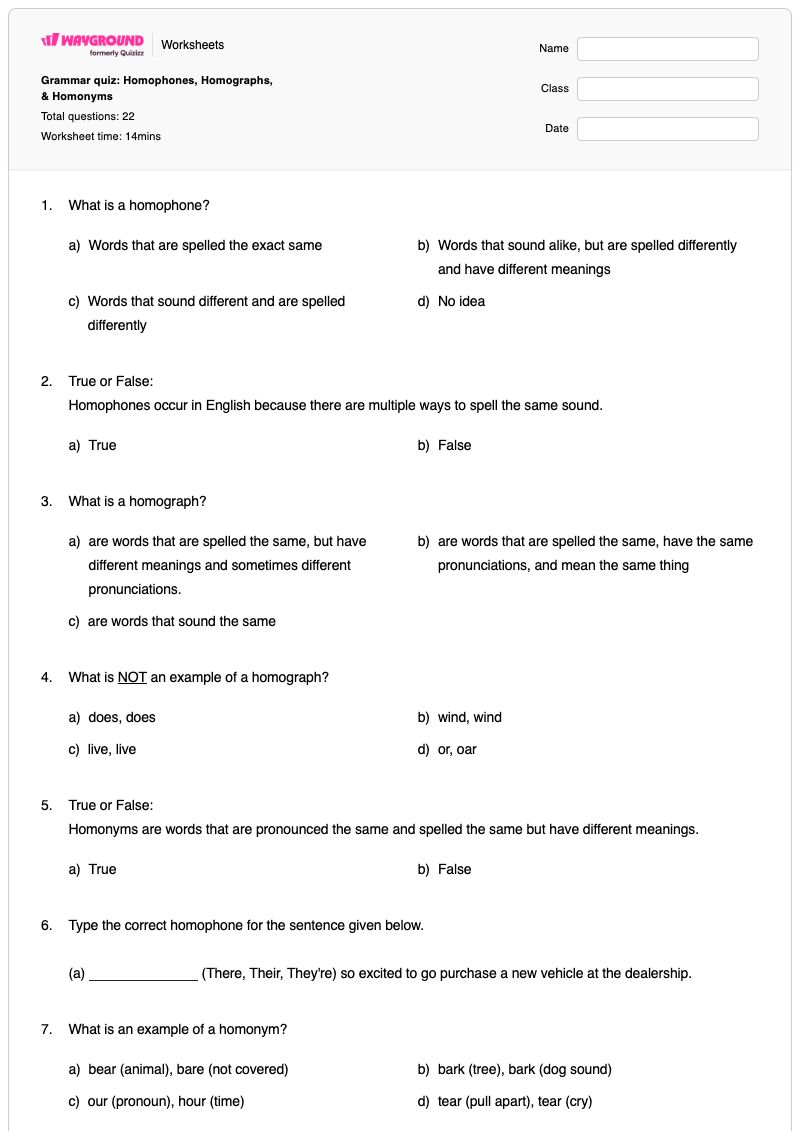
Grammar quiz: Homophones, Homographs, & Homonyms

คำถามทั้งหมด: 22

ชื่อ
ระดับ
วันที่
1.
What is a homophone? 
a)
Words that are spelled the exact same 
b)
Words that sound alike, but are spelled differently and have different meanings
c)
Words that sound different and are spelled differently 
d)
No idea
2.
True or False: 
Homophones occur in English because there are multiple ways to spell the same sound. 
a)
True
b)
False
3.

What is a homograph?

a)

are words that are spelled the same, but have different meanings and sometimes different pronunciations.

b)

are words that are spelled the same, have the same pronunciations, and mean the same thing

c)

are words that sound the same

4.

What is NOT an example of a homograph?

a)

does, does

b)

wind, wind

c)

live, live

d)

or, oar

5.

True or False:

Homonyms are words that are pronounced the same and spelled the same but have different meanings.

a)

True

b)

False

6.

Type the correct homophone for the sentence given below.


(a)   (There, Their, They're) so excited to go purchase a new vehicle at the dealership.

7.

What is an example of a homonym?

a)

bear (animal), bare (not covered)

b)

bark (tree), bark (dog sound)

c)

our (pronoun), hour (time)

d)

tear (pull apart), tear (cry)

8.

The singer made a low bow to the audience after the concert.

a)

decorative ribbon (rhymes with so)

b)

bend at the waist (rhymes with how)

c)

a weapon for shooting arrows

9.

All the students were present today.

a)

a gift

b)

existing or occurring now

c)

give (rhymes with resent)

d)

here (rhymes with pleasant)

10.

Can I go to the party _______?

a)

too

b)

to

c)

two

d)

toe

11.

The grocery bag was light because it was packed with bread and hotdog buns.

a)

not heavy

b)

sunshine

c)

to illuminate

d)

bright

12.

Carlo's pants were much too _____________ after his weight loss.

a)

loose

b)

lose

c)

loss

d)

lost

13.

______ my best friend.

a)

your

b)

you're

14.
Spring is my favorite time of the year. 
a)
A season 
b)
A coil of metal that bounces 
15.
Select the correct homophone.
(Theirs/There's) not going to be school on President's day! 
a)
Theirs
b)
There's
16.

What is: bass, bass

a)

homophone

b)

homonym

c)

homograph

d)

N/A

17.

What is: bat, bat?

a)

homophone

b)

homonym

c)

homograph

d)

n/a

18.

What is: buy and by?

a)

homophone

b)

homonym

c)

homograph

d)

n/a

19.

What is: tail, tale

a)

homophone

b)

homonym

c)

homograph

d)

n/a

20.

What is a homonym?

a)

Words that are spelled the same and sound the same but have different meaning.

b)

Words that spelled differently, but sound the same and have different meaning.

c)

Words that are spelled the same but sound different and have a different meaning.

d)

Words that sound the same, are spelled the same and mean the exact same thing.

21.

What is: live, live

a)

homophone

b)

homonym

c)

homograph

d)

n/a

22.

What is: bark, bark

a)

homophone

b)

homonym

c)

homograph

d)

n/a

แป้นคำตอบ

Grammar quiz: Homophones, Homographs, & Homonyms

คำถามทั้งหมด: 22

1.
b) Words that sound alike, but are spelled differently and have different meanings
2.
a) True
3.
a)

are words that are spelled the same, but have different meanings and sometimes different pronunciations.

4.
d)

or, oar

5.
a)

True

6.
They're, they're
7.
b)

bark (tree), bark (dog sound)

8.
b)

bend at the waist (rhymes with how)

9.
d)

here (rhymes with pleasant)

10.
a)

too

11.
a)

not heavy

12.
a)

loose

13.
b)

you're

14.
a) A season 
15.
b) There's
16.
c)

homograph

17.
b)

homonym

18.
a)

homophone

19.
a)

homophone

20.
a)

Words that are spelled the same and sound the same but have different meaning.

21.
c)

homograph

22.
b)

homonym

คำถามที่พบบ่อย

แบบฝึกหัดนี้ครอบคลุมเนื้อหาอะไรบ้าง และช่วยให้นักเรียนแยกแยะความแตกต่างระหว่างคำพ้องเสียง คำพ้องรูป และคำพ้องความหมายได้อย่างไร?

แบบฝึกหัดภาษาอังกฤษสำหรับนักเรียนชั้นประถมศึกษาปีที่ 4-6 นี้ ประกอบด้วยคำถามแบบเลือกตอบ 21 ข้อ และคำถามเติมคำในช่องว่าง 1 ข้อ เพื่อสอนนักเรียนเกี่ยวกับความแตกต่างระหว่างคำพ้องเสียง คำพ้องรูป และคำพ้องความหมาย ทั้งในด้านการสะกด การออกเสียง และความหมาย นักเรียนจะนำความแตกต่างเหล่านั้นไปใช้โดยการตีความคำต่างๆ เช่น “bow,” “present,” “light,” และ “spring” ในบริบท และเลือกคำที่สะกดถูกต้อง เช่น “too,” “you’re,” และ “there’s”

ฉันจะใช้แบบฝึกหัดนี้สอนเรื่องคำพ้องเสียง คำพ้องรูป และคำพ้องความหมายได้อย่างไร?

แนะนำคำศัพท์สามประเภทโดยใช้คำถามนิยามในแบบฝึกหัด จากนั้นสาธิตให้เห็นว่าบริบทเปลี่ยนความหมายของคำอย่างไร เช่น “bow” และ “present” ให้นักเรียนอธิบายว่าทำไม “or/oar” จึงไม่ใช่คำพ้องรูป และทำไม “bark” จึงเป็นคำพ้องรูป ก่อนที่จะทำแบบฝึกหัดการสะกดคำตามบริบท ซึ่งรวมถึง “too/to/two” และ “there/their/they’re”

ฉันควรระวังข้อผิดพลาดอะไรบ้างเมื่อนักเรียนทำแบบฝึกหัดเรื่องคำพ้องเสียง คำพ้องรูป และคำพ้องความหมายนี้?

นักเรียนอาจสับสนคำที่มีเสียงเหมือนกันกับคำที่มีการสะกดเหมือนกัน โดยเฉพาะอย่างยิ่งเมื่อจำแนกคำว่า “bark,” “tear,” “wind,” และ “live” ในประโยคตัวอย่าง ให้ระวังการเลือกใช้รูปแบบที่ดูคุ้นเคยโดยไม่ตรวจสอบความหมายหรือไวยากรณ์ เช่น “your” แทน “you’re,” “lose” แทน “loose,” หรือ “theirs” แทน “there’s”

ฉันจะมอบหมายและตรวจงานแบบฝึกหัดเรื่องคำพ้องเสียง คำพ้องรูป และคำพ้องความหมายนี้อย่างไร?

คุณสามารถมอบหมายแบบฝึกหัดนี้เป็นไฟล์ PDF ที่พิมพ์ได้ หรือเป็นแบบทดสอบดิจิทัลบน Wayground แบบฝึกหัดนี้มีเฉลยคำตอบครบถ้วน และสามารถตรวจให้คะแนนงานที่ส่งในรูปแบบไฟล์พิมพ์ได้โดยการสแกนงานของนักเรียนด้วยแอป Wayground for Teachers ตัวเลือกแบบพิมพ์ยังช่วยสนับสนุนโรงเรียนที่ต้องการลดเวลาการใช้หน้าจอในขณะที่นักเรียนฝึกฝนการเลือกใช้คำตามบริบทได้อีกด้วย

ฉันจะปรับแบบฝึกหัดนี้ให้เหมาะสมกับนักเรียนของฉันได้อย่างไร?

ในการตั้งค่าขั้นสูงของแบบฝึกหัด ให้ปรับระยะห่างระหว่างตัวอักษรและขนาดตัวอักษรเพื่อให้คำจำกัดความ บริบท และตัวเลือกคำพ้องเสียงอ่านง่ายขึ้น นอกจากนี้ คุณยังสามารถเปิดใช้งานแบบอักษรที่เหมาะสำหรับผู้ที่มีภาวะดิสเล็กเซีย หรือแปลแบบฝึกหัดเป็นภาษาอื่นเมื่อเป็นประโยชน์สำหรับนักเรียนที่กำลังทำแบบฝึกหัดเกี่ยวกับ “there/their/they’re,” “your/you’re” และคำถามเกี่ยวกับการเลือกใช้คำอื่นๆ

ฉันจะหาแบบฝึกหัดแบบนี้เพิ่มเติมได้ที่ไหนบน Wayground?

Wayground มีแบบฝึกหัดและโจทย์ฝึกหัดมากมายให้ดาวน์โหลดฟรีในหลากหลายวิชา พร้อมไฟล์ PDF และเฉลยคำตอบ เพื่อช่วยให้นักเรียนพัฒนาทักษะและความเข้าใจในแนวคิดสำคัญๆ ดูแหล่งข้อมูลเพิ่มเติมได้ที่ https://wayground.com/en-us/worksheets