

Wayground
Inclusive Classrooms: Social Skills Development for Students with Autism - Printable Special Education Worksheets - Wayground

Inclusive Classrooms: Social Skills Development for Students with Autism

10 คำถาม

Special Education

ห้องเรียนแบบบูรณาการ: การพัฒนาทักษะทางสังคมสำหรับนักเรียนออทิสติก เป็นแบบฝึกหัดที่พิมพ์ได้ฟรีสำหรับวิชาการศึกษาพิเศษระดับมหาวิทยาลัย ประกอบด้วยคำถามแบบเลือกตอบ 10 ข้อ เกี่ยวกับการสนับสนุนการพัฒนาทักษะทางสังคมสำหรับนักเรียนออทิสติกในห้องเรียนแบบบูรณาการ นักเรียนจะได้ระบุกลยุทธ์ที่มีประสิทธิภาพ เช่น การแทรกแซงโดยเพื่อน การใช้สื่อภาพ การจัดตารางเวลาอย่างเป็นระบบ เรื่องราวทางสังคม การสนับสนุนพฤติกรรมเชิงบวก และการสื่อสารที่ชัดเจน คำถามยังครอบคลุมถึงความท้าทายทางสังคมทั่วไป การสนับสนุนจากเพื่อน เครื่องมือที่ใช้เทคโนโลยี การฝึกทักษะทางสังคม แผนการศึกษาเฉพาะบุคคล (IEP) และการทำงานร่วมกับผู้ปกครองและผู้ดูแล มีเฉลยคำตอบให้ครบถ้วน แบบฝึกหัดนี้ช่วยให้ผู้เรียนแยกแยะแนวทางปฏิบัติที่ให้การสนับสนุนและเป็นรายบุคคลออกจากแนวทางที่อิงกับการกีดกัน การลงโทษ หรือความคาดหวังที่ไม่ชัดเจน เมื่อนักเรียนประเมินตัวเลือกแต่ละชุด พวกเขาจะเชื่อมโยงแนวทางปฏิบัติในห้องเรียนแบบบูรณาการกับผลลัพธ์ที่เฉพาะเจาะจง รวมถึงการสื่อสารที่ดีขึ้น ปฏิสัมพันธ์กับเพื่อน ความสัมพันธ์ที่มีความหมาย และเป้าหมายทางสังคมที่ปรับให้เหมาะสม ครูสามารถใช้แบบฝึกหัดนี้สำหรับการสอนแบบมีผู้แนะนำ การทบทวนด้วยตนเอง หรือการตรวจสอบความรู้ในหลักสูตรการศึกษาพิเศษที่เน้นการสนับสนุนออทิสติกและแนวทางปฏิบัติแบบบูรณาการ

การตั้งค่าแผ่นงาน

ขนาดตัวอักษร

S
M
L
XL
แผ่นงาน

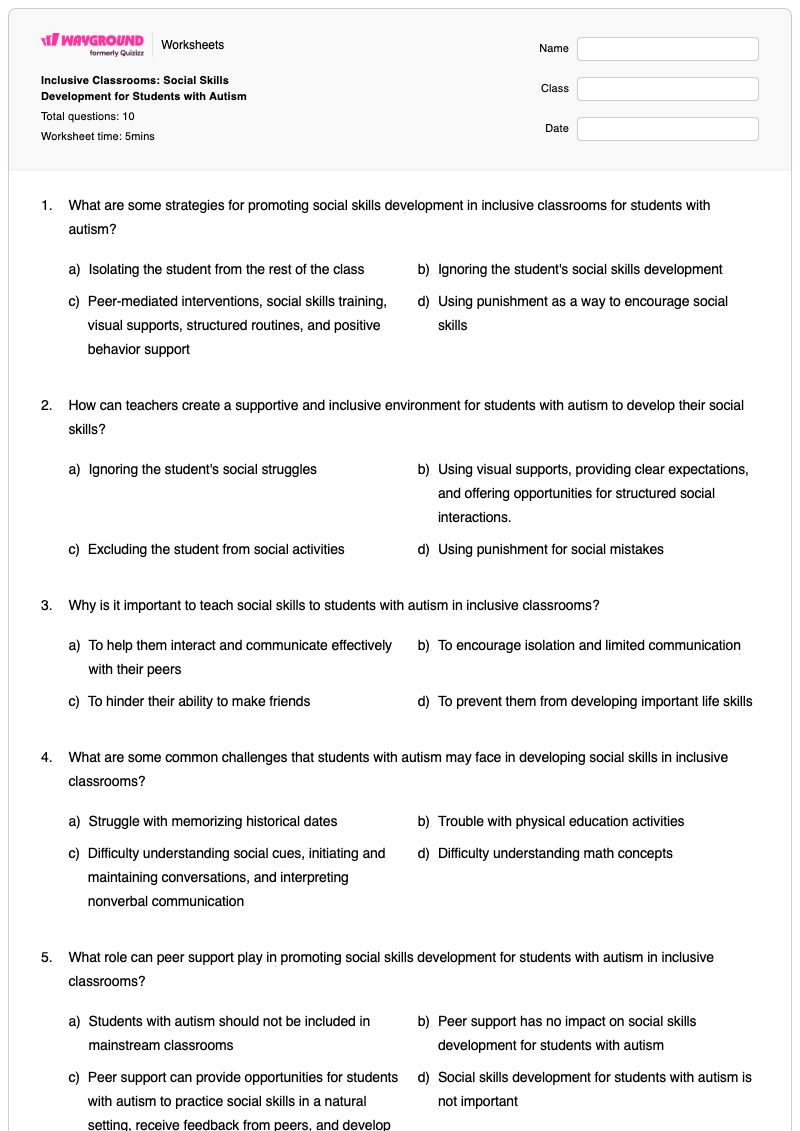
Inclusive Classrooms: Social Skills Development for Students with Autism

คำถามทั้งหมด: 10

ชื่อ
ระดับ
วันที่
1.

What are some strategies for promoting social skills development in inclusive classrooms for students with autism?

a)

Isolating the student from the rest of the class

b)

Ignoring the student's social skills development

c)

Peer-mediated interventions, social skills training, visual supports, structured routines, and positive behavior support

d)

Using punishment as a way to encourage social skills

2.

How can teachers create a supportive and inclusive environment for students with autism to develop their social skills?

a)

Ignoring the student's social struggles

b)

Using visual supports, providing clear expectations, and offering opportunities for structured social interactions.

c)

Excluding the student from social activities

d)

Using punishment for social mistakes

3.

Why is it important to teach social skills to students with autism in inclusive classrooms?

a)

To help them interact and communicate effectively with their peers

b)

To encourage isolation and limited communication

c)

To hinder their ability to make friends

d)

To prevent them from developing important life skills

4.

What are some common challenges that students with autism may face in developing social skills in inclusive classrooms?

a)

Struggle with memorizing historical dates

b)

Trouble with physical education activities

c)

Difficulty understanding social cues, initiating and maintaining conversations, and interpreting nonverbal communication

d)

Difficulty understanding math concepts

5.

What role can peer support play in promoting social skills development for students with autism in inclusive classrooms?

a)

Students with autism should not be included in mainstream classrooms

b)

Peer support has no impact on social skills development for students with autism

c)

Peer support can provide opportunities for students with autism to practice social skills in a natural setting, receive feedback from peers, and develop meaningful relationships.

d)

Social skills development for students with autism is not important

6.

How can technology be used to support social skills development for students with autism in inclusive classrooms?

a)

By ignoring the use of technology and focusing solely on traditional teaching methods

b)

By limiting students' access to technology

c)

By banning the use of technology in the classroom

d)

By providing interactive and visual learning tools, social skills training apps, virtual reality simulations, and video modeling programs.

7.

What are some effective communication strategies for teachers to use when working with students with autism on social skills development?

a)

Ignoring individual student needs, lack of patience, inconsistent expectations, and no positive reinforcement

b)

Visual supports, clear and concise language, structured routines, and social stories

c)

Loud and crowded environments, long and complex verbal instructions, unpredictable schedules

d)

No visual supports, using ambiguous language, unstructured routines, and no social stories

8.

What are some potential benefits of incorporating social skills training into the curriculum for students with autism in inclusive classrooms?

a)

Improved communication and interaction skills

b)

Limited access to resources

c)

Increased anxiety and stress

d)

Decreased academic performance

9.

How can individualized education plans (IEPs) support the social skills development of students with autism in inclusive classrooms?

a)

By excluding the student from social activities

b)

By focusing only on academic goals

c)

By including specific social goals, strategies, and accommodations tailored to the individual needs of the student.

d)

By ignoring the individual needs of the student

10.

What are some best practices for collaborating with parents and caregivers to support the social skills development of students with autism in inclusive classrooms?

a)

Excluding parents and caregivers from the student's education

b)

Not providing any updates or progress reports to parents and caregivers

c)

Open communication, sharing strategies and resources, providing regular updates, involving parents and caregivers in goal-setting and intervention planning

d)

Ignoring parents and caregivers' input

แป้นคำตอบ

Inclusive Classrooms: Social Skills Development for Students with Autism

คำถามทั้งหมด: 10

1.
c)

Peer-mediated interventions, social skills training, visual supports, structured routines, and positive behavior support

2.
b)

Using visual supports, providing clear expectations, and offering opportunities for structured social interactions.

3.
a)

To help them interact and communicate effectively with their peers

4.
c)

Difficulty understanding social cues, initiating and maintaining conversations, and interpreting nonverbal communication

5.
c)

Peer support can provide opportunities for students with autism to practice social skills in a natural setting, receive feedback from peers, and develop meaningful relationships.

6.
d)

By providing interactive and visual learning tools, social skills training apps, virtual reality simulations, and video modeling programs.

7.
b)

Visual supports, clear and concise language, structured routines, and social stories

8.
a)

Improved communication and interaction skills

9.
c)

By including specific social goals, strategies, and accommodations tailored to the individual needs of the student.

10.
c)

Open communication, sharing strategies and resources, providing regular updates, involving parents and caregivers in goal-setting and intervention planning

คำถามที่พบบ่อย

แบบฝึกหัดนี้ครอบคลุมหัวข้ออะไรบ้างเกี่ยวกับการพัฒนาทักษะทางสังคมสำหรับนักเรียนออทิสติก?

แบบฝึกหัดนี้ประกอบด้วยคำถามแบบเลือกตอบ 10 ข้อ เพื่อตรวจสอบว่าห้องเรียนแบบบูรณาการสามารถสนับสนุนการพัฒนาทักษะทางสังคมสำหรับนักเรียนออทิสติกได้อย่างไร นักเรียนจะต้องระบุแนวทางปฏิบัติที่มีประสิทธิภาพ ซึ่งรวมถึงการแทรกแซงโดยเพื่อน การใช้สื่อภาพ การจัดตารางเวลาอย่างเป็นระบบ เรื่องราวทางสังคม การสนับสนุนพฤติกรรมเชิงบวก เครื่องมือทางเทคโนโลยี เป้าหมายทางสังคมเฉพาะบุคคล และความร่วมมือของครอบครัว และเชื่อมโยงแนวทางปฏิบัติเหล่านั้นกับผลลัพธ์ด้านการสื่อสารและการปฏิสัมพันธ์กับเพื่อน

ฉันจะใช้แบบฝึกหัดนี้ในการสอนการสนับสนุนทักษะทางสังคมแบบมีส่วนร่วมได้อย่างไร?

แนะนำแบบฝึกหัดโดยจัดกลุ่มแนวคิดต่างๆ ออกเป็น การสนับสนุนในห้องเรียน กลยุทธ์การสื่อสาร การมีส่วนร่วมของเพื่อน การวางแผนรายบุคคล และความร่วมมือของครอบครัว หลังจากที่นักเรียนเลือกคำตอบแล้ว ให้พวกเขาอธิบายว่าเหตุใดตัวเลือกที่เกี่ยวข้องกับการสนับสนุนด้วยภาพ การกำหนดความคาดหวังที่ชัดเจน การปฏิสัมพันธ์ที่เป็นระบบ และการสนับสนุนเชิงบวกจึงเหมาะสมกว่าการกีดกันหรือการลงโทษ ใช้คำถามเกี่ยวกับการสนับสนุนจากเพื่อน เทคโนโลยี และ IEP เพื่ออภิปรายว่ากลยุทธ์ต่างๆ สามารถปรับให้เข้ากับความต้องการของนักเรียนแต่ละคนได้อย่างไร

ฉันควรสังเกตข้อผิดพลาดอะไรบ้างเมื่อนักเรียนทำแบบฝึกหัดนี้เสร็จ?

นักเรียนอาจเลือกตัวเลือกที่เบี่ยงเบนความสนใจซึ่งอธิบายถึงการแยกนักเรียนออกจากกลุ่ม การเพิกเฉยต่อความต้องการทางสังคม การกีดกันพวกเขาออกจากกิจกรรม หรือการใช้การลงโทษแทนที่จะตระหนักถึงแนวทางปฏิบัติที่ให้การสนับสนุน พวกเขาอาจมองข้ามความท้าทายเฉพาะที่ระบุไว้ในแบบฝึกหัด เช่น การตีความสัญญาณทางสังคม การเริ่มต้นหรือการรักษาบทสนทนา และการเข้าใจการสื่อสารที่ไม่ใช้คำพูด หรืออาจสับสนระหว่างเป้าหมายทางวิชาการทั่วไปกับเป้าหมายทางสังคมเฉพาะบุคคลในแผนการศึกษาเฉพาะบุคคล (IEP) ทบทวนว่าเหตุใดภาษาที่ชัดเจน การสนับสนุนด้วยภาพ กิจวัตรประจำวันที่เป็นระบบ การให้ข้อเสนอแนะจากเพื่อน และการสื่อสารกับครอบครัวอย่างสม่ำเสมอจึงตอบสนองความต้องการเหล่านี้ได้

ฉันจะมอบหมายและให้คะแนนแบบฝึกหัดทักษะทางสังคมนี้อย่างไร?

แบบฝึกหัด 10 ข้อนี้มีให้เลือกทั้งในรูปแบบไฟล์ PDF ที่สามารถพิมพ์ได้ และแบบทดสอบดิจิทัลบน Wayground โดยมีเฉลยคำตอบครบถ้วนสำหรับตรวจสอบคำตอบ แบบฝึกหัดที่พิมพ์ได้สามารถตรวจให้คะแนนได้โดยการสแกนงานของนักเรียนด้วยแอป Wayground for Teachers ในขณะที่แบบฝึกหัดดิจิทัลสามารถมอบหมายผ่านแพลตฟอร์มเพื่อให้นักเรียนทำแบบทดสอบออนไลน์ได้

ฉันจะปรับแบบฝึกหัดนี้ให้เหมาะสมกับนักเรียนของฉันได้อย่างไร?

สำหรับข้อสอบแบบเลือกตอบเกี่ยวกับกลยุทธ์การเรียนการสอนแบบบูรณาการ ให้ใช้การตั้งค่าขั้นสูงเพื่อปรับระยะห่างระหว่างตัวอักษร หรือเลือกขนาดตัวอักษรที่ใหญ่ขึ้นเพื่อให้ตัวเลือกอ่านง่ายขึ้น นอกจากนี้ คุณยังสามารถเปิดใช้งานแบบอักษรที่เหมาะสำหรับผู้ที่มีภาวะดิสเล็กเซีย หรือแปลแบบฝึกหัดเป็นภาษาอื่นได้ เมื่อการเปลี่ยนแปลงเหล่านั้นช่วยให้เข้าถึงคำถามและตัวเลือกคำตอบได้ง่ายขึ้น

ฉันจะหาแบบฝึกหัดแบบนี้เพิ่มเติมได้ที่ไหนบน Wayground?

Wayground มีแบบฝึกหัดและโจทย์ฝึกหัดให้ดาวน์โหลดฟรีมากมายในทุกวิชา พร้อมไฟล์ PDF และเฉลยคำตอบ เพื่อช่วยให้นักเรียนพัฒนาทักษะและความเข้าใจในแนวคิดที่สำคัญ ดูแหล่งข้อมูลเพิ่มเติมได้ที่ https://wayground.com/en-us/worksheets