

Wayground
Bill of Rights Scenarios Quiz - Printable สังคมศึกษา Worksheets 8th ระดับชั้น - Wayground

Bill of Rights Scenarios Quiz

Matthew Gugino

สร้างโดย Matthew Gugino

10 คำถาม

8th ระดับชั้น

สังคมศึกษา

อัปเดตแล้ว ต.ค. 2569

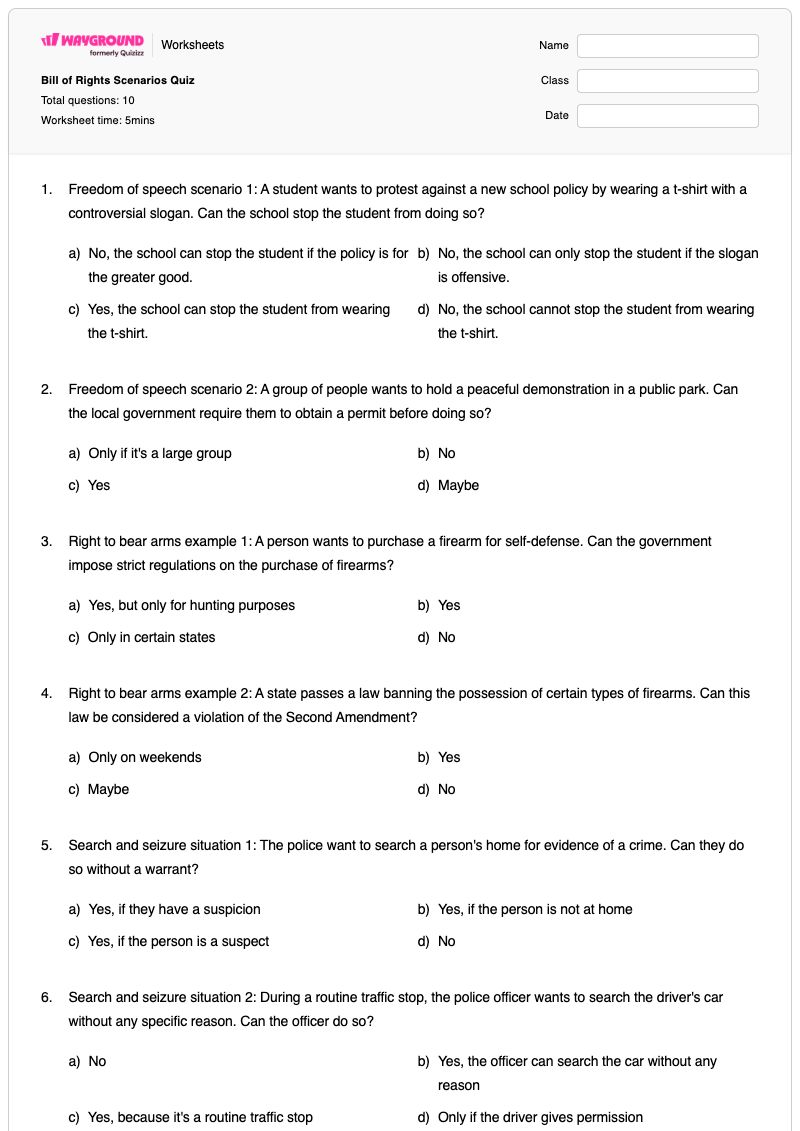
แบบทดสอบสถานการณ์เกี่ยวกับสิทธิในรัฐธรรมนูญ เป็นแบบฝึกหัดประวัติศาสตร์สำหรับนักเรียนชั้น ม.2 (เกรด 2) ประกอบด้วยคำถามแบบเลือกตอบ 10 ข้อ ที่ให้นักเรียนนำสิทธิในรัฐธรรมนูญไปประยุกต์ใช้กับสถานการณ์ทางกฎหมายในชีวิตประจำวัน นักเรียนจะต้องประเมินสถานการณ์ต่างๆ ที่เกี่ยวข้องกับเสรีภาพในการพูดและการชุมนุมอย่างสันติ สิทธิในการพกพาอาวุธ การค้นและยึดทรัพย์ สิทธิของผู้ถูกกล่าวหา และการลงโทษที่โหดร้ายและผิดปกติ แทนที่จะท่องจำเฉพาะชื่อของบทแก้ไขเพิ่มเติม พวกเขาจะต้องพิจารณาว่าการกระทำของรัฐบาลนั้นได้รับอนุญาตหรือไม่ หรืออาจละเมิดสิทธิที่ได้รับการคุ้มครอง แบบฝึกหัดที่พิมพ์ได้ฟรีนี้ช่วยให้นักเรียนเชื่อมโยงหลักการของสิทธิในรัฐธรรมนูญกับตัวอย่างที่เป็นรูปธรรม รวมถึงการแสดงออกในโรงเรียน การชุมนุมสาธารณะ การค้นตัวของตำรวจ การสอบสวนในระหว่างการควบคุมตัว การเข้าถึงทนายความของรัฐ กฎระเบียบเกี่ยวกับอาวุธปืน และวิธีการตัดสินลงโทษหรือประหารชีวิต แบบฝึกหัดนี้มีประโยชน์สำหรับการสอนแบบมีผู้แนะนำ การฝึกฝนด้วยตนเอง หรือการตรวจสอบความสามารถของนักเรียนในการตีความการคุ้มครองตามรัฐธรรมนูญในบริบทต่างๆ มีเฉลยคำตอบให้เพื่อความสะดวกในการตรวจสอบและตรวจให้คะแนน

การตั้งค่าแผ่นงาน

ขนาดตัวอักษร

S
M
L
XL
Waygroundแผ่นงาน

Bill of Rights Scenarios Quiz

คำถามทั้งหมด: 10

ชื่อ
ระดับ
วันที่
1.

Freedom of speech scenario 1: A student wants to protest against a new school policy by wearing a t-shirt with a controversial slogan. Can the school stop the student from doing so?

a)

No, the school can stop the student if the policy is for the greater good.

b)

No, the school can only stop the student if the slogan is offensive.

c)

Yes, the school can stop the student from wearing the t-shirt.

d)

No, the school cannot stop the student from wearing the t-shirt.

2.

Freedom of speech scenario 2: A group of people wants to hold a peaceful demonstration in a public park. Can the local government require them to obtain a permit before doing so?

a)

Only if it's a large group

b)

No

c)

Yes

d)

Maybe

3.

Right to bear arms example 1: A person wants to purchase a firearm for self-defense. Can the government impose strict regulations on the purchase of firearms?

a)

Yes, but only for hunting purposes

b)

Yes

c)

Only in certain states

d)

No

4.

Right to bear arms example 2: A state passes a law banning the possession of certain types of firearms. Can this law be considered a violation of the Second Amendment?

a)

Only on weekends

b)

Yes

c)

Maybe

d)

No

5.

Search and seizure situation 1: The police want to search a person's home for evidence of a crime. Can they do so without a warrant?

a)

Yes, if they have a suspicion

b)

Yes, if the person is not at home

c)

Yes, if the person is a suspect

d)

No

6.

Search and seizure situation 2: During a routine traffic stop, the police officer wants to search the driver's car without any specific reason. Can the officer do so?

a)

No

b)

Yes, the officer can search the car without any reason

c)

Yes, because it's a routine traffic stop

d)

Only if the driver gives permission

7.

Rights of the accused scenario 1: A person is arrested and taken into custody. Can the police interrogate the person without informing them of their right to remain silent?

a)

No

b)

Yes, they can interrogate without informing the right to remain silent

c)

The person can be interrogated only if they have committed a serious crime

d)

The person can be interrogated only if they have a lawyer present

8.

Rights of the accused scenario 2: A defendant in a criminal trial cannot afford to hire a lawyer. Can the court provide them with a public defender?

a)

No, the defendant must represent themselves

b)

Yes

c)

Yes, but only if the defendant is a minor

d)

No, the court does not provide legal representation

9.

Cruel and unusual punishment example 1: A person convicted of a crime is sentenced to life imprisonment without the possibility of parole for a non-violent offense. Can this be considered cruel and unusual punishment?

a)

Yes

b)

No

c)

Maybe

d)

Depends on the circumstances

10.

Cruel and unusual punishment example 2: A state allows the use of a particular method of execution that has been deemed to cause extreme pain. Can this method be considered cruel and unusual punishment?

a)

No

b)

Maybe

c)

Not sure

d)

Yes

Waygroundแป้นคำตอบ

Bill of Rights Scenarios Quiz

คำถามทั้งหมด: 10

1.
d)

No, the school cannot stop the student from wearing the t-shirt.

2.
c)

Yes

3.
b)

Yes

4.
b)

Yes

5.
d)

No

6.
a)

No

7.
a)

No

8.
b)

Yes

9.
a)

Yes

10.
d)

Yes

คำถามที่พบบ่อย

แบบทดสอบสถานการณ์เกี่ยวกับรัฐธรรมนูญช่วยให้นักเรียนชั้น ม.2 ฝึกฝนทักษะด้านใดบ้าง?

แบบฝึกหัดนี้ช่วยให้นักเรียนนำสิทธิที่ได้รับการคุ้มครองตามรัฐธรรมนูญไปใช้กับสถานการณ์แบบเลือกตอบ 10 ข้อ แทนที่จะเพียงแค่ระบุชื่อของบทแก้ไขเพิ่มเติม พวกเขาต้องตัดสินใจว่าสถานการณ์ที่เกี่ยวข้องกับการพูดและการชุมนุม อาวุธปืน การค้นหา การสอบสวน การได้รับความช่วยเหลือทางกฎหมาย และการลงโทษนั้น สอดคล้องกับสิทธิที่นำเสนอในแบบทดสอบหรือไม่

ฉันจะใช้แบบฝึกหัดนี้สอนเรื่องสิทธิขั้นพื้นฐานผ่านสถานการณ์จำลองได้อย่างไร?

แนะนำสิทธิคุ้มครองแต่ละข้อด้วยคำจำกัดความสั้นๆ จากนั้นให้นักเรียนอธิบายว่าสิทธิใดใช้ได้ก่อนที่จะเลือกคำตอบสำหรับแต่ละสถานการณ์ ใช้การอภิปรายเป็นคู่เพื่อเปรียบเทียบกรณีตัวอย่างบนเสื้อยืดของโรงเรียนและในสวนสาธารณะ จากนั้นทบทวนว่าเหตุใดแบบฝึกหัดจึงแยกการตรวจค้นของตำรวจ การสอบสวนระหว่างถูกควบคุมตัว ทนายความของรัฐ และการลงโทษขั้นรุนแรง ออกเป็นคำถามเกี่ยวกับสิทธิที่แตกต่างกัน

ฉันควรระวังข้อผิดพลาดอะไรบ้างเมื่อนักเรียนทำแบบทดสอบเกี่ยวกับรัฐธรรมนูญฉบับนี้?

นักเรียนอาจสับสนระหว่างเสรีภาพในการพูดกับสิทธิในการชุมนุมอย่างไม่จำกัด หรือมองข้ามไปว่าแบบทดสอบให้คำตอบที่แตกต่างกันสำหรับเสื้อยืดโรงเรียนที่เป็นประเด็นถกเถียง และข้อกำหนดเรื่องการขออนุญาตสำหรับการชุมนุมสาธารณะ พวกเขาอาจเลือกเพียงแค่ความสงสัยก็เพียงพอสำหรับการค้นบ้าน สันนิษฐานว่าการหยุดรถตามปกติจะอนุญาตให้ค้นรถได้โดยอัตโนมัติ หรือมองข้ามการคุ้มครองที่แยกต่างหากซึ่งเกี่ยวข้องกับการไม่พูดและการมีทนายความของรัฐ ระวังนักเรียนที่มองว่ากฎระเบียบเกี่ยวกับอาวุธปืน การห้ามอาวุธปืน และคำถามเกี่ยวกับการลงโทษนั้นใช้แทนกันได้ แทนที่จะประเมินแต่ละสถานการณ์ตามเงื่อนไขของมันเอง

ฉันจะมอบหมายและให้คะแนนแบบฝึกหัดเรื่องสิทธิขั้นพื้นฐานนี้อย่างไร?

แบบฝึกหัดนี้มีให้ดาวน์โหลดในรูปแบบ PDF และแบบทดสอบดิจิทัลบน Wayground พร้อมทั้งเฉลยคำตอบครบถ้วน ตรวจคำตอบที่พิมพ์ออกมาด้วยตนเอง หรือสแกนงานของนักเรียนด้วยแอป Wayground for Teachers และมอบหมายแบบฝึกหัดเวอร์ชันดิจิทัลเมื่อต้องการให้รวบรวมคำตอบทางออนไลน์

ฉันจะปรับแบบฝึกหัดสถานการณ์เกี่ยวกับสิทธิขั้นพื้นฐานนี้ให้เหมาะสมกับนักเรียนของฉันได้อย่างไร?

ในการตั้งค่าขั้นสูงของแบบฝึกหัด ให้ปรับระยะห่างระหว่างตัวอักษรหรือขนาดตัวอักษรเพื่อให้คำถามแบบเลือกตอบอ่านง่ายขึ้น นอกจากนี้ คุณยังสามารถใช้แบบอักษรที่เหมาะสำหรับผู้ที่มีภาวะดิสเล็กเซีย หรือแปลแบบฝึกหัดเป็นภาษาอื่นโดยคงรูปแบบคำถามเกี่ยวกับสิทธิขั้นพื้นฐานไว้ได้

ฉันจะหาแบบฝึกหัดฟรีแบบนี้เพิ่มเติมได้ที่ไหนบน Wayground?

Wayground นำเสนอชุดแบบฝึกหัดและโจทย์ฝึกหัดฟรีที่ครอบคลุมหลากหลายวิชา พร้อมไฟล์ PDF และเฉลยคำตอบ เพื่อสนับสนุนทักษะและแนวคิดที่สำคัญ ดูแหล่งข้อมูลเพิ่มเติมได้ที่ https://wayground.com/en-us/worksheets